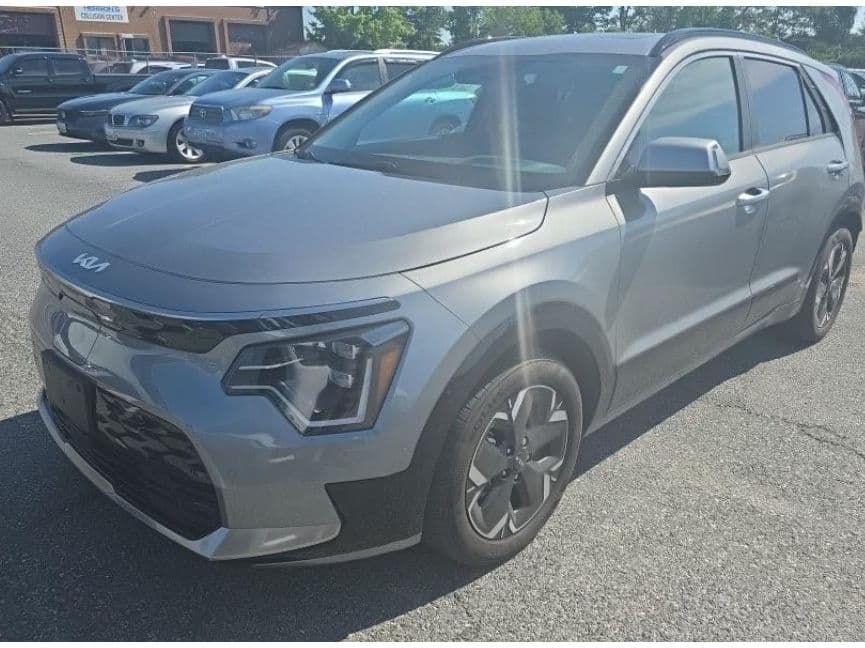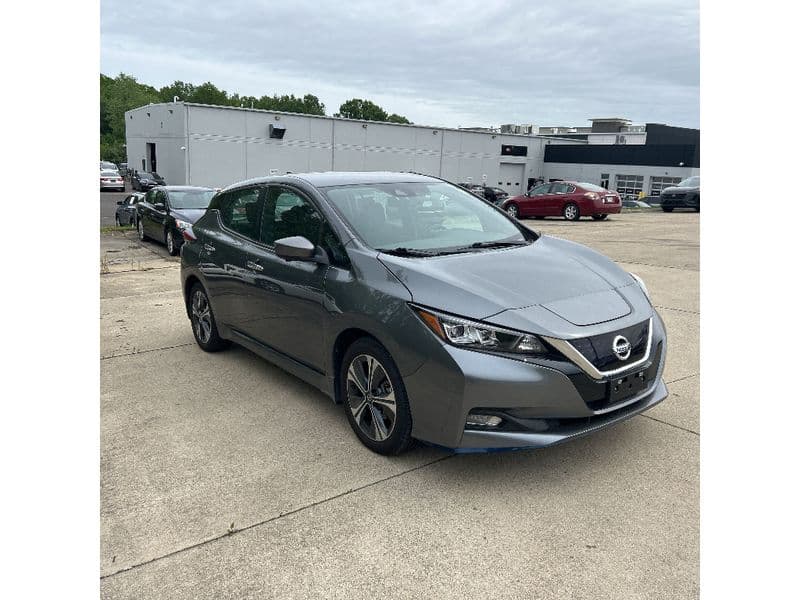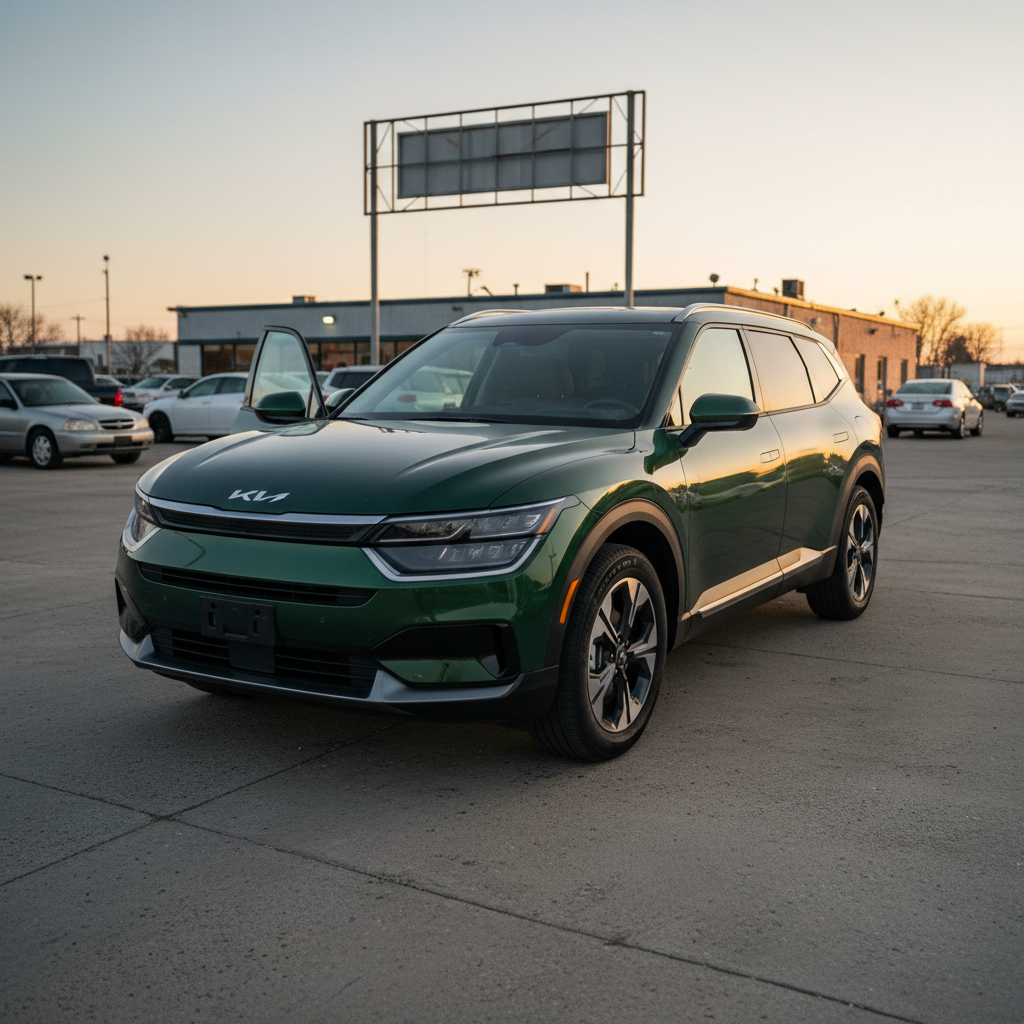
You’re comparing the Nissan Leaf vs Kia Niro EV because you want an affordable electric car that won’t make everyday life harder. Both are proven, mainstream EVs with plenty of used inventory in the U.S., but they solve slightly different problems. One is a compact hatchback pioneer; the other is a newer small crossover aimed squarely at families and longer‑distance drivers.
At a glance
Nissan Leaf vs Kia Niro EV: who each one fits best
Nissan Leaf: best for budget‑minded commuters
- Lower used prices, especially older 24–40 kWh models.
- Great for shorter daily drives and second‑car duty.
- Simpler tech, familiar hatchback format.
- Earlier U.S. models use CHAdeMO DC fast charging, which is being phased out.
Kia Niro EV: best for families and longer trips
- More range (around 239–253 miles EPA for recent U.S. models).
- Small crossover body with better rear space and cargo.
- CCS fast‑charging and stronger highway comfort.
- Higher purchase price but more versatile for one‑car households.
Used‑EV shopper tip
Key specs: Nissan Leaf vs Kia Niro EV
Specs vary by model year and trim, but if you’re shopping the bulk of the U.S. used market, you’re likely cross‑shopping a 2018–2024 Nissan Leaf against a 2019–2024 Kia Niro EV. Here’s how typical U.S.‑spec cars compare.
Core spec comparison (typical U.S. models)
Representative specs for common U.S. trims you’ll see used. Always confirm exact numbers for the specific car you’re considering.
| Spec | Nissan Leaf (40 kWh) | Nissan Leaf (62 kWh / Plus) | Kia Niro EV (64.8 kWh) |
|---|---|---|---|
| EPA range (mi, approx.) | ~149 | ~214 | ~239–253 |
| Battery capacity (gross) | ~40 kWh | ~62 kWh | 64.8 kWh |
| Onboard AC charging | 6.6 kW | 6.6 kW | ~11 kW |
| DC fast‑charge connector (U.S. pre‑2026) | CHAdeMO | CHAdeMO | CCS |
| Peak DC fast‑charge power (claim) | up to ~50 kW | up to ~100 kW (real‑world typically lower) | up to ~100 kW+ (pack max ~80 kW in practice) |
| Body style | Compact hatchback | Compact hatchback | Subcompact crossover |
| Horsepower (approx.) | 147 hp | 214 hp | 201 hp |
| Drivetrain | FWD | FWD | FWD |
Later‑model Leafs with the larger pack (SV Plus/SL Plus) narrow the gap, but the Niro EV still wins for highway range and DC charging convenience.
Model‑year caveat
Used pricing, value and incentives
On the used market, the Nissan Leaf is usually the cheaper entry ticket. Early‑generation Leafs with smaller batteries can be some of the lowest‑priced used EVs you’ll find, while the Niro EV still commands relatively strong money thanks to its range and crossover body.
Typical used‑market positioning (U.S.)
Exact prices vary by mileage, condition, battery health, and market, but patterns are clear.
Nissan Leaf pricing patterns
- Older (2013–2017) 24–30 kWh cars often sit at the bottom of the EV market on price.
- 2018+ Leafs with the 40 kWh pack stay affordable but usable for most commutes.
- 62 kWh Leaf Plus models cost more but undercut many long‑range EVs.
Because depreciation has already hit hard, a well‑cared‑for Leaf can be a very low‑cost way to go electric, especially if you don’t do long road trips.
Kia Niro EV pricing patterns
- 2019+ Niro EVs still price like "real cars" you can road‑trip and family‑haul in.
- Their combination of range, space and mainstream styling keeps resale values stronger than the Leaf’s.
- Expect to pay Leaf‑Plus money, or more, for a similar‑age Niro EV.
In return you get more range, more space and better DC fast charging, which matters if this is your only car.
Where Recharged can help on value
Ready to find your next EV?
Browse VehiclesRange and efficiency in the real world
Range is where the Nissan Leaf and Kia Niro EV really diverge. Leaf range depends heavily on battery size and degradation, while the Niro EV’s larger pack and more modern thermal management keep it more consistent over time.
Typical usable range for common trims (when new)
In mixed U.S. driving, including highway speeds, a healthy Niro EV will usually deliver meaningfully more real‑world range than an equivalent‑age Leaf. On cold days or at 70–75 mph, the Niro’s extra kWh and better cooling matter even more.
Climate and range
Charging: ports, speeds and road‑trip friendliness
Charging is where spec sheets can be misleading. On paper, late‑model Leafs and the Niro EV both support DC fast charging around 50–100 kW. In practice, differences in connector standards and thermal design make the Niro EV much easier to road‑trip for most U.S. drivers.
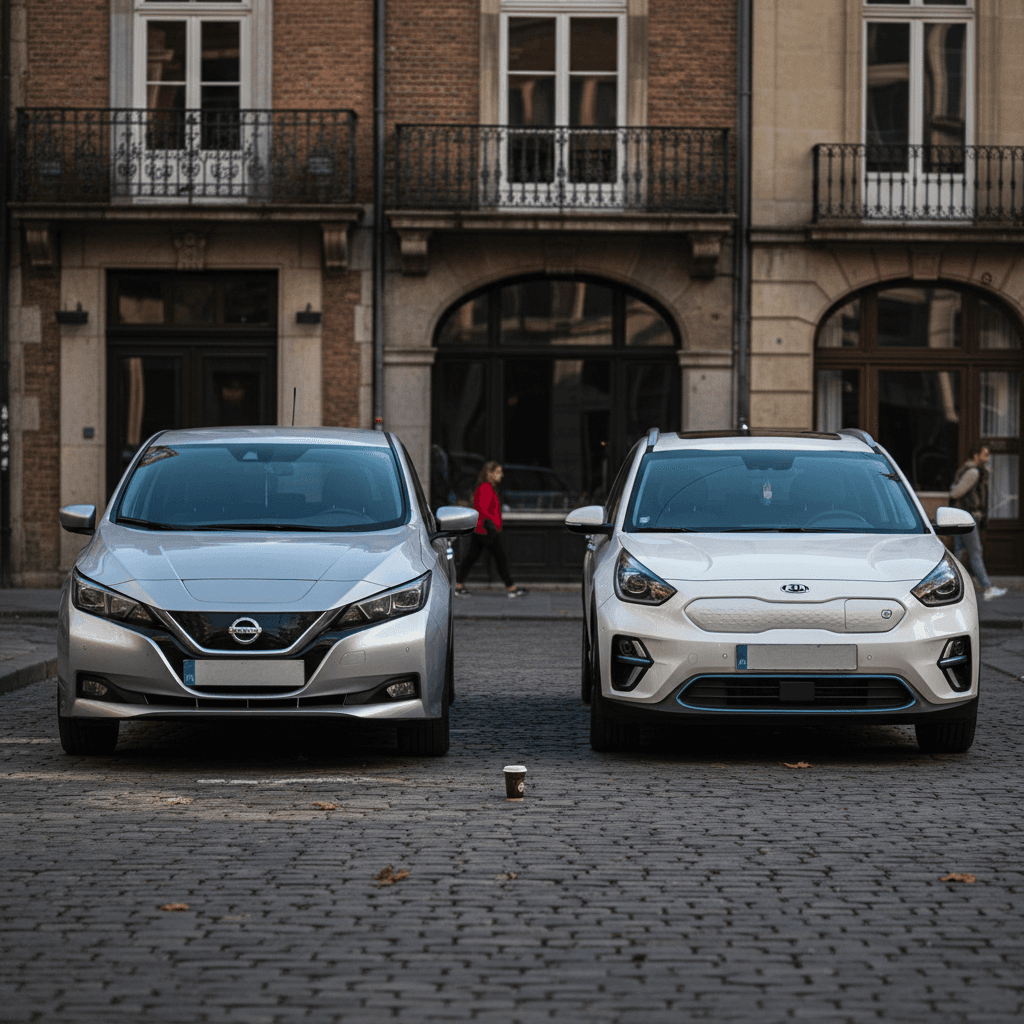
Charging comparison: Nissan Leaf vs Kia Niro EV (U.S. pre‑2026 models)
Focuses on what you’ll experience using U.S. public charging today.
| Charging factor | Nissan Leaf | Kia Niro EV |
|---|---|---|
| DC connector | CHAdeMO (older standard, shrinking network) | CCS (current U.S. standard outside Tesla) |
| Typical peak DC speed | ~40–70 kW when conditions are ideal | ~70–80 kW sustained on many stations |
| DC charging behavior | Tends to taper early; repeated fast‑charges can heat‑soak older packs | More consistent speeds; better thermal management |
| AC charging at home | Up to ~6.6 kW (about 25 mi/hr) | ~11 kW onboard (if you have sufficient home power) |
| Road‑trip practicality | Possible but slower and requires careful CHAdeMO planning | Much easier to plan around CCS networks like Electrify America and EVgo |
For most U.S. drivers, CCS on the Niro EV simply gives you more and better DC fast‑charging options than CHAdeMO on earlier Leafs.
The CHAdeMO reality check
For home charging, both cars will happily live on a 240 V Level 2 charger. The Niro EV’s stronger onboard AC charger just means that if you have a high‑amp circuit and a smart wallbox, you can refill its big battery overnight more easily.
Home charging and Recharged
Interior space, cargo and daily usability
You feel the philosophical difference between these two the moment you open the rear doors. The Leaf is a classic compact hatchback. The Niro EV is a small crossover that rides a bit higher, with a boxier rear for cargo.
How they compare for people and stuff
Both are perfectly usable as primary cars for many households, but one has a clear advantage on family duty.
Nissan Leaf practicality
- Comfortable front seats, especially in newer generations.
- Rear legroom is fine for kids and shorter adults; tighter for tall passengers behind tall drivers.
- Hatchback cargo is usable but less squared‑off than a crossover, which can make strollers and bulky items tricky.
- Cabin materials feel more "economy car" in many trims, especially earlier years.
Kia Niro EV practicality
- Higher seating position and easier ingress/egress, helpful for families and older passengers.
- More usable rear headroom and legroom for grown‑ups.
- Cargo area is boxier and more flexible; better for road trips and Costco runs.
- Cabin feels closer to a mainstream compact SUV in design and materials.
Car seats and kids
Driving experience and comfort
Neither of these EVs is trying to be a track weapon. They’re tuned for comfort, predictability and ease of use, which is exactly what most shoppers in this segment actually want.
Nissan Leaf on the road
- Instant EV torque makes city driving feel lively, especially in the lighter 40 kWh cars.
- Steering is light, visibility is good, and the footprint is small, ideal for urban parking.
- On the highway, the Leaf can feel less planted, and wind noise is more noticeable, particularly on older generations.
- "e‑Pedal" one‑pedal driving (on newer Leafs) is genuinely useful in traffic once you get used to it.
Kia Niro EV on the road
- More powerful motor (around 201 hp) and the bigger battery make it feel relaxed at highway speeds.
- Ride quality is generally more composed, especially with passengers and cargo.
- Selectable regen modes, including strong one‑pedal driving, give you control over how the car feels.
- Cabin noise and refinement are closer to a modern compact crossover than an economy hatch.
Road‑trip verdict
Battery health, degradation and long‑term confidence
Battery health is the single biggest wild card when buying a used EV, and it’s an area where the Leaf and Niro EV differ in design philosophy.
Battery design and what it means used
Same fundamental chemistry, very different thermal strategies.
Nissan Leaf battery
- Earlier Leafs rely largely on air cooling and simple heaters, not sophisticated liquid cooling.
- In hot climates, this has historically meant faster degradation, especially with repeated DC fast charging.
- Later Leafs improved durability, but pack health can vary widely between two similar‑year cars.
- Battery health bars on the dash help, but they’re a blunt instrument; you want a deeper report.
Kia Niro EV battery
- Uses liquid‑cooled battery packs, which help manage temperatures during fast‑charging and in hot or cold weather.
- Real‑world owner data suggests slower, more predictable degradation than early Leafs.
- Still, not all Niro EVs are equal, fast‑charged fleet cars can have more wear than gently used commuter vehicles.
- Service history and detailed health data matter as much as the nameplate.
Why a detailed battery report matters
Which should you buy: Nissan Leaf or Kia Niro EV?
Choosing between the Nissan Leaf and Kia Niro EV really comes down to your budget, your daily driving pattern and how often you’ll rely on DC fast charging. Both can be smart buys; they just optimize for different things.
Choose a Nissan Leaf if…
- You want the lowest possible cost of entry into EV ownership.
- Your regular driving is mostly local, commuting, errands, school runs under ~60–70 miles a day.
- You have or can install Level 2 home charging, so slower DC infrastructure isn’t a big issue.
- You’re comfortable trading some long‑trip capability and future‑proofing for upfront savings.
If you go this route, prioritize newer Leafs with the 40 or 62 kWh battery and strong battery health scores.
Choose a Kia Niro EV if…
- You need one EV that can do both daily commuting and real road trips.
- Back‑seat space and cargo flexibility are important for family duty.
- You value CCS fast‑charging access and better long‑term range retention.
- You’re willing to pay more now for fewer compromises later.
The Niro EV is the better "do‑everything" choice, especially as your primary car.
How Recharged fits into the decision
Quick checklist: is the Leaf or Niro EV right for you?
5‑minute decision helper
1. Map your real daily mileage
Look at a typical week. If you rarely exceed 60–70 miles in a day, and can charge at home, the Leaf (especially 40 or 62 kWh) can be perfectly sufficient. If you regularly push 100+ miles a day or have an unpredictable schedule, the Niro EV’s extra range is reassuring.
2. Decide how often you’ll road‑trip
If road trips are a once‑or‑twice‑a‑year event, a Leaf with careful planning may be fine. If you expect to do multi‑state drives several times a year, CCS fast charging and the Niro EV’s bigger pack will save you time and stress.
3. Be honest about space needs
Do you routinely haul kids, friends, pets or bulky cargo? The Niro EV’s crossover shape and rear seat space will feel less compromised. If you’re mostly solo or a couple in the car with light luggage, the Leaf’s hatchback layout works well.
4. Consider your climate
Hot desert summers and repeated DC fast charging are hard on air‑cooled packs like early Leafs. In mild climates or for low‑mileage use, that’s less of a concern. In very hot areas, the Niro EV’s liquid‑cooled pack is the safer longevity bet.
5. Look past the sticker price
Cheaper isn’t always better if it means you outgrow the car in a year. Factor in battery health, charging convenience, and how long you plan to keep the car. A Recharged advisor can help you compare <strong>total cost of ownership</strong>, not just the purchase price.
FAQ: Nissan Leaf vs Kia Niro EV
Frequently asked questions about Nissan Leaf vs Kia Niro EV
Both the Nissan Leaf and Kia Niro EV have earned their place in the used‑EV landscape. The Leaf is the affordability champion and a great gateway into electric driving if your life fits its limits. The Niro EV is the more capable all‑rounder that can credibly replace a small gas crossover. If you’re on the fence, the smartest move is to shop actual cars, compare prices, Recharged Score battery reports and real‑world photos, and talk through how you drive with an EV‑savvy advisor. That’s where the right choice becomes obvious.