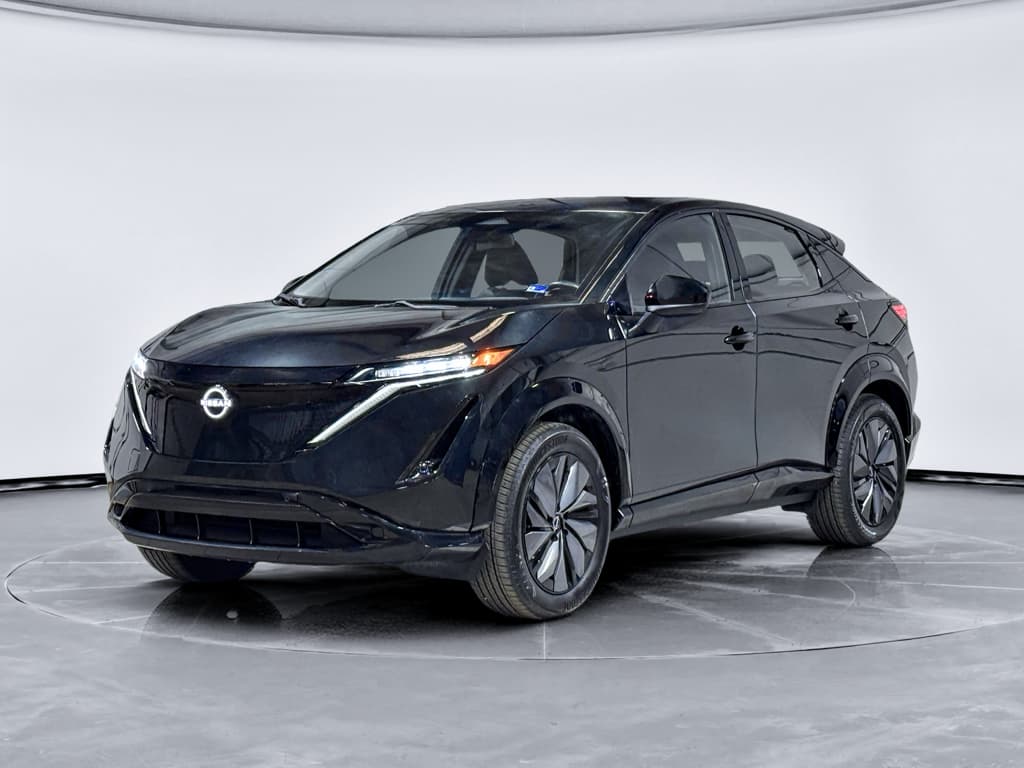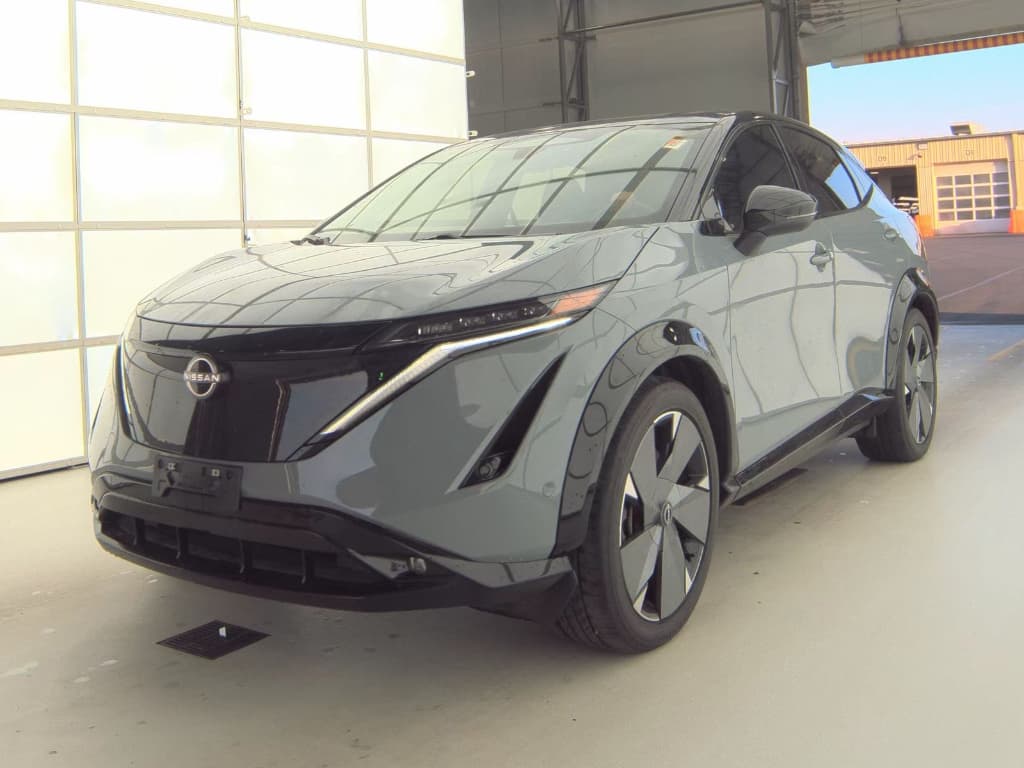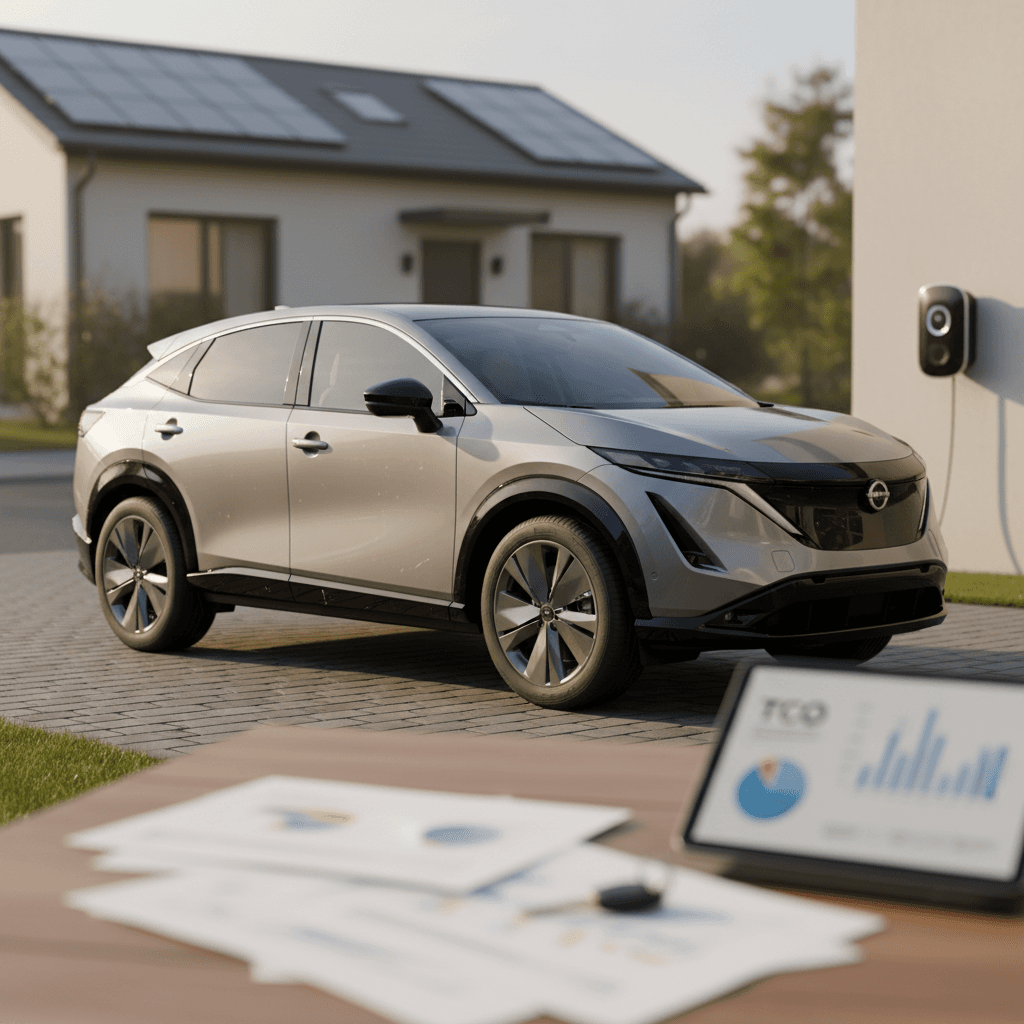
You don’t buy a Nissan Ariya for the quarter‑mile time. You buy it because you want a quiet, all‑electric crossover that feels like the future, without lighting your bank account on fire. The real question is: what’s the true cost of owning a Nissan Ariya over 5 years, payments, charging, insurance, tires, everything?
Short answer
Why the Nissan Ariya’s 5‑Year Costs Matter
Compact crossovers are the family sedan of our time, and the Ariya is Nissan’s reset button after the Leaf era. It’s competing with the Tesla Model Y, Hyundai Ioniq 5, Kia EV6, and a brigade of plug‑in pretenders. On paper, EVs like the Ariya should undercut gas SUVs on fuel and maintenance. In practice, purchase price and depreciation can erase those gains if you’re not careful, especially in the first 3–5 years.
This guide walks through the 5‑year true cost of ownership for a Nissan Ariya in the U.S., using realistic (not rosy) assumptions. We’ll break down depreciation, charging, insurance, maintenance, and taxes, and then look at how buying a used Ariya with known battery health can tilt the math back in your favor.
Nissan Ariya basics: battery, trims, and what affects cost
Core flavors of Ariya
- Battery sizes: roughly 63 kWh ("standard" pack) and 87 kWh ("long‑range") usable capacity.
- Drivetrains: front‑wheel drive (single motor) and e‑4ORCE all‑wheel drive (dual motor, more power, more cost).
- Trim names: Engage, Venture+, Evolve+, Empower+, Premiere, Platinum+, etc. Higher trims pile on options and price.
What moves the cost needle
- Battery size: Bigger pack → higher MSRP but better range and potentially stronger resale.
- e‑4ORCE AWD: More performance and traction, but adds cost and slightly higher energy use.
- Options: Tech packages, panoramic roof, premium audio, leather, great to have, brutal to depreciate.
Choose the right Ariya for your math
How we built a 5‑year Nissan Ariya cost model
Any cost model lives and dies on its assumptions. Here’s the baseline scenario we’ll use so you can adjust it to your life:
Key 5‑year cost assumptions for Nissan Ariya
You can mentally tweak any of these numbers up or down for your own situation.
| Factor | Assumption used | Notes |
|---|---|---|
| Vehicle | 2024 Nissan Ariya FWD, long‑range battery, mid‑trim | New purchase; used numbers later |
| Purchase price | $45,000 out‑the‑door | After dealer fees, before any tax credits |
| Ownership period | 5 years / 60,000 miles | 12,000 miles per year |
| Energy cost | $0.15 per kWh home charging, 80% home / 20% public | Blended cost; your utility may be higher or lower |
| Efficiency | 3.0 miles per kWh (overall) | Real‑world mixed driving |
| Insurance | $1,600 per year | Middle‑of‑the‑road U.S. driver profile |
| Maintenance & repairs | $600 per year average | Includes tires and out‑of‑warranty surprises |
| Residual value | ~45–50% of original price at year 5 | EV depreciation is evolving; we’ll discuss this |
Assumptions are illustrative, not guarantees, think of them as a starting point for your own spreadsheet.
Your mileage may literally vary
5‑year Nissan Ariya cost of ownership: quick summary
Five‑year cost snapshot for a new Nissan Ariya (illustrative)
If you buy new and drive a normal American commute, most of what you "spend" on an Ariya in five years is depreciation, not electrons, not oil changes, not dealer service. That’s why the new‑vs‑used decision, and the price you pay up front, matter more than whether you charge at 11¢ or 17¢ per kWh.
Depreciation and resale value: where most of the money goes
EV depreciation has been a moving target: tax‑credit whiplash, rapid tech improvements, and a flood of new models have all pushed used prices down faster than legacy gas SUVs. The Ariya lives in that world. The upside for you: if you’re buying used, the previous owner likely did the hard part for you.
How a $45,000 new Ariya might depreciate
Illustrative curve for a 5‑year horizon
Year 1
~25% gone. After the first year, that $45,000 Ariya might be worth around $33,000–$35,000, depending on incentives and mileage.
Year 3
~35–40% gone. Around $27,000–$30,000 value is a reasonable working number if the market stays soft on used EVs.
Year 5
~50–55% gone. A clean, normal‑mileage example might land near $20,000–$24,000.
The single biggest Ariya cost mistake
If we take our $45,000 purchase and assume it’s worth $22,500 at year 5, that’s $22,500 in depreciation, or about $4,500 per year. Everything else, charging, insurance, maintenance, lives in the shadow of that number.
Home and public charging costs over 5 years
The Ariya’s energy bill is the good news section. Using our 3.0 mi/kWh efficiency and 12,000 miles per year, you’re burning through about 4,000 kWh annually. At a blended rate of $0.15 per kWh (mostly home, some public), that’s $600 a year in electricity. Public DC fast charging, when you need it, will nudge that number up.
Illustrative 5‑year charging cost for a Nissan Ariya
Assumes 80% home charging at $0.14/kWh, 20% public DC fast charging at $0.35/kWh.
| Charging type | Share of miles | Effective cost per kWh | Annual cost | 5‑year total |
|---|---|---|---|---|
| Home Level 2 | 80% | $0.14 | ~$450 | ~$2,250 |
| Public DC fast | 20% | $0.35 | ~$200–$250 | ~$1,000–$1,250 |
| Blended total | 100% | ≈$0.18 | ≈$650–$700 | ≈$3,250–$3,500 |
If you road‑trip a lot and lean hard on fast chargers, shift more miles into the "public" column.
Want to shrink this line item?
Even in a pricey electricity market, your Ariya’s energy bill will almost always look better than feeding a comparable gas crossover that gets 25 mpg. At $3.75 a gallon and 12,000 miles a year, that gas SUV is burning around $1,800 yearly in fuel, roughly 2–3× the Ariya’s electricity spend.
Insurance, taxes, and registration for an Ariya
Insurance is the sneaky second‑tier cost in EV ownership. The Ariya is new, relatively high‑tech, and not yet produced in Model‑Y volumes, which can keep repair estimates buoyant. Many U.S. drivers will land somewhere in the $1,400–$1,800 per year range, depending on location, driving record, and coverage choices.
Insurance cost drivers
- Trim and MSRP: Higher‑trim Ariyas with expensive headlights, wheels, and interior materials cost more to repair.
- Battery and electronics: Advanced driver‑assist systems and big battery packs raise the stakes in a collision.
- Local repair ecosystem: Areas with fewer EV‑savvy shops can see higher labor rates and longer repair times.
Taxes and fees
- Sales tax: Depending on your state, this can add thousands to the up‑front cost.
- Registration: Some states add small annual EV fees to replace lost gas‑tax revenue.
- Property tax on vehicles: States that levy this (like parts of the Southeast) make expensive new EVs sting more.
EV tax credits: handle with care
Maintenance, repairs, and tires: what actually wears out
The Ariya inherits the EV maintenance advantage: no oil changes, fewer moving parts, and no exhaust system to rust away. But it’s still a 4,500‑plus‑pound crossover on rubber donuts. Weight is the silent accountant here.
Typical 5‑year Ariya maintenance items
Where your service dollars are likely to go
Tires
Expect to replace the factory tires once, possibly twice, in 5 years depending on mileage and driving style. Budget $900–$1,200 per set installed for quality rubber.
Fluids & checks
No engine oil, but you’ll still need cabin air filters, brake fluid every few years, and general inspections. Think a few hundred dollars spread over 5 years.
Repairs & surprises
Out‑of‑warranty fixes may include suspension components, sensors, or electronics. Averaged out, budgeting $300–$500 a year in the long term is conservative but sane.
Where EVs like the Ariya win big
If you budget around $600 a year all‑in for maintenance, tires, and the occasional hiccup, you’ll likely be pleasantly surprised rather than painfully short.
New vs used Nissan Ariya: which has the better economics?
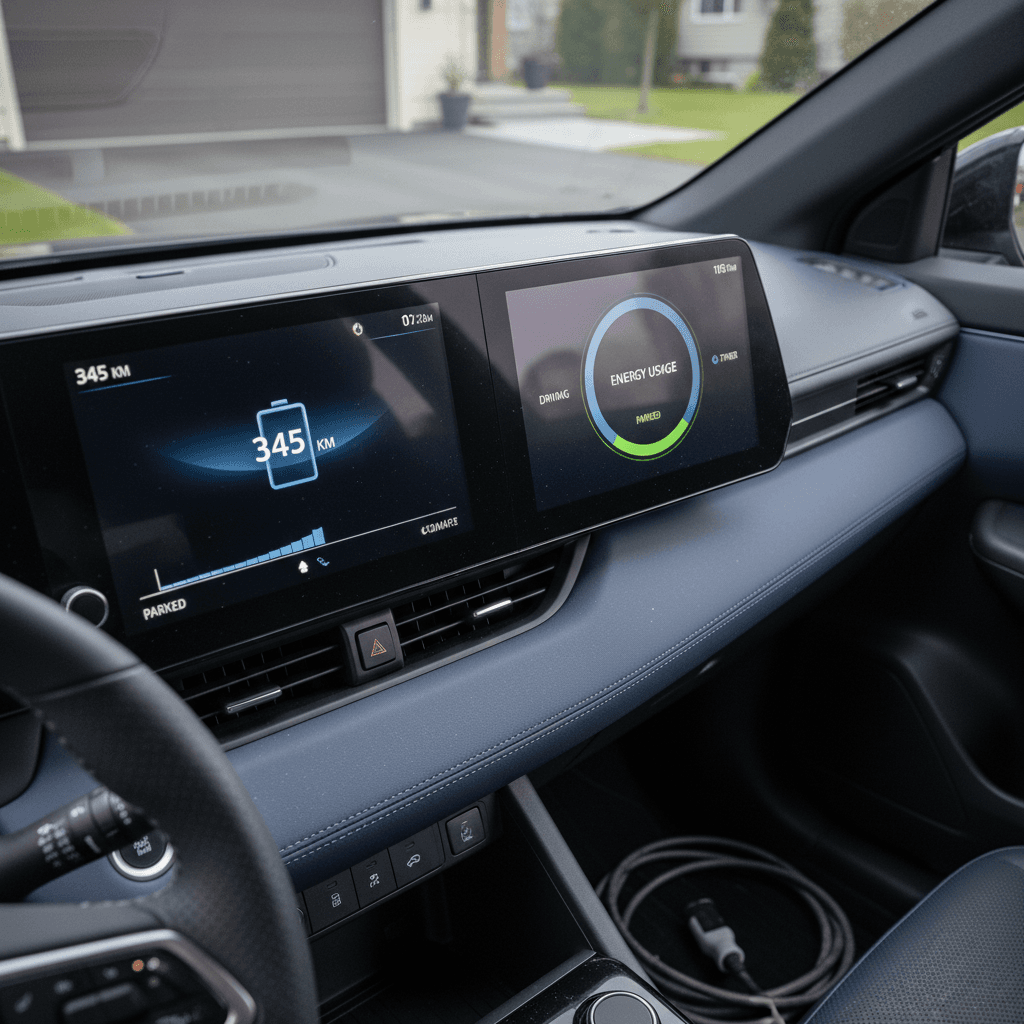
Here’s where the plot thickens. From a pure spreadsheet standpoint, the Ariya, like most modern EVs, looks better as a 2‑ or 3‑year‑old used purchase than as a brand‑new indulgence. That’s because the steepest part of the depreciation curve happens early, before the battery has had time to age meaningfully.
Buying new: pros and cons
- Pros: Full warranty, latest software and hardware, possibly eligible for new‑EV incentives, you choose exact color and options.
- Cons: Highest depreciation hit, higher insurance, and if better tech arrives in 2 years, you eat that obsolescence.
Buying used: pros and cons
- Pros: Lower price, slower future depreciation as the car ages, potential access to used‑EV federal credits depending on rules and eligibility.
- Cons: Shorter remaining warranty, unknown battery history if not properly documented, fewer choices in color/trim.
The used‑EV wild card: battery health
This is precisely why the used market is where smart money hunts. If you can buy an Ariya at, say, 40% off original MSRP after two or three years, with certified strong battery health, your 5‑year cost of ownership (from today forward) can undercut buying new by thousands, even after you factor in slightly higher maintenance risk.
How Recharged can tilt the numbers in your favor
Everything we’ve just walked through, the steep early depreciation, the importance of battery health, the ambiguity of used EV pricing, is exactly the mess Recharged was built to clean up.
Why a used Ariya from Recharged can be a smarter 5‑year bet
Less guesswork, more math you can live with
Verified battery health
Every Ariya on Recharged comes with a Recharged Score Report that includes independent battery diagnostics, so you’re not guessing about the most expensive component in the car.
Fair, transparent pricing
Listings are benchmarked against the market, with clear, data‑backed pricing instead of mystery dealer markups. You see how battery health and mileage affect value.
Financing & delivery made boring (in a good way)
Recharged offers financing, trade‑in options, instant offers or consignment, plus nationwide delivery and expert EV guidance so you can buy fully online or visit the Experience Center in Richmond, VA.
Ready to find your next EV?
Browse VehiclesThe quiet power of buying after the plunge
Quick checklist to sanity‑check your own 5‑year Ariya costs
5‑year Nissan Ariya cost checklist
1. Start with a realistic purchase price
Price out the exact trim, battery, and drivetrain you want, new or used, and make sure you include taxes and fees. This number dominates the rest of the math.
2. Estimate your annual miles
If you drive 8,000 miles a year, your energy and depreciation per year look very different than if you drive 18,000. Plug your real mileage into the equation.
3. Check local electricity rates
Look up your kWh rates, especially off‑peak EV plans. Then estimate your yearly kWh use using your Ariya’s efficiency (roughly 3.0 mi/kWh in mixed driving).
4. Get real insurance quotes
Before you buy, pull a couple of actual quotes for the specific Ariya you’re eyeing. Don’t assume insurance will match your current crossover, it might be higher or lower.
5. Budget for tires and maintenance
Plan on at least one set of quality tires within 5 years plus routine service. Set aside $500–$700 per year in your model to avoid surprises.
6. Model resale value conservatively
When you guess your year‑5 resale, be a pessimist. Use a 45–50% residual as a starting point for a new Ariya, unless used EV prices clearly stabilize higher in your region.
Nissan Ariya 5‑year ownership: FAQs
Frequently asked questions about Nissan Ariya 5‑year costs
Bottom line: is a Nissan Ariya a good 5‑year bet?
Viewed in isolation, the Nissan Ariya is a handsome, quiet, thoroughly modern electric crossover that does its job with almost Japanese‑appliance anonymity. Viewed as a 5‑year financial commitment, it’s a reminder that the EV revolution still answers to the oldest law in car‑buying: what you pay going in, and what you get coming out.
If you buy new at full sticker, trade out early, and ignore battery health on resale, the Ariya will cost you about as much as any other well‑equipped compact SUV, just with electricity instead of gas receipts. If you buy carefully priced, lightly used metal with a clean battery bill of health, the numbers start to look much more compelling.
Run the math with your own miles, rates, and insurance quotes. Then, if a used Ariya fits your life, consider letting Recharged do the hard parts: battery diagnostics, fair pricing, financing, trade‑in, and delivery. Five years from now, you want to remember the drives, not the spreadsheets.