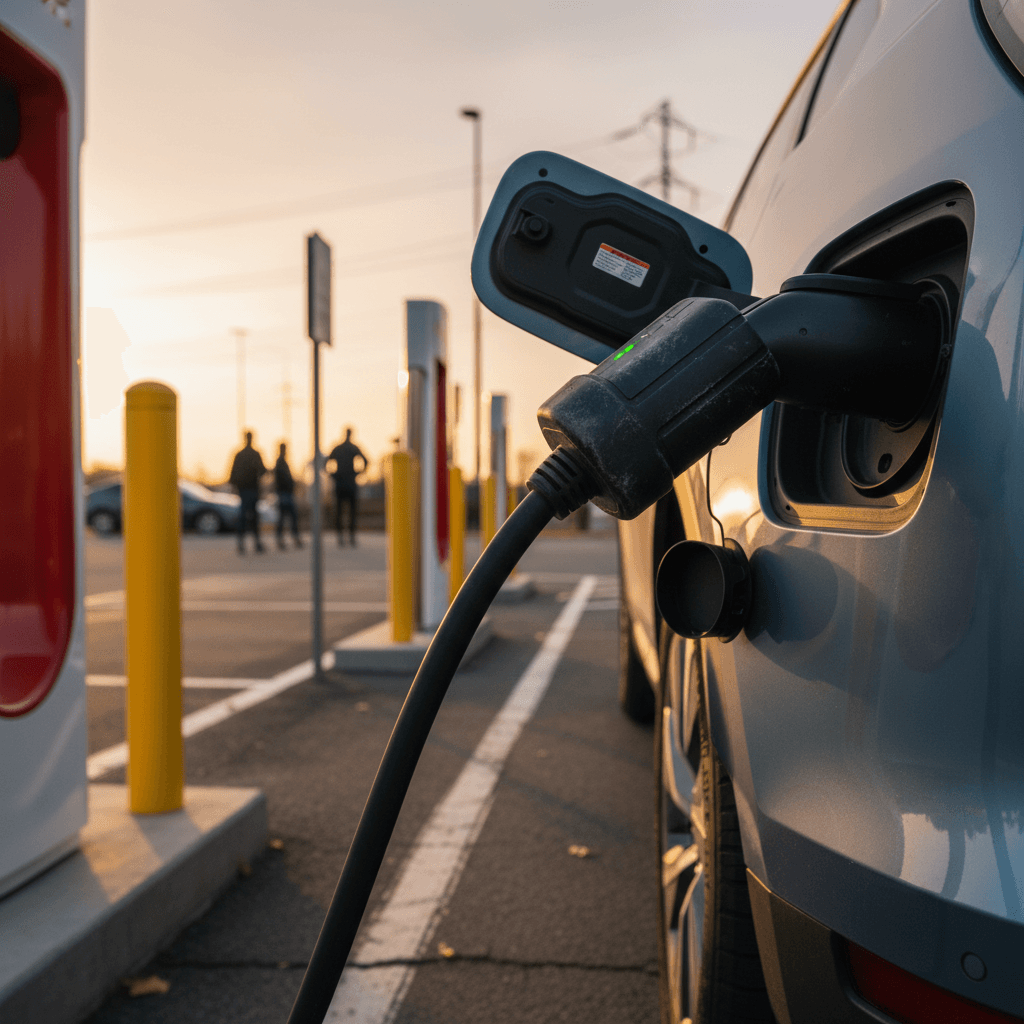
If you own a CCS‑equipped EV and keep hearing about Tesla’s North American Charging Standard (NACS), you’re probably wondering if a NACS to CCS adapter can finally give you “charge anywhere” freedom. In 2025, adapters are powerful tools, but they’re not magic wands, and the fine print matters more than the marketing.
The short version
Why NACS to CCS adapters suddenly matter
The charging landscape in late 2025
A few years ago, CCS was the non‑Tesla default and NACS was Tesla‑only. Today, NACS has effectively become the new North American standard. New EVs from Ford, GM, Hyundai, Kia and others are shipping with NACS ports, while legacy CCS cars are gaining Supercharger access through adapters and software updates.
That transition period, 2024 through roughly 2027, is exactly where NACS↔CCS adapters live. They’re the bridge between old ports and new infrastructure, and for many drivers, the difference between a relaxed road trip and a two‑hour detour to find a working charger.
NACS vs CCS: a quick primer
NACS (Tesla plug)
- Compact connector that handles AC and DC charging in one port.
- Native plug on Tesla vehicles and most new EVs starting 2025–2026.
- Backed by Tesla’s huge Supercharger network and now other networks adopting NACS.
- Officially standardized as the North American Charging Standard.
CCS1 (Combined Charging System)
- Bulkier connector with separate AC pins and DC pins stacked below the J1772 shape.
- Standard on most non‑Tesla EVs sold in North America from ~2017–2024.
- Used by Electrify America, EVgo, ChargePoint DC, and many regional networks.
- Still widely deployed, but long‑term momentum is moving toward NACS.
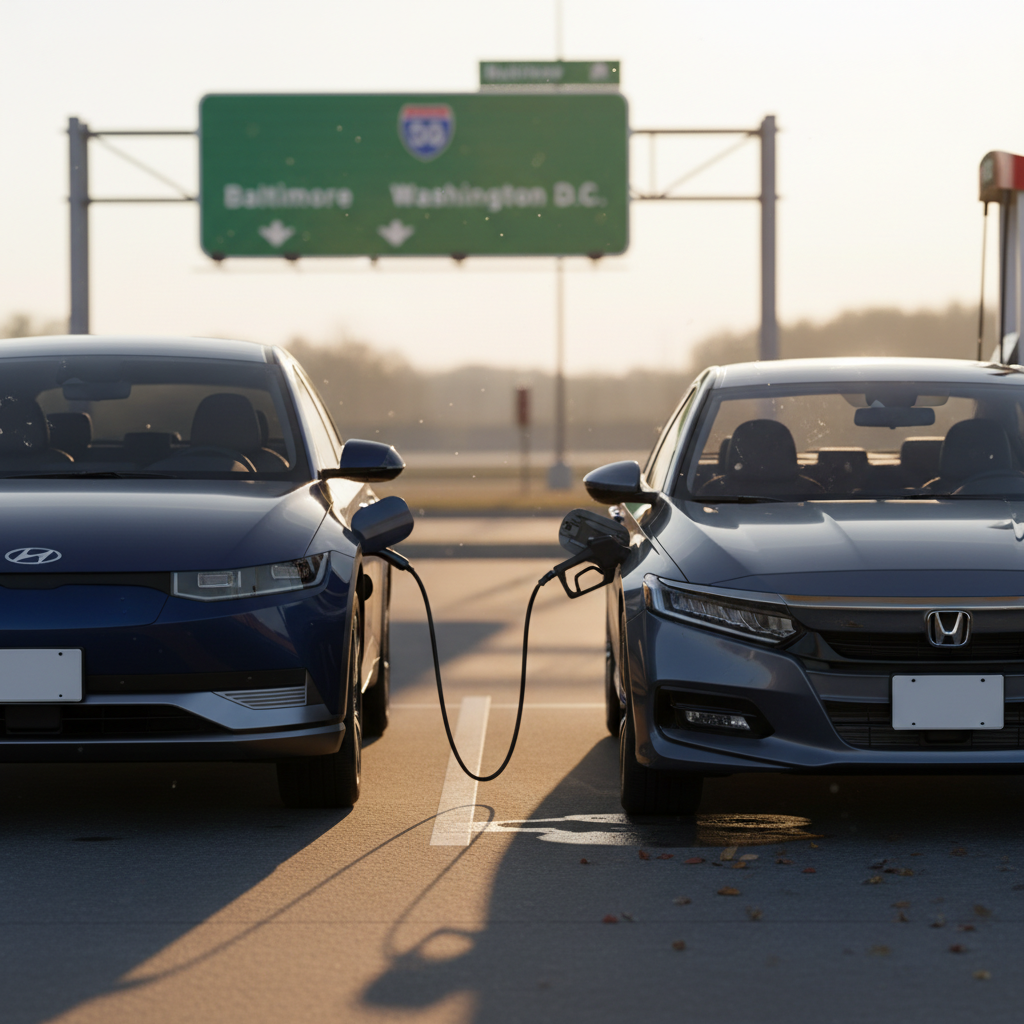
Adapters sit between these two worlds. The direction matters a lot: are you trying to plug a NACS cable into a CCS car, or a CCS cable into a NACS car? Those are completely different products, sold and regulated very differently.
Two adapter directions: NACS→CCS and CCS→NACS
Know which adapter you’re actually shopping for
The industry loves confusing names. Focus on which side is the car, and which side is the station.
1. NACS charger → CCS car
What it is: A NACS to CCS adapter lets a CCS‑port vehicle use a NACS cable, like a non‑Tesla EV using a Tesla Supercharger or another NACS DC fast charger.
Who uses it: Legacy CCS cars from brands that already enabled NACS access (Ford, GM, Hyundai, Kia, Volvo/Polestar, etc.), or CCS EVs using third‑party NACS stations.
2. CCS charger → NACS car
What it is: A CCS to NACS adapter lets a NACS‑port vehicle (Tesla or a new‑standard EV) plug into older CCS fast chargers.
Who uses it: Primarily Tesla owners and NACS‑native EVs wanting to keep using legacy CCS sites while they still exist.
3. CHAdeMO and oddballs
Adapters that chain CHAdeMO, CCS, and NACS together do exist, but they’re niche, fragile solutions. They often introduce power limits, handshake failures, and a lot of ways for something to go wrong on a road trip.
How to read product names
Who actually needs a NACS to CCS adapter?
Not everyone needs a NACS to CCS adapter, despite the social‑media panic. The right answer depends on which port your car has, which networks you rely on, and how often you road‑trip.
Common scenarios (and whether an adapter makes sense)
You drive a CCS‑only EV and road‑trip a lot
If you own a CCS‑port EV from 2018–2024 and frequently drive outside your local charging comfort zone, a <strong>manufacturer‑approved NACS to CCS adapter</strong> (if your brand offers one) can dramatically expand usable fast‑charging, especially where Superchargers are dense and CCS sites are sparse or unreliable.
Your brand gives you an official adapter
Hyundai, Kia, Ford, GM, Mercedes, Volvo, Polestar, Nissan and others are rolling out <strong>OEM CCS→NACS adapters</strong> (charger NACS, car CCS) to customers, often free for early buyers. If your automaker emails you an offer, that’s the adapter you want first.
You already have a NACS‑port EV
If your car is NACS‑native (newer Tesla, some 2025+ Hyundai/Kia, etc.), you do <strong>not</strong> need a NACS to CCS adapter. You might consider the opposite, <strong>CCS to NACS</strong>, so you can still use legacy CCS networks on routes where Tesla coverage is thin.
You rarely leave your metro area
If 95% of your charging happens at home and local DC stations, an adapter is nice but not urgent. Money spent on a more reliable home Level 2 charger may do more for your stress level than any fast‑charging magic gadget.
You’re buying a used EV
Adapters become part of the negotiation. If you’re considering a used CCS EV, find out whether an OEM NACS adapter is already included or transferable. If you’re shopping on <strong>Recharged</strong>, you can review the Recharged Score and listing details to see what charging equipment is included and how the battery will respond to frequent DC charging.
Automaker adapters vs third‑party: what’s the difference?
At this point in the movie, most major automakers have lined up behind NACS and are either shipping their own adapters or sourcing them from approved partners. In parallel, a lively cottage industry of third‑party brands is selling NACS↔CCS adapters that promise Supercharger compatibility for everyone. The two worlds are not equivalent.
Automaker / OEM adapters
- Sold or provided by your vehicle manufacturer or its official dealers.
- Designed around your EV’s exact charging hardware, firmware, and battery‑management system.
- Often bundled free or discounted for existing owners during the NACS transition.
- Explicitly allowed under your warranty and terms of service.
- Integrated into the brand’s app and navigation (plug & charge, preconditioning, billing).
Third‑party adapters
- Sold by aftermarket brands; some reputable, some very much not.
- May be compatible with generic NACS DC chargers, but Tesla can and does restrict unapproved adapters on its network.
- Rarely validated on every vehicle/charger combination they claim.
- Can throttle power or fail handshakes without clear explanations.
- Risk of warranty disputes if something goes wrong while using one.
Tesla policy matters here
Real‑world performance and limitations
On paper, many adapters support 250–350 kW. In practice, your charging speed will be limited by four things: the charger, the adapter, your car’s hardware and software, and the state of your battery. The weakest link always wins.
What actually limits your charging speed
It’s not just the number on the box.
Vehicle voltage & architecture
Some high‑voltage EVs (including certain Lucid, Porsche, and Hyundai‑group models) can’t pull their headline power from older 400V Superchargers, even with an adapter. You might see 50–100 kW where the marketing promised more.
Adapter design and thermal limits
Adapters have to move a lot of current through a small package. To avoid overheating, most will derate above a certain power level or shut down temporarily. Long, hot sessions on a blazing August day are the hardest test.
Handshake & firmware quirks
Each DC session begins with a digital negotiation. If the adapter’s firmware doesn’t play nicely with your car or the specific charger firmware revision, you’ll see failed starts, early cut‑offs, or mysterious error codes.
Battery temperature & state of charge
Your EV’s battery management system decides how much power to accept. If the pack is cold, hot, or already above ~60–70% charge, it will taper regardless of what the adapter could theoretically carry.
Expect some unpredictability
Safety and warranty risks you shouldn’t ignore
High‑power DC adapters are not phone‑charging dongles. They route hundreds of amps into a battery pack worth more than some condos. Engineers lose sleep over the things that can go wrong; you should at least read the warranty section.
- Connector wear and heat: Stacking connectors (charger → adapter → car) increases contact resistance. Poorly made adapters can overheat, damage charge ports, or in worst cases, melt.
- Water ingress and sealing: Cheap housings and seals don’t love winter road salt or summer thunderstorms. DC gear lives outdoors; buy something built like it knows that.
- Firmware mismatch: An adapter that ignores safety messages or misreports capabilities can put both the charger and your car into fault states.
- Warranty gray zones: Automakers are clear: damage caused by unapproved adapters may not be covered. If your brand sells an official adapter, they will almost always favor that path.
Avoid no‑name high‑power adapters
Buying checklist: how to choose the right adapter
When you’re ready to shop for a NACS↔CCS adapter, treat it like you’re buying part of the car, not an accessory. Here’s how to separate serious hardware from expensive scrap metal.
NACS↔CCS adapter buying checklist
1. Start with your automaker
Before you hit marketplaces, check your brand’s owner portal or app: FordPass, MyHyundai, Kia Access, GM’s apps, etc. Many brands now offer <strong>free or discounted OEM adapters</strong> to existing CCS customers as they roll out NACS support.
2. Confirm direction and compatibility
Make sure the adapter direction matches your use case (NACS charger → CCS car, or CCS charger → NACS car) and that your exact vehicle model and year is listed, not just "compatible with most EVs."
3. Look for real certifications
For DC adapters, look for UL or equivalent safety certifications and clear continuous current ratings. If the product page is vague about testing and standards, that’s a red flag.
4. Understand power limits
Check both <strong>peak</strong> and <strong>sustained</strong> power ratings. Some adapters advertise 250 kW peaks but only handle 150 kW continuously before throttling. If your car tops out at ~150 kW anyway, paying for 350 kW capability may be wasted.
5. Read the fine print on Supercharger use
If you want Tesla access, verify whether your automaker has officially enabled your car on the Supercharger network and whether the adapter you’re considering is <strong>explicitly allowed</strong>. Be skeptical of vague "Supercharger ready" claims from third‑party brands.
6. Prioritize support and firmware updates
Choose a manufacturer with documented firmware update tools, clear support channels, and an actual warranty. Adapters are evolving fast; you want a product that can be updated as Tesla and other networks tweak their systems.
Adapters when you’re shopping for a used EV
If you’re in the market for a used EV, adapters are suddenly part of the value proposition, right alongside battery health and fast‑charging capability. The good news: you don’t have to navigate that alone.
What to look for in a used EV, adapter‑wise
Especially if you want road‑trip flexibility.
1. Battery health under frequent DC use
More DC fast charging generally means more battery stress over the life of the car. When you browse used EVs on Recharged, each listing includes a Recharged Score with verified battery diagnostics so you can understand how the pack has aged and how it should handle regular fast charging going forward.
2. Included charging hardware
Ask specifically which adapters and cables come with the car: OEM CCS↔NACS adapter, home Level 2 EVSE, mobile charger. These can be worth hundreds of dollars separately, and you’ll want to know whether you’re covered for both CCS and NACS networks.
3. Your real‑world routes
Think about how you’ll actually use the car. If your regular trips follow a Supercharger‑rich corridor, a CCS car with an OEM NACS adapter could be a better road‑tripper than a NACS‑native car with no CCS coverage in your region.
4. Total cost of charging flexibility
Instead of just asking "Does it come with an adapter?", ask how much it would cost to add one later, and whether that changes the math between two used EVs you’re considering.
How Recharged helps
Ready to find your next EV?
Browse VehiclesFrequently asked questions about NACS to CCS adapters
NACS↔CCS adapter FAQ
Bottom line: should you buy one now?
NACS to CCS and CCS to NACS adapters are the duct tape of today’s EV world, indispensable in the right situation, unnecessary clutter in others. If your automaker offers an official adapter that matches your real‑world driving patterns, it’s often worth grabbing, especially while introductory pricing or free‑adapter programs are on the table.
But don’t let fear of missing out push you into a sketchy, over‑promised third‑party brick just because it claims "350 kW" and "Supercharger ready" in a product title. Focus on compatibility, safety, and support, not just peak numbers. And if you’re still deciding which EV to buy, especially in the used market, it may be smarter to choose the car whose charging story, port type, adapter roadmap, and battery health, already fits your life. That’s exactly the kind of detail the Recharged Score and our EV specialists are built to unpack with you.