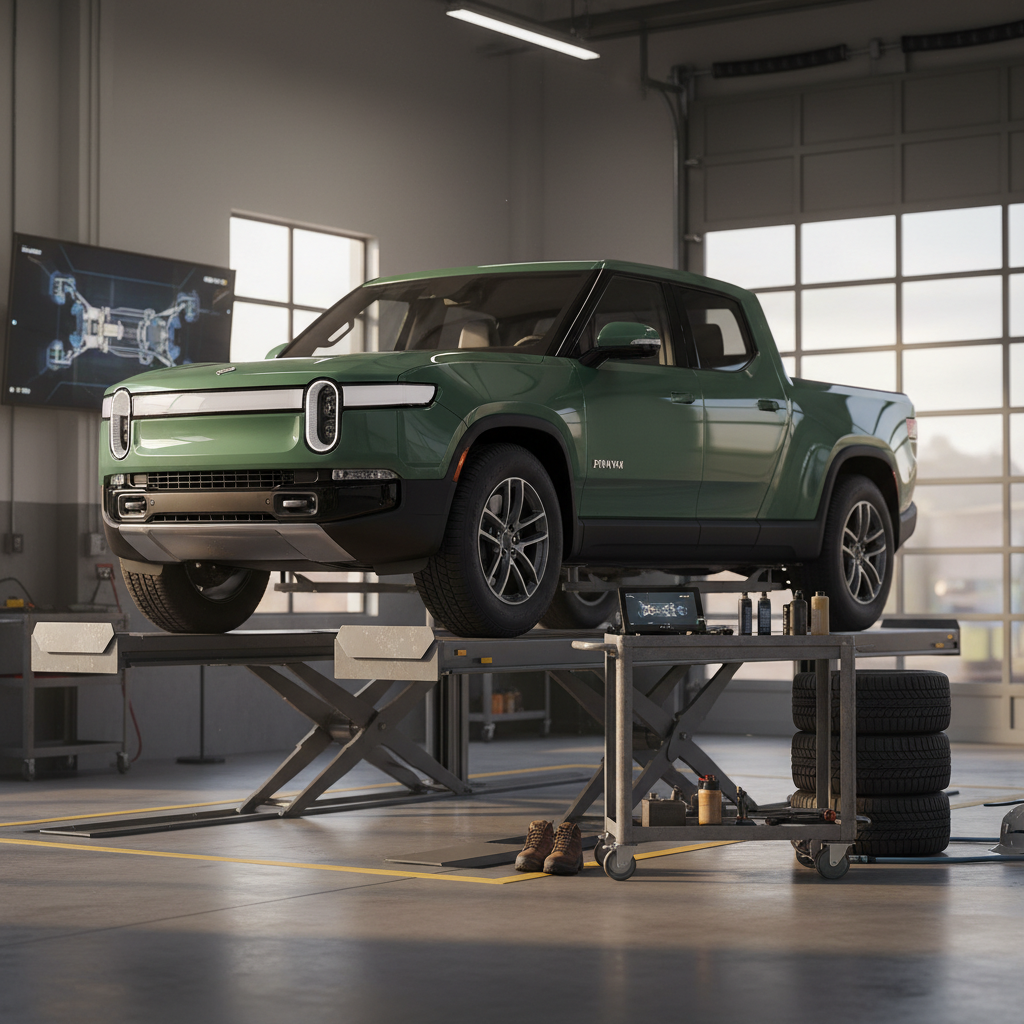
If you’re eyeing a 2024 Rivian R1T, you’re probably asking the same question every early-adopter asks: **is this thing actually reliable**, or will I be living at the service center? The 2024 model year benefits from several years of real-world feedback on earlier R1Ts, but Rivian is still a young automaker and the R1T is a complex, software-heavy electric truck. This guide breaks down what we know so far about **2024 Rivian R1T reliability**, how it compares to earlier years and other EV trucks, and what to watch for, especially if you’re considering a used R1T.
Early data, not a decades-long track record
Is the 2024 Rivian R1T reliable?
Broadly, the 2024 Rivian R1T appears **average to slightly above average** for a first-generation EV truck: solid battery and drivetrain durability so far, some recurring build-quality and software quirks, and a service network that’s good when you can get it, but still thin in many areas. Owners who understand they’re buying an early tech-forward truck tend to be happy. Shoppers expecting Toyota Tacoma-level “set it and forget it” reliability may be disappointed by the occasional trips back for fixes and software bugs.
2024 Rivian R1T reliability snapshot (early ownership)
Temper your expectations
How Rivian R1T reliability has evolved by model year
To understand the 2024 truck, it helps to see where Rivian started. Early 2022 R1Ts saw more build-quality complaints: panel alignment, trim pieces, water leaks, and initial software bugs. As production matured and more field data rolled in, Rivian iterated quickly.
2022–early 2023 R1T
- Higher odds of teething issues: misaligned panels, squeaks/rattles, early ECU and infotainment glitches.
- More service campaigns and recalls as Rivian learned from real-world use.
- Some owners saw repeated trips for the same small issues until the right parts or software arrived.
Late 2023–2024 R1T
- Refined build processes: tighter body fit and interior finish compared to early trucks.
- Many early software bugs addressed through over-the-air (OTA) updates.
- Hardware changes to components like suspension links and seals aimed at durability and noise reduction.
Good news for 2024 shoppers
Common 2024 Rivian R1T issues owners report
Because the 2024 R1T shares its basic platform with earlier trucks, many of the common complaints are familiar: they’re usually not catastrophic breakdowns, but rather **quality-of-life issues** that send you back to a service center or mobile tech. Here are the main buckets to watch.
Most common R1T reliability pain points
Not every truck will see these, but they’re patterns worth knowing
1. Infotainment & screens
Some owners report:
- Center screen freezing or rebooting.
- Glitchy Bluetooth pairing or CarPlay/phone integration via apps.
- Camera delays when shifting into reverse.
Most are fixed with software updates or a hard reset, but it can be frustrating in daily use.
2. Seals, trim & wind noise
Compared to early trucks, 2024s are better built, but you may still see:
- Wind noise around mirrors or door seals at highway speed.
- Occasional water intrusion around the frunk or tailgate seals.
- Minor trim squeaks on rough roads.
3. Charging quirks
The truck is generally solid at Level 2 and DC fast charging, but some owners have seen:
- Public fast chargers stopping mid-session.
- Charge port door not fully closing or failing to open.
- Inconsistent speeds at certain third-party stations.
Many of these are network-related rather than the truck itself, but they still affect your experience.
Other issues seen less often
Less common, but they matter, especially if you’re buying used
4. Air suspension and ride
On trucks with adaptive suspension, a small minority have reported:
- Height calibration messages.
- Slow raising/lowering in extreme cold.
- Suspension warning lights that require a software reset or part replacement.
5. HVAC & climate control
Some owners have seen uneven cabin temps or slow defrost performance in very cold weather. These are usually addressed via OTA software updates tuning the HVAC logic.
6. Key, door handle & locking behavior
Because Rivian leans on phone-as-key and electronic handles, the occasional bug shows up:
- Phone not recognized until app is relaunched.
- Handles not extending immediately.
- Truck remaining “awake,” affecting standby drain.
Tip for test drives
Battery health and range longevity on the R1T
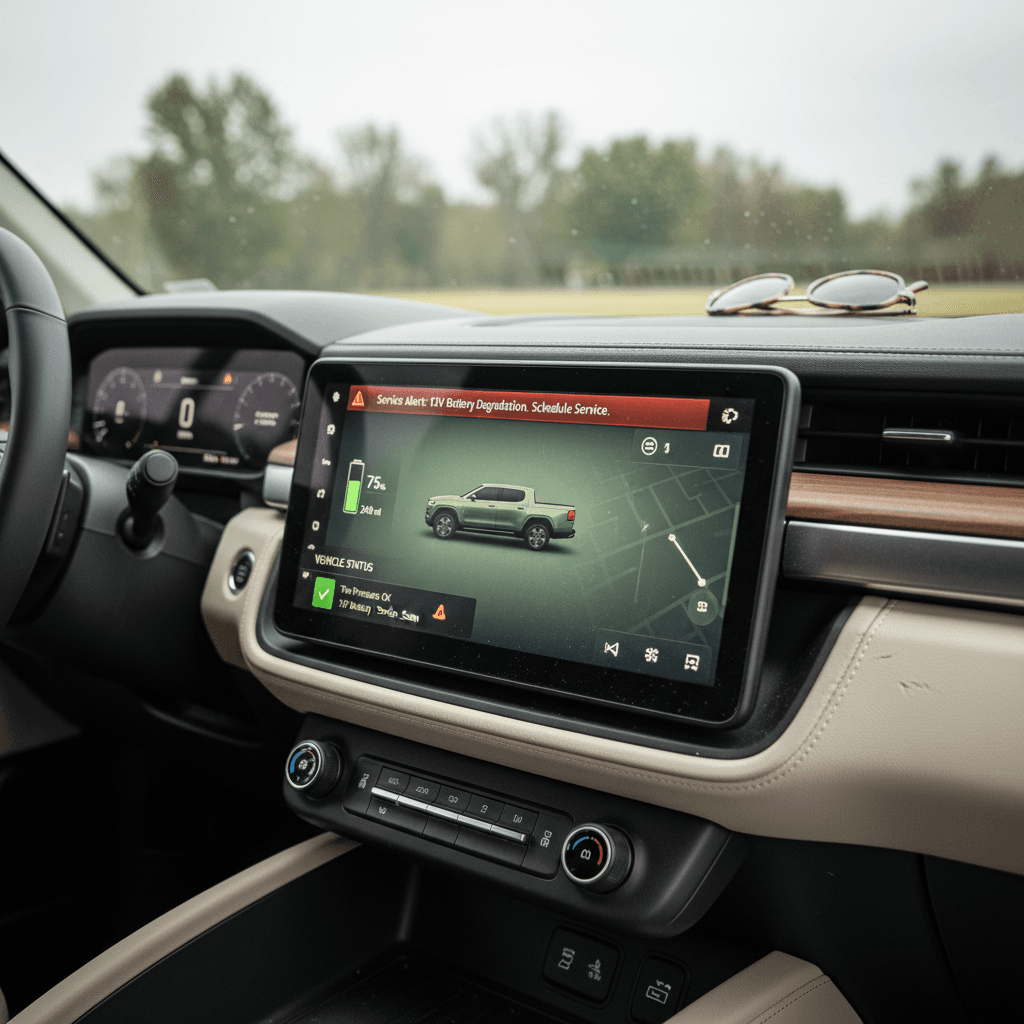
So far, **battery reliability is a strong point** for the R1T family. We don’t have 10-year data yet, but owner logs and fleet data from earlier model years indicate modest degradation when trucks are charged reasonably (home Level 2, infrequent 100% DC fast charges, and sensible charging limits). The 2024 R1T uses updated battery management software aimed at preserving pack life and optimizing cold-weather performance.
- Most owners report only small, gradual drops in displayed range after the first year, often in the single-digit percentage range.
- Thermal management is robust, but frequent heavy towing at highway speeds will stress both range and long-term battery health.
- Rivian’s pack design uses large modules and active cooling, which should help long-term durability compared to older EV architectures.
Battery warranty basics
Software updates: a reliability risk and a strength
The 2024 Rivian R1T is essentially a rolling computer. That’s good news and bad news for reliability. On the plus side, **over-the-air (OTA) updates** can fix bugs, add features, and even tweak ride and charging behavior without a shop visit. On the downside, a bad software build can introduce new quirks overnight.
How OTAs help reliability
- Fix known bugs in infotainment, driver-assistance, and HVAC logic.
- Refine battery preconditioning for faster and more consistent fast charging.
- Add safeguards and better error messaging for systems like suspension and locking.
- Roll out recall-related changes without requiring physical service in some cases.
How OTAs can hurt reliability
- Occasional releases that cause new infotainment or connectivity issues.
- Updates that change vehicle behavior (regen feel, driver-assist tuning) in ways some owners don’t like.
- Rare cases where a glitchy update requires a service visit or remote rollback.
Best practice for updates
Rivian warranty coverage and service experience
Rivian’s warranty package for the R1T is competitive with other premium EVs, and it’s a huge piece of the reliability puzzle. The challenge isn’t the coverage; it’s **getting service conveniently** if you don’t live near a service center.
Typical Rivian R1T warranty coverage (U.S.)
Always verify exact terms for the VIN you’re considering, coverage can vary by market, model year, and in-service date.
| Component | Typical Coverage | What It Means |
|---|---|---|
| Basic (bumper-to-bumper) | 4 years / 50,000 miles | Covers defects in most non-wear items, electronics, trim, many interior and body components. |
| Battery & Drive Units | Up to 8 years / 175,000 miles | Protects against premature failure of the pack and motors, subject to terms and exclusions. |
| Corrosion (perforation) | Typically 8–12 years | Covers rust-through of body panels from the inside out. |
| Roadside assistance | Usually matches basic warranty | Towing to a service center if the truck is undriveable. |
Battery and drive unit coverage is a major safety net against big-ticket early failures.
On the service side, Rivian relies on a combination of **dedicated service centers** and **mobile technicians** who can handle many repairs in your driveway or office lot. Owners near major metro areas tend to report quick response and solid communication. Rural owners can face longer waits for appointments, parts, or mobile visits.
Service access can be a deal-breaker
2024 R1T reliability vs other electric trucks
Rivian isn’t the only game in town anymore. Ford, GM, Tesla, and others are competing for the same electric truck buyer, and each comes with its own reliability trade-offs. With limited long-term data on any of them, you’re mostly comparing **patterns of issues**, service networks, and how quickly problems get fixed.
How the 2024 R1T stacks up on reliability factors
A high-level comparison of reliability-related strengths and weaknesses among major electric trucks.
| Model | Battery/Drivetrain Durability (Early Data) | Build Quality Feel | Software & OTA Behavior | Service Network Strength |
|---|---|---|---|---|
| Rivian R1T | Strong so far; few major pack or motor failures reported, robust thermal management | Premium interior feel; improved fit vs early builds, still occasional squeaks/seals | Frequent OTAs, generally positive but sometimes introduce minor bugs | Smaller network; mobile service helps, but access varies by region |
| Ford F-150 Lightning | Good drivetrain performance; some early 12V battery and module issues reported | Traditional truck feel; some owners report panel and trim inconsistencies | Software improving but less adventurous than Rivian; fewer feature-changing OTAs | Large blue-oval dealer footprint, though EV expertise varies |
| Chevy Silverado EV (early) | Limited data; shared Ultium platform has had mixed reliability reports in other models | Work-truck oriented interiors on WT trims; more upscale on higher trims | OTA capability present, but fewer headline-grabbing updates so far | GM dealer network is broad; EV-specific capability still ramping up |
| Tesla Cybertruck (early) | Very limited data; Tesla packs and motors historically strong, but first-year build quality concerns | Sharp design but inconsistent panel gaps and finish on early builds | Aggressive OTA updates, similar to other Teslas, powerful but sometimes polarizing | Dense Supercharger and service footprint; appointment backlogs in some markets |
No electric truck is bulletproof yet, each brand makes different trade-offs.
The R1T in context
What to check if you’re buying a used 2024 Rivian R1T
A 2024 R1T will usually still be under factory warranty, which takes some sting out of reliability worries. But you still want to **buy the right example**, especially as more lightly-used trucks hit the market from first owners who are upgrading, relocating, or changing vehicles.
Used 2024 Rivian R1T reliability checklist
1. Pull the service and recall history
Ask for a printout or screenshot of the truck’s service history. Look for repeated visits for the same issue, especially suspension warnings, charging faults, or water leaks, that might indicate a persistent problem.
2. Inspect for panel gaps, seals, and water marks
Walk the truck carefully. Check alignment where the doors meet the fenders and cab, inspect door and hatch seals, and look in the frunk, gear tunnel, and bed for signs of past water intrusion or staining.
3. Test the whole software stack
On your drive, test navigation, audio, cameras, driver-assist features, Bluetooth, and phone-as-key. Note any error messages or glitches and verify the truck is running the latest OTA version before delivery if possible.
4. Evaluate charging behavior
If you can, plug into a Level 2 charger and confirm the truck starts charging quickly, maintains a steady rate, and shuts down cleanly. Ask the seller about their DC fast-charging habits and typical road-trip speeds.
5. Listen for suspension and drivetrain noise
On varied pavement at different speeds, listen for clunks, rattles, or grinding, especially over bumps and during tight turns or braking. Air suspension trucks should change height smoothly without loud compressor cycling.
6. Confirm warranty transfer and coverage
Have the seller confirm that Rivian has their account information and that all warranties transfer properly. If you’re planning long-term ownership, that battery and drive-unit coverage is one of the truck’s biggest assets.
Buying through a specialist can help
How Recharged evaluates R1T battery health
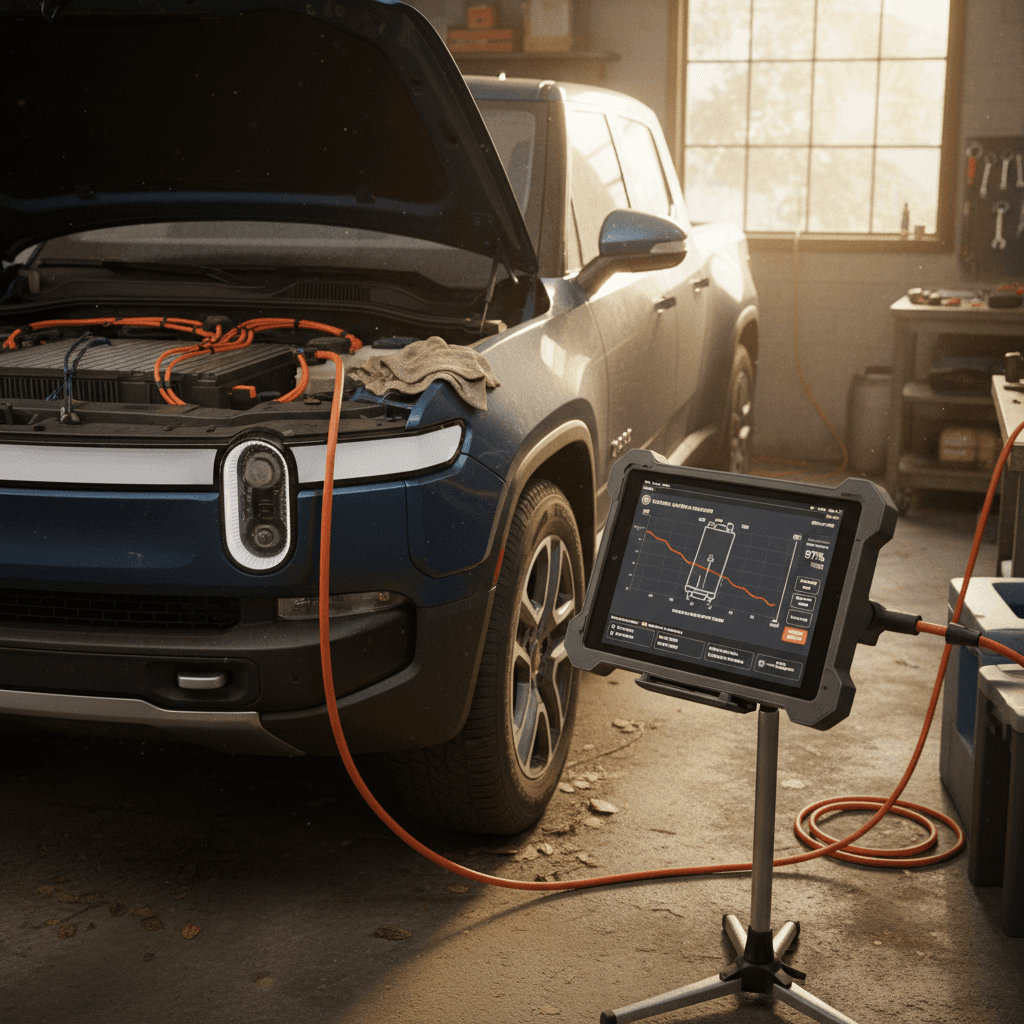
For many shoppers, the biggest long-term reliability fear is the battery, and with good reason. It’s the single most expensive component in the truck. When Recharged lists a used 2024 Rivian R1T, we dig well beyond the on-screen range estimate to understand how that pack is really doing.
Inside the Recharged Score for a Rivian R1T
Battery health is central to how we rate used EVs
Pack health & usable capacity
We look at real-world charge and discharge behavior, not just the official EPA rating, to estimate **usable capacity** today versus when new. That feeds into the Recharged Score so you know whether your R1T’s pack is aging normally or showing early signs of concern.
Range in real driving
Our analysis considers climate, wheel/tire setup, driving style, and trip patterns to give a realistic picture of **highway and mixed-use range**, not just the optimistic numbers.
Value vs. reliability risk
Because Recharged is a used EV marketplace, we benchmark each R1T against similar trucks nationwide. If a vehicle’s reliability or battery profile suggests higher risk, that’s reflected in our pricing and our recommendations.
Ready to find your next EV?
Browse VehiclesThat approach matters because two 2024 R1Ts can look identical on paper, same color, same options, similar mileage, but have very different stories. One might have lived an easy commuter life in mild weather; another might have towed heavy loads and fast-charged twice a week. Our goal is to surface those differences so you can shop with eyes wide open.
FAQ: 2024 Rivian R1T reliability questions
Frequently asked questions about 2024 R1T reliability
Bottom line: Should reliability stop you from buying an R1T?
The 2024 Rivian R1T is not the indestructible, 300,000‑mile farm truck your grandfather drove, and that’s not really the point. It’s a **high-tech electric adventure vehicle** built by a young automaker that’s still maturing. Reliability so far is a mix of strengths and trade-offs: strong battery and drivetrain performance, improving build quality, occasional software and trim annoyances, and a service network that may or may not be convenient depending on your ZIP code.
If you’re comfortable being slightly on the leading edge, can live with the occasional bug, and value quiet, instant-torque electric driving more than traditional truck simplicity, the **2024 R1T** can absolutely be a smart buy, especially as a well-vetted used truck with plenty of warranty left. If you’d rather avoid surprises, look for an R1T that’s already had its early issues sorted, ideally with documentation and a third-party assessment.
Recharged was built for exactly this moment in the EV market. When you shop for a used Rivian R1T on our platform, you’ll see a **Recharged Score Report** for every vehicle, including verified battery health, fair market pricing, and expert guidance from first click through delivery. That way, you’re not just betting on a brand-new technology, you’re buying a truck whose reliability story you actually understand.