If you drive an electric vehicle, the phrase “mobile EV charger for roadside use” usually comes up the first time you picture running out of range on a lonely highway. The good news: true “out of charge” breakdowns are rare today. The better news: when they do happen, you now have more options than just an expensive flatbed tow.
Range anxiety vs. reality
Why mobile EV chargers exist (and how big the problem really is)
When you search for a mobile EV charger for roadside use, you’re usually worried about one thing: being stranded with a low battery and no plug in sight. It happens, especially on long‑distance trips, winter drives, or when public chargers are down. Surveys in 2024–2025 still show more than half of U.S. shoppers cite charging logistics and range anxiety as key reasons they hesitate to go electric, even as modern EVs routinely deliver 250 miles or more of real‑world range.
At the same time, reliability at public charging stations has been a mixed bag. Industry data through early 2025 shows that roughly 1 in 6 visits to public chargers can end in failure, most often because equipment is down, payment doesn’t work, or every stall is occupied. That’s a recipe for drivers pressing deeper into their battery reserves than they’d like, especially in unfamiliar territory.
EV roadside charging in context
Why this still matters
What is a mobile EV charger for roadside use?
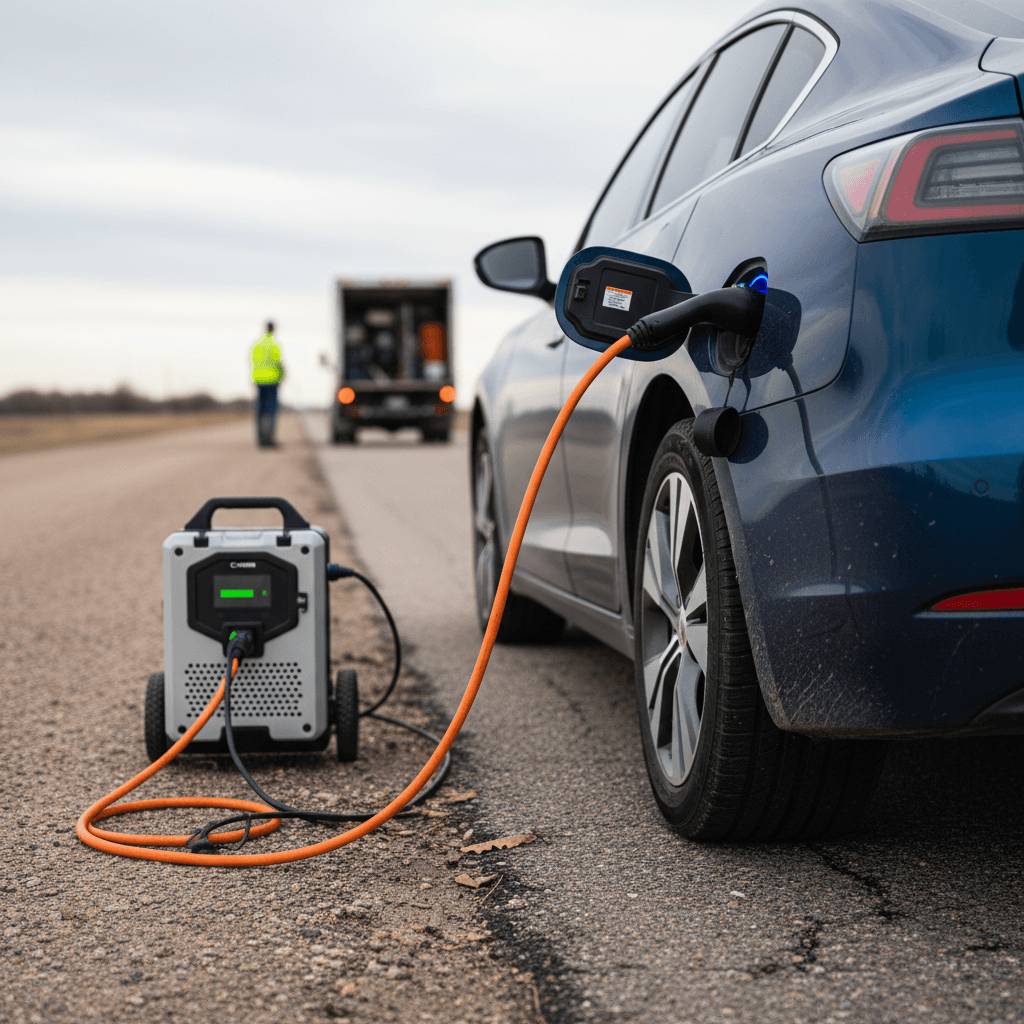
A mobile EV charger for roadside use is either a service or a piece of equipment that can bring electricity to your vehicle when you can’t get to a fixed charger. Think of it as the EV equivalent of someone showing up with a jerrycan of gasoline, only the logistics are more complex.
How roadside mobile EV charging actually works
Three pieces come together any time someone brings electrons to your stranded car.
1. Mobile power source
2. Temporary connection
3. Enough range to escape
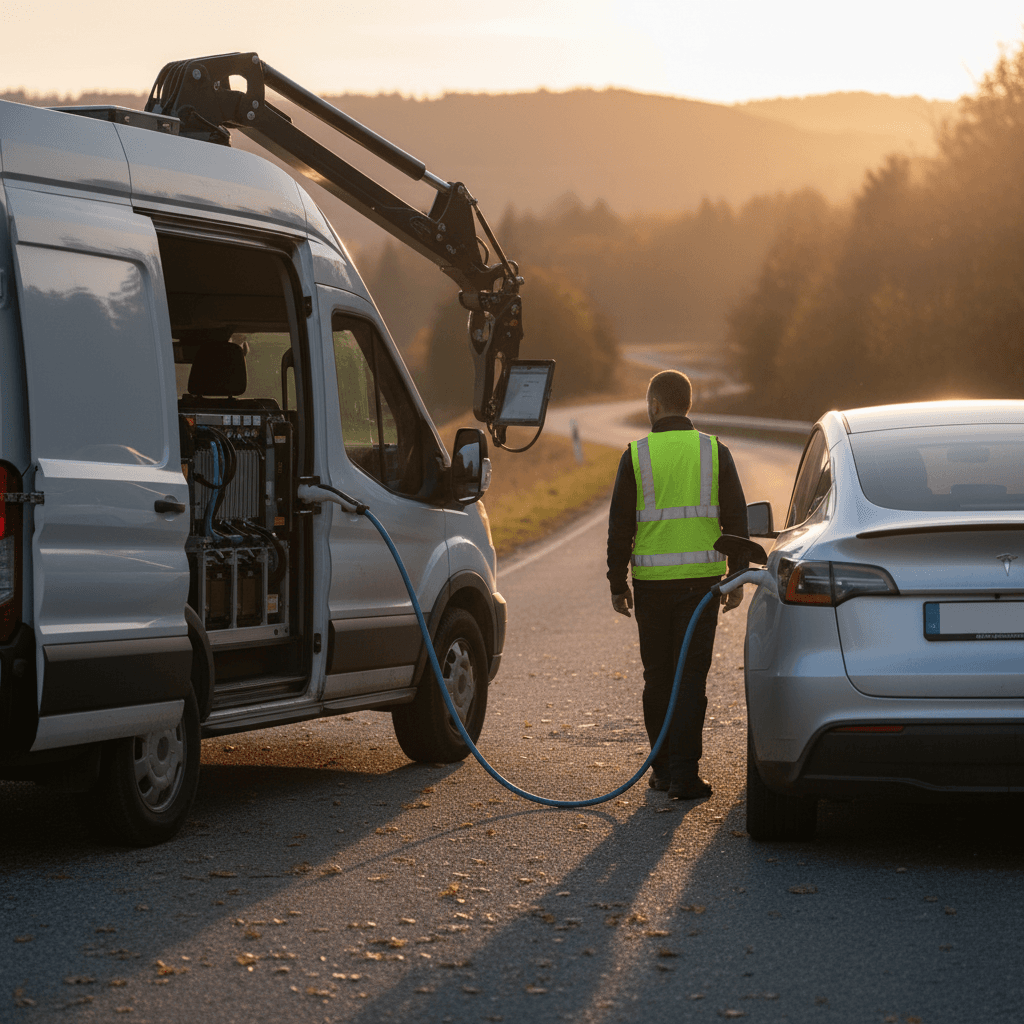
Most services today use compact DC fast chargers mounted in a van or on a small trailer. A typical roadside‑oriented unit might offer around 20 kW of DC power with CCS or NACS connectors, delivering a quick boost in 15–30 minutes rather than tying up a truck for hours.
Types of mobile EV charging solutions
When people talk about mobile EV charging, they often lump several very different solutions together. To choose the right approach, it helps to separate professional roadside services from equipment individual drivers might own.
Three main ways to get a charge when you’re stuck
From full‑service roadside help to DIY workarounds.
1. Professional mobile charging trucks
2. Portable power stations + EVSE
3. Traditional roadside towing
Think of it as a bridge, not a lifestyle
Mobile EV charger vs towing: cost, time, and convenience
If you’re stranded, you’ll care about three things: how fast help arrives, how long it takes to get moving again, and what it costs. Here’s how a mobile EV charger for roadside use compares with a conventional tow in typical U.S. scenarios.
Mobile EV charging vs. towing at a glance
Typical ranges based on U.S. roadside pricing and provider offerings. Actual costs vary by region and membership plan.
| Factor | Mobile EV charger (roadside service) | Traditional tow to charger |
|---|---|---|
| Typical base cost | $150–$200 call‑out, often including first few kWh or minutes of charging | $150–$300 within 25–50 miles; more for long‑distance or off‑hours |
| Time on scene | 15–45 minutes of charging after arrival | 10–30 minutes to load, plus drive time to charger and unload |
| Total downtime | Often under 90 minutes from arrival to departure | Can stretch to several hours, especially if the nearest charger or dealer is far |
| Wear on vehicle | Minimal; your EV drives away under its own power | Extra wear from winching and loading; risk if procedures aren’t followed perfectly |
| Range added | Roughly 15–60 miles, enough to reach a fast charger or get home | Whatever you can get at destination charger once you arrive |
| Availability | Growing, but limited to certain metro areas and interstate corridors | Widely available nationwide via traditional roadside and tow providers |
In many cases, a mobile charge is cheaper and gets you driving sooner than a long‑distance tow.
Where mobile charging really shines
Should you buy your own gear or rely on roadside service?
The phrase “mobile EV charger for roadside use” tempts some drivers to shop for a gadget they can toss in the trunk and forget about. In practice, most non‑commercial EV owners will be better off with a mix of solid planning, a good portable EVSE, and a roadside plan that covers EVs properly.
When a dedicated roadside service makes sense
- You regularly drive beyond your comfortable round‑trip range to visit family, clients, or vacation homes.
- You live in a region where mobile EV charging trucks already operate, especially along major interstates.
- Your existing auto club or OEM plan includes EV‑specific roadside benefits, such as on‑the‑spot charging or towing directly to a fast charger.
- You run a small fleet of EVs for deliveries or services and downtime quickly turns into lost revenue.
When personal equipment is enough
- You mostly drive in a metro area with dense public charging and rarely run the pack below 15–20%.
- You already own a good Level 2 home charger and a portable EVSE that can plug into common outlets when traveling.
- Your vehicle’s built‑in trip planner or app does a good job routing you past reliable chargers.
- You’re comfortable keeping a high‑capacity power bank or small inverter generator for camping, knowing it will only add a few miles per hour of charge.
Beware of overpromised “miracle” gadgets
Key features to look for in a mobile roadside EV charger
If you’re choosing a roadside plan that includes mobile EV charging, or evaluating equipment for fleet or commercial use, there are a few specifications and practical details that matter far more than brand marketing.
Essential buying and selection checklist
1. Power output and charging speed
Look for DC fast chargers in the <strong>20–50 kW</strong> range for roadside use. Lower‑power setups can work, but they’ll keep a truck tied up for longer and may only add a few miles of range per hour instead of per minute.
2. Connector types (NACS, CCS, J1772)
In North America, make sure the solution supports the connector your EV uses: <strong>NACS</strong> for Tesla and many new models, <strong>CCS</strong> for most legacy non‑Tesla EVs, and occasionally <strong>J1772</strong> for AC Level 2. Adapters can help, but every extra piece is a potential failure point.
3. Safety certifications and protections
Verify certifications (such as UL, CSA, or equivalent), <strong>ground‑fault protection</strong>, proper cable insulation, and thermal monitoring. Mobile charging happens in less controlled environments, safety margins matter.
4. Range delivered per session
Ask how many miles of range a typical roadside charge adds and over what time window. A practical target is <strong>20–40 miles in 15–30 minutes</strong>, which is enough to reach a nearby fast charger at highway speeds.
5. Operating footprint and access
Some DC trailers and trucks need room to maneuver and park. On tight shoulders or in busy urban corridors, a more compact van‑based setup may be the only option that can reach you safely.
6. Transparent pricing and coverage
Before you sign up, understand <strong>what’s included</strong>: number of annual service calls, per‑mile surcharges, after‑hours fees, and whether they’ll tow you if a mobile charge isn’t possible.
Mobile EV charging will never replace home or public charging, but it closes an important psychological gap. Knowing you have a safety net makes it easier for some buyers to let go of the gas pump.
Planning ahead so you (hopefully) never need roadside charging
The most effective way to use a mobile EV charger for roadside use is simple: try not to need it. Good tools, realistic expectations, and a bit of discipline go a long way toward making roadside emergencies vanishingly rare.
Practical strategies to avoid running out of charge
A little planning beats a lot of waiting on the shoulder.
Use trip planning and SOC buffers
Adjust for weather and load
Check chargers before you arrive
Keep your apps and memberships ready
Used EV owners: know your real range
FAQ: Mobile EV chargers for roadside use
Frequently asked questions
Mobile EV chargers for roadside use are a small but growing part of the charging ecosystem. You may never need one, but knowing how they work, what they cost, and where their limitations lie can make EV ownership feel a lot less stressful. The smartest play is still to buy an EV with healthy range for your lifestyle, charge predictably at home or work when you can, and keep a roadside plan in your back pocket as a true safety net. When you’re ready to shop for a used EV that fits that playbook, Recharged can help you compare battery health, real‑world range, and total ownership costs across vehicles, all before you ever sign on the dotted line.