If you’ve ever watched your range tick down with no charger in sight, a mobile electric car charging service sounds like a dream: tap an app, and a charging van or portable unit comes to you. In 2025, these services are real, growing fast, and useful in the right situations, but they’re not a replacement for having a smart charging plan of your own.
Mobile charging is a fast‑growing niche
What is a mobile electric car charging service?
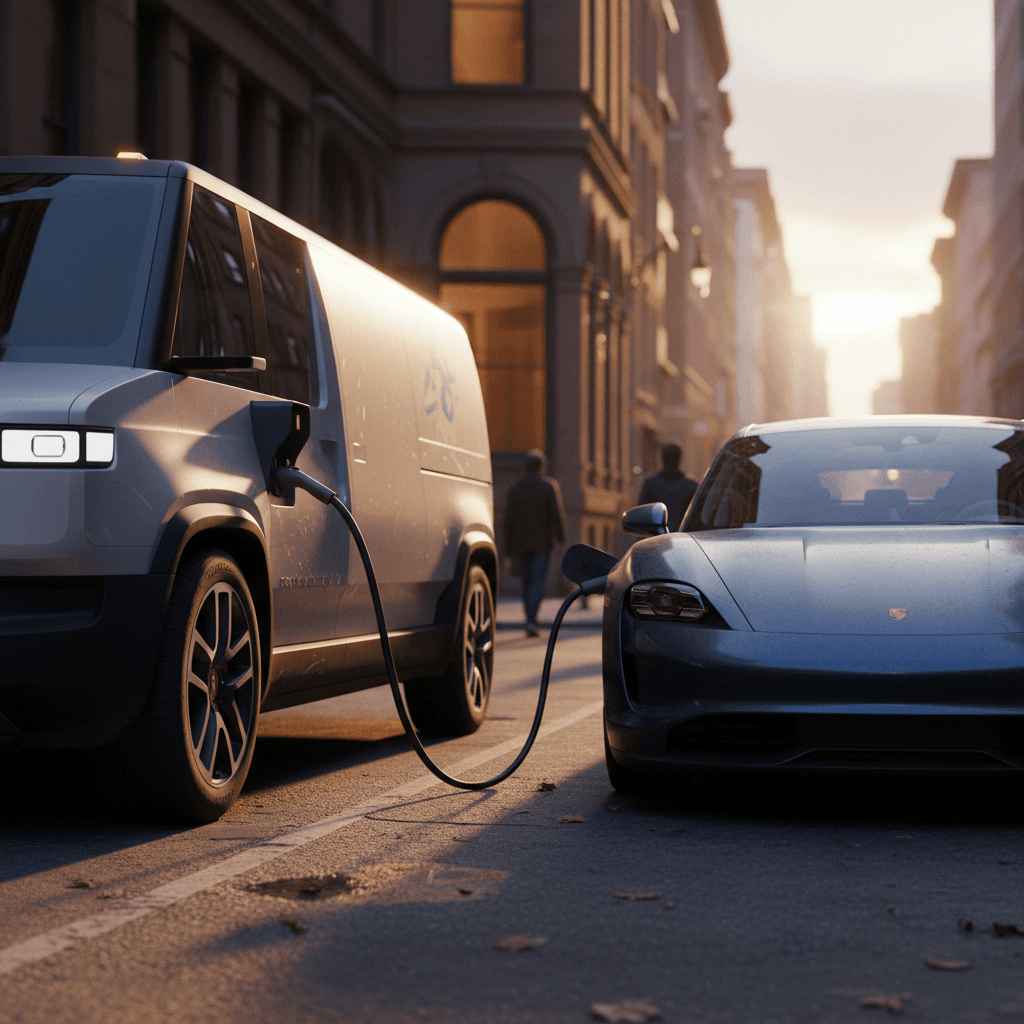
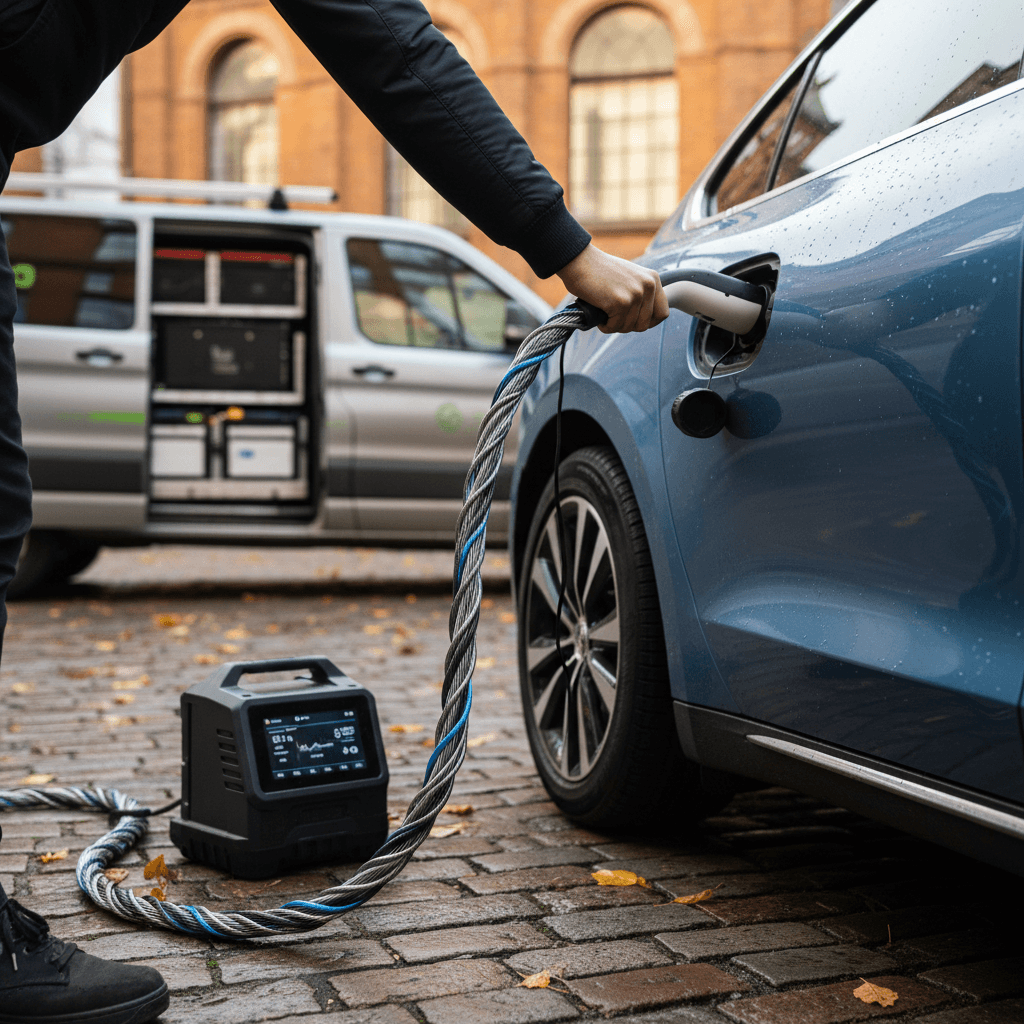
A mobile electric car charging service sends energy to your EV instead of you driving to a fixed charger. Think of it as fuel delivery for the EV era. A technician or driver shows up with a battery‑equipped van, trailer, or portable DC fast charger, plugs into your vehicle, and adds enough range to get you moving again.
- Most services operate via app or phone: you share your location, connector type (CCS, NACS, CHAdeMO), and state of charge.
- A mobile unit, often capable of DC fast charging, drives to you and parks nearby.
- The operator connects to your charge port and initiates a session, usually adding 20–80 miles of range in 15–45 minutes.
- You pay per kWh, per session, per minute, or as part of a roadside‑assistance plan.
This is different from a portable EV charger you own, a Level 1 or Level 2 unit you keep in your trunk and plug into a wall outlet. Mobile services are typically commercial‑grade, higher‑power units designed to serve many drivers per day, often run by startups, charging networks, or roadside‑assistance companies.
Mobile EV charging and services by the numbers
How mobile EV charging services actually work
While business models vary, most mobile EV charging services follow a similar playbook. Understanding the flow makes it easier to decide if it works for your situation.
Typical mobile charging service flow
From low battery warning to back on the road
1. Request via app or phone
You request help through an app, website, or roadside‑assistance hotline. You’ll usually provide:
- Your exact location (GPS or address)
- Vehicle make/model
- Connector type (CCS, NACS, J1772, CHAdeMO)
- Current state of charge
2. Van or trailer dispatched
A van, pickup, or small truck equipped with a battery pack or generator‑powered DC fast charger heads your way.
Some services pre‑position units near dense EV areas or popular routes to shorten response times.
3. Quick charge on the spot
The operator plugs in and starts a charge session, usually delivering DC power directly to your battery.
In 15–45 minutes, you may gain 20–80 miles of range, typically enough to reach a permanent charger or get home.
Pro tip: Tell them your target range, not just SOC
When a mobile charging service makes sense, and when it doesn’t
Mobile charging isn’t meant to replace home or public charging. It shines in specific scenarios and is overkill in others. Here’s how to think about it as a tool in your EV toolbox.
Great use cases for mobile EV charging
- Stranded with low range: You misjudge a trip, a charger is down, or traffic eats into your buffer.
- No home charging: You live in an apartment or condo and rely entirely on public charging, mobile service can be a backup during outages.
- Corporate or fleet events: A business uses a mobile unit to support electric shuttles, test drives, or delivery vans at temporary locations.
- Site testing: Developers use mobile chargers to test demand before installing permanent infrastructure.
Situations where it’s rarely worth it
- Everyday commuting: Using mobile service as your primary charging solution will be expensive and inconvenient.
- Areas with strong public networks: If you’re surrounded by reliable DC fast chargers, driving a few extra miles is usually cheaper.
- Planned road trips: A bit of route planning with PlugShare, ChargePoint, or your in‑car nav beats paying premium rescue pricing.
- Minor top‑ups: If you’re at 60% and just “want more,” find a normal charger instead.
Don’t treat mobile charging as your fuel station
What does mobile electric car charging cost?
Pricing for mobile EV charging is still evolving, but in most North American markets it’s closer to a tow truck than a public charger. You’re paying for both electricity and a vehicle plus driver to come find you.
Typical mobile EV charging service pricing (U.S.)
Ballpark figures as of late 2025. Actual prices vary by provider, city, and whether service is bundled with roadside assistance.
| Pricing model | What it looks like | Typical range* |
|---|---|---|
| Flat service fee | One fee covers dispatch plus a set energy amount. | $75–$150 per visit |
| Per kWh + trip fee | Delivery fee plus an energy rate similar to or above DC fast charging. | $25–$60 trip fee + $0.35–$0.70/kWh |
| Per minute | You pay based on how long the charger is connected, often with a minimum. | $0.50–$1.50 per minute |
| Roadside‑assist add‑on | Mobile charging included or discounted with premium roadside plans. | Incremental $0–$75 depending on plan |
Always check for minimum fees and service radius limits before you confirm a booking.
Watch out for idle and after‑hours fees
Where are mobile EV charging services available?
Most mobile electric car charging service providers focus on dense EV regions, major U.S. metros, tech hubs, and high‑traffic corridors, rather than nationwide blanket coverage. Think Los Angeles, the Bay Area, Dallas–Fort Worth, Atlanta, parts of Florida, the Mid‑Atlantic, and select Canadian and European cities.
Typical providers offering mobile charging
Who might power your on‑demand charge?
Roadside assistance & insurers
Some AAA regions and insurers now bundle mobile EV charging into premium roadside plans, right alongside towing and lockout service.
You may already have coverage without realizing it, check your policy or app.
Charging networks & startups
Several EV charging networks and independent startups operate dedicated mobile units in select cities.
They often integrate with popular charging apps so you can request a visit from your phone.
Fleets, dealers & property owners
Corporate fleets, apartment complexes, and event venues sometimes contract mobile charging as an internal service.
In those cases, you’ll access it through the site’s management rather than a public app.
Coverage is expanding, but uneven
Mobile charging vs home, public, and portable chargers
To decide where a mobile electric car charging service fits into your life, it helps to compare it with the other charging options you’ll actually use week in and week out.
How mobile EV charging compares to other options
High‑level comparison of core charging options for U.S. EV drivers.
| Option | Typical power | Cost to you | Best for | Key drawback |
|---|---|---|---|---|
| Home Level 2 | 7–11 kW | Low: often $0.10–$0.25/kWh depending on utility rates. | Daily charging, predictable routines. | Requires 240V circuit and often a parking space you control. |
| Public DC fast charger | 50–350 kW | Medium–high: $0.30–$0.70+/kWh. | Road trips, quick turnarounds, apartment dwellers. | Can be busy, occasionally offline, and sometimes more expensive than gas on a per‑mile basis. |
| Portable charger you own | 1.4–7 kW | Low equipment cost; electricity from wherever you plug in. | Back‑up in friends’ driveways, hotels, or workplaces. | You still need a compatible outlet; slow for big top‑ups. |
| Mobile charging service | Usually 20–80 kW | High: service + delivery premium on top of energy. | Emergencies, infrastructure gaps, fleet or event support. | Limited coverage, higher cost, and wait times. |
Mobile service is a great backstop, but rarely the cheapest or most convenient primary option.
Use mobile charging as part of a layered plan
Key factors to check before you book a mobile service
If you do need to call a mobile electric car charging service, a few quick checks can save you frustration, money, and time at the side of the road.
Pre‑booking checklist for mobile charging
1. Confirm your connector type
Know whether your car uses CCS, NACS (Tesla’s connector), J1772, or CHAdeMO. Many newer non‑Tesla EVs are shifting to NACS after 2025, but there’s still a mix on the road. The wrong connector means a wasted trip.
2. Verify coverage and ETA
Use the provider’s app or hotline to confirm they actually serve your exact location and ask for a realistic ETA. In some areas, it might be faster to limp to a nearby DC fast charger instead.
3. Ask about minimums and surcharges
Before you tap “confirm,” ask about minimum charge amounts, after‑hours fees, tolls, and cancellation penalties. Take a screenshot of the quote page for your records.
4. Request a specific range target
Tell the operator how many miles or kilometers you need, not just your current state of charge. That helps them size the session and keeps the bill from creeping up unnecessarily.
5. Park in a reachable, safe spot
If your car still moves, try to park with room for a van or trailer to pull alongside the charge port. Avoid tight garages with low clearance or spots blocked by other vehicles.
6. Line up your next charger
Use PlugShare or your in‑car nav to choose the DC fast charger or Level 2 station you’ll visit after the mobile top‑up, so you’re not figuring it out with 12 miles of range left.
The future of mobile EV charging services
Mobile EV charging is moving from clever pilot projects to a serious slice of the charging‑as‑a‑service market. As EV adoption grows and infrastructure struggles to keep pace, having energy that can move where it’s needed offers obvious advantages.
Where mobile electric car charging is headed
Trends shaping on‑demand EV power through the 2030s
Higher‑power, cleaner units
Next‑gen mobile chargers are adding higher DC power levels while using cleaner energy sources, battery packs charged from renewables or hybrid generator setups, to reduce noise and emissions.
Tighter app integration
Most public chargers are already app‑connected. Mobile services are layering on predictive dispatch, real‑time queue info, and integration with route‑planning tools so you can request help without leaving your nav screen.
Fleet‑focused offerings
Delivery, rideshare, and rental fleets increasingly use mobile charging to keep vehicles in service without building out permanent infrastructure at every depot or parking lot.
Mobile EV charging won’t replace fixed infrastructure, but it will fill the gaps, especially for drivers and fleets that can’t afford downtime or don’t control their parking.
Think about resale and long‑term ownership
FAQ: Mobile electric car charging services
Frequently asked questions about mobile EV charging
Bringing it all together
Mobile electric car charging services are a clever answer to a very real pain point: sometimes the charger you planned on isn’t there when you need it. As EV adoption outpaces fixed infrastructure in many regions, having energy that can come to you adds a valuable safety net.
That said, the smartest move, especially if you’re considering a used EV, is to build a plan that doesn’t depend on expensive emergency solutions. Map out your home, work, and public charging options, keep a small range buffer on longer trips, and treat mobile charging the way you treat a tow truck: good to know it exists, but hopefully you’ll rarely call.
How Recharged fits into your charging plan
Ready to find your next EV?
Browse Vehicles