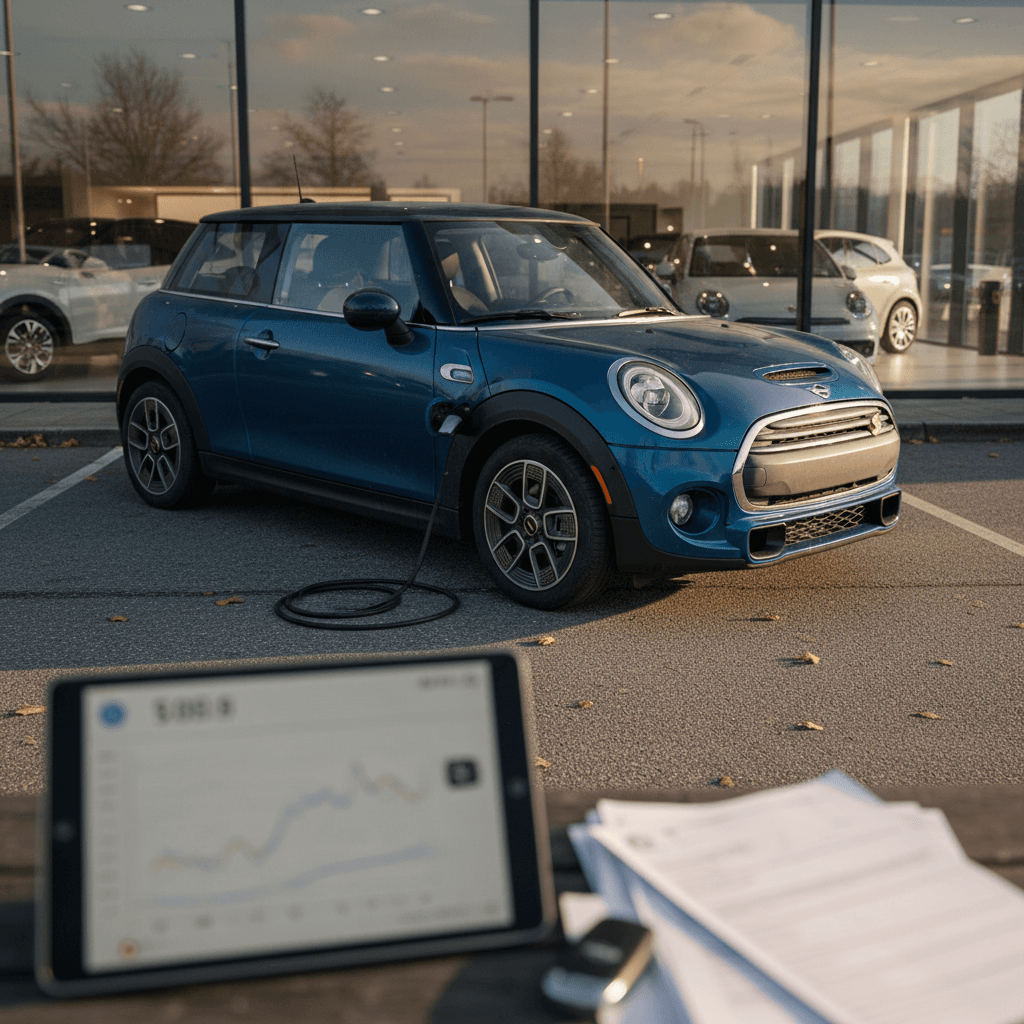
If you’re driving a Mini Cooper SE and thinking about upgrading in 2026, you’re probably wondering what your quirky electric hatchback is really worth. The Mini Cooper SE trade in value in 2026 depends on more than just age and mileage, battery health, incentives, and the arrival of the new‑generation Mini Electric all play a role.
Scope of this guide
Mini Cooper SE trade-in value in 2026: big picture
The Mini Cooper SE has always been a niche EV: small battery, big personality. That combination means its trade-in story in 2026 looks different from higher‑range rivals. New, the car leaned heavily on tax credits and discounts; used, it’s now appealing as a fun city EV priced closer to a compact sedan than a luxury car.
Mini Cooper SE value snapshot for 2026
Because new‑car pricing on the Mini SE was already aggressive after federal and local credits, used values in 2026 are more about finding the right buyer than squeezing every last dollar out of book value. Well‑kept, low‑mileage examples with clean battery health still bring strong money relative to their real‑world usefulness.
Range is the big value limiter
Which Mini Cooper SE years hold value best in 2026?
How different Mini SE model years stack up in 2026
Newer years, fresher warranty, and better equipment help your trade-in bottom line.
2023–2024 models
Best‑case trade-in candidates in 2026.
- Only 2–3 years old.
- Plenty of battery warranty left.
- Often lower mileage and fresher interiors.
These are most attractive to buyers stepping into their first EV.
2021–2022 models
The value sweet spot.
- Old enough to be significantly cheaper than new.
- Still inside the 8‑year battery warranty window.
- Mileage often in the 25–50k range.
Condition and options matter more here.
2020 launch year
These are the oldest Mini SEs on the road.
- Approaching the back half of battery warranty.
- Higher average mileage.
- More wear on seats, trim, and wheels.
A clean 2020 car can still be an appealing bargain city EV.
In 2026, buyers and appraisers don’t necessarily care about small year‑to‑year option tweaks. They care about how close your Mini SE feels to "new", fewer owners, clean history, and a battery that still delivers confidence on a test drive.
Typical Mini Cooper SE trade-in ranges for 2026
Exact numbers will vary by region, mileage, and condition, but by spring 2026 many trade offers for a normal‑mileage Mini Cooper SE fall into broad bands. Think of these as directional ranges for a clean car with no major accident history and typical options:
Approximate Mini Cooper SE trade-in value bands for 2026 (U.S.)
Illustrative ranges assuming clean title, no major accidents, average equipment, and typical mileage for age. Real offers will depend on your specific car and local market conditions.
| Model year | Typical 2026 mileage | Rough trade-in band | Notes |
|---|---|---|---|
| 2024 | 10,000–25,000 miles | $24,000–$28,000 | Very fresh inventory; close to late‑model used retail. |
| 2023 | 15,000–35,000 miles | $20,000–$24,000 | Still feels nearly new; strongest demand in 2026. |
| 2022 | 25,000–45,000 miles | $17,000–$21,000 | Core of the used‑EV market; condition and color matter. |
| 2021 | 30,000–55,000 miles | $15,000–$19,000 | Slightly older tech feel; solid commuter/second‑car role. |
| 2020 | 35,000–65,000 miles | $13,000–$17,000 | Oldest cars; good examples still attractive at the right price. |
These are not formal appraisals but ballpark figures to help you sense‑check offers in 2026.
Why these are ranges, not promises
If you see a 2026 trade‑in quote that’s far outside these guideposts, pause and dig into the assumptions. Is the buyer penalizing you for a branded title, open recall, or an accident on the vehicle history report? Or are they simply low‑balling because they don’t specialize in used EVs?
7 factors that move your Mini Cooper SE trade-in up or down
- Mileage – The Mini SE is often a second car, so low miles are common. Being under ~10,000 miles per year generally helps; much higher than that pushes offers down.
- Battery health – A pack that still delivers its expected range (and proves it on a test drive or diagnostic) supports top‑of‑market offers; noticeable degradation does the opposite.
- Remaining battery warranty – Mini’s high‑voltage battery coverage (commonly 8 years / 100,000 miles) reassures the next owner. A 2020 car in 2026 still has warranty time left, which helps.
- Accident and title history – Clean, unbranded titles and no major collisions are worth real money. Structural damage or airbag deployment can slash offers even if the car looks fine.
- Trim and options – Iconic and well‑equipped cars with popular colors, driver‑assist packages, and nice wheels are easier to sell, so they often get stronger trade quotes.
- Cosmetic condition – Curb‑rashed wheels, interior scuffs, and worn tires make a car feel "used up." Fresh rubber and a clean interior make your Mini feel cared for.
- Local used‑EV demand – Urban, EV‑friendly markets often value a short‑range city EV like the Mini SE more than rural areas where long‑distance driving is common.
Think like the next buyer
How battery health and warranty change your 2026 value
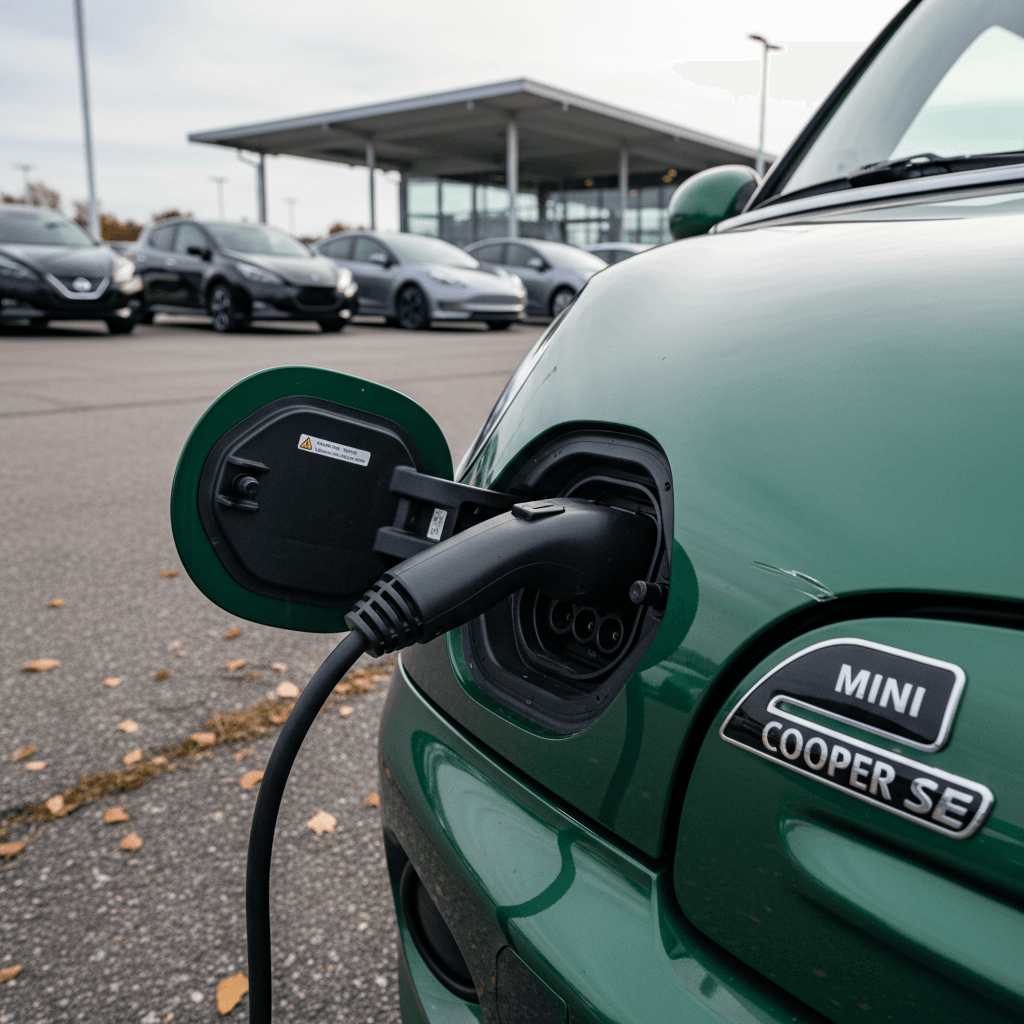
With any used EV, the battery is the big-ticket item. The Mini Cooper SE’s pack is relatively small, but it’s backed by a high‑voltage battery warranty that commonly runs 8 years or 100,000 miles against major defects or excessive capacity loss. That means even early 2020 cars still have coverage remaining in 2026, which props up their value.
What appraisers look for
- No battery-related warning lights or reduced‑power messages.
- Charging behavior that matches expectations at home and DC fast charging.
- Real‑world range that lines up with Mini’s ratings and online owner reports.
- Consistent range estimates over several drives, not huge swings.
Why a formal health report helps
Because range is modest to begin with, buyers want reassurance your pack hasn’t degraded unusually. A third‑party battery health report, like the Recharged Score diagnostic you get on every car sold through Recharged, can document usable capacity instead of relying on guesswork or a quick test drive.
Use your warranty window
How tax credits and new Minis shape 2026 prices
The Mini Cooper SE has lived through one of the strangest pricing eras in modern car history: pandemic shortages, sky‑high used values, and then a normalization as new‑car supply came back. On top of that, federal and state EV tax credits and rebates have shifted both new and used pricing.
Two big 2026 price pressures on your Mini SE
Even a perfectly maintained car lives in a market shaped by incentives and new tech.
Incentives compress used values
Many new Mini Cooper SE buyers effectively paid several thousand dollars less than sticker price after federal and local incentives. In 2026, buyers and dealers know that, so trade‑in values reflect the "effective" original price, not the window sticker from the day you bought it.
New 2025+ Mini Electric
The new‑generation Mini Cooper E and SE bring more range and newer tech. That makes your older Mini SE feel dated on paper, even if it still drives great. As these new models filter into the used market, the previous generation has to be priced attractively to compete.
Don’t anchor on your original MSRP
Step-by-step: how to maximize your Mini SE trade-in
Pre‑trade checklist for Mini Cooper SE owners
1. Gather your paperwork
Have your title or payoff info, maintenance records, and charging equipment receipts ready. A well‑documented history makes appraisers more comfortable offering top‑of‑range numbers.
2. Make the car showroom clean
Get a thorough wash, vacuum, and wipe‑down. Consider a professional detail if the interior or wheels are tired. Fix easy wins like missing floor mats or burned‑out bulbs.
3. Address obvious mechanical issues
If there’s a dash light on, a bad 12‑volt battery, or worn‑out tires, your offer will suffer. Replacing consumables can cost less than the value you’d lose on appraisal.
4. Charge to a realistic level
Arrive with the battery at a <strong>normal state of charge</strong>, not 5%, not 100%. Around 50–80% lets the appraiser verify range and charging behavior without making a special trip.
5. Bring all keys and charging gear
Missing keys or the factory Level 1 EVSE can knock a few hundred dollars off your offer. If you upgraded to a nicer portable or wall charger, decide whether to include it in the deal.
6. Get at least two offers
Compare a franchise dealer’s trade‑in, an instant‑offer style buyer, and an EV‑focused marketplace like <strong>Recharged</strong>. You’ll quickly see who really values your Mini SE and who doesn’t.
Use online values as a starting point, not the final word
Trade-in vs. selling your Mini Cooper SE
Once you know roughly what your Mini Cooper SE is worth in 2026, the next decision is how to sell it. For some owners, a simple trade‑in at the Mini dealer makes sense. Others will get more by selling to a specialized EV retailer or via a consignment‑style marketplace.
Trading in your Mini SE
- Pros: Fast, minimal hassle, tax benefit in many states (you pay sales tax only on the price difference to your next car).
- Cons: Traditional dealers may undervalue short‑range EVs, especially if they don’t retail many of them.
- Best if: You’re buying another car immediately and value convenience over squeezing out the last dollar.
Selling to an EV‑focused buyer
- Pros: Buyers who understand EVs tend to value battery health, service history, and equipment correctly.
- Cons: Can take a bit more time if the car is marketed to the right audience.
- Best if: You want a transparent, data‑backed offer and are open to online buyers, not just your local dealer.
Where Recharged fits in
How Recharged values and buys Mini Cooper SE models
Because Recharged specializes in used electric vehicles, the Mini Cooper SE isn’t just "another used hatchback" in our system, it’s a known quantity with predictable patterns. When we evaluate a 2020–2024 Mini SE in 2026, we look beyond a simple book number.
What goes into a Recharged offer on your Mini SE
A transparent, EV‑specific view of your car, not a one‑size‑fits‑all trade-in tool.
Battery‑first appraisal
We run a Recharged Score diagnostic to quantify usable battery capacity and charging health. That lets us value cars with strong packs more confidently than buyers who are guessing from a short test drive.
Fair‑market pricing
Our pricing tools pull in real‑world Mini SE transaction data, auction results, and active listings across the country. The idea is simple: your offer should line up with what similar cars actually sell for, adjusted for your car’s specifics.
Flexible ways to sell
You can sell your Mini SE outright, trade into another EV on Recharged, or use a consignment‑style listing where our experts handle marketing, buyer questions, and paperwork while you keep more of the sale price.
Ready to find your next EV?
Browse VehiclesIf you’re not sure whether to trade now or wait, you can even get an offer from Recharged simply as a data point. That number, plus your local dealer quotes, will give you a realistic sense of where your Mini Cooper SE sits in the 2026 market.
Mini Cooper SE trade-in value 2026: FAQ
Frequently asked questions about Mini Cooper SE trade-in value in 2026
The Mini Cooper SE will never be the resale‑value champ of the EV world, but in 2026 it can be a smart trade‑in or sale if you approach the process with clear eyes. Understand where your car fits in the market, document its battery health and maintenance, and compare offers from both traditional dealers and EV‑focused buyers. If you’d like a transparent, data‑driven number, plus the option to trade into another electric vehicle, Recharged is built to make that next step simple, whether your Mini SE has been your daily commuter, your city runabout, or your favorite back‑road toy.