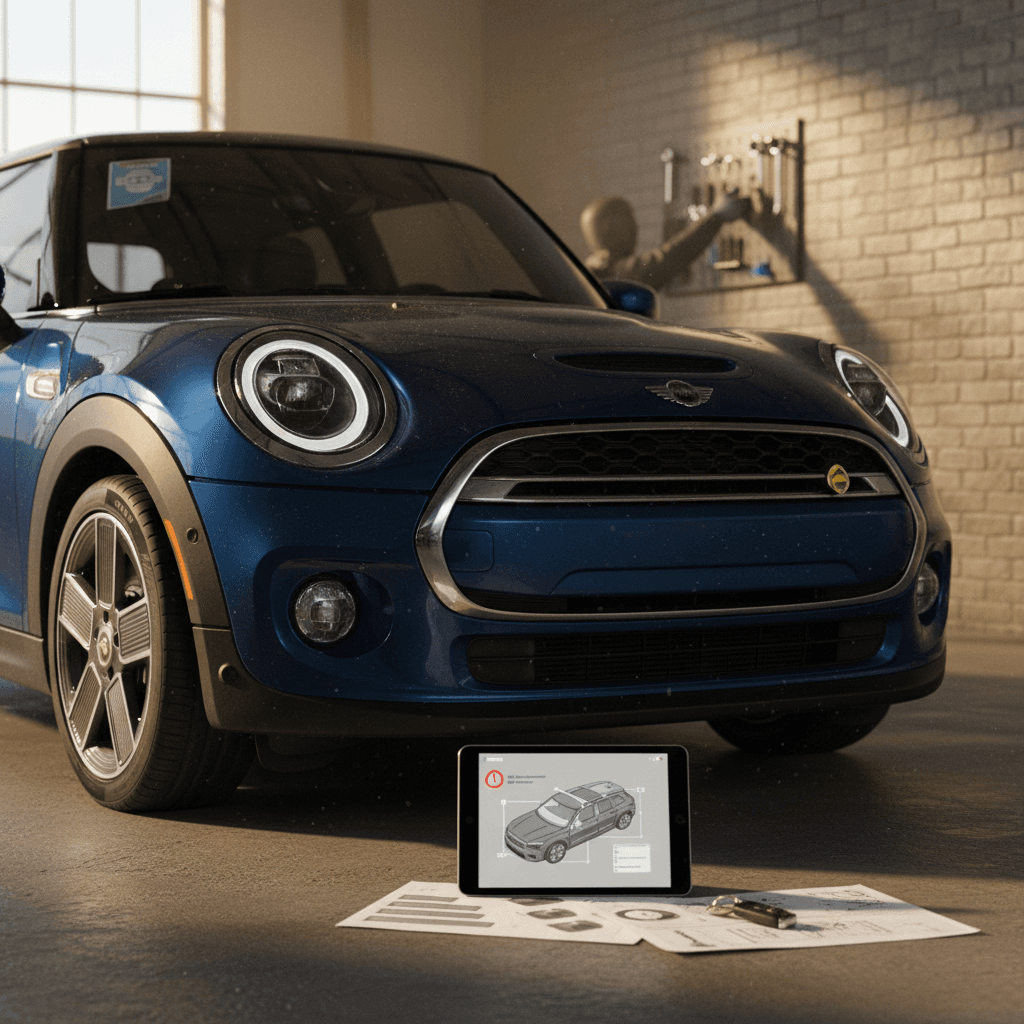
If you’re looking for a clear Mini Cooper Electric recalls list, you’re probably trying to answer two questions: “Is my Mini Cooper SE safe?” and “Should I worry about battery fire recalls when buying used?” This guide walks through the major recall campaigns for the Mini Cooper Electric (often badged as the Mini Cooper SE), what years are affected, and how to quickly check any car by VIN, especially important if you’re shopping used.
Quick note on naming
Mini Cooper Electric recalls at a glance
High‑level picture of Mini Cooper SE recalls
The Mini Cooper SE hasn’t had dozens of separate recall campaigns, but the ones it does have are concentrated around the high‑voltage battery pack and potential fire risk or sudden shutdown. That makes them important to understand, especially if you’re relying on a used Mini EV as a daily driver.
Major Mini Cooper SE recall campaigns
Below is a plain‑English tour of the major Mini Cooper Electric recalls that U.S. shoppers and owners should care about. Exact NHTSA campaign numbers change by market, but the themes are consistent: battery pack integrity, moisture intrusion, and software updates to detect problems early.
Battery fire–risk recalls on Mini Cooper Electric
Key Mini Cooper SE battery‑related recalls
These are the headline recalls that show up when you search Mini Cooper Electric safety issues in the U.S. and Europe.
| Recall focus | Approx. model years | Issue summary | Typical fix |
|---|---|---|---|
| High‑voltage battery short‑circuit / fire risk | 2020–2024 | Manufacturing defects in the high‑voltage battery can lead to short circuits, overheating, and in rare cases a thermal event, even when parked. | Dealer installs updated software that monitors the battery for isolation faults and can automatically discharge the pack below ~30% state of charge; further repairs if a fault is detected. |
| Moisture intrusion in battery housing | 2020–2022 (subset) | Leaking battery housing can allow water in, potentially causing insulation faults, vehicle stalling, or, after long inactivity, battery overheating. | Dealers inspect the high‑voltage battery for water ingress and isolation faults; if found, the pack or modules are replaced free of charge. |
Always confirm details for your specific VIN on the official NHTSA site or with a Mini dealer.
Why these recalls matter
For the main fire‑risk recall, Mini’s remedy is surprisingly hands‑off: a software update. It doesn’t magically fix a bad battery, but it adds diagnostics that constantly watch for insulation faults. If the car detects a dangerous pattern, it can automatically discharge the pack to a safer state of charge and tell you to see a dealer. From there, a technician decides whether the battery needs repair or replacement under the recall.
Other notable Mini Cooper SE recalls
Outside the headline battery campaigns, the Mini Cooper Electric has had a small number of more routine recalls, things like control‑unit software, labeling, or hardware shared with gas Minis. These are still safety‑related, but they’re closer to what you see on any modern car and don’t fundamentally change the risk profile of the vehicle.
- Airbag or restraint‑system software updates that affect both gas and electric Minis.
- Charging‑system or high‑voltage control‑unit software updates to prevent unexpected shutdowns.
- Labeling or compliance recalls (for example, incorrect tire‑pressure stickers or documentation).
How many recalls does the Mini Cooper SE have?
How to check Mini Electric recalls by VIN
Lists like this are a helpful starting point, but the only way to know exactly which recalls apply to your Mini Cooper Electric is to run the car’s 17‑digit VIN through official databases and then confirm with a dealer.
Step‑by‑step: Checking Mini Cooper SE recalls
1. Find your Mini’s full VIN
Your VIN appears on the driver’s side dashboard at the base of the windshield, on the driver’s door jamb label, and on your registration or insurance documents. You’ll need all 17 characters with no typos.
2. Search the NHTSA recall lookup
Go to the official government recall lookup tool and enter your VIN. It will show any open safety recalls that have not yet been completed on that specific vehicle.
3. Check Mini USA’s recall page
Mini (via BMW) maintains its own VIN recall search for U.S. vehicles. Running your VIN there can surface campaigns that are completed, region‑specific, or brand‑initiated before they show everywhere else.
4. Call a Mini service advisor
With the VIN in hand, call a Mini dealer’s service department and ask them to read back all recall and service campaigns attached to that car, and which ones show as completed in the system.
5. Ask for printed service history
If you already own the Mini, or are buying from a cooperative seller, ask the dealer to print the service history that specifies when recall work was performed. This is gold when evaluating used EVs.
6. Set a reminder after purchase
If you’re buying used, set a calendar reminder to run the VIN again in 6–12 months. Battery‑related recalls can be announced years after a vehicle is built, especially as long‑term data rolls in.
Don’t rely on Carfax alone
What these recalls mean if you already own a Mini EV
If you already own a Mini Cooper SE, the recall headlines can feel alarming, nobody likes the phrase “battery fire risk.” But context matters. Most Mini EVs will never experience a severe battery issue, and the recall system exists precisely to reduce that risk even further.
The good news
- High‑voltage battery issues are still rare events compared with the total number of Mini EVs on the road.
- Recalls are performed free of charge, even for second or third owners.
- Software‑based fixes can be rolled out relatively quickly and refined over time.
The responsibilities
- You’re expected to respond promptly to recall notices and schedule service.
- Until work is done, Mini may recommend avoiding indoor parking or high‑power DC fast charging.
- You should watch for cluster warnings related to the high‑voltage system and act on them immediately.
Simple owner checklist
Buying a used Mini Cooper Electric? Recall checklist
Used Mini Cooper SEs can be smart buys: they’re small, fun, and often cheaper than comparable used EVs. But because the headline recalls all orbit the high‑voltage battery, you want to go in with your eyes wide open, especially if the car has lived in harsh climates or spent a lot of time sitting.
Recalls to verify before buying a used Mini EV
1. Confirm every open recall is completed
Ask the seller for the VIN, then call a Mini dealer to verify that all open recall campaigns, especially battery and moisture‑intrusion recalls, show as completed. If they don’t, negotiate that work into the sale or walk away.
2. Look for battery‑related warning history
During the test drive, check the instrument cluster and iDrive‑style menus for any historic high‑voltage warning messages. Ask directly whether the car has ever displayed faults like “Continued journey possible. High‑voltage system.”
3. Inspect underbody and charging hardware
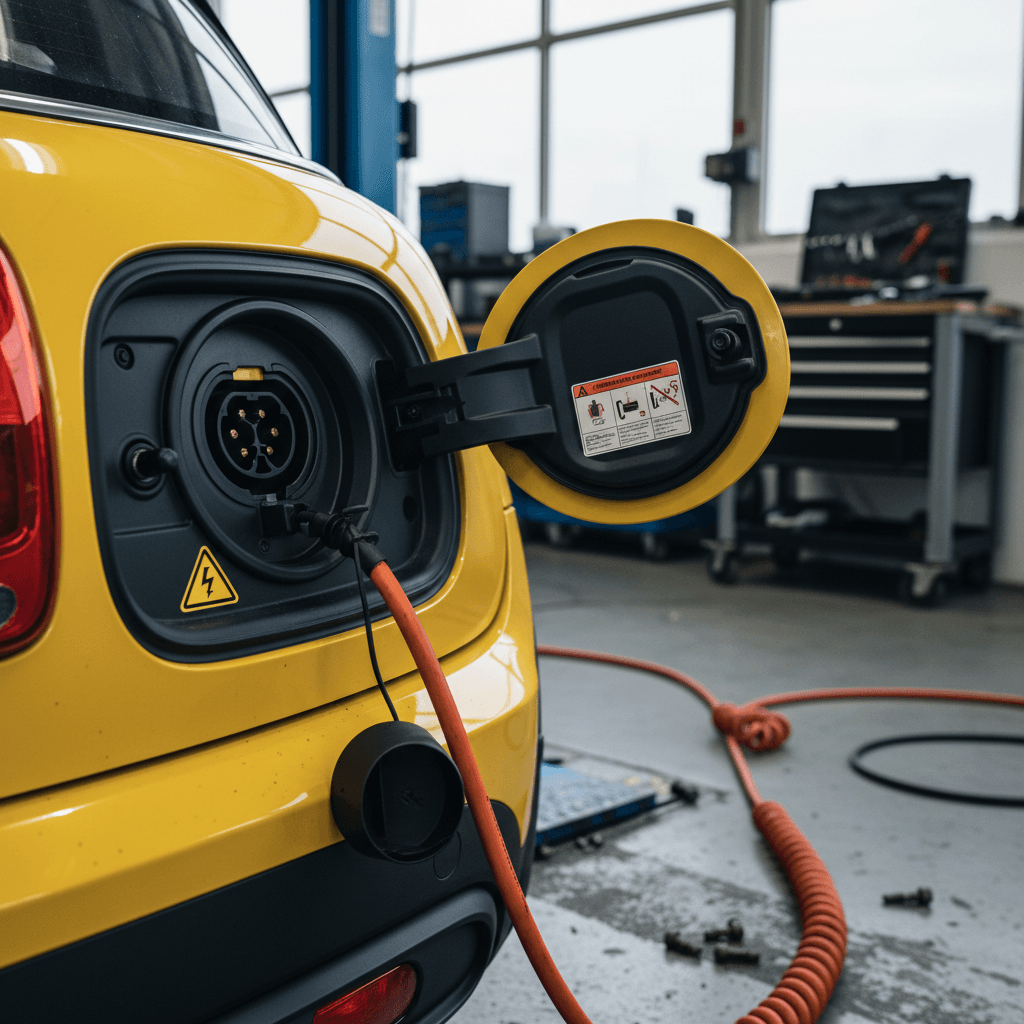
On a lift, look for damage or corrosion around the battery pack casing and underbody. At minimum, visually inspect the charge port, cables, and seals for signs of abuse or water intrusion.
4. Ask for dealer service printouts
A Mini dealer can print service history tied to the VIN, including recall work. This is much more reliable than a stack of loose invoices alone and shows whether software updates were actually installed.
5. Get an independent EV‑savvy inspection
If you’re serious about a particular car, consider an inspection from a shop that understands EVs. At Recharged, every vehicle goes through a Recharged Score evaluation, including battery diagnostics and recall status verification.
6. Compare price against battery risk
A deeply discounted Mini SE with incomplete battery recalls and sketchy history may not be a bargain once you factor in inconvenience and potential future repairs. A slightly higher‑priced, fully documented car is usually the smarter bet.
How Recharged handles Mini EV recalls
Ready to find your next EV?
Browse VehiclesHow Mini Electric recalls compare to other EV brands
If you read EV news broadly, it can feel like “every electric car is being recalled for batteries.” In reality, most mainstream manufacturers, Tesla, GM, Hyundai, Volkswagen, BMW/Mini, have had at least one high‑profile battery recall as they ramped early EV programs. Mini is not uniquely flawed here, but it’s also not magically exempt.
Mini Cooper SE in the wider EV recall landscape
Where Mini sits compared with other popular electric brands
Mini Cooper SE
Small production volume, but concentrated recalls around one core issue: high‑voltage battery integrity.
Pros: Fun, simple EV drivetrain. Cons: Any battery recall is a big deal on a relatively small pack.
Other legacy automakers
Brands like GM, Hyundai and VW have faced large battery recall campaigns linked to specific suppliers or cells.
Lessons learned there often inform how Mini and BMW approach diagnostics and software remedies.
Pure‑play EV brands
Tesla, Rivian and others tend to push software harder and can issue frequent over‑the‑air fixes.
Mini leans more on dealer‑installed updates today, which means you have to book time in a service bay.
Don’t normalize serious recalls
FAQ: Mini Cooper Electric recalls
Frequently asked questions about Mini Cooper Electric recalls
The bottom line on Mini Cooper EV recalls
If you like the idea of a small, characterful city EV, the Mini Cooper Electric still deserves a spot on your list. But you should treat its battery‑focused recalls as non‑negotiable homework, not background noise. Run the VIN through official tools, confirm recall completion with a Mini dealer, and keep the paperwork. If you’re shopping used, layer in an EV‑savvy inspection so you’re not the one discovering a hidden high‑voltage problem months down the road.
Handled properly, these recalls don’t have to be deal‑breakers. In fact, they can be an opportunity, helping you negotiate a fair price on a Mini Cooper SE whose issues have been addressed, not ignored. And if you’d rather not do the detective work alone, a platform like Recharged, with battery diagnostics, recall verification, and nationwide used EV inventory, exists to shoulder that burden so you can just enjoy the drive.