If you’re looking at a Mercedes-Benz EQS, new or used, it’s fair to ask how this big electric flagship holds up in a crash. The phrase “Mercedes EQS safety rating crash test” gets searched a lot, but the answers aren’t as simple as a single 5‑star number, especially in the U.S. Let’s unpack what we do (and don’t) know from crash tests, how the EQS is engineered to protect you, and what that means if you’re comparing it with other luxury EVs or shopping used.
Quick safety snapshot
Overview: How Safe Is the Mercedes EQS?
Mercedes EQS safety at a glance
Mercedes builds the EQS on a dedicated EV architecture with a strong safety cage, multiple crumple zones, and sophisticated restraint systems. You also get an expansive list of active safety tech, automatic emergency braking, adaptive cruise control with lane centering, blind‑spot monitoring, and 360‑degree cameras are standard on most trims. For a buyer, the practical takeaway is that the EQS sits near the top of the class on engineering intent and feature content, even if the U.S. lab data isn’t fully filled in yet.
Key limitation for U.S. shoppers
What Official Crash Tests Exist for the EQS?
In the U.S., the two big names you’ll see in searches for “Mercedes EQS safety rating crash test” are NHTSA and IIHS. Here’s the current landscape for the EQS sedan:
U.S. crash-test status for the Mercedes EQS sedan
What NHTSA and IIHS have published as of early 2025.
| Agency | Model/Body Style | Overall Rating | Notes (as of early 2025) |
|---|---|---|---|
| NHTSA | Mercedes-Benz EQS sedan | Not yet rated | No public 5‑star overall rating published for the EQS sedan as of early 2025. |
| IIHS | Mercedes-Benz EQS sedan | Not yet rated | EQS does not yet appear in IIHS crash-test result pages; only other Mercedes models are listed. |
| IIHS / NHTSA | Comparable Mercedes models (e.g., E‑Class) | Top-tier scores | Gas E‑Class and other Mercedes sedans perform very well, which is a useful reference point but not a substitute for EQS‑specific data. |
Always double‑check NHTSA and IIHS websites for the latest EQS ratings, as new tests can be added mid‑model‑year.
Why no U.S. EQS crash ratings yet?
European crash tests: EQS and EQE
While the EQS sedan hasn’t been the headline car in Europe’s Euro NCAP crash program, its sibling, the Mercedes EQE, has, and the two cars share Mercedes’ latest safety philosophy, battery layout concepts, and driver-assistance tech. That gives you meaningful clues about how the EQS is likely to behave.
- Euro NCAP five‑star performance (EQE): The EQE earned a full 5‑star rating in Euro NCAP testing, with very strong scores for adult occupant protection and outstanding marks for its driver-assistance systems.
- Top ADAS assessment: In Euro NCAP’s separate assisted‑driving evaluation, the EQE’s system achieved a “Very Good” overall grade, the best in its test group, thanks to consistent lane keeping, effective adaptive cruise, and robust safety backups if the driver doesn’t respond.
- Shared underpinnings and safety tech: The EQS and EQE are built on the same EVA platform, using a rigid passenger cell, extensive crash zones, and similar restraint concepts. Mercedes applies its “Integral Safety” approach across the whole line, not just one nameplate.
What this implies for the EQS
Active safety & driver-assistance tech on the EQS
One reason many shoppers search for “Mercedes EQS safety rating crash test” is to understand whether the software side of safety, automatic braking, lane centering, etc., is as strong as the physical crash structure. On the EQS, the answer is yes: Mercedes loads this car with standard active‑safety gear, and the broader system has already been validated on the EQE in Europe.
Core active-safety systems on the Mercedes EQS
Exact availability can vary by model year and trim, but this is the typical lineup you’ll see when shopping.
Automatic emergency braking
Lane keeping & centering
Driver monitoring
Adaptive cruise control
360° cameras & parking aids
OTA safety refinements
How to use EQS driver assistance safely
Passive safety: crash structure and battery protection
Active safety helps you avoid a crash; passive safety helps you survive one. On a large EV like the EQS, two questions dominate: how it protects occupants and how it protects (and isolates) the battery pack in a severe impact.
Rigid passenger cell & crumple zones
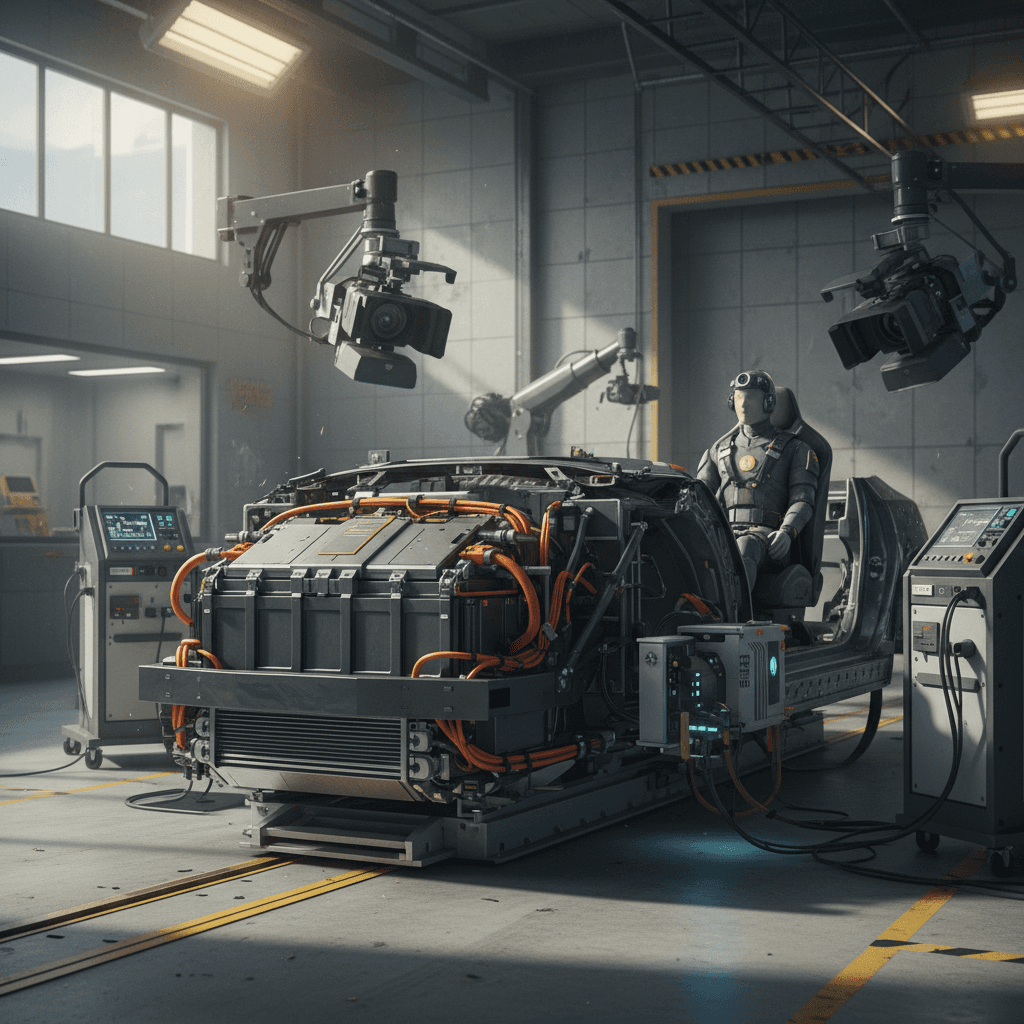
The EQS follows Mercedes’ long‑standing "Integral Safety" playbook: a very stiff passenger compartment surrounded by carefully engineered front, rear, and side crumple zones. In a crash, those outer structures deform in a controlled way, absorbing energy before it reaches the cabin.
- High‑strength and ultra‑high‑strength steel in key load paths
- Multiple front crash beams and deformable crash boxes
- Side structures designed to direct impact forces around the cabin
Battery protection and underbody layout
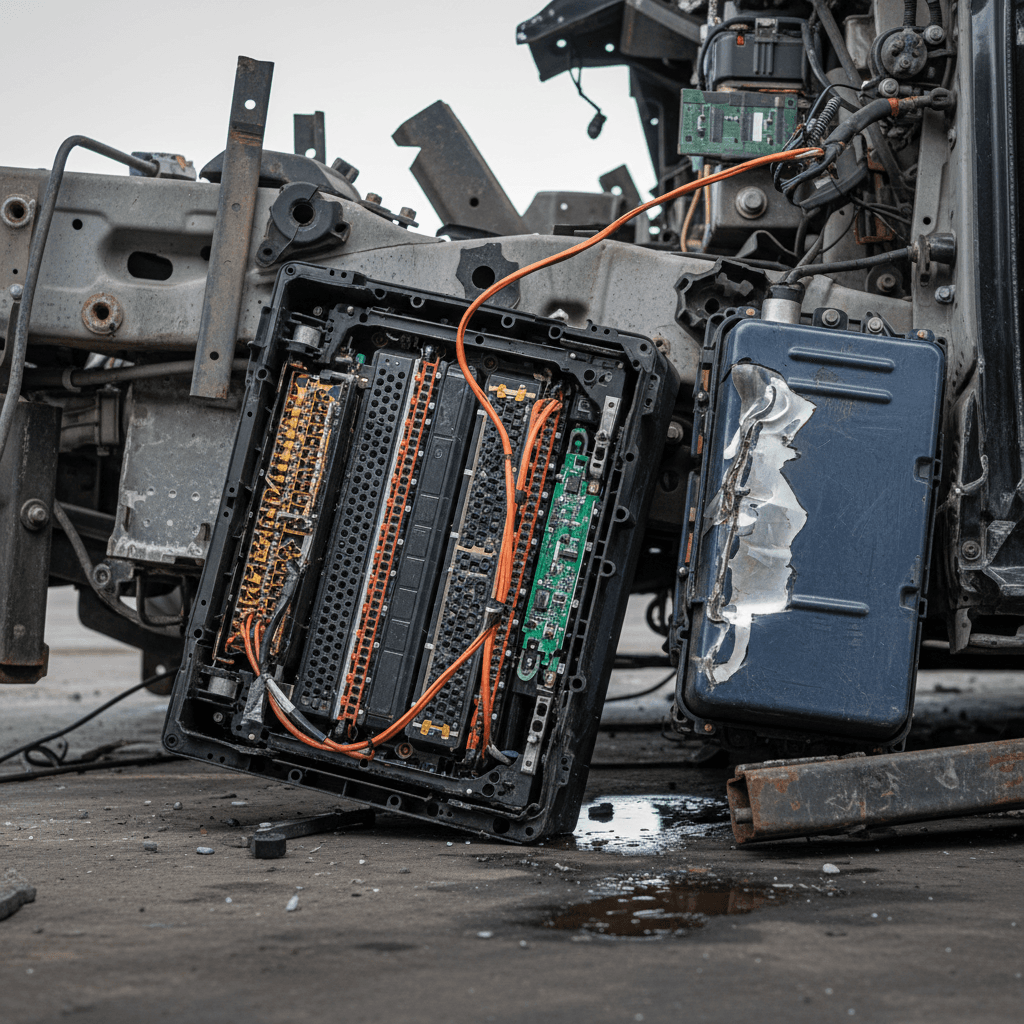
The EQS’s large battery pack is mounted low in the floor, protected by a reinforced housing and cross‑members. In a severe impact, crash rails are designed to divert energy away from the battery and passenger cell.
- Armored battery casing to resist intrusion and puncture
- Automatic high‑voltage shutoff in serious crashes
- Underbody shields to protect against debris and curb strikes
On higher‑trim cars with advanced packages, you’ll also find PRE‑SAFE® and PRE‑SAFE® Impulse Side. These systems can detect an imminent side impact and pre‑tension belts, close windows, and even inflate bolsters in the seat to push you slightly away from the impact zone, essentially creating a virtual crumple zone around you before the crash actually happens.
What about EV fire risk?
Real‑world safety: where the EQS shines (and where it doesn’t)
Lab tests are useful, but real‑world safety also depends on vehicle size, mass, technology behavior, and how owners actually use the car. Here’s how the EQS stacks up in day‑to‑day protection.
Real‑world safety pros and tradeoffs
Big luxury EVs do some things extremely well, and carry a few tradeoffs you should understand.
Mass and crash compatibility
Driver distraction risk
Weather and lane-keeping
Software updates & recalls
Test safety systems on your test drive
Safety checklist for shopping a used Mercedes EQS
If you’re considering a used EQS, you care about two things: the car’s built‑in safety and how well that safety has been preserved by previous owners. Here’s a focused checklist to run through before you sign.
Used Mercedes EQS safety checklist
1. Scan the VIN for recalls and campaigns
Ask the seller or dealer for a current recall and service campaign printout tied to the EQS’s VIN. Pay special attention to software updates related to airbags, automatic emergency braking, or driver-assistance packages.
2. Review crash and insurance history
Pull a full vehicle history report. Look for any <strong>structural damage</strong>, airbag deployment, or “salvage/rebuilt” branding. A high‑end EV with poorly repaired crash damage may not perform as designed in a future collision.
3. Inspect ADAS hardware
Walk around the car and look for cracked radar covers in the grille, damaged bumper sections where sensors live, misaligned cameras behind the windshield, or broken side‑mirror housings. These are all critical to modern safety systems.
4. Confirm software is current and error‑free
During a test drive, scan the instrument cluster and infotainment for persistent warning messages about collision‑avoidance, lane‑keeping, or driver‑assist functions. Ask the seller to show the software version and update history if available.
5. Check tire condition and load rating
The EQS’s weight means you really need the correct <strong>XL / EV‑rated tires</strong> with proper speed and load ratings. Uneven wear can hint at prior suspension damage or alignment issues after a curb strike or crash.
6. Evaluate seatbelts and airbags
Check that all belts retract crisply and latch securely. During your inspection, confirm that the airbag warning light comes on at startup and turns off promptly, staying lit can signal stored crash codes or unresolved airbag issues.
Don’t ignore minor warning lights
How Recharged evaluates EQS safety for used buyers
At Recharged, we treat safety as a first‑class topic, right alongside battery health and fair pricing, when we list a used Mercedes EQS on our marketplace. That philosophy is baked into the Recharged Score Report that accompanies every vehicle on our site.
What Recharged looks at on a used EQS
Safety isn’t just star ratings. It’s how the actual car in front of you has been cared for.
Structural & accident checks
Battery & high‑voltage integrity
Driver‑assist and sensor validation
Transparent condition & pricing
Delivery-ready and supported
EV‑specialist guidance
Ready to find your next EV?
Browse VehiclesFAQ: Mercedes EQS safety rating & crash tests
Common questions about Mercedes EQS safety ratings
Bottom line: Should you trust the EQS on safety?
If you clicked on this article searching for “Mercedes EQS safety rating crash test” hoping for a neat 5‑star U.S. score, you won’t find one, yet. What you do find is a large luxury EV built on a state‑of‑the‑art platform, backed by Mercedes’ long safety pedigree, closely related to the 5‑star‑rated EQE in Europe, and packed with modern crash‑avoidance technology.
For many buyers, that combination is more than enough to feel comfortable putting family and clients in an EQS, especially if you’re buying a car with documented history and up‑to‑date software. If you’d like help comparing EQS safety with other used EVs, or want a deeper dive on a specific VIN, Recharged can pair you with an EV specialist, a Recharged Score battery and condition report, financing options, and even nationwide delivery, so you can focus on what matters: finding a safe, comfortable EV that fits the way you actually drive.