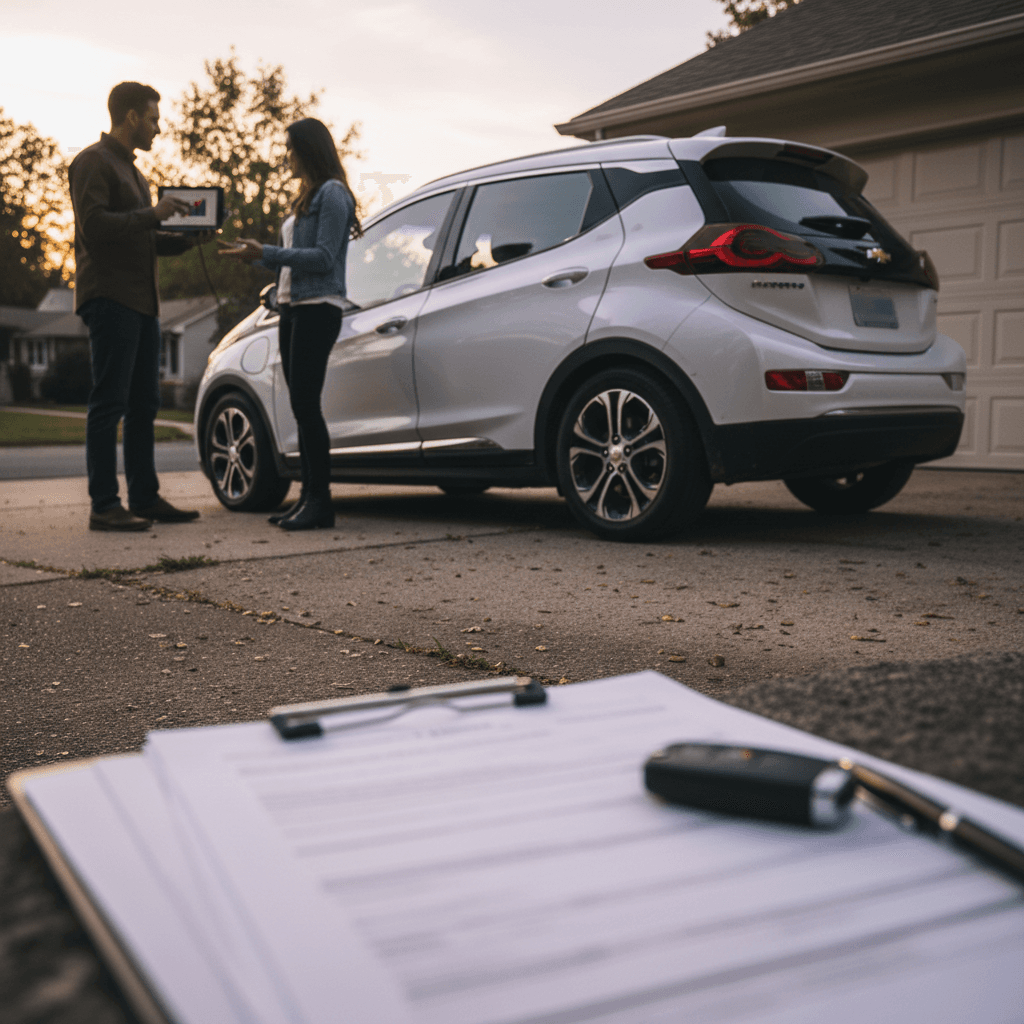
If you’re wondering how to sell a Chevy Bolt EV in a private sale, you’re already ahead of most sellers. The Bolt is a fantastic commuter, but its history of rapid depreciation and high‑profile battery recalls means buyers show up with more questions than usual. The good news: if you prepare the right way, you can sell quickly and avoid leaving thousands of dollars on the table.
Who this guide is for
Why Chevy Bolt EVs Are a Unique Case in the Used Market
Before you decide how to sell, it helps to understand what’s happening in the used Bolt market. Early Bolts were priced close to $37,000 new, then GM slashed sticker prices to under $27,000 in 2023. At the same time, all 2017–2022 cars were swept into a major LG battery recall, and many received full pack replacements. Add in falling used‑EV prices across the board, and you’ve got a car that can look like a bargain or a risk, depending on how clearly you explain its story.
Chevy Bolt EV: What Buyers Are Seeing in 2025
Why some Bolts are “too cheap”
Step 1: Decide if a Private Sale Is Right for Your Bolt
Private Sale vs. Instant Offer for Your Bolt EV
Weigh the extra money against your time, risk, and hassle.
Private Sale: Maximum Price, Maximum Work
- Pros: Often nets $1,000–$3,000 more than a trade‑in or instant offer if priced right.
- Cons: You handle listing, test drives, negotiation, payment safety, and paperwork.
- Best if: You’re not in a rush and comfortable meeting strangers and answering technical EV questions.
Recharged / Trade‑In: Less Money, Less Pain
- Pros: Fast, streamlined, no‑hassle sale; experts handle valuation, paperwork, and battery diagnostics.
- Cons: You may get a bit less than top‑dollar private‑party pricing.
- Best if: You value time, safety, and certainty more than squeezing out the last dollar.
Reality check on used EV pricing
Step 2: Get Your Bolt’s History and Battery Story Straight
With a Chevy Bolt, serious buyers will ask two things right away: Has the recall work been done, and what’s the battery health like? If you can’t answer confidently, they’ll move on to the next listing.
Information to Gather Before You List
1. Recall status and battery replacement
Run your VIN through the NHTSA or Chevrolet recall lookup and confirm whether the high‑voltage battery has been replaced under recall. If it has, keep the dealer service records handy, this can be a selling point because many older Bolts now have essentially new packs.
2. Service records and repairs
Pull together maintenance receipts (tires, brake fluid, cabin filter), software updates, and any repairs. A thin file doesn’t help your case, but organized records can justify a higher asking price.
3. Clean title and any prior incidents
Order a Carfax or AutoCheck report or download the latest one from your insurer or lender if available. Be upfront about any accidents, prior buyback status, or title brands, buyers will find out anyway.
4. Real‑world range and charging behavior
Note the typical range you see at 100% charge in your climate and how you’ve charged the car (mostly Level 2, occasional DC fast charging, etc.). Range screenshots from the dashboard can help skeptical buyers feel at ease.
5. Battery health verification
If possible, obtain an independent <strong>battery health report</strong>. Recharged, for example, uses its Recharged Score diagnostic to quantify pack health on used EVs so buyers aren’t guessing. Even if you sell privately, a credible test like this is powerful evidence.
Turn the recall into a selling point
Step 3: Price Your Chevy Bolt EV for a Private Sale
Pricing a Bolt isn’t like pricing a generic compact sedan. You’re balancing fast EV depreciation with the model’s strong reputation as a cheap‑to‑run commuter. Aim too high and you’ll sit on the market; aim too low and you’ll leave easy money behind.
Sample Private‑Party Price Ranges for Chevy Bolt EVs
Illustrative ranges only, always verify with current local comps.
| Model Year / Type | Typical Miles | Condition Snapshot | Realistic Private‑Party Range |
|---|---|---|---|
| 2017–2018 EV LT | 70k–90k | Older, out of basic warranty, recall‑era battery; buyer questions likely | $8,000 – $12,000 |
| 2019–2020 EV LT/Premier | 45k–75k | Mid‑life commuter, recall handled, solid cosmetic condition | $12,000 – $16,000 |
| 2021–2022 EV or EUV | 20k–50k | Newer styling, improved safety tech, strong demand as budget EV | $15,000 – $22,000 |
| 2023 EV or EUV | Under 30k | Latest generation before pause in production, often still under warranty | $18,000 – $24,000 |
Use this as a sanity check against what you see on marketplace sites, KBB, and Recharged valuations.
How to sanity‑check your price
- Price just below the cluster of similar cars (for example, $15,900 instead of $16,500).
- Avoid emotional premiums like “what I still owe on the loan”, buyers don’t care.
- Be prepared to adjust by $500–$1,000 if you get no serious interest in the first 7–10 days.
- Consider seasonal timing: tax‑refund season and the start of the school year often bring more commuter‑EV shoppers.
Step 4: Prep Your Bolt EV to Make a Great First Impression
The nicer your Bolt looks and feels, the less time buyers spend hunting for flaws and the more time they spend picturing their commute. Cosmetic condition can easily swing value by $1,000 or more on a relatively affordable car.
Bolt EV Prep Checklist Before Photos or Showings
Deep clean inside and out
Wash, clay, and wax if you can. Vacuum thoroughly, clean hard surfaces, and eliminate odors. EV shoppers care about a quiet, clean cabin, your Bolt should feel more like a tech product than a used rental.
Fix low‑cost wear items
Replace wiper blades, burned‑out bulbs, and a filthy cabin air filter. Top off washer fluid. Small, cheap fixes can prevent buyers from mentally discounting your car by thousands.
Maximize curb appeal
Install inexpensive hubcaps if yours are scuffed, touch up obvious paint chips, and remove personal stickers. Aim for “honest, well‑cared‑for daily driver,” not “show car.”
Stage the charging gear
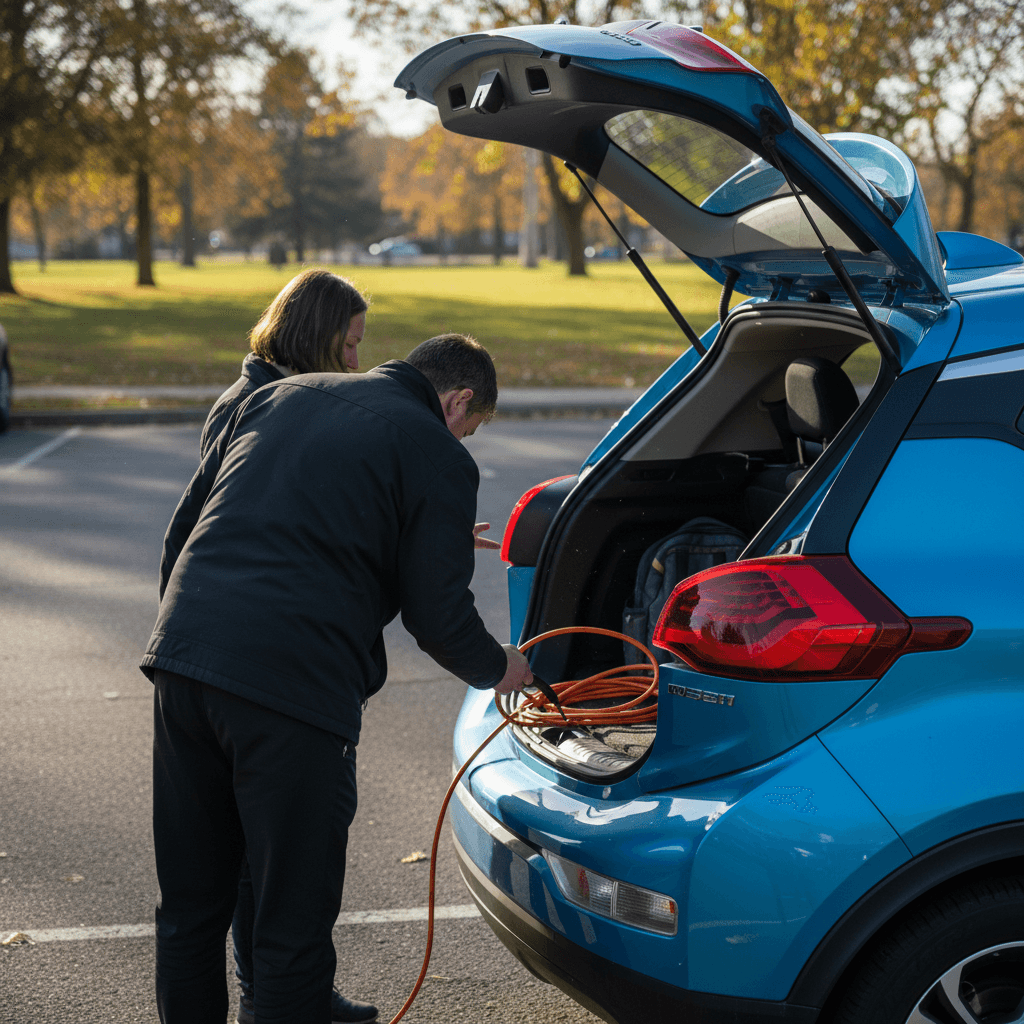
Include the OEM Level 1 charger neatly coiled in the hatch and, if you have one, highlight an aftermarket Level 2 portable unit as a bonus. Many first‑time EV buyers are nervous about charging, make it feel turnkey.
Set the dash for range
Charge to 80–100% before showings so the cluster displays a healthy estimated range. This is the easiest way to calm range‑anxiety questions before they’re asked.
Step 5: Create a Trust‑Building Listing that Sells
With Bolts, a vague listing is a red flag. Your ad needs to address the big questions up front: battery, recall, range, and charging. Think like a cautious buyer and write the listing you wish you’d seen when you were shopping.
Must‑Include Details
- Year, trim (LT, 2LT, Premier, EUV), and key options (DC fast‑charge port, Driver Confidence package, Super Cruise on some EUVs).
- Exact mileage and ownership history (first owner, non‑smoker, etc.).
- Battery recall status and whether the pack was fully replaced.
- Typical real‑world range you see at your normal state of charge.
- Charging details: included charger(s), home charging habits, and DC fast‑charging experience.
- Accident or title history, be honest and specific.
Sample Bolt EV Listing Snippet
2021 Chevy Bolt EV 2LT – New Recall Battery – DC Fast‑Charge – $17,400
One‑owner Bolt EV 2LT with 34,200 miles. Battery pack replaced by Chevrolet under recall in August 2023 (documentation in hand). Typically shows 250+ miles at full charge in mild weather.
Equipped with DC fast‑charging, Driver Confidence II, blind‑spot monitoring, and Apple CarPlay/Android Auto. Clean title, no accidents, non‑smoker. Includes OEM Level 1 charger and portable Level 2 unit.
Use your battery report as a sales tool
Step 6: Screen Buyers and Handle Test Drives Safely
Private sales live or die on how you handle people, not just pricing. You want to attract serious, qualified buyers without putting yourself, or your Bolt, at risk.
Safe Screening and Test‑Drive Steps
Start with messages, then a quick call
Use the marketplace app or email to answer basic questions. Before setting a meeting, hop on a short call to confirm the person’s name, general location, and that they understand it’s an EV with a specific asking price.
Meet in a public, well‑lit place
Arrange to meet in a busy parking lot during the day, near a police station or bank if possible. Avoid having strangers come to your home, especially if you’ll be alone.
Check a valid driver’s license
Take a quick photo (with their permission) or simply verify the name and expiration date before anyone drives your car. If your insurance requires it, confirm coverage for test drivers.
Ride along on the test drive
You should be in the passenger seat, guiding them on a short loop with city and highway speeds. Point out one‑pedal driving, regen, and how the Bolt displays remaining range.
Set expectations around range and charging
Explain that range varies with temperature, speed, and driving style. Show them the energy screen so they can see recent consumption instead of fixating on a single number.
Don’t do this
Step 7: Paperwork and Getting Paid Safely
The last step is where many private sellers get nervous. The key is to keep it simple, verify everything, and follow your state’s rules for title transfer and taxes.
- Confirm how your state handles private sales. Check your state DMV website for the exact forms needed: title, odometer disclosure, bill of sale, and whether a smog exemption applies (EVs are often exempt, but rules vary).
- Prepare a straightforward bill of sale. Include VIN, year/make/model, exact mileage, sale price, date, buyer/seller names and addresses, and an "as‑is, no warranty" statement. Both parties should sign and keep copies.
- For a loan‑free car, meet at your bank. Cashier’s checks drawn in‑person at a major bank branch are safer. You can deposit and verify funds immediately before handing over the signed title and keys.
- If you still owe money on the Bolt, involve the lender. Call your lender for their exact payoff process. Often, you and the buyer will meet at the lender’s office or coordinate payoff and title release via wire or cashier’s check.
- Remove your info after the sale. Cancel or transfer insurance once the sale is complete, remove the car from any connected apps, and keep a copy of the signed title and bill of sale for your records.
Be realistic about taxes and fees
When to Skip the Private Sale and Use Recharged Instead
For some Bolt owners, a private sale is absolutely the right move. For others, it’s several weekends of hassle and worry in exchange for a few hundred dollars more. That’s where a specialist marketplace like Recharged can change the equation.
How Recharged Can Simplify Selling Your Chevy Bolt EV
You still get fair market value, without doing all the work yourself.
Verified battery health
Transparent pricing support
Nationwide reach and logistics
Ready to find your next EV?
Browse VehiclesOptions beyond a DIY private sale
Chevy Bolt EV Private Sale FAQ
Frequently Asked Questions
Selling a Chevy Bolt EV in a private sale is absolutely doable, as long as you lean into what makes the car different. Be ready to talk frankly about the recall, document your battery’s health, and price against today’s market rather than yesterday’s MSRP. If that sounds like more work than you want to take on, you don’t have to choose between a sketchy fire‑sale and doing everything yourself. With Recharged, you can get transparent pricing, verified battery diagnostics, financing and trade‑in options, and expert EV support from start to finish, so your next owner is confident in the car, and you’re confident you didn’t leave money on the table.