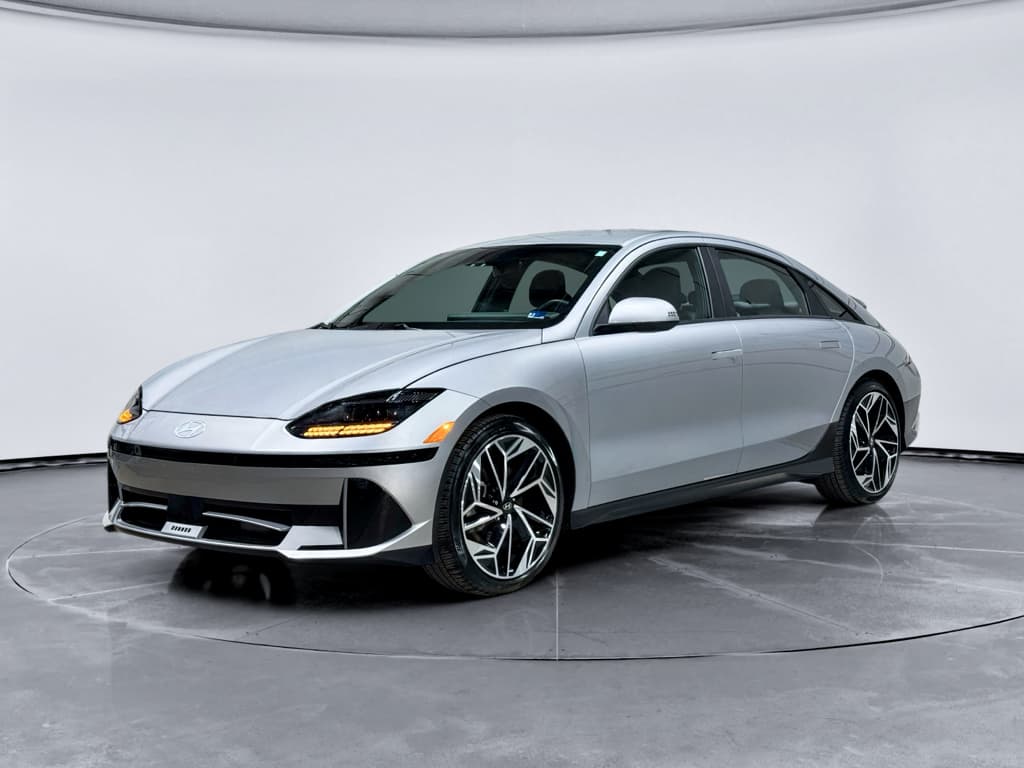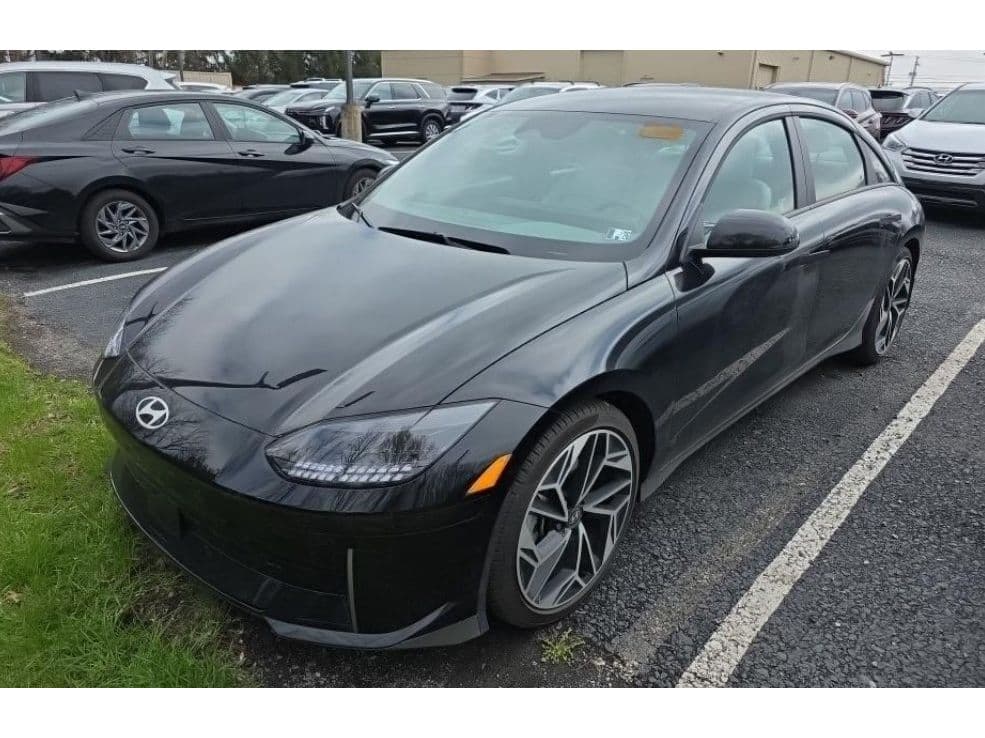
If you’re wondering how fast the Hyundai Ioniq 6 depreciates, you’re asking the right question. Depreciation is the single biggest cost in owning almost any new car, and electric sedans like the Ioniq 6 have had some eye‑opening price swings over the last few years. The good news: when you understand that curve, you can turn it from a risk into an opportunity, especially if you’re buying used.
Quick context
Hyundai Ioniq 6 depreciation at a glance
How fast does the Hyundai Ioniq 6 depreciate?
If you buy a new Ioniq 6 today, you should assume a fairly aggressive first three years of depreciation, in line with other mid‑priced EVs. Forecast models suggest roughly a 58% loss after five years, with the car keeping around 42% of its original MSRP. That’s not dramatically worse than many gas sedans, but the timeline is steeper up front.
Used buyers benefit

What the data says: 3- and 5-year depreciation curves
Because the Ioniq 6 is still relatively new, you won’t find 10‑year depreciation charts yet. But several data sources and early used listings give us a reasonable picture of how fast it’s dropping today and where it’s likely to land in the medium term.
Estimated Hyundai Ioniq 6 depreciation from new MSRP
Illustrative numbers based on current market data, third‑party forecasts, and typical miles. Real values vary by trim, incentives and region.
| Ownership year | Approx. value vs. original MSRP | What it looks like on a $50,000 MSRP | What’s happening |
|---|---|---|---|
| Year 1 | ~75–80% remaining | $37,500–$40,000 | First‑year hit plus heavy incentives show up as depreciation |
| Year 3 | ~55–60% remaining | $27,500–$30,000 | Most of the big drop is behind you; used pricing stabilizes |
| Year 5 | ~42–45% remaining | $21,000–$22,500 | Forecasts put total 5‑year depreciation around 55–58% |
| Year 8 | ~30–35% remaining (early forecast) | $15,000–$17,500 | Battery health and future EV price wars will matter most here |
Think of these as “order‑of‑magnitude” guides, not exact appraisals for any single car.
Don’t take the table as a quote
One independent depreciation model pegs the Ioniq 6 at roughly 58% depreciation after five years, leaving it with a resale value a touch above $21,000 on a typical mid‑trim car. Meanwhile, UK‑based data suggests the car retains roughly 51–56% of its value after 3 years and 36,000 miles, depending on motor and trim, which lines up well with U.S. forecasts once you normalize for currency and spec.
Why does the Ioniq 6 depreciate this way?
Four big drivers of Ioniq 6 depreciation
Most of what you see in the numbers is explainable, and predictable.
1. Sticker vs. real transaction price
In 2023–2025, many Ioniq 6 buyers saw heavy discounts and lease incentives, plus pass‑throughs of federal tax credits on leases. The bigger the gap between MSRP and what people actually pay, the more “depreciation” you see on paper in the first few years.
2. EV price wars and tech cycles
Rapid improvements in range, charging speed and driver‑assist tech make new EVs feel outdated faster than gas cars. As newer models arrive, or Hyundai cuts new‑car prices, used prices have to adjust to stay compelling.
3. Battery health perceptions
Buyers are still learning how to think about EV battery longevity. The Ioniq 6’s E‑GMP platform has shown solid real‑world durability so far, but fear of the unknown still gets priced into resale value.
4. Segment competition
The Ioniq 6 competes directly with the Tesla Model 3, Polestar 2, and a wave of new Chinese and Korean sedans globally. When rivals cut prices, or dump inventory into fleets, it pulls resale values down across the segment.
Perception vs. reality
Ioniq 6 vs. other EVs and gas sedans
Compared with other EVs
- Similar to mid‑market EVs: Forecasts put the Ioniq 6 in the same ballpark as cars like the Kia Niro EV in 5‑year percentage loss.
- Less volatile than Tesla peaks: Tesla’s rapid price cuts created extremely sharp used‑price swings. The Ioniq 6 hasn’t seen those whiplash levels, in part because it started at a lower price point.
- Better than early “compliance” EVs: Older low‑range EVs (think first‑gen Leaf) can lose 60%+ of their value in the first three years. The Ioniq 6’s range and charging performance make it more future‑proof than that.
Compared with gas sedans
- Steeper early drop, similar 5‑year result: A typical midsize gas sedan might lose ~50% of its value in five years. The Ioniq 6 may lose a bit more on paper, but can claw that back with lower running costs.
- More sensitive to incentives: Gas sedans rarely see $7,500‑equivalent incentives stacked on top of discounts. When the market shifts those programs, it shows up immediately in EV depreciation curves.
- Policy‑sensitive: Changes to EV tax credits, NACS charging access and local incentives can quickly reshape demand, and resale.
A “Goldilocks” depreciation profile
Lease residuals and what they tell you
Lease residuals are the finance world’s best guess at depreciation. Hyundai’s own lease programs have used residuals in roughly the 54–62% range for 24‑ to 36‑month terms on the Ioniq 6, depending on trim, mileage allowance, and model year. That implies Hyundai Financial expects the car to retain a bit more than half its value after three years in normal use.
- Shorter 24‑month leases have tended to show higher residuals (low 60s) because the bank takes less time‑horizon risk.
- 36‑month leases on popular trims commonly land in the mid‑ to high‑50% range, lining up with the 3‑year 55–60% value estimates.
- Unusually rich lease cash and tax‑credit pass‑throughs in 2023–2025 mean that lessees are often paying far less than the “real” depreciation the residual implies.
How to use residuals as a shopper
Factors that move your individual car’s value
What makes one Ioniq 6 worth more than another?
Depreciation curves are averages; the market prices your specific car.
Mileage & usage
Like any car, lower‑mileage Ioniq 6s command a premium. But how those miles were put on, lots of DC fast charging vs. gentle commuting, also matters to savvy EV buyers.
Battery health
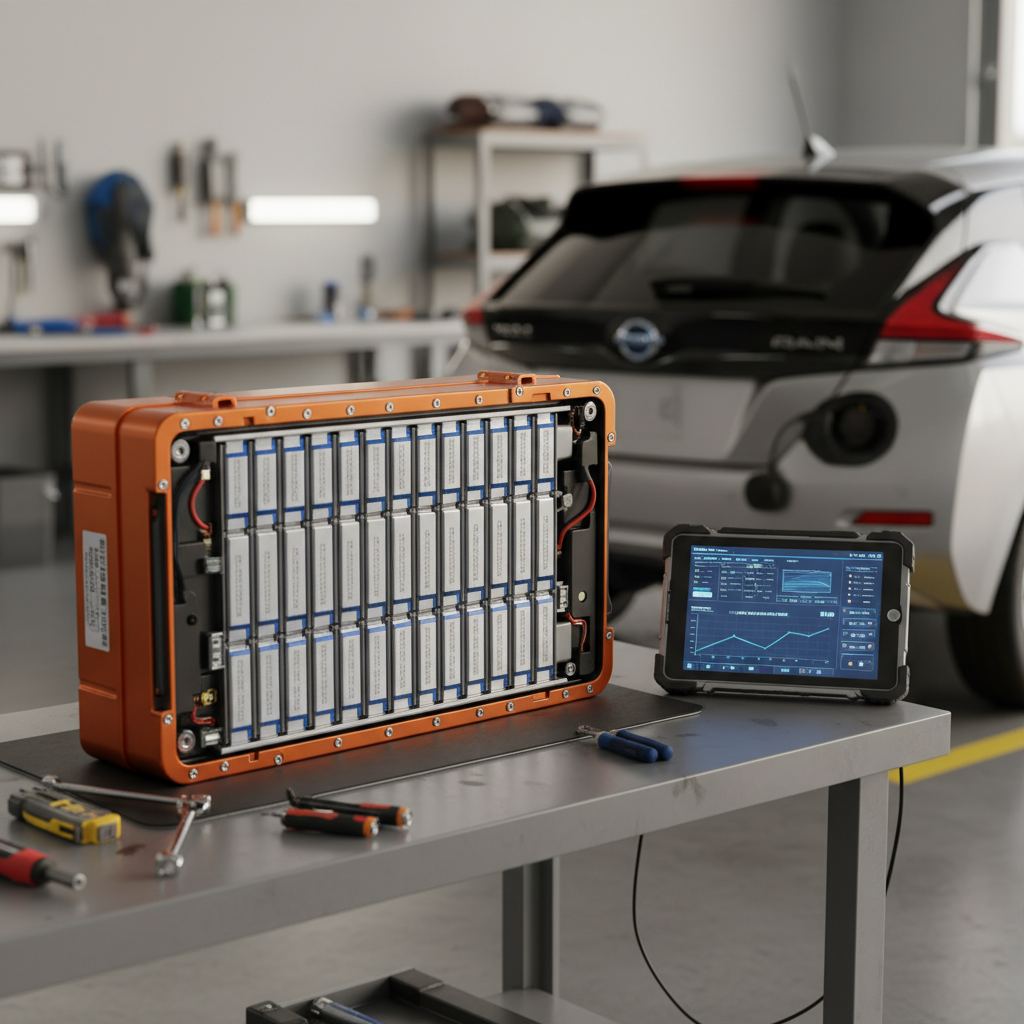
State of health (SOH) is a huge driver for EV resale. A pack at 94% SOH after several years is simply worth more than one that’s drifted into the mid‑80s, even with similar miles.
Charging history
Frequent high‑power DC fast charging can speed up battery wear. Cars that spent most of their time on home Level 2 charging usually show healthier packs over time.
Market & region
Cold‑weather states, patchy public charging, and local policy shifts all change demand. A spec that’s hot in California might be a tougher sell in the rural Midwest.
Condition & records
Clean accident history, complete maintenance records and original charging equipment help reduce buyer anxiety and support stronger pricing.
Trim & color
Long‑range trims, desirable wheels and neutral colors (white, gray, black, blue) typically hold value better than niche specs or unusual colors.
Watch for “cheap” cars with hidden costs
How to use Ioniq 6 depreciation to your advantage
Play the depreciation curve, don’t fight it
1. Buy at 2–4 years old
If you can, target an Ioniq 6 that’s <strong>already taken the first big hit</strong>, roughly model‑years 2023–2024 in 2026 and beyond. You’ll often save $15,000–$20,000 versus original MSRP while still getting modern range and tech.
2. Prioritize battery and charging history
Ask for a battery health report, DC fast‑charge counts and where the car was usually charged. At Recharged, this is baked into the <strong>Recharged Score</strong>, so you can compare cars on more than just odometer readings.
3. Be flexible on trim, picky on condition
A spotless SE or SEL with strong battery health is almost always a better deal than a loaded Limited that lived on fast chargers and has accident history, even if the Limited looks cheaper relative to its sticker.
4. Consider total cost, not just resale
Depreciation is just one line item. Lower electricity and maintenance costs can more than offset slightly steeper nominal depreciation compared with a gas sedan, especially if you keep the car 6–8 years.
5. Let someone else buy new, unless incentives are wild
There are moments when factory cash and tax‑credit pass‑throughs make <strong>leasing or even buying new rational</strong>. But in a normal market, the Ioniq 6’s curve heavily favors the patient used buyer.
Where Recharged fits in
Ready to find your next EV?
Browse VehiclesProtecting value: battery health and the Recharged Score
For EVs, battery health is the new “engine compression test.” Two Ioniq 6s of the same year and mileage can be thousands of dollars apart in value if one pack has been babied and the other has been hammered with fast charging and deep discharges.
Everyday habits that slow depreciation
- Charge mostly at home or work on Level 2 instead of relying on high‑power DC fast charging.
- Avoid living at 100% or 0% state of charge, keeping the pack between roughly 20–80% for daily use is easier on the cells.
- Precondition in extreme temps when possible so the battery isn’t delivering full power while stone‑cold or blazing hot.
- Keep software up to date; OEM updates can improve efficiency, charging behavior and sometimes even range estimates.
How the Recharged Score helps buyers and sellers
- Objective battery diagnostics: Recharged uses dedicated EV tooling to measure pack health, not just guess from range readouts.
- Pricing tied to condition: Cars with healthier batteries and cleaner histories are priced accordingly; tired examples are either discounted or filtered out.
- Full‑journey support: From financing and trade‑ins to nationwide delivery and consignment, Recharged is built around EV‑specific questions, like how depreciation and battery health interact.
Selling or trading an Ioniq 6?
Frequently asked questions about Ioniq 6 depreciation
Hyundai Ioniq 6 depreciation FAQ
Bottom line: is the Hyundai Ioniq 6 a good value?
Taken in isolation, the Hyundai Ioniq 6’s depreciation can look intimidating: a steep early drop and forecasts of roughly 58% value lost over five years. But that’s only one dimension of the story. Stack in its low running costs, strong real‑world efficiency and growing acceptance in the used market, and it starts to look like a rational, even savvy, choice, especially if you buy at two to four years old rather than brand‑new.
If you’re shopping used, the real question isn’t just “how fast does it depreciate?” but “what am I getting for each dollar I spend over the years I’ll own it?” A late‑model Ioniq 6 with a healthy battery, clean history and transparent pricing can deliver a lot of car for the money. And that’s exactly the gap Recharged is built to fill: pairing solid market data with verified battery diagnostics so you can let depreciation work for you, not against you.