On paper, the Mercedes EQS is a range monster. EPA figures north of 350 miles make it look like an electric S-Class that can cross a state on a single charge. But you don’t commute on paper, you drive at 70–75 mph with climate control on, maybe kids in the back and luggage in the trunk. This guide breaks down the Mercedes EQS real-world range on the highway, using instrumented tests, owner experiences, and some hard-earned EV road-trip wisdom.
Quick takeaway
Mercedes EQS highway range at a glance
Headline real‑world EQS highway results
Those are the hero numbers, achieved by professional testers on well-chosen routes. In your hands, the EQS is still an impressive long‑legged cruiser, but speed, weather, and wheel choice can easily carve 50–80 miles off that headline range if you’re not paying attention.
EPA vs real world: why the numbers don’t match
The Mercedes EQS family carries some of the highest EPA range ratings in the luxury EV segment. A recent EQS 450+ sedan is rated up to about 352 miles combined, with highway MPGe that suggests strong long-distance efficiency. But the EPA cycle mixes in a lot of lower‑speed driving, gentle acceleration, and relatively little time pinned at 75 mph. Your actual highway range depends on three big factors:
- Speed: Aerodynamic drag rises with the square of your speed; going from 65 to 80 mph is like paying a penalty tax on range.
- Weather: Cold temps, rain, snow, or strong headwinds can easily cost 10–30% of your range.
- Configuration: Dual‑motor 4Matic models and big 21–22 inch wheels look great, but they eat into efficiency.
Why highway range is always lower
Real-world tests at 70–75 mph
To cut through the marketing fog, it helps to look at independent 70–75 mph range tests. These are simple: charge to 100%, set cruise control, drive in loops until the battery is essentially empty, then record the mileage. A few key EQS results stand out.
What the big testers saw
EQS highway range in controlled 70–75 mph loops
EQS 450+ RWD (early car)
Speed: 70 mph steady
Result: ~395 miles to 0%
Takeaway: Beat its EPA rating by about 45 miles. This is the standout "perfect day" result for the EQS sedan.
EQS 450 4Matic (refresh)
Speed: 75 mph test loop
Result: ~400 miles observed
Takeaway: The updated 118 kWh pack and efficiency tweaks let the dual‑motor car match the best rear‑drive result at a slightly higher speed.
EQS SUV highway testing
Speed: 70–75 mph
Result: Low‑300s miles common
Takeaway: The taller, heavier EQS SUV can still beat or match its EPA rating, but you should think of it as a 300‑ish‑mile highway machine, not a 400‑miler.
Notice the pattern: on a cool, controlled loop with disciplined driving, the EQS punches above its EPA weight. But those are best‑case numbers, and they assume you’re willing to pull into a charger with the battery in the single digits. Most people aren’t.
Plan around 10–80%, not 0–100%
EQS sedan vs EQS SUV: big body, big penalty
EQS Sedan: the range hero
- Battery: 108–118 kWh usable, depending on model year/refresh.
- Best EPA ratings: roughly 352–390 miles combined for 450+ and 450 4Matic trims.
- Real 70–75 mph range: ~340–400 miles on a good day, depending on wheels, trim, and weather.
- Character: Low, slippery, almost teardrop‑shaped; this is a car whose styling chief was clearly the wind tunnel.
EQS SUV: luxury bus with a bill
- Battery: similar 118 kWh pack, more weight and frontal area.
- EPA ratings: typically in the low‑300‑mile range, depending on trim.
- Real 70–75 mph range: often in the 280–320 mile window in average conditions.
- Character: A plush three‑row living room that happens to be shaped like a brick compared with the sedan; the aero penalty shows up at the plug.
If your life is mostly suburban school runs and Costco runs, the EQS SUV’s lower highway range is rarely an issue. If you want to devour interstates with minimal stops, the sedan is the better tool for the job.
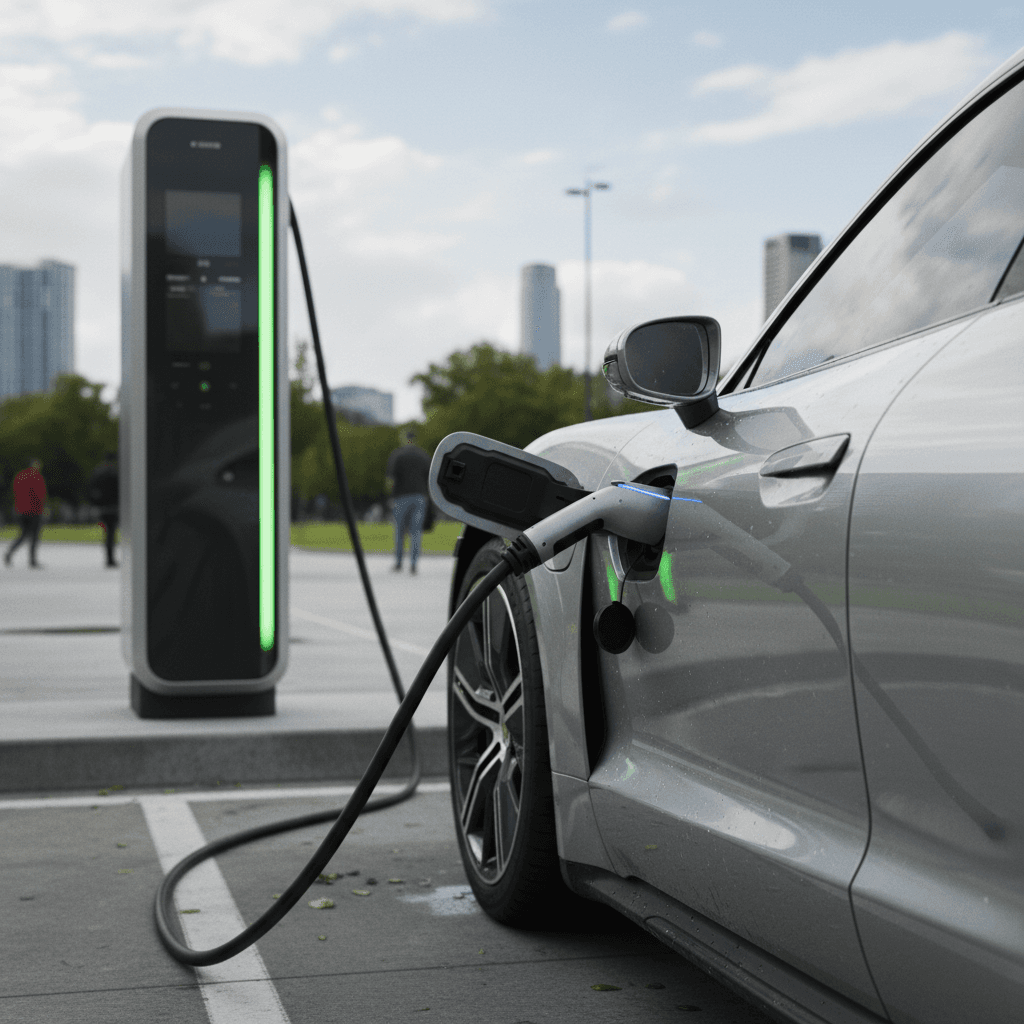
What EQS owners actually see on the highway
Owner reports paint a more nuanced, lived‑in picture than carefully controlled media tests. In forums and long‑term reviews, you’ll generally see three camps:
- The optimists: Slower drivers on 19–20 inch wheels in mild temps who match or slightly beat EPA, even on long highway stretches.
- The realists: Most owners running 70–75 mph who see 320–360 miles indicated on a full charge and arrive with 10–15% left after 230–260‑mile legs.
- The frustrated: Drivers on 21–22 inch wheels, higher speeds, or hilly routes who struggle to see more than the high‑200s in cold or wet weather.
Why some owners only see ~280 miles
Range by trim, wheels, and weather
Trim badges on the EQS are less about bragging rights and more about battery taxation. More motors and more tire equals more consumption. Here’s a simplified highway‑focused view you can actually plan around.
Mercedes EQS sedan: realistic 70–75 mph highway range
Approximate real‑world legs in mild weather, flat-ish terrain, starting from 100% and arriving near 0%. Subtract 10–15% for a comfortable buffer.
| Trim | Drivetrain | Typical Wheels | Likely 70–75 mph Range (mild) | Highway Range (cold, winter) |
|---|---|---|---|---|
| EQS 450+ | RWD | 19–20 in | 360–400 mi | 300–340 mi |
| EQS 450 4Matic | AWD | 20–21 in | 340–380 mi | 285–330 mi |
| EQS 580 4Matic | AWD, more power | 20–21 in | 330–370 mi | 280–320 mi |
| AMG EQS | High power AWD | 21–22 in | 290–330 mi | 240–280 mi |
These are directional planning numbers, not promises; your right foot and the weather are still in charge.
The SUV trims tend to sit a segment down from this table: knock off roughly 10–15% across the board for comparable configurations. That’s the cost of extra height and weight.
Temperature really matters
How to maximize your EQS’s highway range
The good news: the EQS gives you a very large battery and a very slippery body to work with. With a few habits, you can get astonishing highway legs without feeling like you’re hypermiling a rental Corolla.
7 practical ways to stretch EQS highway range
1. Treat 72 mph as the sweet spot
The EQS is so quiet that 82 mph feels like 65. Use cruise control and keep it in the low‑70s; every extra 5 mph above that starts to carve away meaningful range.
2. Use Eco or Comfort on long runs
Sport modes sharpen responses but they also keep more power on tap. Eco and Comfort smooth out throttle inputs and can trim your consumption over a long day.
3. Precondition while plugged in
Before you leave, heat or cool the cabin while the car is still charging. That way, the big initial climate load comes from the outlet, not the battery.
4. Be smart about wheels and tires
If you’re spec‑ing or shopping an EQS, understand that the big 21–22 inch wheels are a range tax. The 19s are your best friend for efficiency and comfort.
5. Use navigation‑aware route planning
The built‑in nav and many third‑party apps can route via fast chargers, factoring elevation and weather. Let the car do the math so you don’t have to white‑knuckle the last 20 miles.
6. Aim for 10–80% DC fast‑charge windows
The EQS charges hardest between roughly 10% and 60–70%. Don’t waste time going from 80% to 100% on a road trip, that last 20% is slow and buys you relatively little extra range.
7. Read mi/kWh, not just miles
Watch your live consumption. If you’re averaging 3.2 mi/kWh, a 110‑ish kWh usable pack suggests a theoretical 350+ miles; if you’re at 2.4 mi/kWh, plan your next stop accordingly.
When the EQS really shines
Road-tripping in a used EQS: what to know
If you’re considering a used EQS, you’re probably wondering two things: how much range has it lost, and whether it still feels like a long‑legged luxury car or a very expensive appliance with a plug.
Battery health & degradation
- The EQS’s large pack means that even with some degradation, you may still have more usable energy than many new, smaller‑battery EVs.
- Real‑world highway range is more sensitive to tires, alignment, and driving style than a couple of percent of capacity loss.
- What you want is visibility. A proper battery health report, like the Recharged Score used on EVs sold through Recharged, tells you how much capacity the car has actually retained.
Software, navigation & planning
- Later‑build EQS models and updated software tend to have better route planning and charging‑curve behavior.
- When you’re shopping used, test‑drive the exact car on a 30–40 mile highway loop and note its mi/kWh at 70 mph.
- If you buy through Recharged, EV‑specialist advisors can walk you through what that real‑world number will mean for your typical road trips, not just the commute.
How Recharged can help
FAQ: Mercedes EQS real-world highway range
Frequently asked questions about EQS highway range
Is the EQS’s highway range right for you?
The Mercedes EQS is not an efficiency science project in the Lucid Air mold, and it’s not a bare‑bones range king like some Teslas. It’s something more old‑money German: a rolling, quietly ruthless way to cover distance. In the real world, with cruise set in the low‑70s, it will give you genuine 300‑plus‑mile highway legs in comfort, and on its best day it brushes the 400‑mile club.
If that sounds like your kind of road trip, the next step is matching the right EQS trim and battery health to your life. That’s where a transparent used‑EV marketplace like Recharged earns its keep, verified battery reports, fair pricing, and EV‑savvy guidance so you know exactly what kind of real‑world highway range you’re signing up for before you click "buy."