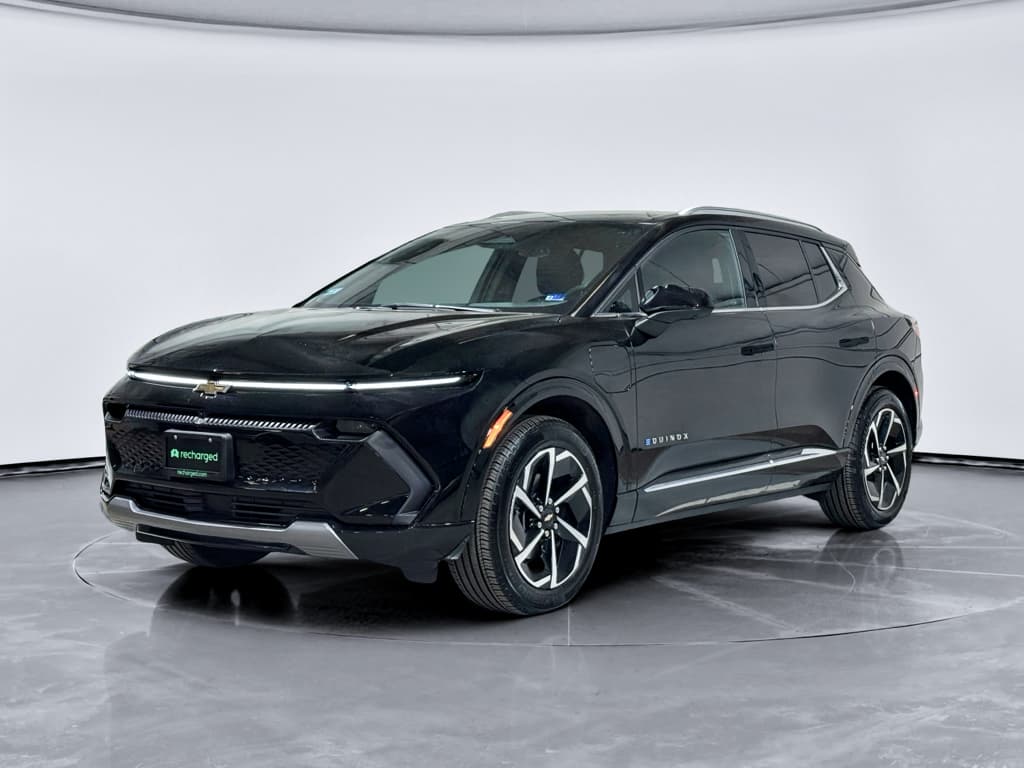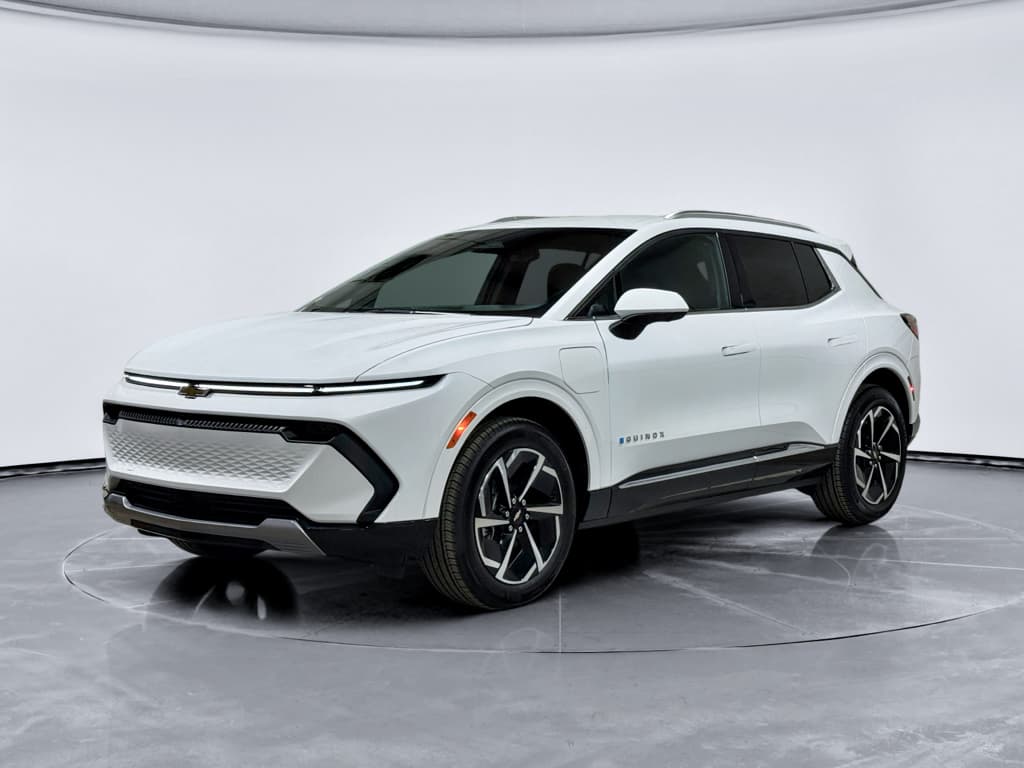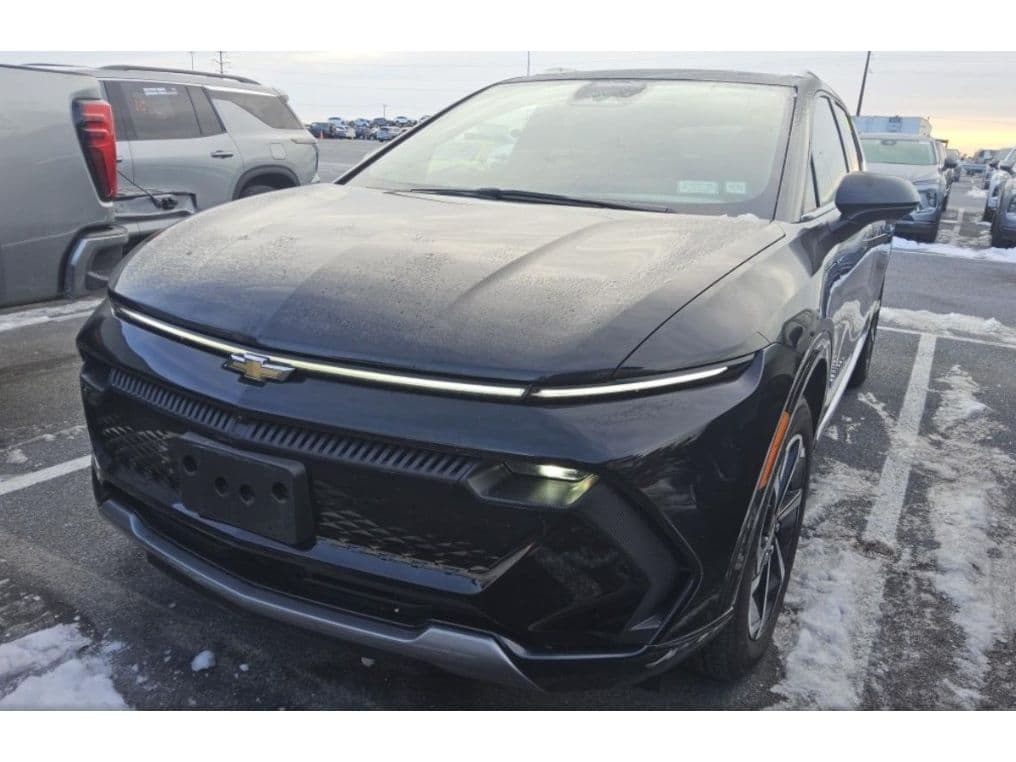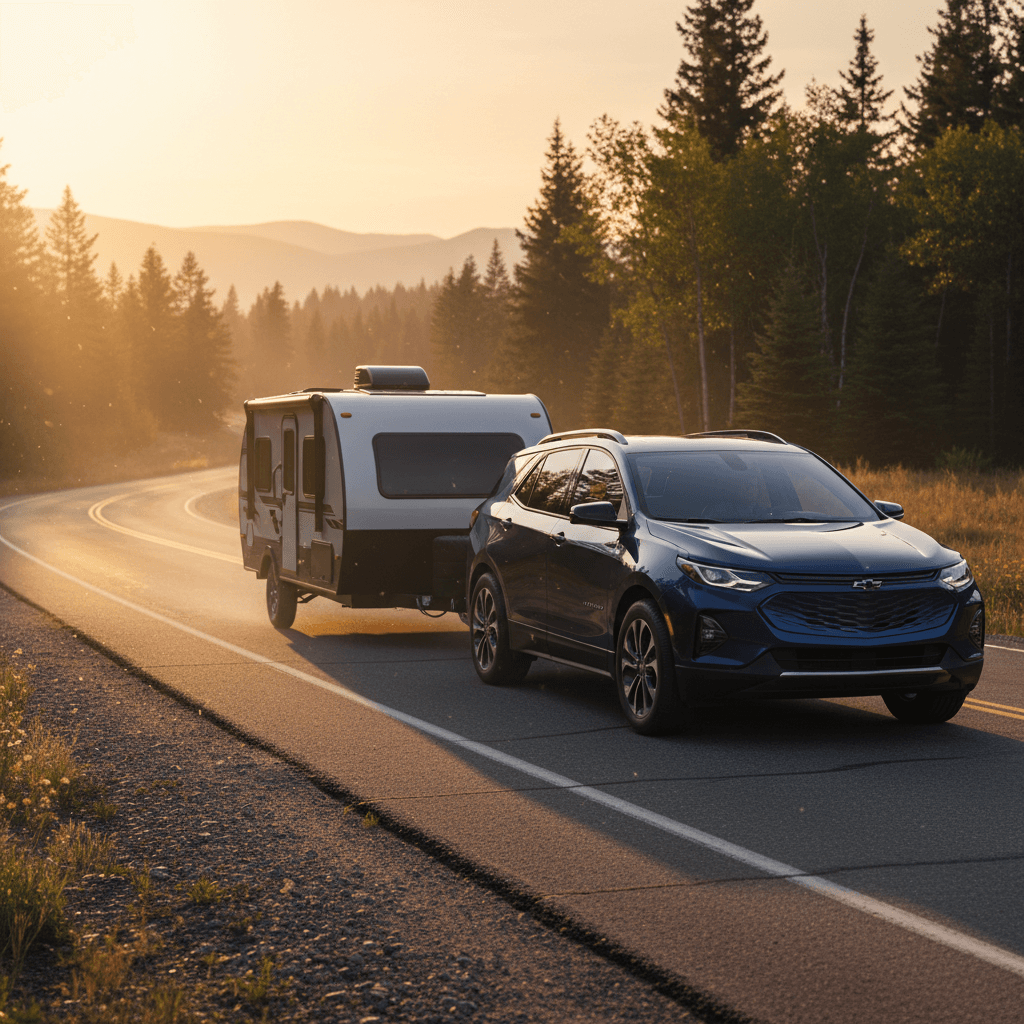
Yes, the Chevrolet Equinox EV can tow a trailer, within reason. Properly equipped, Chevy rates it to tow up to 1,500 pounds. That’s enough for a small camper, a pair of jet skis, or a 4x8 utility trailer full of weekend projects. But with an electric SUV, the real story isn’t just the number on the spec sheet; it’s how towing hits your range, how you load the trailer, and whether this compact EV actually fits your plans.
Snapshot: Equinox EV towing in one minute
Can the Chevrolet Equinox EV actually tow a trailer?
From the factory, the answer is **yes, the Chevrolet Equinox EV can tow a trailer**, provided it’s equipped with the correct trailering hardware. Chevrolet lists a **maximum towing capacity of 1,500 pounds** across the lineup when the vehicle has the appropriate hitch and wiring installed. That figure is in line with the gas-powered Equinox and many compact crossovers.
Where things get interesting is how that capacity feels on the road. The Equinox EV is a relatively heavy compact SUV with instant electric torque, which makes it feel confident at lower speeds. But like every EV, once you hang a brick-shaped trailer in the breeze, your smooth, quiet commuter turns into a rolling lesson in aerodynamics. You’re not buying a mini Silverado here; you’re getting a city‑friendly EV that moonlights as a light-duty tow rig.
Chevrolet Equinox EV towing at a glance
Chevrolet Equinox EV tow ratings, tongue weight, and limits
Let’s translate the brochure numbers into plain English. When you see “Maximum towing capacity: 1,500 lbs,” that’s not a suggestion; it’s the **hard ceiling**. Go beyond it and you’re outside what Chevrolet engineered the vehicle to handle, structurally, electrically, and legally in some cases.
Equinox EV key tow-related specs
Approximate factory ratings you should treat as hard limits unless your owner’s manual states otherwise.
| Item | Typical Rating | What It Means For You |
|---|---|---|
| Maximum trailer weight | 1,500 lbs | Total weight of trailer plus cargo; do not exceed it. |
| Typical tongue weight target | 10–15% of trailer weight | Aim for ~150–200 lbs on the hitch with a 1,500‑lb trailer. |
| Hitch tongue rating | Approx. 350 lbs | Upper limit of vertical load on the receiver; cargo carriers count too. |
| Number of passengers/cargo | Affects payload and stability | Full cabin + heavy cargo may mean you should tow less than 1,500 lbs. |
| Roof cargo | Not recommended when towing | Extra drag and weight stack onto everything the EV is already fighting. |
Always verify these numbers against the specific owner’s manual for your model year and trim before towing.
Don’t confuse tow rating with payload
What kind of trailer can an Equinox EV tow safely?
Good and bad trailer matches for the Equinox EV
Think in shapes and weights, not just numbers on paper.
Great matches (well within 1,500 lbs)
- 4x8 or 5x8 utility trailer with lawn gear or lumber
- Small aluminum utility trailer with a pair of bicycles or a motorcycle
- Teardrop or ultralight camper under ~1,500 lbs loaded
- Single-axle cargo trailer with light household items
Okay with care (near the limit)
- Small jet-ski trailer with one or two PWCs (check actual weights)
- Compact pop-up camper close to 1,300–1,500 lbs loaded
- Short, low-profile enclosed trailer with light cargo
Stay conservative, leave margin for water, propane, and camping gear.
Poor matches (skip these)
- Full-height travel trailers, even if under 1,500 lbs
- Car haulers or tandem-axle toy haulers
- Horse trailers or tall utility trailers stacked high
- Anything that feels like a parachute behind you
Here, aerodynamic drag hurts more than weight.
The 1,500‑lb rating puts the Equinox EV squarely in the "weekend gear hauler" camp, not the "family RV tow vehicle" club. It shines when you keep the trailer **small, low, and simple**. Think mulch runs, Home Depot Saturdays, or a minimalist camping setup, not dragging a cabin through the Rockies.
Pro tip: focus on loaded weight, not dry weight
How towing affects Chevrolet Equinox EV range
This is the part EV owners feel in their bones. The Equinox EV’s battery pack is sized for competitive daily driving range, but when you bolt on a trailer, **aerodynamic drag and rolling resistance** start drafting off your kilowatt-hours like it’s an all-you-can-eat buffet.
Light, low trailer
- Example: small open utility trailer, modest cargo
- Expect roughly 20–30% range loss at highway speeds
- A 280‑mile highway leg might feel more like 190–220 miles
- Realistic: plan for shorter legs, especially in cold weather
Small camper or box trailer
- Example: teardrop or short, boxy camper
- Expect roughly 30–50% range loss, sometimes more in wind or hills
- That same 280‑mile highway leg can shrink to 140–180 miles
- Plan charging stops every ~100–130 miles to keep stress low
Unlike a gas crossover, you don’t just watch a needle drop faster; you have to **plan your charging route around your new, shorter legs**. That usually means slower cruising speeds, more frequent stops, and choosing chargers with easy trailer access so you’re not playing Tetris in the parking lot.
Trailer + tight charger = bad combo
Tow package, hitch, and wiring: what you actually need
Whether you’re shopping new or used, the phrase you’re hunting for in the build sheet or window sticker is some form of **"trailering package" or "tow package."** On the Equinox EV, that usually includes pre‑wiring, a control module, and hardware provisions for the hitch.
Essential hardware before you tow a trailer
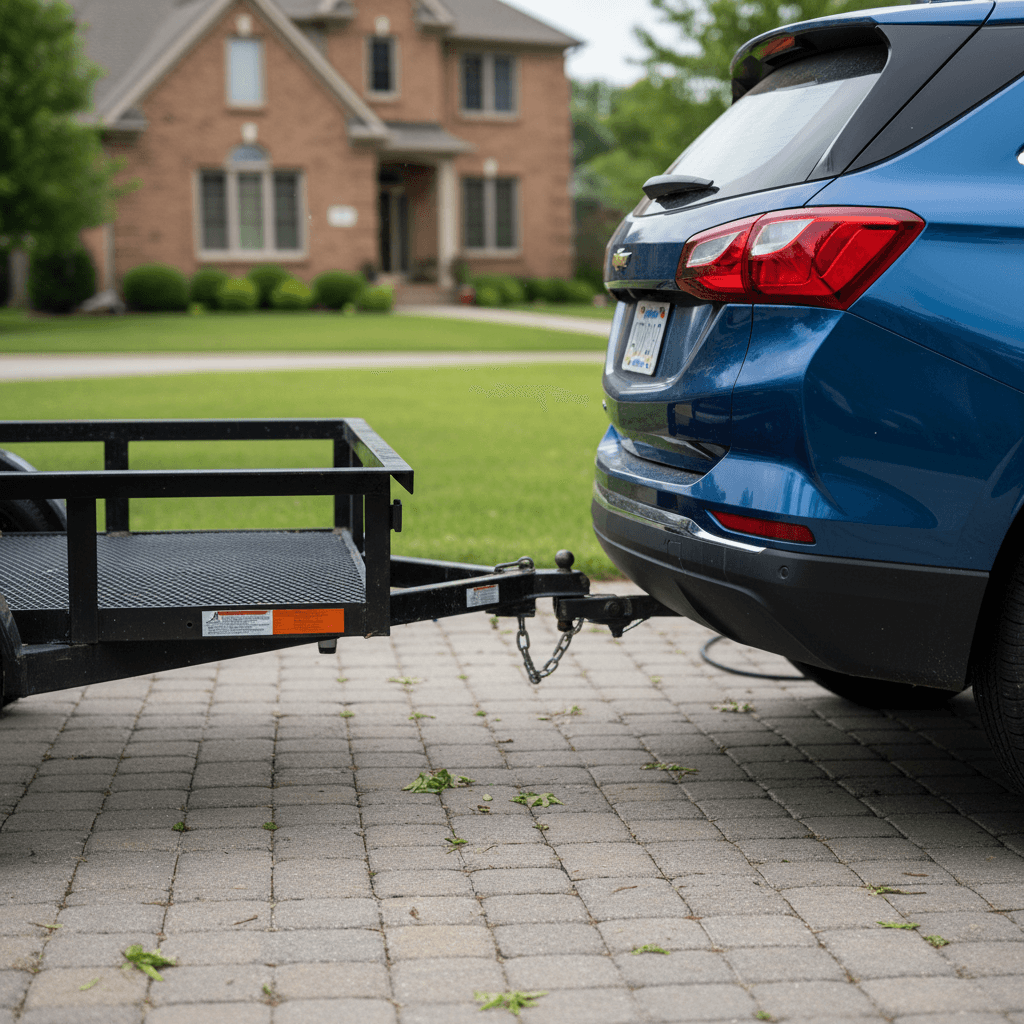
1. Factory or dealer-installed hitch receiver
Look for a **2‑inch receiver hitch** that’s specifically rated for the Equinox EV. Universal hitches from big-box stores are tempting, but the factory solution (or OEM‑spec equivalent) is engineered for the EV’s structure and rating.
2. Proper trailer wiring harness
You’ll need a **4‑pin (flat) trailer connector** for lights at minimum. This should be part of a GM-approved wiring kit that talks nicely to the Equinox EV’s electronics, rather than a spliced-in science project.
3. Brake controller (for heavier or braked trailers)
If your trailer has electric brakes, and in many states it must past a certain weight, you’ll need a compatible **trailer brake controller**. Ask the dealer or installer how they integrate it with the Equinox EV’s systems.
4. Correct ball mount and hitch ball
Match the **ball size to the trailer coupler** (commonly 1‑7/8", 2", or 2‑5/16") and use a ball mount that keeps the trailer riding level. An excessively nose‑up or nose‑down trailer is a recipe for sway.
5. Clear documentation of ratings
Confirm the **hitch rating, tongue weight limit, and tow capacity** in writing, owner’s manual, hitch sticker, or both. Snap photos and save PDFs; when in doubt roadside, you’ll want to know exactly what your setup is rated to do.
Buying used? Make the tow gear work for you
Ready to find your next EV?
Browse VehiclesWeight, loading, and safety basics for Equinox EV owners
Towing safely with a compact EV is less about bravado and more about **boring, disciplined math**. The Equinox EV will happily drag a properly matched trailer; what it can’t do is fix a badly loaded one.
- Keep tongue weight roughly 10–15% of total trailer weight. Too light and the trailer can sway; too heavy and the rear of the SUV sags and steering gets vague.
- Load heavy items low and centered over the trailer axle(s). Avoid piling weight behind the wheels, that’s how fishtailing starts.
- Stay under the Equinox EV’s **gross vehicle weight rating (GVWR)** and **gross combined weight rating (GCWR)** listed on the door sticker and in the manual.
- Respect local laws for trailer brakes and lighting; many states require brakes well under 1,500 lbs for certain types of trailers.
- Check tire pressures on both the SUV and trailer before every trip. Underinflation and towing are a bad mix.
Slow down, literally
Step-by-step: setting up your Equinox EV for its first tow
Your first Equinox EV towing setup, in 8 steps
1. Confirm ratings in the owner’s manual
Open the Equinox EV owner’s manual and find the **trailer towing** section for your exact model year and trim. Note the max trailer weight, tongue weight, and any speed limits Chevy specifies while towing.
2. Inspect the hitch and wiring
Verify the receiver hitch is **securely mounted**, not rusty or bent, and that the trailer wiring connector is free of corrosion. If anything looks questionable, have a professional shop or Chevrolet dealer inspect it.
3. Weigh or estimate your trailer
Use a public scale if possible. If not, add: trailer dry weight + water (8.3 lbs/gal) + propane + batteries + gear. If you’re close to 1,500 lbs, treat that as a red flag, not a goal.
4. Load the trailer correctly
Place heavy items low and near the axle(s), then fine‑tune tongue weight by moving cargo slightly forward or back. If the Equinox’s rear sags dramatically, you’ve gone too far.
5. Do a full light and brake check
With a helper watching, verify **running lights, brake lights, and turn signals** on the trailer. If it has brakes, test them gently in a safe, empty lot before you hit public roads.
6. Start with a short shakedown run
Drive a short, local loop at moderate speeds. Listen for clunks, feel for sway, and experiment with regen settings. This is the time to discover issues, not 200 miles from home at dusk.
7. Plan conservative charging stops
Use your favorite charging app and assume **30–50% less range** than usual. Prioritize easy‑access stations where you won’t have to shoehorn the trailer between parked cars.
8. Re‑check everything at the first stop
After 20–30 minutes of driving, stop and feel the **hitch, coupler, and wheel hubs** (carefully). Retighten straps, check the coupler latch, and make sure nothing has shifted.
Is the Equinox EV right for your towing needs, or do you need more?
When the Equinox EV is a great tow partner
- You mostly tow under **1,200–1,300 lbs** loaded.
- Your trips are regional rather than cross‑country marathons.
- You’re okay planning **more frequent charging stops**.
- Your trailer is compact and reasonably aerodynamic.
- You value quiet, smooth EV driving the other 95% of the time.
When you should look for more tow capacity
- You want to pull a full-height travel trailer or big toy hauler.
- Your camping style includes long, fast interstate days.
- You regularly tow in high winds, mountains, or extreme heat.
- Your family plus gear already eats most of the SUV’s payload.
- You’d rather sacrifice a bit of efficiency for a beefier tow rating.
If that second column sounds like your life, you might be happier in something with a **higher tow rating and more battery**, think midsize electric SUVs and trucks that are explicitly built to pull. If, on the other hand, you just want an EV that can drag a small trailer to the trailhead or a teardrop to a state park once a month, the Equinox EV is right in its element.
How Recharged can help if you’re shopping used
FAQ: Chevrolet Equinox EV towing questions, answered
Chevrolet Equinox EV towing FAQ
So yes, the Chevrolet Equinox EV can tow a trailer, so long as that trailer is **small, sensible, and honestly weighed**, and you respect the 1,500‑lb limit. In return, you get a quiet, smooth EV that handles mulch runs, lightweight campers, and DIY weekends without giving up its urban friendliness the other six days of the week. Treat the ratings as gospel, take the hit in range as the price of admission, and the Equinox EV becomes what it was always meant to be: a city EV with just enough tow capability to keep your hobbies rolling.