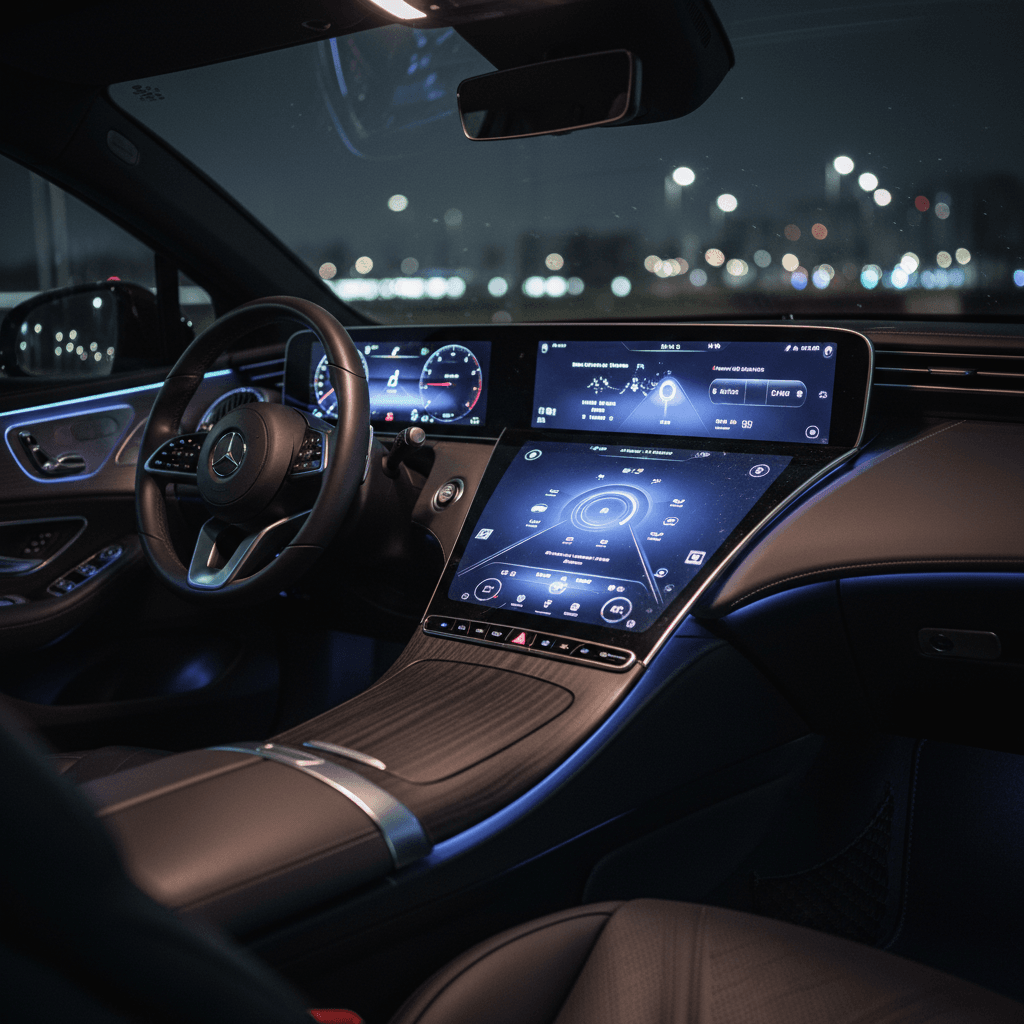
The Mercedes EQS arrived in 2021 as the electric S‑Class, a rolling technology thesis on how far you can push luxury, silence and software. Now it’s 2026, early cars have 30,000–70,000 miles on the clock, and the market has rendered its harsh verdict: the EQS plummets in value even as it still feels like a spaceship from the future. This long term review looks at what the EQS is really like to live with in 2026, and whether buying one used is a stroke of genius or an expensive science experiment.
Context: Which EQS Are We Talking About?
Why a 2026 Long-Term Look at the EQS Matters
When the EQS was new, reviewers focused on range numbers, that vast Hyperscreen dashboard and the way it tried to out‑S‑Class the S‑Class. That’s not your question in 2026. You want to know: Does it hold up at 50,000 miles? What breaks? How ugly is the depreciation? And, crucially, is this the smartest way to get a six‑figure luxury EV for the price of a new midsize crossover?
Mercedes EQS in 2026: The Big Numbers
Those numbers sketch the EQS paradox. It’s still one of the most comfortable, technically ambitious EVs you can buy, and one of the steepest‑depreciating. For a used buyer, that combination can be enormously attractive if you go in with clear eyes.
What the Mercedes EQS Gets Brilliantly Right
Core Strengths of the Mercedes EQS
Where this big electric Benz still feels genuinely special in 2026
Near-Silent Cruising
First-Class Comfort
Showpiece Interior
If you commute on relatively smooth highways and charge at home, the EQS plays to its strengths. It’s serene, quick in any trim, and it asks very little of you beyond plugging in at night. The car takes care of the rest, often wrapping you in a level of comfort that would have required an S‑Class with a big engine and bigger fuel bills just a few years ago.
Range, Battery Life and Real-World Efficiency
On paper, most EQS sedans land between around 277 and 352 miles of EPA range depending on battery size and trim. In the real world, long‑term owners tend to see something closer to 250–320 miles in mixed driving, depending heavily on wheel size, climate and speed.
Real-World Range After a Few Years
- EQS 450+ owners often report 3.0–3.5 mi/kWh in mixed use, which translates to roughly 260–300 miles on a full charge in normal driving.
- Higher‑power EQS 580 models, big wheels and aggressive driving can trim that by 10–15%.
- In cold climates, plan on winter range dropping 20–30%, especially on short trips where the big cabin needs repeated heating.
Battery Degradation So Far
Most early‑build EQS sedans are now 3–5 years old, and owner reports generally show modest capacity loss so far, often in the single‑digit percentages by 50,000 miles when properly charged and not fast‑charged every day.
Mercedes backs the high‑voltage pack with an 8‑year / around 100,000‑mile warranty for major defects on U.S. cars, which typically follows the vehicle to second owners. For a used buyer, that warranty window is a huge part of the appeal.
Pro Tip: How to Treat the EQS Battery Well
Charging Experience: On Road Trips and In Town
The EQS runs on a 400‑volt architecture and most trims peak around 200 kW on a capable DC fast charger. That’s no longer headline‑grabbing in 2026, but it’s still plenty usable for real‑world road trips.
EQS Charging Experience at a Glance
Typical numbers for a healthy EQS sedan in mild weather on a modern DC fast charger.
| Scenario | Approx. Time | Energy Added | What It Feels Like |
|---|---|---|---|
| 10–80% DC fast charge | 30–35 minutes | Enough for ~180–220 miles | Coffee + restroom stop; not painful, but slower than some newer 800‑V rivals. |
| 20–80% DC fast charge | 25–30 minutes | ~150–190 miles | Reasonable on a long road‑trip rhythm. |
| 0–100% Level 2 at home (9.6 kW) | 10–12 hours | Full pack overnight | You plug in; you forget about it; it’s full by morning. |
| Daily top‑up (40–70% at home) | 2–3 hours | ~70–100 miles | Most owners treat the EQS like a smartphone, top up, don’t think about it. |
Actual times vary with temperature, charger quality and state of charge, but this is broadly what you can expect.
Watch Out for Charging Curve Reality
Around town, the story is simple: if you can install a 240‑V Level 2 charger, the EQS is easy to live with. If you rely exclusively on public charging, it becomes more of a logistical project, not unique to Mercedes, but the reality of running a big‑battery luxury EV without a driveway.
Software, UX and Luxury Tech: The Good and the Gremlins
The EQS is a triumph of theater, the ambient lighting, the whispering climate control vents, the augmented‑reality head‑up display that paints arrows directly onto the lane you should take. When it all works, it feels more like a first‑class airline pod than a car.
EQS Tech: Highlights vs. Headaches
Why owners love the gadgets… and sometimes swear at them
Tech That Delights
- Augmented‑reality navigation is legitimately useful in complex city interchanges.
- MBUX voice control understands natural speech better than many rivals.
- Seat massage, Energizing Comfort programs and high‑end audio make long drives feel shorter.
Tech That Annoys
- Occasional lag or bugs in the infotainment stack, frozen cameras, blank tiles, random warnings that clear with a restart.
- Owner anecdotes of glitchy driver‑assist behavior or lane‑keeping that can feel overbearing.
- Updates are better in 2025–2026 cars, but earlier builds may still feel like software in search of a service pack.
Critical Note on Driver-Assistance and Software
Ride Comfort and Daily Liveability
Here the EQS delivers on the badge. Air suspension and adaptive damping soak up expansion joints with a soft‑touch, almost floaty character, especially on 19‑inch wheels. It’s not a sports sedan, nor does it pretend to be; push it hard on a back road and the EQS will respond, but it clearly prefers a glass‑smooth autobahn to a mountain pass.
- Steering is light and artificially filtered, but the optional rear‑axle steering makes this huge sedan eerily maneuverable in parking lots.
- Cabin storage is generous, but the swoopy roofline can pinch rear‑seat headroom for tall passengers compared with traditional three‑box sedans.
- Trunk space is large and usefully shaped; the hatchback layout is a real advantage over some rival luxury EV sedans.
- As a commuter or chauffeured car, the EQS still feels like one of the comfiest ways to dissolve traffic and meetings into background noise.
Reliability Patterns From 2021–2025 Owners
There isn’t a single “EQS reliability story,” but a pattern emerges from owners, forums and service data: the core EV hardware has been broadly solid; the complexity around it can be hit‑or‑miss.
What’s Generally Held Up Well
- Battery packs and drive units: So far, widespread catastrophic failures appear rare; most issues are software or low‑voltage‑system related.
- Suspension hardware: Air struts and control arms aren’t trouble‑free, but large‑scale failure patterns haven’t emerged the way they have with some older air‑suspended luxury cars.
- Brakes: With strong regenerative braking, pads and rotors tend to wear slowly if the car is driven smoothly.
Common Owner Complaints
- Intermittent software glitches: random warning lights, occasional loss of camera or sensor functions, fixed via software updates or module resets.
- HVAC quirks: reports of stuck‑on heat or inconsistent A/C performance that required dealer visits and, in a few cases, repeated repairs.
- Dealer experience: some owners report long wait times for parts and limited EV‑specific expertise at smaller stores, which can stretch a minor issue into a multi‑week saga.
Warranty Safety Net for Used Buyers
Depreciation: The EQS’s Great Tragedy and Used-Buyer Opportunity
New, the EQS sedan often opened above the six‑figure mark. By the time it hits the two‑ or three‑year mark, it has a reputation for shedding value with operatic enthusiasm, one of the heaviest‑depreciating luxury sedans of its cohort. The flip side? In 2026 you can often buy a lightly used EQS for the price of a new mid‑trim gas crossover.
EQS Depreciation Snapshot
Why Depreciation Is Your Friend in 2026
Should You Buy a Used Mercedes EQS in 2026?
The EQS Is a Great Fit If…
- You want S‑Class comfort without S‑Class fuel bills, and you’re okay paying for premium maintenance when needed.
- You have reliable Level 2 home charging and don’t mind 25–35‑minute fast‑charge stops on road trips.
- You value quiet, comfort and tech theater more than razor‑sharp handling.
- You’re shopping 2–4‑year‑old cars still within their warranty envelope and are willing to walk away from cars with sketchy service histories.
You Might Want Something Else If…
- You demand bulletproof simplicity and minimal software drama above all else.
- You live far from a strong Mercedes dealer and can’t be without your car for days if a module goes sideways.
- You prioritize road‑trip charging speed over cabin luxury and are eyeing newer 800‑V EVs.
- You’re looking for a small, tossable EV; the EQS is big, luxurious and unapologetically plush.
Used Mercedes EQS Buying Checklist
11 Things to Check Before You Buy a Used EQS
1. Pull a Detailed Service History
Ask for all available service records. Look for evidence of software updates, HVAC repairs, and any repeated visits for the same electrical complaint. Spotty records on a tech‑heavy car should give you pause.
2. Verify Battery and Drive Unit Warranty
Confirm in writing how much <strong>high‑voltage battery</strong> and powertrain warranty remains based on the original in‑service date and mileage. This coverage is your parachute if something big goes wrong.
3. Get Objective Battery Health Data
Don’t rely on a simple “100%” gauge. Use a <strong>third‑party battery health report</strong> or a platform like Recharged’s <strong>Recharged Score</strong> to measure remaining capacity and fast‑charge behavior before you buy.
4. Test All Climate Functions Thoroughly
Spend time with the HVAC. Check that A/C, heat, seat ventilation and defrost all work consistently. HVAC glitches have been a recurring annoyance for some owners.
5. Cycle Every Driver-Assistance Feature
On a test drive, use adaptive cruise, lane‑keeping, blind‑spot monitoring and parking aids. Any warning lights, phantom braking or inconsistent behavior deserve a pre‑purchase inspection by a dealer familiar with EQ models.
6. Inspect Suspension and Tires
Listen for clunks over bumps and feel for floatiness or uneven rebound. On an air‑suspended luxury car, neglected tires or worn components can turn that "magic carpet" into a boat.
7. Check Every Screen and Camera
Make sure the main display, instrument cluster and any rear‑seat screens work properly, with no random blackouts or frozen UI. Toggle all cameras and parking sensors, then restart the car and repeat.
8. Confirm Charging Performance
If possible, do a short <strong>DC fast‑charge test</strong>. Watch that the car reaches reasonable power levels for its state of charge and doesn’t immediately throttle down due to cooling or software issues.
9. Look for Water Intrusion and Odors
Check trunk, footwells and underfloor storage for dampness, mildew or stains. A leaky seal can be an expensive, hard‑to‑trace annoyance in a high‑tech interior.
10. Evaluate Dealer Access
Map out nearby Mercedes dealers and ask about <strong>EV‑trained technicians</strong> and typical wait times. A fantastic EQS is only as good as the support network around it.
11. Budget for Luxury-Car Running Costs
Even with low “fuel” costs, this is still a six‑figure‑engineering car at heart. Set aside money for tires, alignment and out‑of‑warranty electronics as the car ages.
How Recharged Evaluates a Used EQS
Because the EQS is both brilliant and complex, it’s exactly the kind of car that rewards a deeper inspection than a quick test drive and a tire kick. At Recharged, every EQS we list goes through a structured evaluation, including battery‑health diagnostics and market‑based pricing analysis.
Inside a Recharged EQS Assessment
What we look at before we put an EQS on our marketplace
Recharged Score Battery Test
Systems & Software Check
Fair Market Pricing
Ready to find your next EV?
Browse VehiclesWhy Shop a Used EQS Through Recharged?
Mercedes EQS Long-Term Review 2026: FAQ
Frequently Asked Questions About Long-Term EQS Ownership
Final Thoughts: Is the EQS a Future Classic or a Cautionary Tale?
In 2026, the Mercedes EQS is both. As a piece of industrial design, it’s a landmark: a near‑silent, lounge‑like electric flagship that makes most commutes feel indecently civilized. As a financial instrument when bought new, it has been brutal. That contradiction is exactly why it’s so interesting on the used market.
If you’re the kind of driver who appreciates comfort, quiet and spectacle more than lap times, have reliable home charging, and are willing to let a specialist vet the car’s battery and electronics, a used EQS in 2026 can be one of the most rewarding EVs you can buy for the money. If, on the other hand, you want set‑and‑forget simplicity and never want to see the inside of a dealer service bay, there are safer, duller choices.
Either way, go in with open eyes, good data and a clear plan. The EQS may not be perfect, but in the right driveway, especially bought smart through a platform built for used EVs like Recharged, it can feel a lot like you cheated the luxury‑car system.