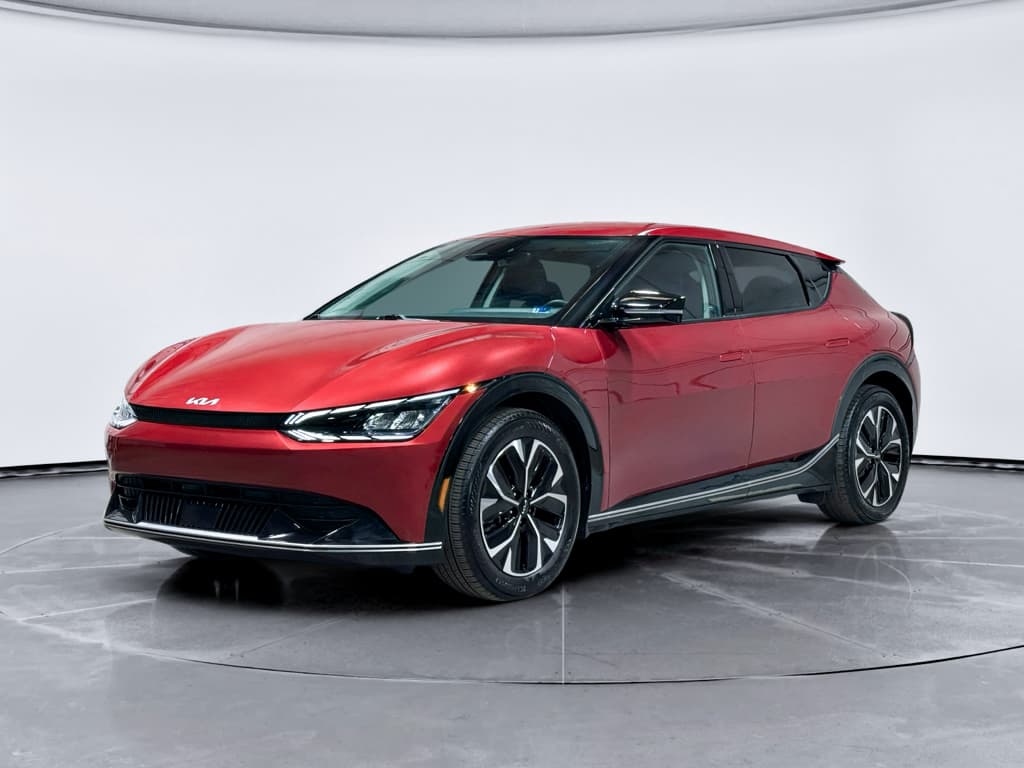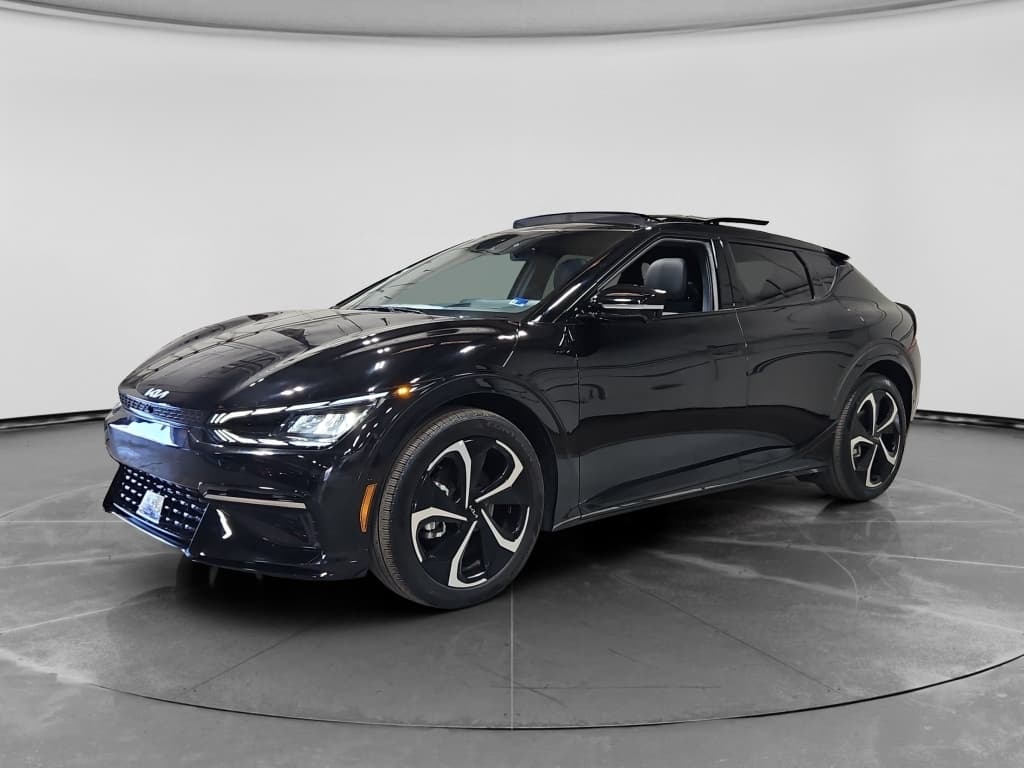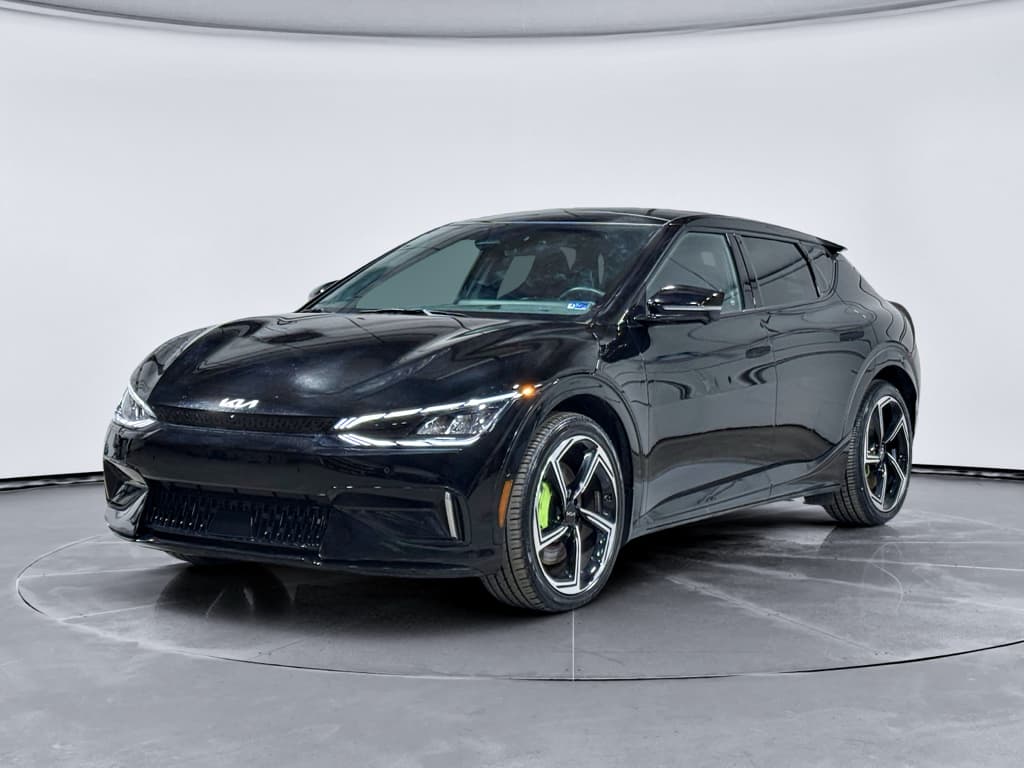
You don’t need a crystal ball to figure out your Kia EV6 trade in value. You need numbers, context, and a clear sense of how dealers actually look at this sleek Korean crossover that turned out to depreciate like a tech gadget. The good news: if you understand what’s driving prices in 2026, you can still come away with a very respectable check, or a strong trade figure on your next EV.
Quick take
Kia EV6 trade‑in value basics in 2026
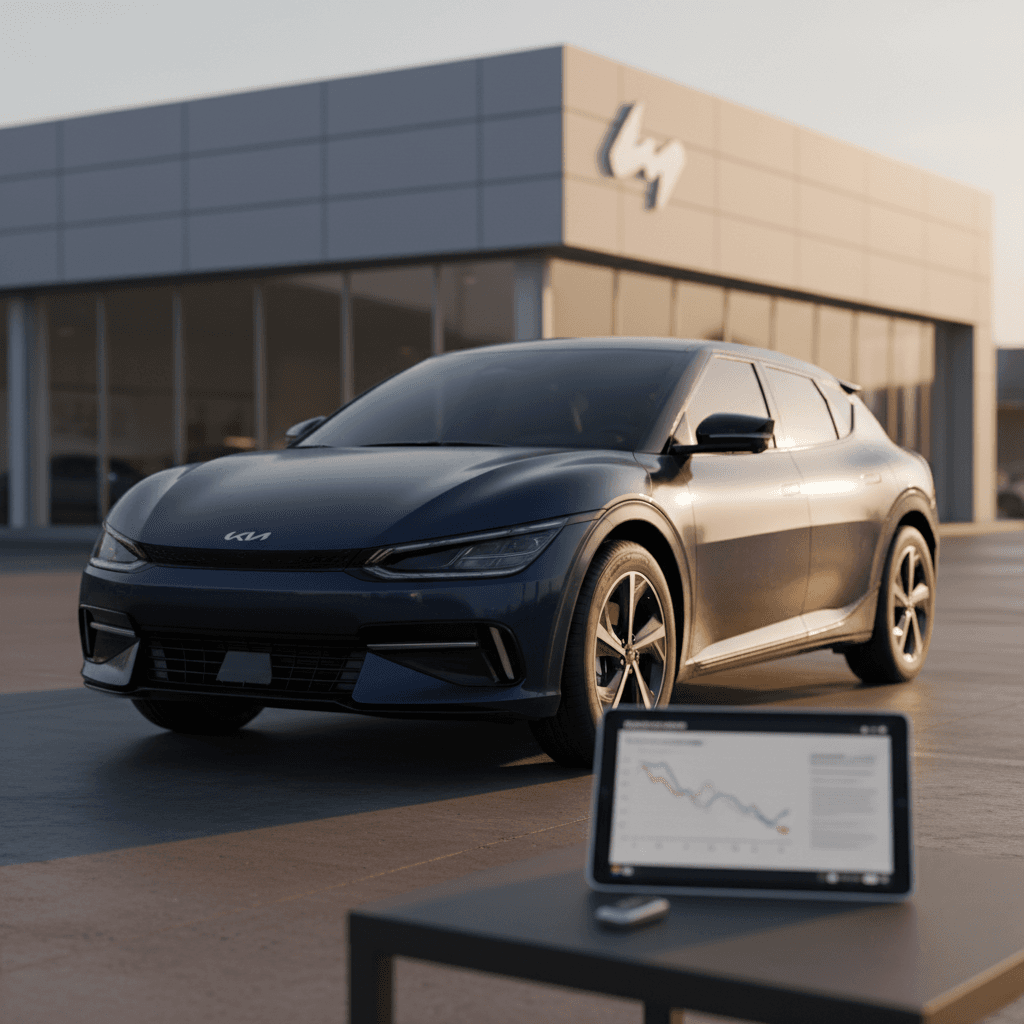
Let’s start with what the data says. Analyses of real‑world sales show the Kia EV6 loses around 60–62% of its value over five years, putting it on the sharper end of EV depreciation. One major resale study pegs five‑year depreciation at about 61.5%, with an average five‑year resale value in the mid‑teens to low‑20s (thousands of dollars), depending on which dataset you read and what MSRP they’re assuming. That’s steeper than the average SUV and even a bit worse than the broader EV compact SUV segment.
Kia EV6 value snapshot
If you’re holding the keys to a 2022–2025 EV6, that sounds grim. But those are averages across trims, mileages, and conditions. Your individual trade‑in value can sit well above or below the curve depending on how you’ve specced, driven, and cared for the car, and where you choose to sell it.
How much is my Kia EV6 worth today? Real‑world ranges
Online value tools and listing sites in early 2026 paint a fairly consistent picture: the EV6 has been marked down by the market, but not written off. The spread is wide because trims, miles, and buyer appetite vary a lot.
Typical Kia EV6 price ranges in early 2026
Approximate U.S. market ranges based on recent listing and appraisal data. Your trade‑in offer will usually sit a few thousand below the private‑party numbers.
| Model year | Example trim | Approx. mileage | Rough private‑party range | Typical dealer trade‑in window |
|---|---|---|---|---|
| 2025 | Light / Wind | 5k–15k mi | $30,000–$38,000 | $27,000–$34,000 |
| 2024 | Light / Wind / GT‑Line | 15k–40k mi | $23,000–$32,000 | $20,000–$28,000 |
| 2023 | Wind / GT‑Line | 30k–60k mi | $19,000–$27,000 | $16,000–$23,000 |
| 2022 | Wind / GT‑Line | 40k–70k mi | $17,000–$23,000 | $14,000–$20,000 |
These are ballpark ranges to help you sanity‑check any trade‑in quote you receive.
About these numbers
Why Kia EV6 depreciation looks so steep
By the numbers, the EV6 is one of the harder‑hit EVs on resale. Depending on the study you read, a new EV6 is forecast to retain only about 38–40% of its original value after five years, versus roughly half for the average SUV. There are a few forces working against it, and none of them have to do with the quality of the vehicle, which is fundamentally very good.
Four big reasons EV6 values have slid
Understanding these helps you read any trade‑in offer with a clearer eye.
EV price wars and incentives
Hyundai and Kia chased volume with heavy discounts and lease deals on new EVs. When new prices fall, used values follow. If a shopper can lease a fresh EV6 cheaply, your 3‑year‑old example has to be seriously discounted to compete.
Fast‑moving EV tech
The EV6 rides on a sophisticated 800‑volt platform that still charges like a champ. But batteries, range, and charging speeds are improving quickly across the segment, which makes early adopters look ‘old’ on paper, even when they still drive like new.
Tax‑credit whiplash
The expiration of federal EV tax credits in late 2025 hit Korean brands hard. New EV6 sales slowed, inventories piled up, and dealers discounted aggressively. That puts pressure on used pricing and, by extension, trade‑in offers.
Supply vs. demand mismatch
Plenty of EV6s were leased or purchased in 2022–2024. Many of those are coming off lease into a market where some shoppers are spooked by charging access and policy changes. More cars than buyers equals softer offers.
The upside of steep depreciation
Factors that move your EV6 trade‑in value up or down
When an appraiser walks around your EV6, they’re mentally adjusting your value every few seconds, up for positives, down for negatives. Here are the levers that matter most.
What appraisers care about on a Kia EV6
1. Model year and trim
Late‑model 2024–2025 EV6s with desirable trims (Wind, GT‑Line, GT) command a premium over early 2022 cars. Performance‑oriented trim lines generally hold a bit better than stripped base models.
2. Mileage and usage
Under ~30,000 miles is friendly territory; over 60,000 miles on a three‑ or four‑year‑old EV6 will push a dealer’s pencil down. High‑speed DC fast‑charging road‑warriors can also raise quiet concern about battery wear.
3. Battery health and charging history
Nothing moves the needle like <strong>proven battery health</strong>. If a scan shows your pack still near original capacity, that’s a confidence boost. Evidence of chronic 100% charging or heavy fast‑charge use can do the opposite.
4. Cosmetic and structural condition
Curb‑rashed wheels, dents, a cracked windshield, or a tired interior all translate into reconditioning costs. Anything on the CARFAX, especially collision damage, can drag your offer down sharply.
5. Tires and brakes
An EV6 is heavy and quick; it eats tires and pads if driven hard. Fresh rubber and solid brakes can be the difference between a so‑so and a strong offer, because the next owner won’t need immediate maintenance.
6. Options and color
Premium audio, sunroof, driver‑assist packs, and popular colors move the needle slightly. Odd colors or unusual specs can narrow your buyer pool and soften your trade number.
Document your car’s story
Trade‑in vs private sale vs EV specialist buyers
The path you choose to sell your EV6 is worth thousands of dollars either way. The traditional trade‑in at a local dealer is convenient but rarely generous. Private sale maximizes price but eats time and energy. Selling to an EV‑focused buyer like Recharged sits somewhere in the middle: more money than the average trade‑in, far less hassle than selling it yourself.
Conventional trade‑in
- Pros: Fast, simple, rolls into your next deal.
- Cons: Lowest offers; many dealers still fear EV complexity.
- Best for: Owners who value convenience over every last dollar.
Private sale
- Pros: Highest potential selling price.
- Cons: Listings, test drives, tire‑kickers, paperwork.
- Best for: Sellers with time, patience, and a hot‑spec EV6.
EV‑specialist buyer (like Recharged)
- Pros: Stronger offers on clean EVs; they understand battery reports and real‑world demand.
- Cons: Limited to their service area / online reach.
- Best for: Owners who want a fair, data‑backed offer without doing all the legwork.
Where Recharged fits in
Ready to find your next EV?
Browse VehiclesHow battery health impacts Kia EV6 trade‑in value
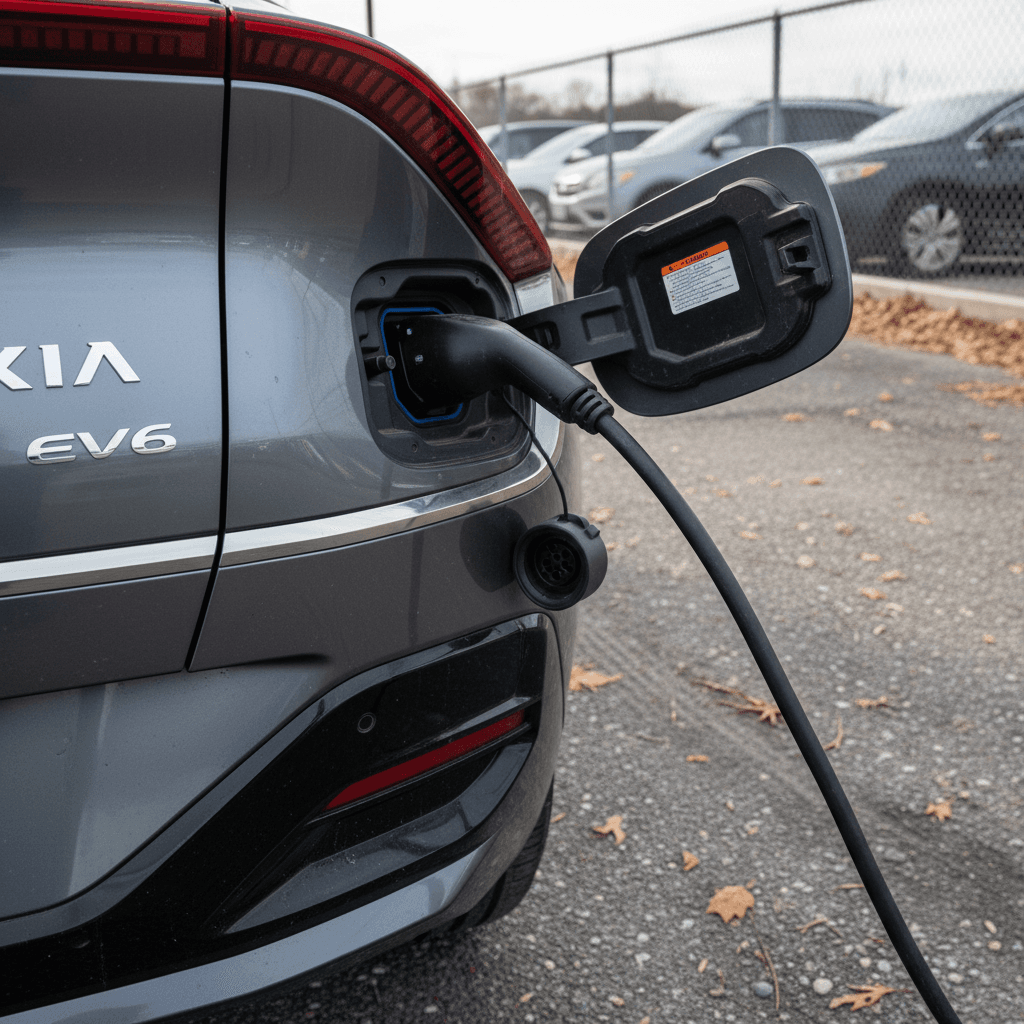
Underneath the styling flourishes and the giant center screen, your EV6 is fundamentally a big battery on wheels. That battery is warrantied for 10 years or 100,000 miles against dropping below 70% of its original capacity, but in the real world, most owners are seeing relatively modest degradation so far. Buyers know this, and they still want proof.
What different battery health scenarios mean for value
Approximate impact vs. an identical EV6 with a strong, verified pack.
90–100% of original capacity
This is unicorn territory for a several‑year‑old EV6, but not impossible if it’s low‑mileage and well‑treated. Expect top‑of‑range trade‑in offers and strong private‑sale interest.
82–89% of original capacity
Completely normal for a used EV. Most buyers and dealers shrug at this range, and it typically has minimal impact on your number as long as range still meets expectations.
Below ~80% capacity
Now the questions start. Buyers worry about road‑trip range and long‑term life. Expect noticeable discounts, especially from non‑EV‑specialist dealers who don’t want to gamble.
Don’t guess, scan the pack
How to estimate your EV6 trade‑in value (step‑by‑step)
You don’t have to accept the first number someone scribbles on a worksheet. Spend 20–30 minutes doing your homework, and you’ll know instantly whether an offer is fair, light, or insulting.
6 steps to a realistic Kia EV6 trade‑in estimate
1. Start with online appraisal tools
Plug your VIN, mileage, and ZIP code into two or three appraisal tools. Use values for ‘clean’ condition if the car is well‑kept. Average the trade‑in numbers; that’s your baseline.
2. Scan used listings matching your spec
Search cars that match your EV6’s model year, trim, mileage, and region. Pay attention to actual asking prices, not outliers. Expect <strong>trade‑ins to land several thousand below</strong> those retail asks.
3. Adjust for condition and equipment
Mentally move your number up for fresh tires, no accidents, desirable options, and clean cosmetics. Move it down for bodywork, curb rash, worn brakes, or weird colors that narrow your buyer pool.
4. Factor in battery health (if you can measure it)
If you have a recent battery‑health report, assume a slight premium for above‑average results and a modest discount for below‑average. If you have no idea, assume the market will price in some risk.
5. Get at least two real offers
Visit or contact at least two buyers: a local dealer and an EV‑focused platform like Recharged. If both cluster around the same figure, you’re near true market value.
6. Decide how much hassle you’ll tolerate
If offers feel light, ask whether a private sale could net $2,000–$4,000 more and whether that money justifies the time and effort. Sometimes, taking a slightly lower but immediate offer is the right move.
Tips to squeeze the most from your EV6 trade‑in offer
Think of the trade‑in process as staging a house for sale, but for a sleek, battery‑powered hatchback in SUV cosplay. The goal is to reduce every excuse the buyer has to discount you.
- Detail the car inside and out. A professional detail is often cheaper than the amount dealers knock off for a dirty car.
- Fix inexpensive cosmetic issues (headlight haze, small paint scuffs, worn wiper blades) before an appraisal.
- Address dashboard lights: no one pays top dollar for an EV with a glowing check‑engine or tire‑pressure light.
- Gather records: charging habits, software updates, recall work, tire rotations, and any warranty repairs.
- Time your sale: late winter and early spring often bring better EV demand than the dog days of summer or the dead of holiday season.
- Shop your deal: pit at least two offers against each other. Let buyers know, gently, that you’re comparing numbers.
Leverage financing and trade‑in together
FAQ: Kia EV6 trade‑in value
Common questions about Kia EV6 trade‑in value
Bottom line: Is now a good time to trade your EV6?
If you bought your Kia EV6 at or near its original MSRP, the numbers in 2026 are, frankly, sobering. On paper, it’s one of the harder‑hit EVs in resale charts. But numbers without context miss the important part: this is a fast‑charging, well‑equipped crossover with a long battery warranty and a growing audience of second‑owner shoppers who want exactly that combination.
Your job, as a seller, is to control the variables you can: present a clean, well‑documented car, get hard data on the battery, and compare offers from at least one conventional dealer, one EV‑specialist buyer, and, if you have the appetite, the private‑sale market.
Recharged exists for exactly this moment in an EV’s life. We buy and sell used electric vehicles every day, run battery‑health diagnostics on each one, and back our pricing with transparent market data in a Recharged Score report. Whether you want an instant offer for your Kia EV6, a trade‑in toward another EV, or a consignment‑style sale with nationwide exposure, our team can help you turn a volatile market into a straightforward transaction, without leaving your couch.