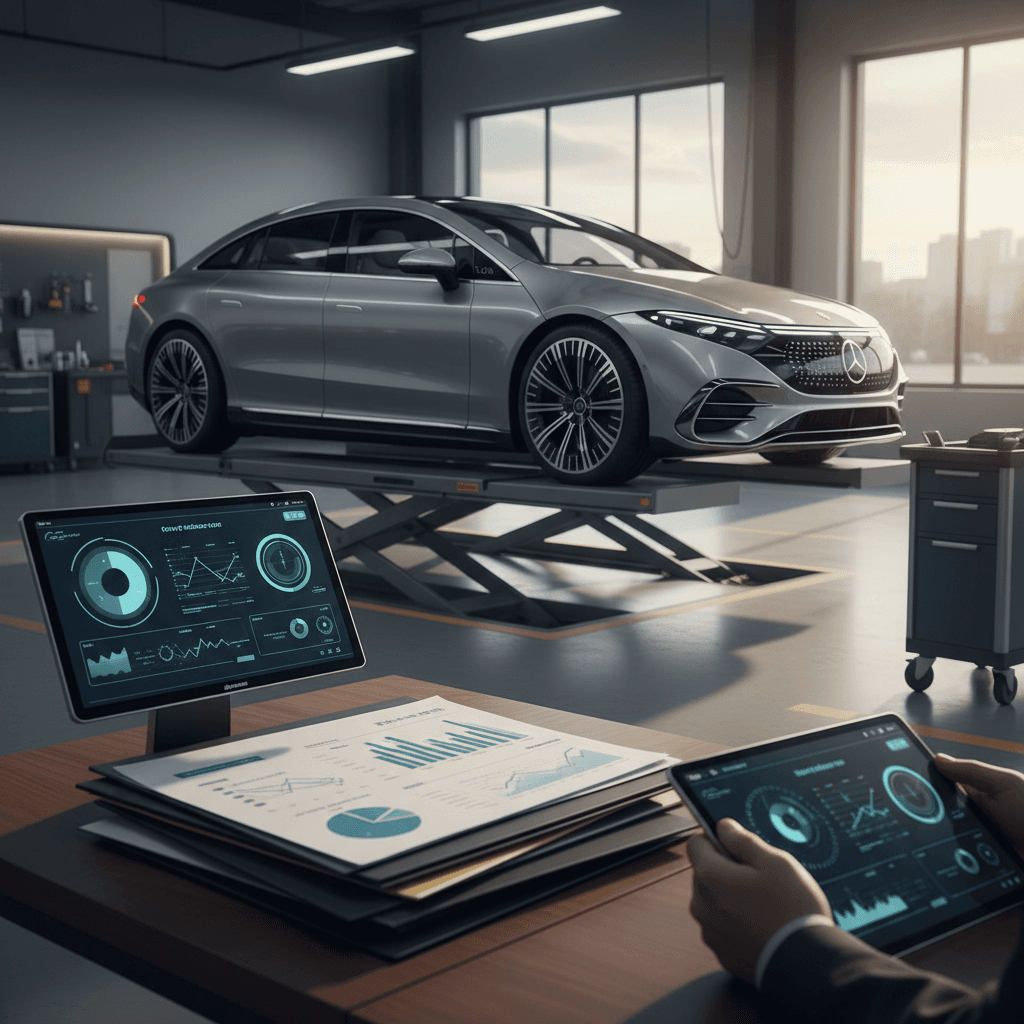
If you’re eyeing a Mercedes EQS, or already have one in the driveway, you’re probably wondering what the **annual maintenance cost** looks like on a six‑figure electric flagship. EVs are supposed to be cheaper to maintain than gas cars, but this is still a Mercedes: there are service schedules, “A” and “B” visits, and big‑ticket wear items to think about. Let’s break down what you can realistically expect to spend each year, and how to keep those costs in check.
The short answer
Mercedes EQS annual maintenance cost at a glance
Mercedes EQS ownership costs: quick stats
Those numbers are averages, not a bill written in stone. Your personal **Mercedes EQS annual maintenance cost** depends on how hard you drive, where you live, and whether you choose a Mercedes dealer, a prepaid plan, or a trusted independent shop.
How much does a Mercedes EQS cost to maintain per year?
Let’s put some solid stakes in the ground before we zoom into the weeds.
- Kelley Blue Book’s 5‑year cost‑to‑own analysis for the 2025 Mercedes‑EQ EQS pegs **average annual maintenance at about $1,602**, or $8,010 over five years.
- Dealer guidance and owner reports cluster routine EQS services between **$500 and $1,300 per visit**, depending on whether it’s a lighter "A"‑type service or a more involved "B" or A2 service.
- Most EQS drivers will see **one paid service about every 1–2 years**, plus wear‑and‑tear items like wipers and tires. Over time, that still averages out close to the $1,200–$1,800 per year range.
Could you land lower than that? Absolutely, especially if you drive modest miles, shop around, or buy a **used EQS** after the steepest depreciation and earliest service hits have already passed. Could it be higher? Yes again, hard‑driven cars on 21‑inch tires, always serviced at high‑labor‑rate metro dealers, will skew toward the top end of that range.
Don’t forget tires and wheels
Service A vs Service B on the EQS
Mercedes doesn’t shout the EQS service schedule from the rooftops, but the pattern will feel familiar if you’ve owned a gas Mercedes. You still see alternating **Service A and Service B** (and later A2/B2‑style variants), just with EV‑specific checklists instead of engine oil changes.
What’s the difference between Service A and Service B?
The basics apply across EQS sedans and SUVs, though exact menus vary by year and region.
Service A (lighter visit)
On an EQS, a typical Service A (or A1/A2 variant) focuses on inspections and a few basic consumables:
- General multi‑point inspection
- Cabin/dust filter replacement
- Brake fluid change (on some A2/B variants)
- Software/diagnostic checks for EV systems
- Road test and reset of service reminders
Owners commonly report **$500–$900** at U.S. dealers for this level of service, depending on location and upsells.
Service B (heavier visit)
Service B (and B2‑type) layers on more time and parts:
- All A‑service items
- More detailed chassis and suspension checks
- Additional filter replacements as needed
- More extensive brake inspection/possible fluid flush
- Additional EV high‑voltage checks
This is where invoices often climb into the **$800–$1,300** range at Mercedes dealers.
About those service intervals
EQS maintenance schedule and when bills get bigger
Instead of a one‑page schedule, Mercedes uses a flexible system and per‑model booklets, but when you compare EQE and EQS documentation, the rhythm is clear: **light–heavy–light–heavy** over roughly 1–2‑year intervals, with a few extra items as the car ages.
Typical Mercedes EQS maintenance cadence (simplified)
Actual intervals can vary slightly by model year and market, but this gives you a realistic roadmap for planning your budget.
| Time / Mileage | Visit type | What usually happens | Typical cost window* |
|---|---|---|---|
| Year 1 or ~10k–20k mi | Early check / first A | Basic inspection, cabin filter, software checks; sometimes complimentary on new leases | $0–$400 |
| Year 2 or ~20k–30k mi | Service B or A2 | Full inspection, cabin/charcoal filters, brake fluid, EV system checks | $800–$1,300 |
| Year 3 or ~30k–40k mi | Service A | Inspection, filters, smaller wear‑item replacements as needed | $500–$900 |
| Year 4 or ~40k–50k mi | Service B / major | More involved inspection, possible cooling system checks, brake fluid again, desiccant or A/C work per manual | $900–$1,400 |
| Year 5+ | Alternating A/B + wear | Same A/B pattern plus tires, brakes, and age‑related items | Varies widely |
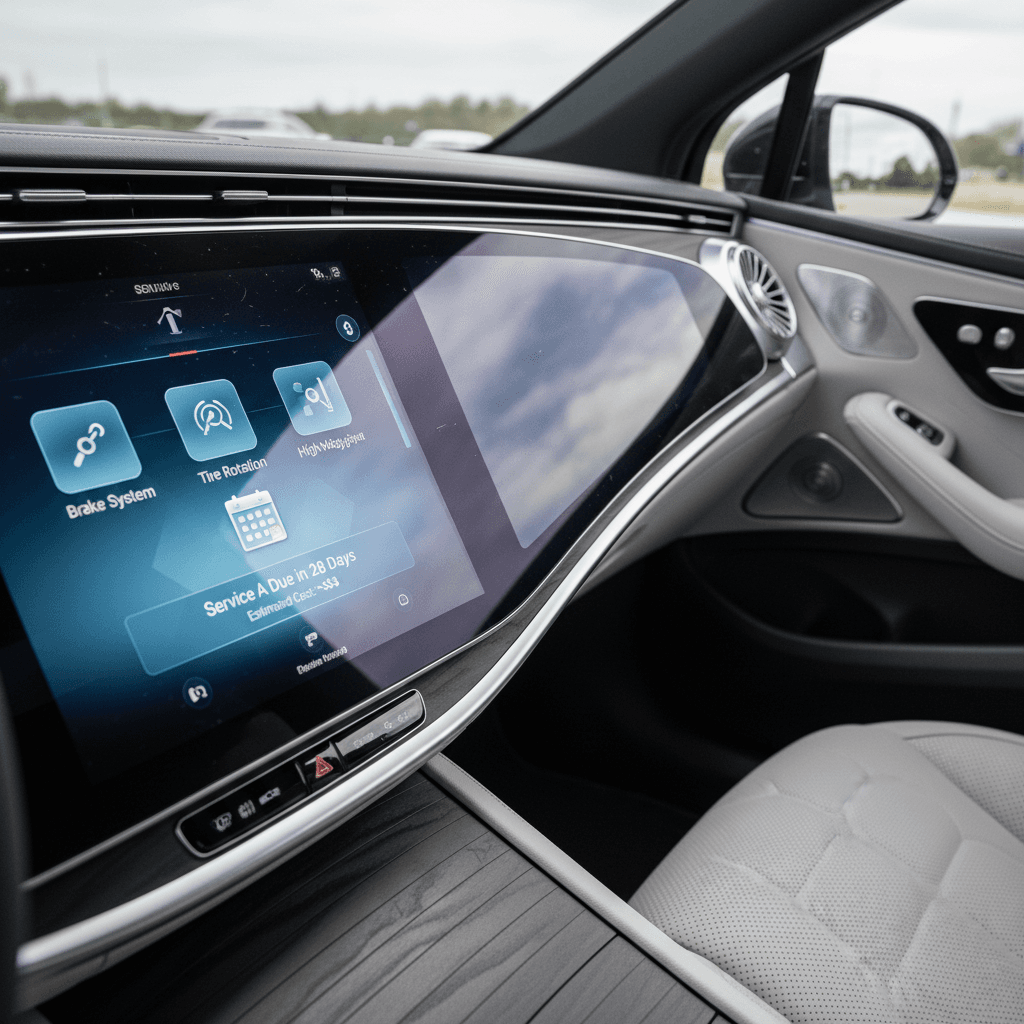
Use this as a planning tool; always follow the maintenance schedule in your EQS manual and on‑screen prompts.
Battery checks vs battery replacement
Real-world owner examples and what they paid
Factory schedules and cost‑to‑own charts are useful, but nothing beats peeking at what real EQS owners are paying at the counter. Pulling from owner anecdotes and dealer examples gives you a reality check.
Sample EQS service bills from owners
Anecdotal, but representative of what many U.S. drivers see.
20k‑mile EQS service
One owner reported a second 20k‑mile maintenance visit (after a complimentary first service) at just under **$700** for an EQS sedan. That was at a Mercedes dealer with no upsells.
“Service A2” quote
Another owner saw an **A2‑type EQS service quoted between $799 and $1,299**, depending on dealership and region. This included brake fluid, filters and EV system checks.
Prepaid plan example
In some markets, Mercedes prepaid plans for EQS‑family cars bundle the first 3–4 services up to 40k miles for roughly **$1,000–$2,000**, smoothing costs but locking you into dealer service.
Ask for a line‑item estimate
EQS maintenance vs gas luxury sedans
The right way to judge the EQS isn’t against a Toyota Corolla, it’s against the cars it actually competes with: S‑Class, 7 Series, Audi A8, high‑spec Taycan. This is a **big‑ticket luxury car either way**, but the electric layout quietly chips away at your annual bills.
Where the EQS saves you money
- No engine oil, spark plugs, or timing chains, you skip entire classes of service that still haunt gas sedans.
- Fewer moving parts overall, which is why research consistently shows EV maintenance and repair costs 30–50% lower than comparable gas cars over typical ownership windows.
- Regenerative braking stretches pad and rotor life; many EV owners go far longer between brake jobs.
Where costs can still sting
- Luxury‑car labor rates at Mercedes dealers remain high, even without engine work.
- Big wheels and heavy curb weight translate to **expensive tires** and more frequent replacements.
- Out‑of‑warranty electronics and comfort features (air suspension, soft‑close doors, massaging seats) are still complex and pricey to fix, just like on an S‑Class.
In practice, a well‑kept EQS will usually **undercut a similarly equipped S‑Class on maintenance**, even if the individual service visits feel just as painful. You’re shifting where the money goes, but you’re still in the deep end of the pool.
Typical five-year maintenance budget for a Mercedes EQS
Let’s translate all this into a concrete planning number. Assume you buy or lease a newer EQS, drive a typical 10,000–12,000 miles per year, and stick with dealer service during the warranty period.
Sample 5‑year Mercedes EQS maintenance budget
This is a planning tool, not a quote, but it’s realistic for many U.S. owners.
| Year | Likely service | Estimated maintenance spend |
|---|---|---|
| Year 1 | Early check / complimentary visit + wipers | $0–$300 |
| Year 2 | First major A/B‑style service | $800–$1,300 |
| Year 3 | Lighter A‑style service + odds and ends | $500–$900 |
| Year 4 | Second major B‑style service | $900–$1,400 |
| Year 5 | Lighter service / inspection + small items | $500–$900 |
| 5‑year total | , | Roughly $3,500–$4,800 (about $700–$960 per year) without tires |
| Add tires once or twice | , | + $1,200–$2,400 over five years |
Tire and wheel damage can add hundreds or thousands on top of this, depending on how and where you drive.
That squares pretty well with cost‑to‑own modeling that lands around **$1,600 per year** including both maintenance and minor repairs. You might beat these numbers with a good independent shop and careful driving; you might exceed them if you pound potholes on 22‑inch wheels and live at the dealer cafe.
How to lower your Mercedes EQS maintenance costs
7 ways to keep EQS maintenance in check
1. Learn the factory schedule
Spend ten quiet minutes with your EQS digital manual and service menu. Highlight the items Mercedes actually requires for warranty, then feel comfortable saying no to add‑ons that don’t appear there.
2. Compare dealer and independent pricing
Once you’re past the free service (if any), get quotes from a Mercedes‑specialist independent shop. Many can handle EV‑specific inspections and brake fluid service at **lower hourly rates** than the dealer.
3. Bundle services when it makes sense
If you’re already paying labor to get in there, say, for brakes, add related items (pads, rotors, sensors) in one visit instead of spreading them across multiple appointments and duplicate fees.
4. Treat your tires like the four‑figure purchase they are
Keep pressures on spec, rotate on schedule, and avoid curbs. Simple habits easily stretch your tire life by thousands of miles on a heavy sedan like the EQS.
5. Use cabin filters and wipers wisely
These are real maintenance items, but they don’t always have to be dealer items. If you’re comfortable, you can **swap wiper blades and cabin filters yourself** between major services with OEM parts bought online.
6. Consider a prepaid plan, carefully
In some regions, Mercedes prepaid maintenance for EQS models can gently discount A/B services. Run the math against individual service quotes; if the plan locks you into higher labor rates, it may not pencil out.
7. Keep immaculate service records
Stamps and PDFs may not save you money today, but they boost resale value later. A clean documented history makes life easier if you sell privately, or trade your EQS to a marketplace like Recharged.
Where Recharged fits in
Ready to find your next EV?
Browse VehiclesBuying a used EQS to save on ownership costs
If you love the idea of an EQS but not the sticker shock, a **used EQS** can be a sweet spot. The original owner takes the sharpest depreciation hit in the first 2–3 years, while you step into the car after the earliest teething issues and first major service are usually taken care of.
Why a used EQS can be smarter
- Huge upfront savings vs. MSRP, often tens of thousands off.
- Many cars still carry substantial **battery and powertrain warranty** coverage.
- You can see how the first owner treated the car through service records and inspection.
What to check before you buy
- Has the **first big A/B service** been done on time?
- Any warning lights, fault codes, or open recalls?
- Battery health and DC fast‑charging habits, something Recharged surfaces in our Recharged Score diagnostics.
Because Recharged specializes in used EVs, our team walks shoppers through **total cost of ownership**: expected maintenance, remaining warranty, realistic tire and brake timelines, and financing options. You can search online, get an instant offer on your trade‑in, line up financing, and have the car delivered, without camping out at a dealership.
Frequently asked questions about Mercedes EQS maintenance costs
Mercedes EQS maintenance cost FAQ
The Mercedes EQS won’t ever be a cheap car to own, but it is a **rational luxury flagship** once you understand the pattern. You trade engine oil and complex drivetrains for high‑voltage checks and big tires, and your yearly outlay lands in the $1,200–$1,800 neighborhood for most drivers. Go in with realistic expectations, a firm grasp of the service schedule, and a clear maintenance budget, and the EQS can deliver all the serenity and torque you’re chasing without surprise‑filled invoices. If you’d rather let someone else take the first‑owner lumps, a **used EQS with a strong Recharged Score** and documented history can make the numbers even kinder.