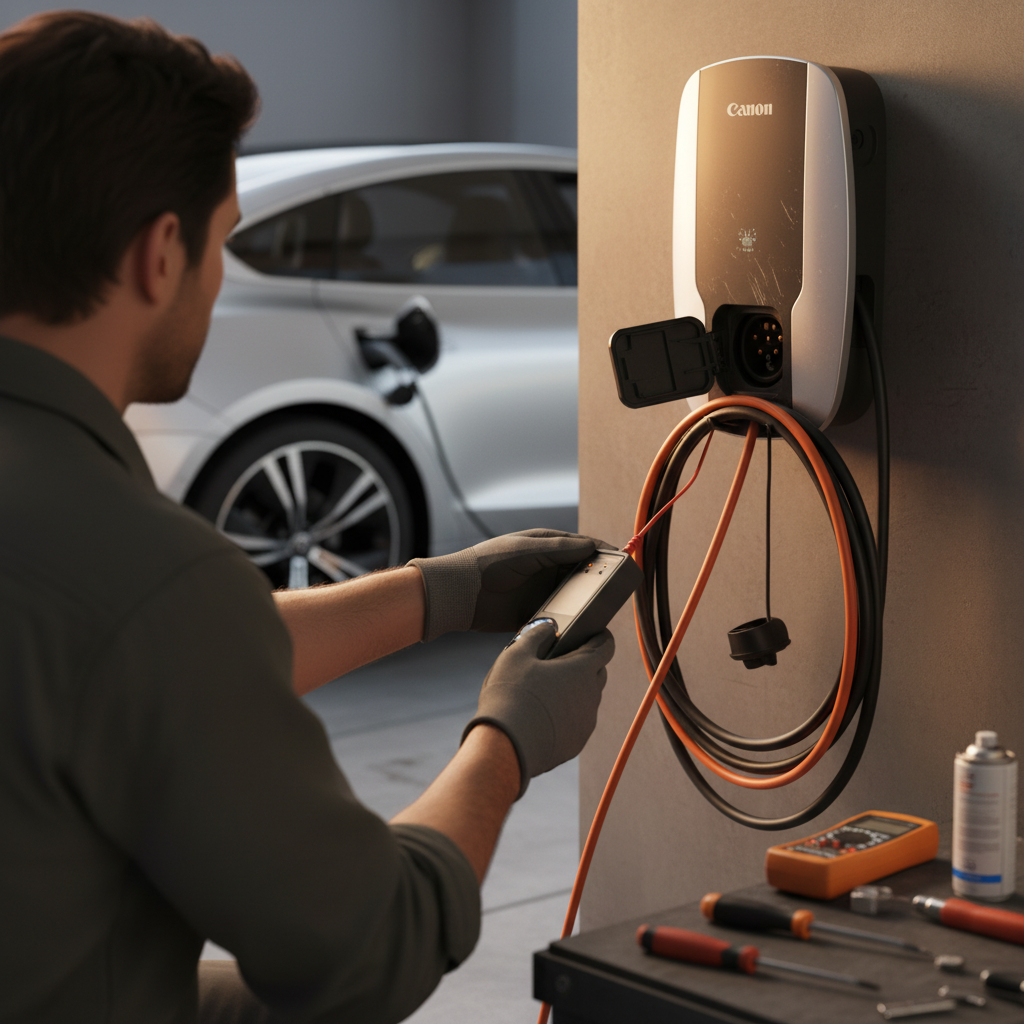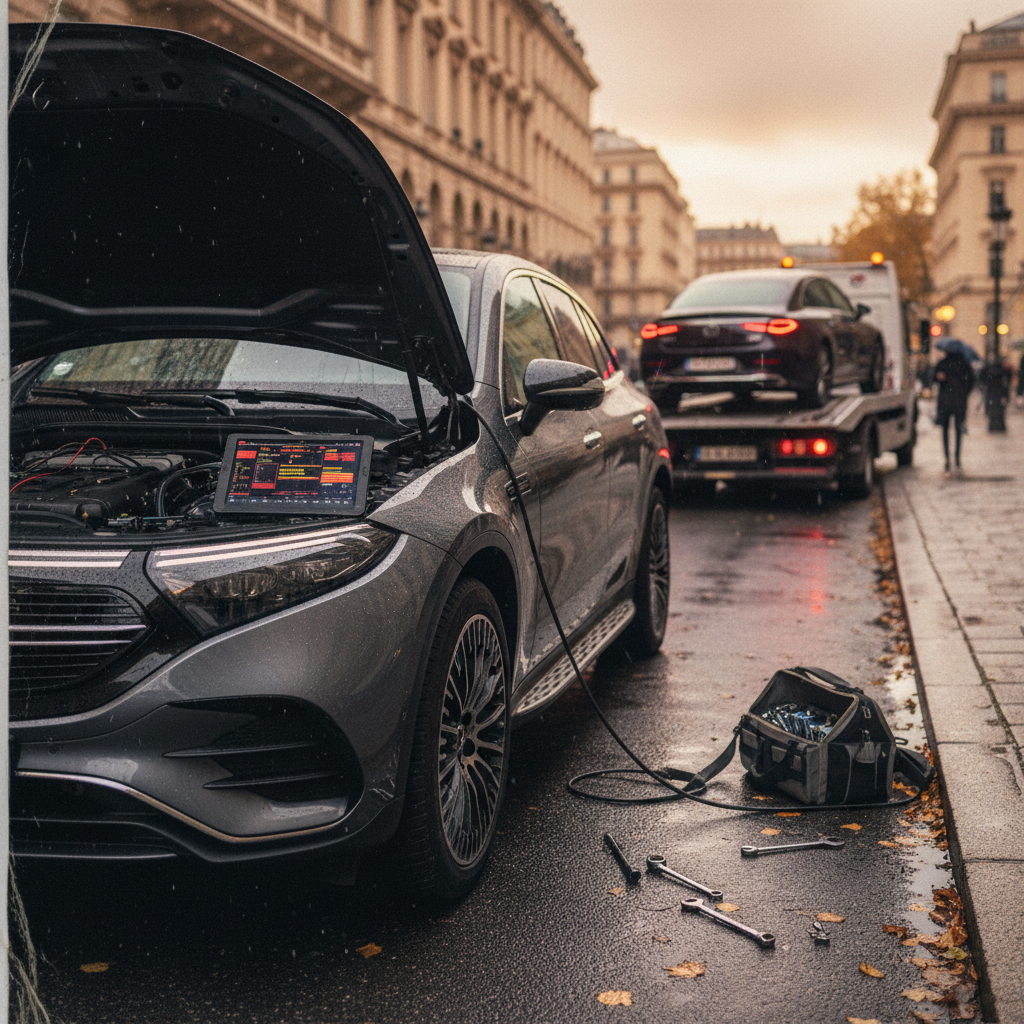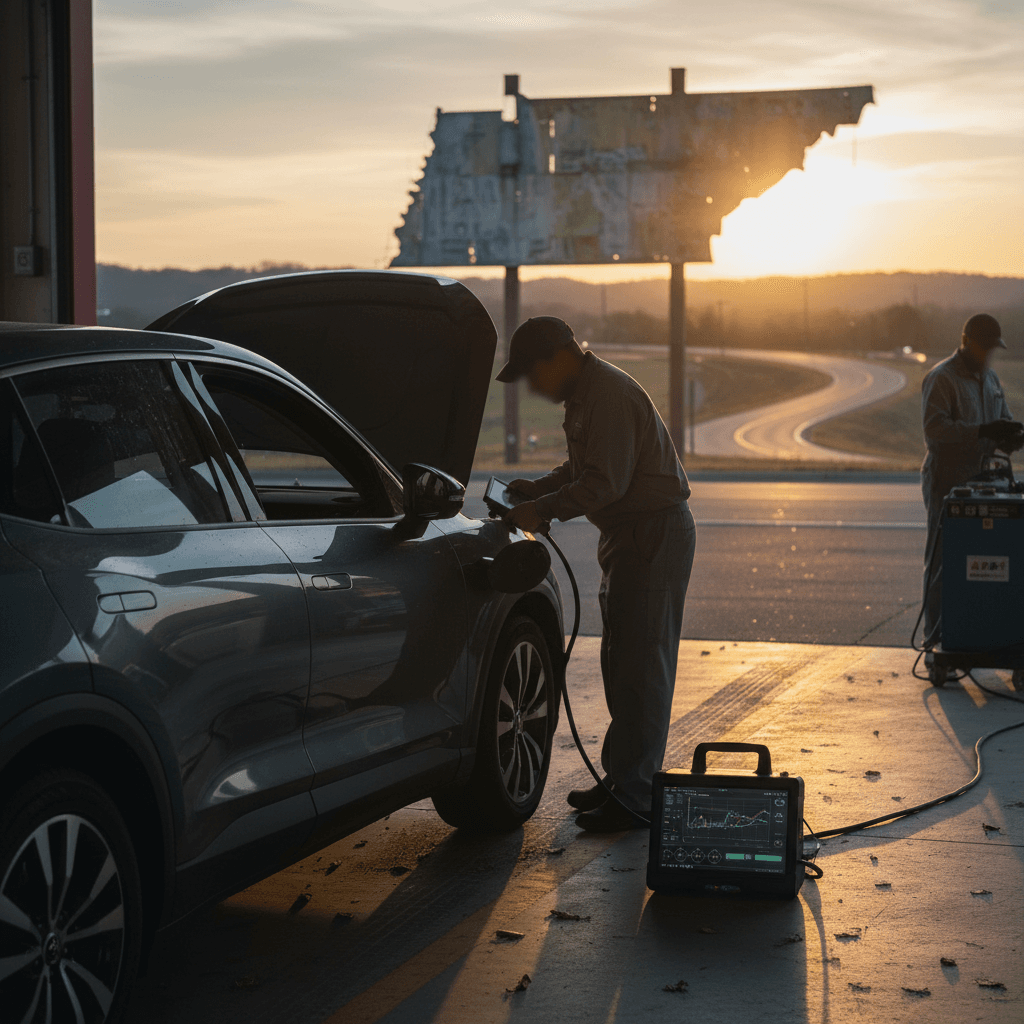
If you’re trying to understand Tennessee electric car inspection requirements, you’re not alone. The state ended its long‑running emissions testing programs, but there’s still confusion, especially if you’re registering an EV for the first time or shopping for a used one. Let’s break down what Tennessee does (and doesn’t) require in 2026, and what you should inspect anyway to protect your wallet.
Quick answer
Overview: Tennessee electric car inspection rules in 2026
Tennessee EV ownership at a glance
To understand how Tennessee treats electric cars today, it helps to separate three ideas that often get lumped together:
- State safety inspection – a periodic safety check required in some states. Tennessee does not have this for ordinary passenger cars.
- Emissions testing – tailpipe/OBD checks used to be required in certain Tennessee counties, but the entire program was phased out in 2022.
- Private pre‑purchase inspections – optional but highly recommended if you’re buying a used EV. These are done by a mechanic or EV specialist, not the state.
Do electric cars need inspections in Tennessee?
What Tennessee requires for EVs today
For a typical electric car or SUV registered in 2026
What the state requires
- No annual safety inspection for regular passenger EVs.
- No emissions test anywhere in Tennessee.
- Standard documents to register: title, proof of identity and residency, and fees.
- Additional EV registration fee on top of the standard plate fee.
What’s smart to do anyway
- Have a trusted shop or EV specialist inspect any used EV before you buy.
- Review battery health and charging history if available.
- Ask for service records and any remaining warranty information.
Bottom line for most EV owners
What actually ended: Tennessee emissions testing history
A lot of the confusion comes from headlines about “Tennessee ending emissions testing.” Here’s what that means in plain language. For decades, certain higher‑population counties, like Davidson (Nashville), Hamilton (Chattanooga), and parts of Middle Tennessee, required an annual emissions inspection before you could renew registration. That system was dismantled in stages and fully ended in early 2022. Today there is no county in Tennessee that requires emissions testing for registration, regardless of whether the vehicle is gas, diesel, or electric.
How Tennessee’s emissions program changed
Where testing used to be required and when it ended
| Time period | Counties affected | What was required | Status in 2026 |
|---|---|---|---|
| Before 2022 | Davidson, Hamilton, Rutherford, Sumner, Williamson, Wilson | Annual emissions test required for many gasoline/diesel vehicles under 10,500 lbs | All county programs ended; no emissions testing required |
| Feb 2022 onward | Statewide | No counties required emissions testing | No emissions or safety inspection needed for ordinary passenger EVs |
| 2026 | Statewide | Only special‑category vehicles (commercial, school buses, rebuilt) see inspections | EVs treated like other passenger cars for inspections |
Note: Throughout these programs, fully electric vehicles were typically exempt from emissions checks because they have no tailpipe.
Why this helps EV owners
Special cases: When an electric car may still face inspections
While routine inspection programs are gone, a few narrow situations can still bring an electric car under Tennessee’s inspection umbrella. These don’t affect most private owners, but they matter if you’re dealing with a commercial fleet, a rebuilt title, or school‑related transportation.
- Commercial vehicles: Electric vans or trucks used in interstate commerce and meeting the federal definition of a commercial motor vehicle are subject to annual safety inspections under federal rules, enforced in Tennessee by the Department of Safety & Homeland Security.
- School buses: If a district eventually uses electric school buses, they will face the same state‑run safety inspections as diesel buses, at least once per year.
- Salvage/rebuilt titles: If an EV has been declared a total loss and you’re converting it to a rebuilt title in Tennessee, it will go through anti‑theft and identity inspections before it can be retitled and registered.
- Off‑highway and low‑/medium‑speed vehicles: Neighborhood electric vehicles and certain off‑highway vehicles have their own equipment standards (lighting, mirrors, etc.) that must be met if you’re titling them for limited on‑road use. While not a classic “inspection station” process, the vehicle still has to comply before a plate is issued.
Buying a salvage or rebuilt EV?
EV registration fees and paperwork in Tennessee
Even though there’s no inspection line to stand in, there are a few Tennessee‑specific rules you’ll feel in your wallet when you register an electric car. State leaders have added extra fees to offset the gas taxes EV drivers don’t pay.
Current Tennessee EV registration surcharges
What you’ll typically bring to the county clerk
- Current title (or out‑of‑state title if you just moved in).
- Valid ID and Tennessee residency documents.
- Odometer disclosure, if required for the model year.
- Payment for the base registration, county fees, and any EV surcharge.
What you don’t have to show for a typical EV
- No annual safety inspection report for regular passenger EVs.
- No emissions certificate (those programs have ended).
- No special battery test results required by the state, though it’s smart to have them for your own protection.
How fees affect your total cost of ownership
Buying a used EV in Tennessee? Inspection checklist you still need
State law may not require an inspection, but skipping a thorough look at a used EV, especially one that’s out of warranty, can be a very expensive mistake. Electric cars hide a lot of value in the battery pack and high‑voltage systems that a quick test‑drive won’t reveal.
Essential inspection steps for a used EV in Tennessee
1. Verify title status and history
Confirm the car has a clean Tennessee title (or equivalent from another state), and check for salvage, rebuilt, lemon‑buyback, or flood history. Ask specifically about previous accident damage and any high‑voltage repairs.
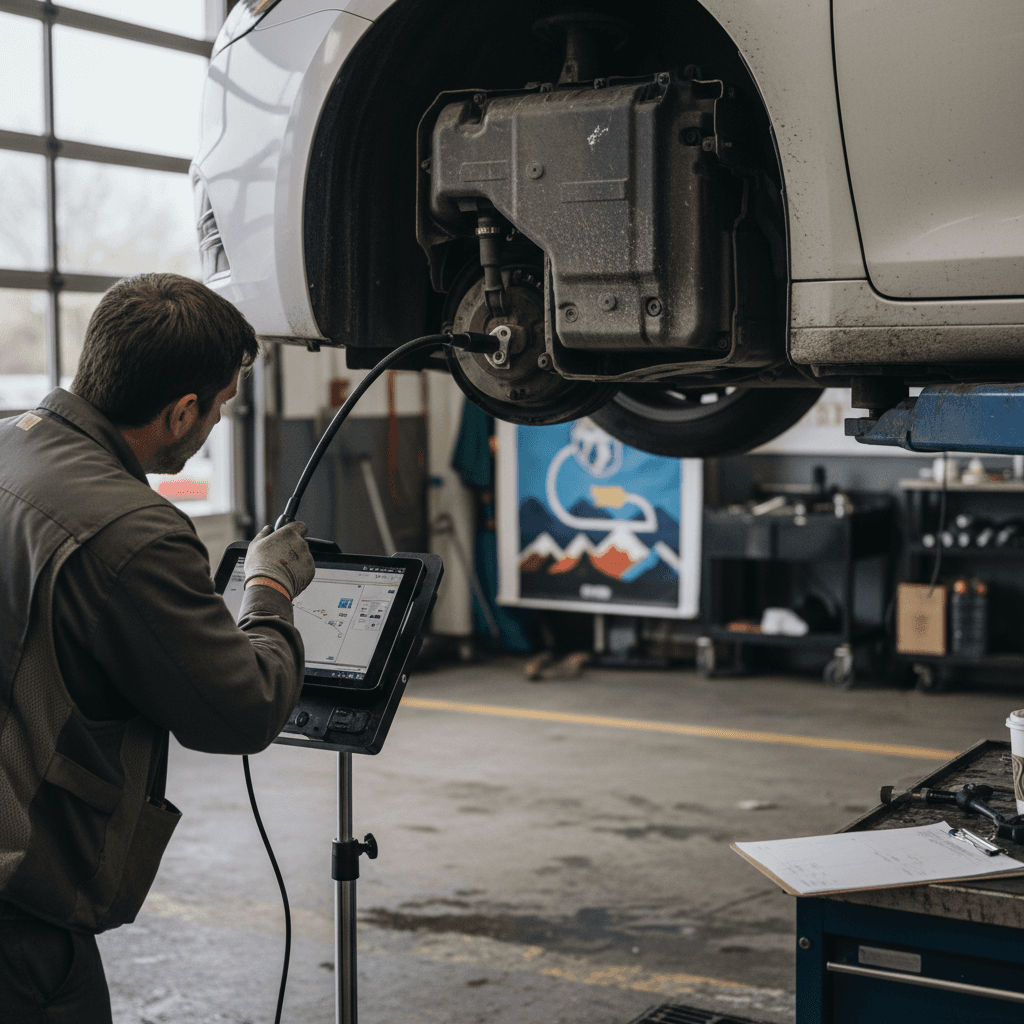
2. Get a professional pre‑purchase inspection
Use a mechanic or shop with <strong>real EV experience</strong>. They should inspect suspension, brakes, tires, steering, cabin electronics, and charging hardware. For out‑of‑area purchases, a digital‑first retailer like Recharged can coordinate inspections and share detailed reports remotely.
3. Review battery health
Ask for a <strong>battery health report</strong> or at least a scan of the car’s state‑of‑health (SOH) reading. Platforms like Recharged include a Recharged Score with verified battery diagnostics so you know how much useful range you’re really buying.
4. Confirm charging performance and connectors
Test both Level 1 and Level 2 charging, and DC fast charging if possible. Make sure the car includes the correct charging cable, adapters, and that the charge port locks and releases properly.
5. Check software, keys, and driver‑assist features
Ensure you get all keys, key cards, and app access transfers correctly. Verify that over‑the‑air updates, navigation, cameras, and common driver‑assist systems are working, if equipped.
6. Estimate warranty coverage and future repairs
Determine how much <strong>factory battery and powertrain warranty</strong> remains by model year and mileage. Ask the shop for a realistic estimate of near‑term wear items so you can budget accordingly.
How Recharged simplifies used EV inspections
Why battery health matters more than state inspections
Traditional inspections focus on items like brakes, lights, steering components, and emissions. Those are still important on an EV, but the single most expensive “wear item” is the battery pack. A car that looks spotless and passes every basic safety check can still be a poor value if its battery has lost too much capacity.
Battery health vs. basic inspection: what’s at stake
Two cars can pass the same safety check but deliver very different ownership experiences
Healthy battery
- Range close to original EPA estimate.
- Stronger resale value in a state like Tennessee that doesn’t mandate inspections.
- Less frequent fast‑charging stops on road trips.
- Fewer surprises as the car ages.
Degraded battery
- Shorter range than advertised, even if everything else checks out.
- Potentially five‑figure replacement cost if out of warranty.
- Harder to resell, especially if buyers see range loss in person.
- Can turn a “great deal” into the most expensive car you’ve ever owned.
A smart move for Tennessee buyers
Common misconceptions about Tennessee EV inspections
- “My county still needs an emissions test.” – Not anymore. As of 2022, no Tennessee county requires emissions testing for registration, and that hasn’t changed as of early 2026.
- “EVs are exempt from inspections, so I don’t need to check anything.” – Legally, that’s partly true. Practically, it’s risky. You’re still responsible for operating a safe vehicle, and you’re on the hook financially if you buy a car with hidden problems.
- “A clean title guarantees a healthy EV.” – A clean title just means the car hasn’t been branded as salvage/flood/etc. It says nothing about battery capacity or high‑voltage systems.
- “Dealers always fully inspect used EVs.” – Some do, some don’t, and very few publish detailed battery data. Ask to see inspection results in writing, or use a marketplace like Recharged that builds this into the process.
Don’t confuse registration with protection
FAQs: Tennessee electric car inspection requirements
Frequently asked questions about Tennessee EV inspections
Key takeaways for Tennessee EV owners
Tennessee makes life relatively simple when it comes to electric car inspection requirements. There’s no routine safety or emissions inspection for standard passenger EVs, and you won’t be turned away at the clerk’s office for lack of an inspection sticker. The trade‑off is that the state also doesn’t protect you from buying a problem car, that responsibility falls on you.
- You can register and renew an electric car in Tennessee without any mandatory state inspection.
- The biggest EV‑specific cost at registration is the extra $200 annual fee for fully electric vehicles (and $100 for hybrids/PHEVs) through at least 2026.
- Special rules still apply to commercial vehicles, school buses, and salvage/rebuilt EVs, which may face inspections or verification checks.
- When buying a used EV, the most important “inspection” isn’t done by the state, it’s a professional mechanical and battery evaluation you arrange yourself.
- Choosing a seller that provides transparent battery health data, like Recharged with its Recharged Score Report, is one of the best ways to de‑risk EV ownership in a state that doesn’t require inspections.
If you’re ready to bring an electric car home to Tennessee, focus less on inspection lines and more on the real condition and long‑term costs of the car you’re buying. With the right pre‑purchase checks, and clear battery data, you can enjoy low‑maintenance, low‑fuel‑cost driving without surprises.