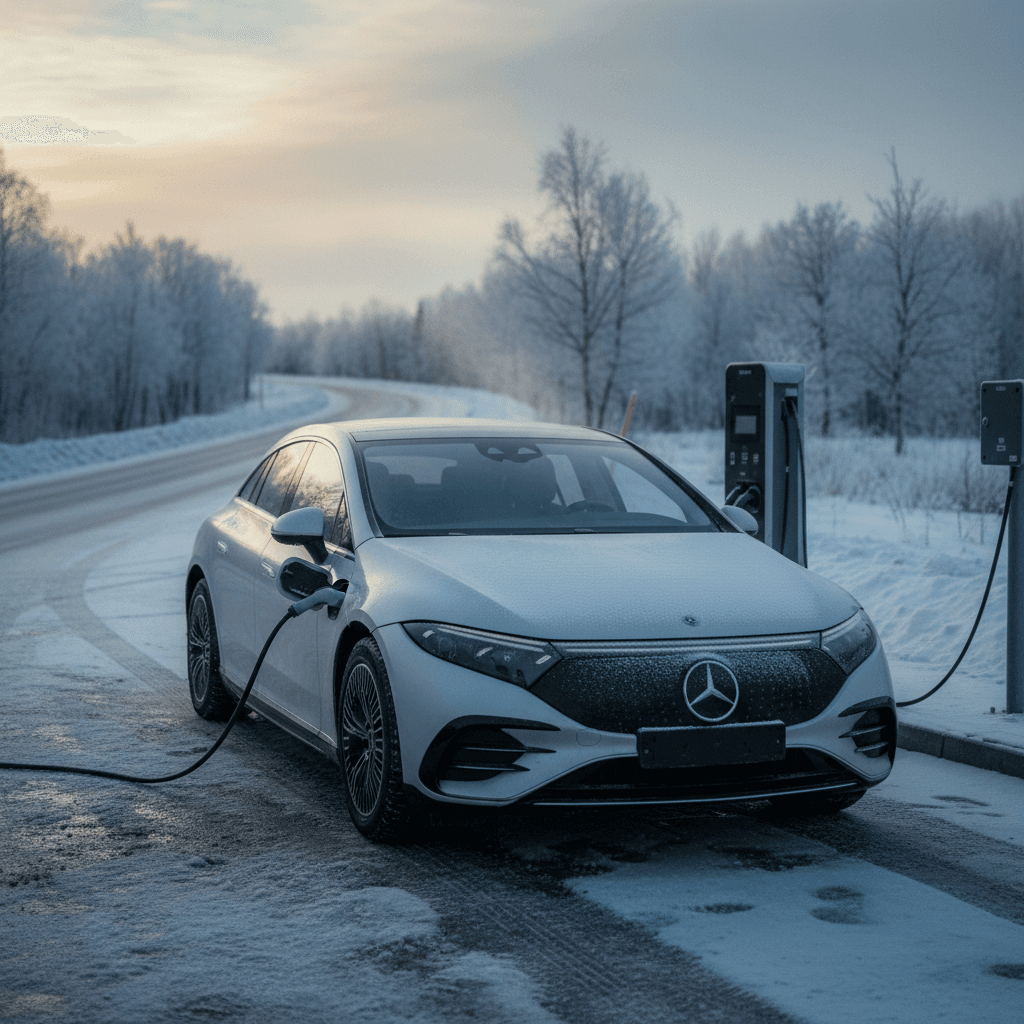
If you own, or are considering, a Mercedes EQE, you’ve probably heard horror stories about winter range loss. The truth is less dramatic but still important: in real-world cold weather, a Mercedes EQE can lose a noticeable chunk of its rated range, especially at highway speeds and in sub‑freezing temps. Understanding what’s normal, and how to drive around those limits, makes the difference between winter range anxiety and a car that just works.
Key takeaway on EQE winter range
Mercedes EQE winter range loss: what’s normal?
Let’s anchor this conversation in what the Mercedes EQE is capable of on paper. Depending on trim and wheels, U.S. EPA estimates for the EQE sedan cluster in the 280–300 mile range on a full charge for the more efficient versions, with the sportier AMG rated significantly lower. In mild weather, careful drivers can often get close to those numbers; in a Midwest or Northeast winter, you probably won’t.
Large‑sample telematics data across many EV models show that in freezing conditions (around 32°F / 0°C), EVs on average retain roughly 80% of their rated range. That 20% hit is an average: some models do better, some worse, and the way you drive matters at least as much as which badge is on the hood. The EQE’s efficient heat pump and thermal management help, but they can’t fully beat physics.
Mercedes EQE winter range at a glance
Those are broad numbers. To make them meaningful for you, we need to look at your specific EQE variant, how and where you drive, and what kind of winter we’re talking about, Pacific Northwest drizzle, or Minnesota in January.
Official EQE range ratings vs real-world winter results
The EQE family covers several trims and markets, but a few reference points help frame expectations:
- In Europe, long‑range rear‑drive EQE sedans can be rated just under 400 miles WLTP, which is more optimistic than EPA and assumes mild conditions.
- In the U.S., recent EQE 350+/320‑badged sedans are typically around 290–300 miles EPA on 19‑inch wheels, a bit less on bigger wheels or performance trims.
- Real‑world owners who share data commonly report 260–300 miles on a full charge in spring or fall mixed driving, and closer to 230–260 miles in winter with freezing temps, highway speeds, and normal use of climate control.
Long‑term testers have also seen roughly 20–30% gaps between EQE’s optimistic lab ratings and their own mixed winter use. That doesn’t mean anything is wrong with the car; it means the test cycles don’t replicate 75 mph interstate driving on cold, wet pavement with people and gear onboard.
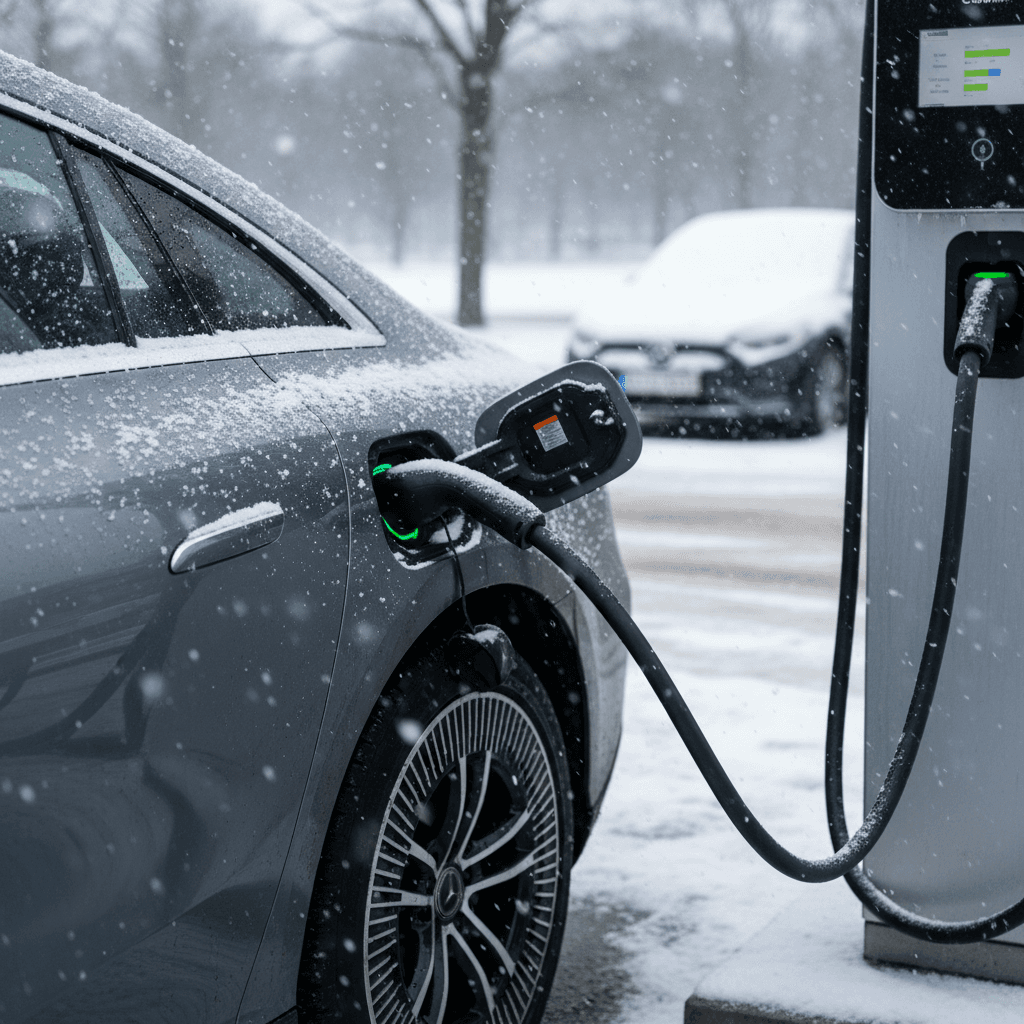
Why winter hurts Mercedes EQE range more than you’d expect
The Mercedes EQE has decent cold‑weather hardware, battery pre‑conditioning, an available heat pump, intelligent thermal management, but winter still exposes three unavoidable inefficiencies that every EV owner eventually notices.
Three main reasons your EQE loses range in winter
You’re not imagining it, the physics are stacked against you when it’s cold out.
Cold battery chemistry
At low temperatures, lithium‑ion cells can’t move ions as efficiently. The pack’s internal resistance rises, so you use more energy per mile for the same driving.
Cabin & battery heating
Unlike a gas car, there’s no waste heat to recycle. Your EQE has to burn battery power just to heat the cabin and condition the battery.
Air density & road conditions
Colder air is denser, which increases aerodynamic drag at highway speeds. Snow, slush, and winter tires also add rolling resistance.
Why short winter trips hurt most
The upshot: if you mostly take short, cold trips and crank the heat, don’t be surprised if you see energy use jump by 30–40% compared with a mild spring day. On the flip side, a continuous two‑hour highway drive in 35°F weather after pre‑conditioning will look much better.
How much Mercedes EQE winter range loss to expect
Because there are many EQE variants and climates, it’s more useful to think in scenarios than single numbers. These ballpark figures assume a long‑range EQE sedan with a healthy battery and efficient wheels/tires.
Mercedes EQE winter range: realistic scenarios
Approximate usable range on a full charge in different winter conditions. Your results will vary with trim, wheels, load, terrain, and driving style.
| Scenario | Temp / Weather | Driving mix | Heater use | Expected usable range* |
|---|---|---|---|---|
| Mild winter day | 40–50°F, dry | 50% city, 50% highway at 65 mph | Moderate | 75–90% of rated range |
| Freezing, dry roads | 20–32°F | Mostly highway at 70–75 mph | Normal | 70–80% of rated range |
| Deep cold interstate run | 0–20°F, windy | Steady 75–80 mph | Normal/high | 60–70% of rated range |
| Short, stop‑and‑go errands | 20–35°F | Urban, frequent stops | High, frequent restarts | As low as 50–65% of rated range |
Use this as a planning tool, not a promise, always leave yourself buffer, especially on unfamiliar routes.
How to read those percentages
Owner anecdotes line up with this: it’s common to see a Mercedes EQE that easily manages 260–290 miles in gentle weather drop into the 210–240 mile band in a typical U.S. winter at normal highway speeds, especially with passengers, cargo, and a warm cabin.
City vs highway: how winter affects EQE differently
City & suburban driving
At low speeds, the EQE is fighting less aerodynamic drag. Regenerative braking also recovers some of the extra energy you spend on stop‑and‑go. In cool but not brutal temperatures (say 30–45°F), you may only see a 10–20% hit in mixed city driving once the car is warmed up.
The catch is warm‑up overhead. If your routine is a bunch of very short drives from a cold start, your average efficiency can still tank because the car never settles into a steady‑state sweet spot.
Highway driving
At 70–80 mph, air resistance dominates, and cold, dense air makes it worse. Throw in winter tires and a stiff headwind, and you can watch projected range fall faster than the odometer climbs.
On long highway runs in below‑freezing temps, many EQE drivers find their usable range is roughly two‑thirds of the EPA sticker. That’s not unique to Mercedes, that’s just how EVs behave at speed in serious cold.
Let ECO mode do some work
Driving strategies to cut winter range loss
You can’t turn your EQE into a summer‑range car in January, but you can often claw back 10–20% of the loss with a few habits that don’t require you to freeze.
Practical EQE winter driving tactics
1. Pre‑condition while plugged in
Use the Mercedes app to warm the cabin and, when available, the battery while the EQE is still charging. That way heat comes from the grid, not the high‑voltage pack.
2. Use seat and wheel heaters first
Seat and steering‑wheel heaters draw much less power than blasting cabin air. Set the cabin a couple of degrees lower and let the contact heaters keep you comfortable.
3. Moderate your speed on cold days
The jump from 70 to 80 mph is brutal for winter range. On really cold, windy days, even cruising at 65 instead of 75 can meaningfully extend your usable buffer.
4. Avoid repeated short cold starts
Bundle errands into one longer drive when you can. It’s more efficient to heat the cabin and battery once and stay moving than to repeat the warm‑up cycle five times.
5. Keep tires properly inflated
Cold air drops tire pressure. Under‑inflated tires add rolling resistance and can shave yet more miles off your winter range. Check pressures when seasons change.
6. Clear snow and ice off the car
Snow stuck to bodywork and wheels isn’t just a safety issue; it also adds aerodynamic drag and rotational mass. A clean car is a more efficient car.
What ‘good’ looks like in winter
Cold-weather charging strategy for the EQE
Mercedes did solid work on the EQE’s charging curve, but cold weather complicates things. A cold battery accepts energy more slowly, so arriving at a DC fast charger with a pack that’s been sitting at 20°F all day can mean disappointingly low charge rates, especially at the start of the session.
Smart EQE charging habits in winter
A little planning can save a lot of time at the charger.
Arrive with a warm battery
Try to fast charge right after driving at highway speed, not first thing after an overnight cold soak. The battery will be closer to its ideal temperature range.
Use pre‑conditioning when available
On routes with compatible DC fast chargers, enable battery pre‑conditioning in navigation so the EQE warms the pack as you approach.
Charge for buffer, not 100%
In winter, it’s often smarter to add enough energy to reach your next stop with a 20–25% buffer than to sit forever trying to reach 90+% at a cold‑limited rate.
Be careful fast‑charging a truly cold battery
For home charging, winter is actually the EQE’s comfort zone: leaving the car plugged in lets it manage pack temperature and can reduce extremes. If you live in a very cold climate and regularly park outside, consider scheduling charging to finish just before you depart so the battery and cabin are both warmed by grid power.
Does winter range loss hurt EQE battery health long term?
Short answer: cold weather range loss is mostly temporary and not the same thing as long‑term battery degradation. When the temperature comes back up, most of the lost range does too. Where winter can indirectly affect battery life is when it changes how you charge and drive.
- Fast‑charging repeatedly from a very low state of charge to high levels on road trips.
- Letting the car sit at 100% for long periods, even in winter, rather than charging to a more moderate daily limit.
- Aggressive driving and heavy loads that keep pack temperatures elevated for long stretches once things warm up.
Winter habits that are kind to your battery
If you’re buying used, this is exactly where a verified battery health report earns its keep. At Recharged, every EV we sell comes with a Recharged Score that includes independent battery diagnostics, so you’re not guessing how previous owners treated the pack.
Buying a used Mercedes EQE? Winter range questions to ask
With new EQE pricing volatility and shifting availability, a used Mercedes EQE can be a compelling value, especially if you understand how winter affects your real‑world experience. Before you sign anything, make sure you have a clear picture of both battery health and cold‑weather practicality.
Cold-weather checklist for a used Mercedes EQE
Ask for a recent battery health report
You want more than guesswork from the range meter in January. A proper diagnostic gives you a percentage of original capacity, not just a feeling.
Verify heat pump and thermal options
Depending on market and trim, some EQEs have more advanced thermal hardware than others. That matters in places with real winters.
Check winter tire and wheel setup
Aggressive winter tires and larger wheels will cut range further. That may be worth it for traction, but factor it into your planning.
Drive it in realistic conditions
If possible, test an EQE on the kind of roads, speeds, and temperatures you’ll actually see. A 10‑minute urban demo on a mild day won’t tell you much about February road trips.
Plan your charging life
Do you have access to overnight Level 2 charging at home or work? That’s the single best antidote to winter range stress.
Leverage expert support
A retailer that specializes in EVs can walk you through cold‑weather expectations and charging setup. At Recharged, our EV specialists do this every day, especially for shoppers in snow‑belt states.
Mercedes EQE winter range loss: FAQ
Frequently asked questions about EQE winter range
Bottom line: living with an EQE through winter
Every EV takes a range hit in winter, and the Mercedes EQE is no exception. In most real‑world cases, you’re looking at a 15–30% reduction from the optimistic number on the window sticker, with the biggest penalties coming from fast highway driving in deep cold and lots of short, cold starts.
The good news is that the EQE’s thermal management and comfort features give you tools to manage that loss without turning every drive into a science experiment. Pre‑condition while plugged in, lean on seat heaters, keep your speed reasonable, and plan winter legs with a little extra buffer. Do that, and an EQE becomes a relaxed, confident winter companion rather than a source of range anxiety.
If you’re considering a used Mercedes EQE, especially in a snow‑belt state, pairing this understanding of winter range with verified battery health data is crucial. That’s exactly what Recharged was built for: transparent used EV shopping, expert guidance on charging and winter ownership, and a Recharged Score report so you know how your EQE’s battery will perform, no matter what the thermometer says.