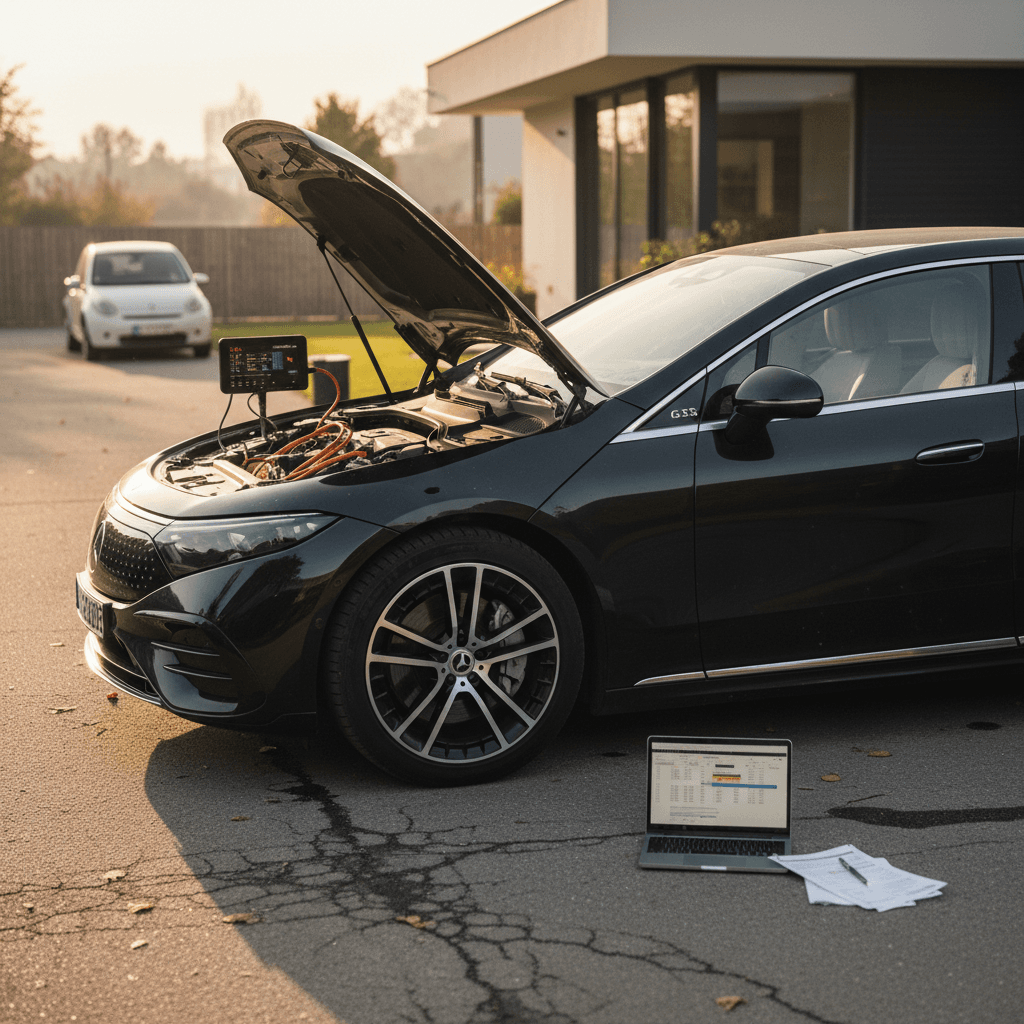
If you’re searching for “2024 Mercedes EQS problems”, you’re probably caught between the appeal of a six‑figure luxury EV at used‑car prices and the fear of owning a complicated electric flagship out of warranty. That tension is justified. The EQS can be quiet, comfortable, and deeply impressive, but owner reports show a clear pattern: most headaches aren’t blown motors or dead battery packs, they’re software, driver‑assist, and charging quirks that can leave the car undriveable until a dealer sorts them out.
Model years covered
Overview: Should You Worry About 2024 EQS Problems?
What the EQS gets right
- Exceptionally quiet, comfortable ride, especially on the EQS 450+ sedan and SUV.
- Strong real‑world efficiency for its size; highway range is competitive among large luxury EVs.
- Cabin tech and interior quality (material choice, lighting, sound insulation) are genuinely class‑leading.
- Plenty of owners report “zero issues in 10–30k miles”, especially on newer 2023–2024 builds.
Where owners report problems
- Driver‑assistance and safety systems (ADAS) that randomly disable, throw false alerts, or even tug the steering wheel in unsettling ways.
- Charging‑related glitches, faults mid‑session, connectors stuck in the port, picky behavior with certain DC fast‑charging networks.
- Occasional HVAC, infotainment, and lighting bugs that require software resets or dealer visits.
- Frustration with how long cars can sit at the dealer and with inconsistent fixes to intermittent software issues.
So far, the 2024 EQS doesn’t look like a disaster, but it’s also not a set‑and‑forget appliance. If you’re considering a used example, you want to understand which problems are nuisance‑level versus which cross into genuine safety and drivability concerns, and how to screen them out before you sign anything.
How Reliable Is the 2024 Mercedes EQS So Far?
We’re still relatively early in the EQS lifecycle, and the 2024 model year is essentially a mid‑cycle refinement of the 2022 launch cars. That means we can blend owner feedback from 2022–2024 models to get a realistic picture of what you’re likely to see on a used 2024.
EQS reliability pattern in the real world
Owner forums are a Rorschach test: you’ll find 2023–2024 EQS 450+ drivers reporting tens of thousands of mostly trouble‑free miles, and you’ll find others deep into lemon‑law or buyback processes after months of persistent ADAS and electrical issues. The takeaway is not that every EQS is doomed; it’s that build variance and software quality control really matter. A careful pre‑purchase inspection and a look at the car’s service history are non‑negotiable.
Most Common 2024 Mercedes EQS Problems
Key 2024 EQS problem categories
Most real‑world complaints fall into four buckets
1. ADAS & steering behavior
Unintended steering inputs, lane‑keeping that "fights" normal lane changes, driver‑assist features dropping out mid‑drive, or repeated false collision warnings. Owners describe these as confidence‑sapping even when they don’t cause an accident.
2. Charging & charge‑port faults
Charging sessions that stop with an error, DC fast chargers that won’t latch properly, or rare cases where the connector locks into the port and the car refuses to shift into Drive until a dealer intervenes.
3. Infotainment & software bugs
Freezing or slow MBUX screens, Apple CarPlay/Android Auto disconnects, random warnings about cameras or parking sensors, and features that disappear after an over‑the‑air update until the system is reset.
4. HVAC, noise, and trim niggles
Intermittent loss of heating or A/C, squeaks from the sunroof or interior trim, wind noise around seals, and 3rd‑row ventilation complaints on EQS SUV models. These are usually fixable but can require multiple visits to chase down.
Watch for patterns, not one‑offs
Battery and Charging Issues on EQS Models
Whenever you’re looking at an EV, “battery problems” tend to loom largest. With the EQS, it’s important to distinguish between high‑voltage battery health (capacity and degradation) and charging‑system behavior (how the car talks to a charger and locks/unlocks the connector). Most troubling owner stories are about the latter, not batteries dying early.
- High‑voltage pack failures are not widely reported on the EQS; there isn’t a drumbeat of early degradation or dead packs the way you sometimes saw on first‑generation EVs.
- Charging faults are more common: cars that start fast‑charging normally, then throw an error at ~50–70% state of charge and stop the session.
- Some EQS owners describe connectors failing to latch with certain public DC fast‑charging networks, while working fine at others.
- In a few anecdotal cases, the charging connector locked into the port after a fault, leaving the car stuck in Park and effectively stranded at the charger until a tow and dealer visit.
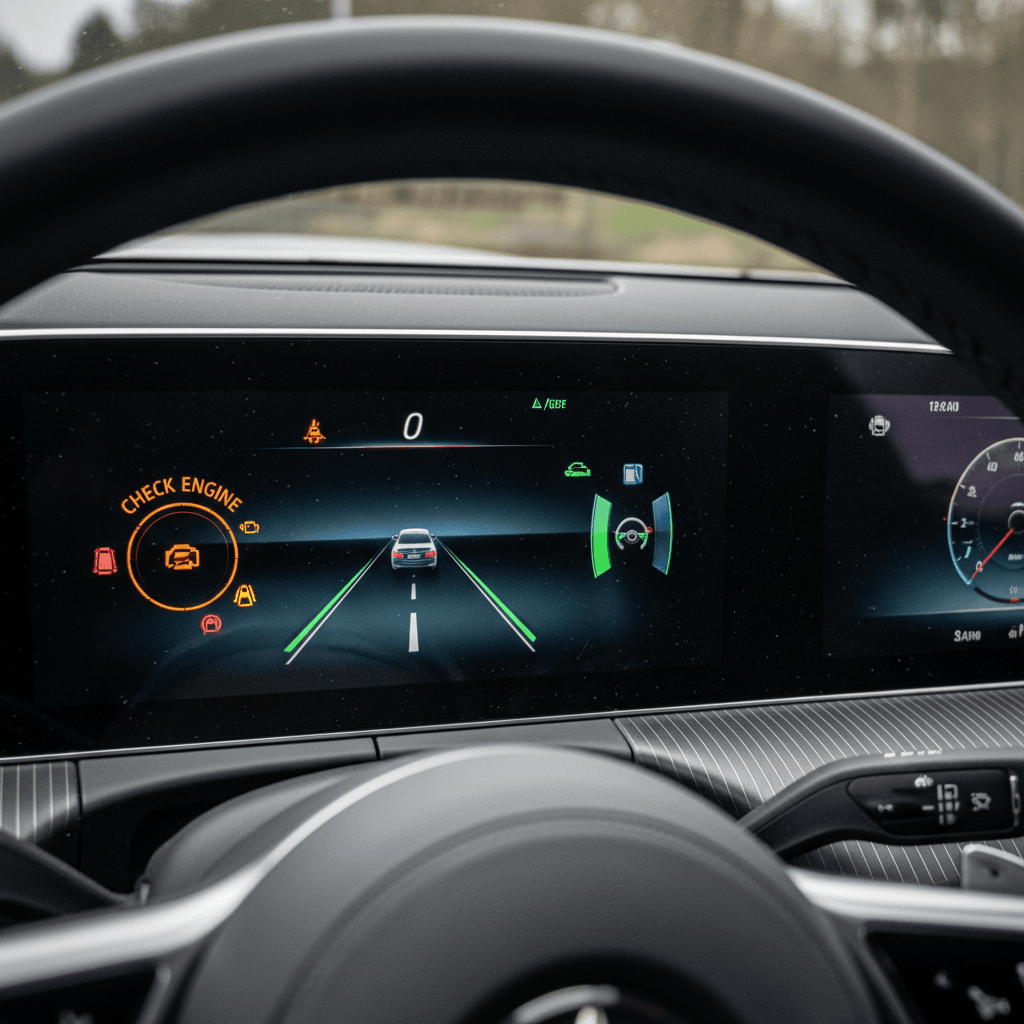
Battery health vs. charging behavior
ADAS and Software Glitches: A Bigger Concern Than Mechanics
Where the 2024 EQS really worries some owners is not motors or suspension, it’s the behavior of the driver‑assistance stack. The car layers lane‑keeping, blind‑spot monitoring, adaptive cruise, automated emergency braking, and parking automation over a complex sensor suite. When all of that plays nicely, the EQS is serene. When it doesn’t, you get some of the hair‑raising stories that show up in owner groups.
Typical EQS ADAS and software complaints
Patterns reported across 2022–2024 EQS sedans and SUVs
| System | Reported symptom | Driver impact |
|---|---|---|
| Lane‑keeping & steering assist | Steering wheel resists lane changes or makes an abrupt, uncommanded correction | Shakes confidence; in worst cases, feels like the car is "fighting" you |
| Forward collision & brake assist | Random collision warnings or emergency‑brake‑assist unavailable messages mid‑drive | Startles driver; key safety features may disable until a restart |
| Parking sensors & Park Assist | Park Assist activating by itself or constant beeping with no obstacle | Annoying at best; at worst, distracts from actual driving tasks |
| Cameras & 360° view | "Camera obstructed" or "content unavailable" messages with clear lenses | Reduces situational awareness when parking or maneuvering |
| Instrument cluster & MBUX | Pop‑ups, soft resets, laggy response, or lost settings after updates | Erodes sense of quality, can hide more serious warnings in clutter |
Most of these issues are intermittent and hard for dealers to reproduce, which can prolong the fix.
When bugs cross into safety territory
Interior, Comfort, and Build-Quality Complaints
On the whole, the EQS’s interior is one of its strengths, materials and sound insulation are where you feel the price tag. But like many modern luxury cars, it’s not immune to small annoyances that stand out precisely because the baseline experience is so good.
- Squeaks and rattles, especially from the panoramic sunroof rails or headliner. Some owners have had entire roof modules replaced to resolve wind noise and squeaks.
- Random cabin electronics gremlins: reading lights or ambient lighting zones that intermittently stop working and then come back after a software update or hard reset.
- On EQS SUV models, rear‑row occupants sometimes complain of weak A/C or heat in the third row, especially in hot climates. That’s a packaging challenge you see on many three‑row EVs, not just Mercedes.
- Seat controls and powered features (like 3rd‑row folding mechanisms) occasionally fail and require parts replacement, which can mean long waits depending on parts availability.
Good news for used shoppers
Recalls and Service Campaigns to Know About
Like nearly every new EV, the EQS has seen a mix of formal recalls and quieter software campaigns. For a 2024 EQS, you’ll want to check for updates related to battery management, high‑voltage safety, and ADAS calibration. Mercedes and regulators have also been adjusting fast‑charging behavior on some EQ‑branded models to manage cell temperatures and longevity, which can change real‑world charging speed after an update.
Recall due‑diligence for a used EQS
1. Run the VIN through official recall tools
Use the NHTSA recall lookup and Mercedes’ own owner portal to see open and completed recalls for that specific EQS. Don’t assume the dealer’s word is enough, verify it yourself.
2. Ask for a campaign and TSB printout
Dealers can print a summary of all software campaigns, technical service bulletins (TSBs), and completed updates. This gives you a snapshot of how “current” the car’s firmware and calibration really are.
3. Confirm battery and BMS updates
Specifically ask whether the car has had any <strong>battery management system</strong> updates, and whether those impacted DC fast‑charging speed or maximum charge level. If they did, test a fast‑charge session to see how it behaves now.
4. Look for repeated visit patterns
If you see multiple visits for the same ADAS, charging, or electrical issue, even if marked “no fault found”, treat that as a yellow flag. Intermittent issues are often the hardest to eradicate.
How 2024 EQS Problems Impact Used Values
Mercedes’ EQ lineup has been living through a tougher EV market: price cuts, inventory overhang, and even pauses in new‑car allocation to the U.S. That’s bad news for early adopters who bought new, but it’s exactly why lightly used EQS sedans and SUVs can look shockingly affordable today compared with their original stickers.
Why EQS values have dropped
- A fast‑moving EV market where newer rivals offer higher voltage architectures, faster fast‑charging, or lower prices.
- High original MSRPs and lease incentives that now pressure used prices down.
- News headlines about EQ‑brand pauses and tax‑credit changes, which spook some buyers and shrink the demand side.
How problems feed into pricing
- Intermittent software and ADAS issues make some shoppers nervous about long‑term ownership costs.
- Cars that have spent significant time in service or are involved in buyback disputes can drag perception of the entire model down.
- The flip side: clean‑history, trouble‑free EQS examples are often undervalued because the market paints with a broad brush.
Risk vs. reward for used EQS shoppers
Buying a Used Mercedes EQS: Problem Checklist
If you’re evaluating a 2024 EQS (or a similar 2022–2023 example), you want to do more than a quick test‑drive around the block. Here’s a structured way to smoke out the most common problems before you commit.
Pre‑purchase EQS problem checklist
1. Pull full service and warranty histories
Ask for a complete printout of dealer visits. Look for repeated visits for ADAS, charging, or electrical issues, especially if notes mention "cannot reproduce" or "no fault found." Those are the problems most likely to come back.
2. Test DC fast‑charging behavior
If possible, take the car to a DC fast charger and monitor charging from ~20% to at least 60–70%. Watch for charging errors, sudden drop‑offs in power, or a connector that fails to latch or release cleanly.
3. Drive with ADAS fully enabled
On a highway test drive, enable lane‑keeping and adaptive cruise. Make a few lane changes with your signal on. The steering should <strong>support</strong> you, not fight you, and you shouldn’t see random warnings or system‑off messages mid‑drive.
4. Stress the software and screens
Spend time in the MBUX and instrument cluster: change settings, use navigation, pair your phone, and try CarPlay/Android Auto. You’re looking for freezes, reboots, or lost settings that hint at deeper software instability.
5. Check climate and interior functions
Run the heat and A/C in all zones, especially the rear (and third row on SUVs). Test all seat adjustments, lighting zones, and powered functions like rear seats and sunshades. Small annoyances add up fast in a daily driver.
6. Listen for squeaks, rattles, and wind noise
On a rougher surface and at highway speeds, listen for roof, dash, or door‑seal noises. Squeaks and wind noise are often fixable, but you want to know what you’re buying into.
Consider a third‑party EV inspection
How Recharged Evaluates Used EQS Battery and Safety
Luxury EVs like the EQS live or die on trust. At Recharged, we try to separate scary anecdotes from the actual condition of each individual car by putting hard data and hands‑on testing in the middle.
What happens before an EQS appears on Recharged
Why not every EQS we inspect ends up for sale
Verified battery health
Safety & ADAS screening
Transparent history & pricing
Ready to find your next EV?
Browse VehiclesIf you already own an EQS and are thinking of getting out of it, Recharged can also help with trade‑ins, instant offers, or consignment. And if you’re leaning toward another EV altogether, our EV‑specialist team can walk you through alternatives that better match your risk tolerance and driving profile.
FAQ: 2024 Mercedes EQS Problems
Frequently asked questions about 2024 EQS problems
Bottom Line: Is a 2024 Mercedes EQS Worth It Used?
The 2024 Mercedes EQS is not a simple car, and its problems reflect that. Mechanically and in terms of battery durability, it doesn’t show systemic failure patterns that would make it untouchable. Instead, its weak spots are software‑heavy systems: driver‑assist, charging, and cabin electronics that don’t always behave consistently, and that can be frustrating to fix when they go wrong.
If you’re willing to trade some complexity for a deep discount on what was a six‑figure luxury EV new, a carefully chosen EQS, especially one with a clean service history and verified battery health, can absolutely be worth it. The key is not to buy blind. Lean on data, demand documentation, and, if you’d like a curated experience, look at EQS examples that have already passed a Recharged Score inspection. That way you get what the EQS does best, quiet, comfort, and presence, without inheriting someone else’s software science project.