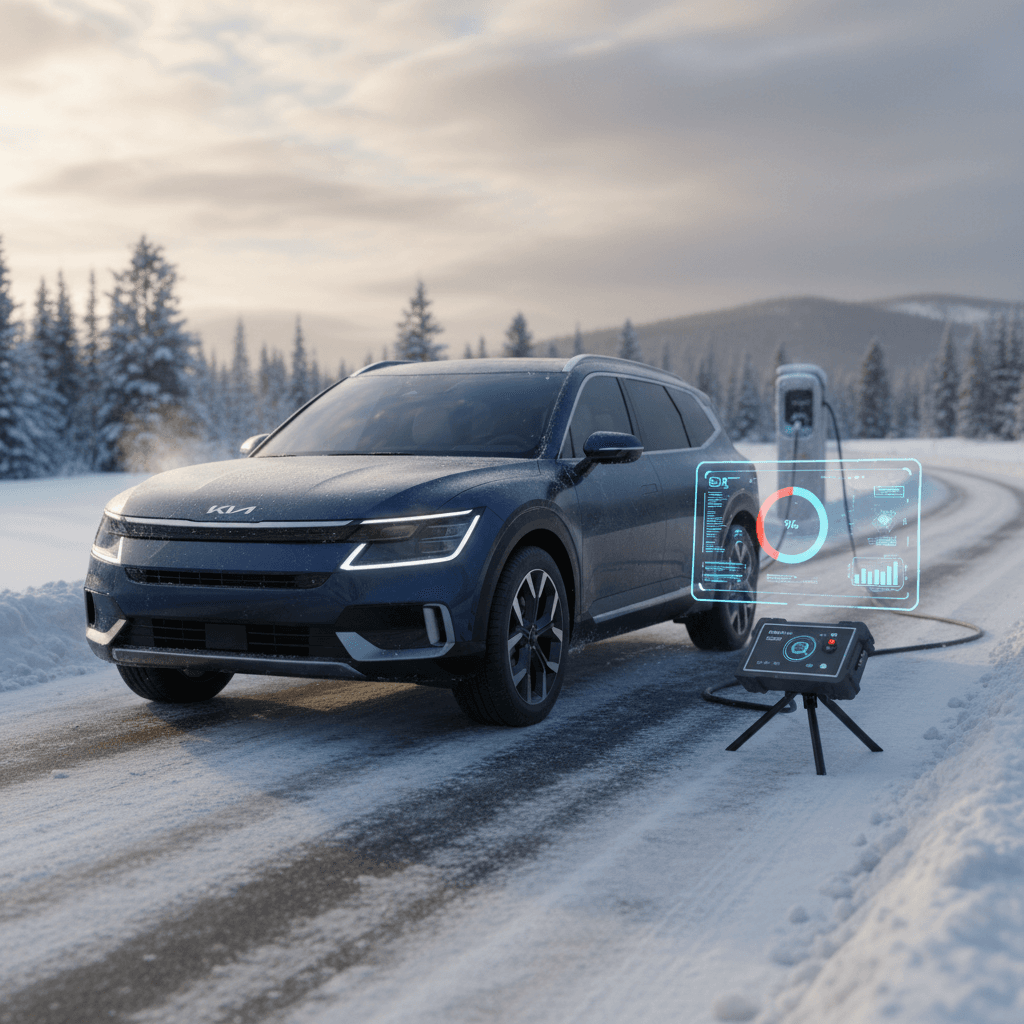
If you live where winter is a season and not a rumor, you’re right to ask about the Kia EV9 winter range loss percentage. Big, boxy, three-row electric SUVs move a lot of cold air, and physics always sends the bill. The good news: among large EVs, the EV9 is actually on the better side of winter efficiency, if you know what to expect and how to drive it.
Key winter range takeaway
Kia EV9 winter range loss: the short answer
Kia EV9 winter range loss at a glance
Put simply, the Kia EV9 is not immune to winter losses, but it’s not a disaster either. In controlled tests and owner data, it generally clusters around a ~20% winter hit compared with its EPA or WLTP rating, which is better than many mid-size EVs and roughly in line with the best of today’s big SUVs.
How much range does the Kia EV9 lose in winter?
Let’s pin down actual Kia EV9 winter range loss percentages from data, not wishful thinking. Across lab-style tests and real owners in cold climates, a clear pattern emerges:
Approximate Kia EV9 winter range loss by condition
These are ballpark figures from a mix of independent tests and owner reports. Your exact results will vary with wind, speed, elevation, wheel size, and how aggressively you heat the cabin.
| Condition | Ambient temp | Driving style | Typical loss vs. EPA | What it feels like in miles |
|---|---|---|---|---|
| Cool, wet fall day | 40–55°F (4–13°C) | Mixed city/highway, 60–70 mph | 10–15% | A 304‑mile EV9 might behave like ~260–275 miles. |
| Normal winter | 20–32°F (-7–0°C) | Mostly highway 65–75 mph | 15–25% | Same EV9 feels like ~225–260 miles. |
| Cold snap | 5–20°F (-15–-7°C) | Highway, climate on, some wind | 20–30% | Think ~210–240 miles. |
| Deep freeze | Below 0°F (-18°C) | Highway, snow, headwind | 25–35% | More like ~190–225 miles and frequent fast-charging. |
Use this as planning guidance, not gospel, treat the upper end of each range as worst-case for that band.
In one widely cited multi‑model winter test, the EV9 clocked in at about a 20% reduction from its official rating in sub‑freezing conditions, comfortably in the “better than average” group for modern EVs. Other cold-weather evaluations and long‑term running reports show the EV9 tracking similarly to its EV6 cousin, with winter reductions in roughly the high‑teens to mid‑twenties percent.
Watch your first few miles
Why cold weather cuts Kia EV9 range
1. The battery chemistry slows down
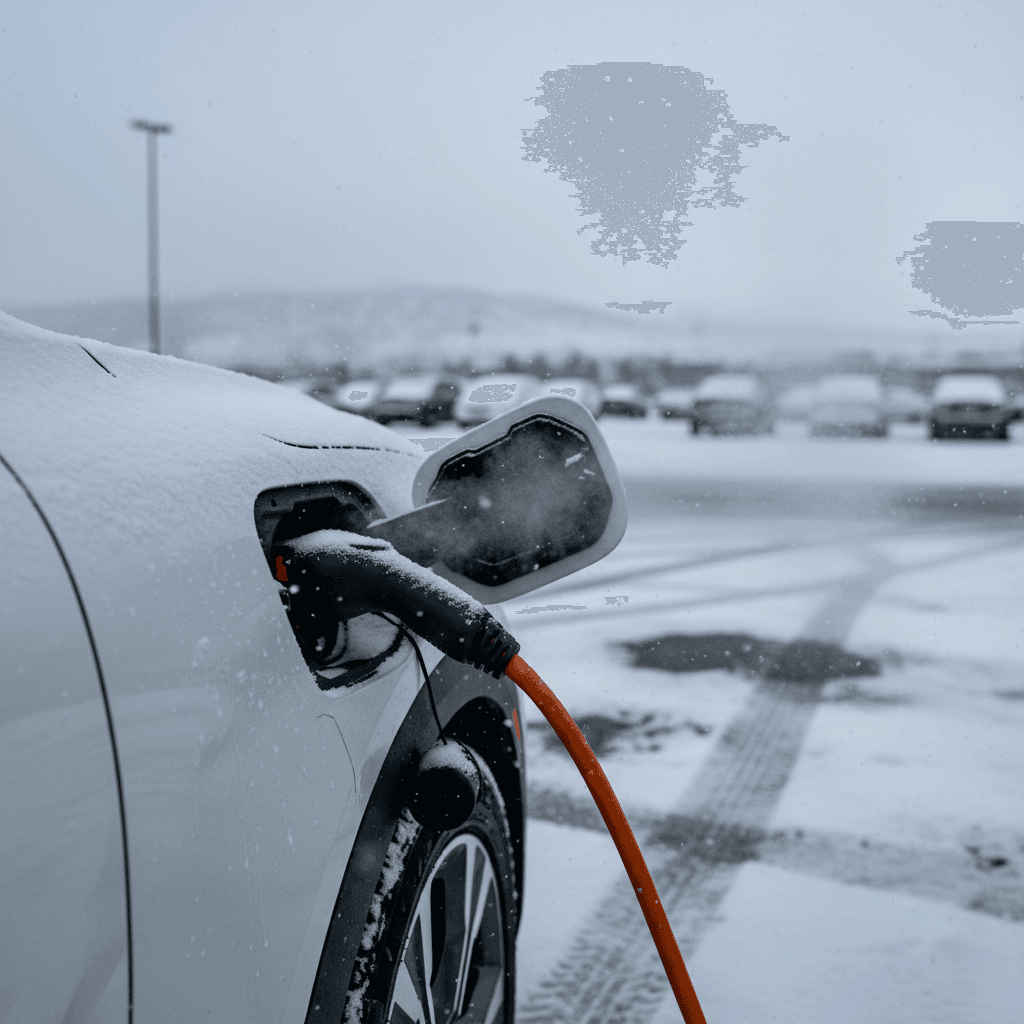
Like every modern EV, the EV9 uses a lithium‑ion pack. In the cold, the electrolyte thickens and ions move more slowly. Internal resistance rises and the car has to draw more power to deliver the same shove to the wheels.
The EV9’s thermal management system fights this with active battery heating, but that heat energy comes from the pack itself or the charger. Until everything is up to temperature, you’re paying an efficiency tax for chemistry.
2. You’re heating a rolling living room
The EV9 is a three‑row family bus with a big glasshouse and a lot of cabin volume. In winter, the heat pump and resistive elements must warm all of that air plus seats and glass.
At 70–75 mph on a cold interstate, climate can easily consume a quarter or more of total power use, especially on short trips where the system never gets to throttle back. Gas SUVs hide this in wasted engine heat; EVs make you see the tab in real time.
3. Thick air and dirty roads
Cold air is denser. Your sleek EV9 suddenly has to punch through what feels like syrup. Aerodynamic drag rises with the square of speed, so the penalty at 75 mph is far worse than at 45 mph, especially in winter air.
Add snow‑packed tires, slush, and poor road surfaces, and rolling resistance heads north too. It’s death by a thousand cuts, all pointing in the same direction: downrange.
4. Software conservatism
Most modern EVs, the EV9 included, will deliberately limit usable energy and peak power when the pack is cold to protect longevity. That means reduced regen at first and a bit of the battery’s capacity held in reserve until temperatures rise.
You’re not losing permanent capacity; you’re losing temporarily unlockable energy. Owners often mistake this for degradation when it’s really just cold‑weather guardrails.
Heat pump helps, but it’s not magic
How trim, driving style, and temperature change EV9 winter loss
Not every Kia EV9 will lose the same percentage in winter. Range loss is a three‑way argument between the trim you bought, the way you drive, and the weather you live in.
Which EV9s lose the most winter range?
Trim and configuration nudge your winter range loss up or down.
Big wheels & GT-Line
EV9 GT-Line and upper trims with large wheels and wider tires pay more in cold weather. Higher drag, more rolling resistance, and extra weight mean their winter hit often sits toward the top of the 20–30% band.
RWD long-range trims
Rear‑wheel‑drive, long‑range EV9s with smaller wheels tend to be winter heroes. Less drivetrain loss and friendlier aero yield percentage losses closer to the mid‑teens in moderate cold, especially at sane speeds.
Your right foot
Drive 80 mph into a headwind at 10°F and no EV on Earth will look efficient. Stay around 60–65 mph, use Eco mode, and let the heat pump work, and the EV9 can feel surprisingly close to its rated range even below freezing.
Quick sizing rule for winter
Real-world Kia EV9 winter range examples
Cold‑weather tests and owner anecdotes are all over the map, but there are consistent themes. Here’s how EV9 winter range tends to look once you control for temperature and driving style.
Illustrative Kia EV9 winter range scenarios
These are simplified composites based on multiple owner reports and winter tests. They’re meant to show patterns, not promise a specific outcome for your car.
| Scenario | Conditions | Observed efficiency | Implied usable range (99.8 kWh pack) | Approx. loss vs. rating |
|---|---|---|---|---|
| Suburban commuter | 25°F, mixed 35–55 mph, preheated while plugged in | ~2.5–2.7 mi/kWh | 250–270 miles from 100–0% | ≈15–20% |
| Ski weekend highway run | 5–15°F, 65–75 mph, 3–4 people, gear on roof | ~2.0–2.2 mi/kWh | 200–220 miles | ≈20–30% |
| Deep cold road trip | -10°F, 70–75 mph, gusty headwind, packed car | ~1.7–1.9 mi/kWh | 170–190 miles | ≈30–35% |
| City slog in a storm | 20°F, 0–35 mph, heavy traffic, lots of idling with heat | ~2.3–2.6 mi/kWh | 230–260 miles, but time‑limited not distance‑limited | ≈15–25% |
Think of these as stories with numbers, helpful for planning, but always leave yourself a buffer.
In truly nasty winter conditions, the EV9 doesn’t defy physics, but it behaves like a well‑sorted European diesel SUV: less efficient, yes, but reassuringly consistent once you learn its cold‑weather habits.
The pleasant surprise
10 ways to reduce Kia EV9 winter range loss
Winter EV9 range checklist
1. Precondition while plugged in
Use the Kia Connect app or in‑car scheduling to pre‑heat the cabin and battery <strong>while the EV9 is still on the charger</strong>. This shifts a big chunk of that initial energy hit off the pack and onto the grid.
2. Favor seat and wheel heaters
Seat and steering‑wheel heaters sip power compared with blasting hot air. Set the cabin a couple degrees cooler and let the contact heaters keep you comfortable, your range display will thank you.
3. Keep speeds realistic
Driving 80 mph instead of 65 mph in dense winter air is like towing an invisible trailer. If you can trim 5–10 mph, you often claw back a meaningful chunk of the 15–25% winter loss.
4. Use Eco or Normal, not Sport
Sport mode in the EV9 makes it feel like a silent muscle truck, but it also encourages wasteful sprints. In winter, <strong>Easy does it</strong>: Eco mode smooths throttle response and can slightly reduce power draw.
5. Avoid short, cold starts when possible
String errands together instead of multiple cold starts. Every time you heat a frozen cabin from scratch, the EV9 takes an outsized energy hit that barely moves the odometer.
6. Park indoors or shielded
A simple garage, carport, or even a building wind shadow can keep the pack and cabin a few degrees warmer. That’s less work for the thermal system and better regen availability from the first mile.
7. Check tire pressures often
Tire pressure drops roughly 1 psi for every 10°F temperature drop. Under‑inflated tires add drag and can sap a few percent of range on their own. Set pressures to the door‑jamb spec when tires are cold.
8. Clear snow and ice thoroughly
Snow on the roof and hanging off wheel wells is more than cosmetic. It adds weight, drag, and rolling resistance. Take the extra minute to knock it off before you drive.
9. Let navigation manage fast‑charging
When you set a DC fast charger as your destination in the EV9’s nav, the car can <strong>precondition the battery on the way</strong>. You’ll charge faster and spend less time idling in the cold.
10. Be honest about your buffer
In mid‑winter, plan trips assuming <strong>20–30% less usable range</strong> than the EPA number and aim to arrive with at least 10–15% battery. That keeps stress down and options open if a charger is busy or offline.
Don’t fast‑charge a stone‑cold battery
Planning winter road trips in a Kia EV9
The EV9 is built for road trips: huge cabin, big battery, comfortable seats. Winter just means you need to plan like a pilot, not a teenager with a quarter‑tank of gas and no consequences.
Set realistic segment lengths
In summer, you might happily plan 220–240‑mile legs in a long‑range EV9 between 80% and 10% charge. In winter, shrink that to 160–190 miles and you’ll have enough margin for headwinds, detours, and the inevitable kids‑need‑a‑bathroom stop.
Remember that charging from 10–60% is the sweet spot for DC fast charging. Shorter hops with brisk charges often get you there faster than long slogs down to very low states of charge.
Choose chargers with amenities
In cold weather, you feel every extra minute standing outside a charger fiddling with apps. Favor sites with multiple stalls, lighting, restrooms, and food so you can stay warm while the EV9 slurps electrons.
If you’re new to EV trips, consider bringing a backup Level 2 portable charger. It won’t save you from every problem, but it can turn a sketchy overnight stop into a full battery by morning.
Winter routing tips for EV9 owners
Think like a range accountant, not a gambler.
Route through charger clusters
In deep winter, it’s wise to route via areas with multiple charging networks and redundant fast chargers. If one site is iced over, busy, or offline, you have a Plan B and C.
Charge earlier than you think
If your estimate says you’ll arrive at 7% in a snowstorm, pull off one charger earlier and top up. That extra 10–15% in the buffer often buys you peace of mind for the next 100 miles.
Use multiple apps
Don’t rely on a single charging app’s optimism. Cross‑check station status in a couple of apps and the car’s nav before you commit to a remote site on a frigid night.
Shopping for a used Kia EV9? Winter range checks that matter
If you’re considering a used Kia EV9, winter range isn’t just about how the car was designed, it’s about how this specific battery has been treated. The goal is to sort the well‑loved family hauler from the abused fast‑charging lab rat.
Used EV9 winter range evaluation
1. Look at long-term efficiency, not one trip
Ask the seller for their lifetime mi/kWh (or kWh/100 km) readout. A number that’s dramatically worse than other EV9s in similar climates can hint at heavy high‑speed use or constant fast‑charging.
2. Test drive on a cold day if possible
If you can, drive the EV9 on a genuinely cold day and watch how quickly efficiency stabilizes after 10–15 minutes. Wild swings, very low regen, or strange warnings may justify a deeper battery health check.
3. Inspect DC fast-charging history
Many EV9s will have been road‑tripped, and that’s fine. But <strong>heavy year‑round fast‑charging</strong>, especially in hot climates, can accelerate battery wear. Ask for service records or logs when available.
4. Pay attention to software version
Kia has already issued over‑the‑air updates touching charging behavior, estimated range logic, and thermal management. Make sure the car is <strong>up to date</strong>; older software can make winter range look worse than it is.
5. Get an independent battery health report
This is where a platform like <strong>Recharged</strong> earns its keep. Every EV we sell includes a <strong>Recharged Score battery health report</strong>, so you can see how much usable capacity remains before you start negotiating.
How Recharged helps winter shoppers
Ready to find your next EV?
Browse VehiclesKia EV9 winter range FAQ
Frequently asked questions about Kia EV9 winter range
Bottom line on Kia EV9 winter range loss percentage
Strip away the hype and panic, and the Kia EV9’s winter story is refreshingly boring, in a good way. You’re looking at a large, comfortable three‑row EV that typically surrenders about one‑fifth of its rated range in ordinary winter use, and closer to a third in truly hostile conditions. That puts it among the more honest, trustworthy winter companions in the current EV landscape.
If you treat the EPA number as a summer best‑case, build a 20–30% winter haircut into your planning, and use the tools Kia gives you, preconditioning, heat pump, smart routing, the EV9 becomes a reliable all‑season family machine rather than a fair‑weather experiment. And if you’re shopping used, leaning on a battery‑health‑driven marketplace like Recharged gives you the confidence that your particular EV9 will still deliver when the temperature and the sun both clock out early.