If you’re looking at a Mercedes EQE, especially used, you’re right to ask about recalls. The Mercedes EQE recalls list includes some serious items, from high‑voltage battery shut‑downs to issues with pedestrian warning sounds. The good news: most fixes are software updates or straightforward dealer work, and you can check any EQE by VIN in just a couple of minutes.
Quick context
Overview: What’s on the Mercedes EQE recalls list?
As of early 2026, the U.S. Mercedes EQE recalls list includes three headline items that matter to shoppers and owners:
- A major high‑voltage battery management system (BMS) software recall that can cause the EQE to shut down and lose drive power while moving.
- An electrical fuse / power distribution issue affecting some EQE and EQS models that could trigger loss of key systems or even fire risk in rare cases.
- An acoustic vehicle alerting system (AVAS) / pedestrian warning sound recall on certain AMG EQE SUV models that may not meet U.S. sound regulations.
On top of formal recalls, there are also a handful of technical service bulletins (TSBs) and pattern complaints, things like 12‑volt system warnings and driver-assist malfunctions, that don’t rise to recall level but are still worth understanding if you’re buying a used EQE.
Mercedes EQE recalls at a glance
1. High-voltage battery shutdown recall (loss of drive power)
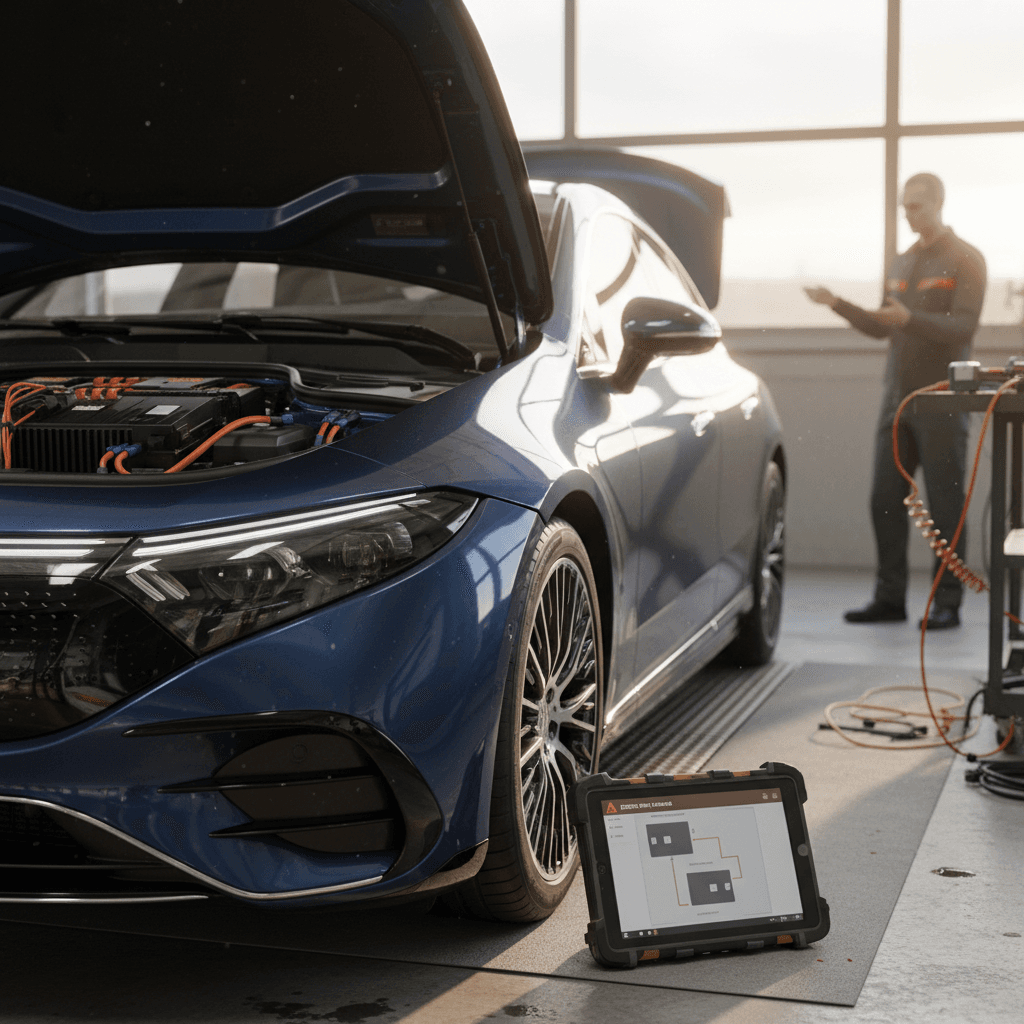
This is the big one on the Mercedes EQE recalls list: a software defect in the battery management system (BMS) that can shut down the high‑voltage battery with no warning, causing a sudden loss of drive power.
High-voltage battery shutdown recall – key details
This summary focuses on the EQE variants most U.S. shoppers will see. Always verify against the VIN for exact coverage.
| Item | Details |
|---|---|
| NHTSA campaign | 2024 recall related to high‑voltage battery management software (often listed as 24V372000 for some EQE trims). |
| Models covered (U.S.) | 2024 EQE 350 4MATIC, EQE 350+, EQE 500 4MATIC; 2023–2025 EQE SUV 350 4MATIC, EQE SUV 350+, EQE SUV 500 4MATIC; plus corresponding EQS variants. |
| Build window | Roughly February 1, 2023 through May 11, 2024 production for EQE/EQS sedans and SUVs. |
| Defect | BMS software can incorrectly shut down the high‑voltage battery while driving, cutting propulsion. |
| Risk | Sudden loss of drive power, increased risk of a rear‑end or side‑impact crash. |
| Remedy | Dealer software update to the battery management system, free of charge. |
| Owner letters | Mercedes mailed notification letters to affected U.S. owners in July 2024. |
Campaign often referenced as MBUSA 2024060002 in recall documentation.
In plain English: some EQE sedans and SUVs built through mid‑May 2024 can, under specific conditions, just go dark. No power to the wheels, no heroic save from the traction gods, just a very expensive paperweight coasting to the shoulder.
How serious is this EQE recall?
- The defect is software‑based, not a bad battery pack design.
- The official fix is a dealer BMS software update. Once completed, the recall is considered closed.
- If you’re buying used, you want to confirm two things: (1) the EQE’s VIN is or isn’t in the affected range, and (2) if it is, that the recall shows as “completed” in the Mercedes and NHTSA systems.
2. Electrical fuse issues and potential power loss
Separate from the BMS software recall, Mercedes has also flagged faulty high‑amperage fuses and related power distribution parts in a batch of 2023–2024 vehicles, including certain EQE and EQS models. In these cars, an improperly manufactured 80‑amp fuse can lead to failures in critical electrical systems, up to and including loss of power or, in a worst‑case scenario, increased fire risk.
Electrical fuse / power distribution recalls affecting EQE
Exact EQE trim coverage can vary; always check the VIN to confirm which campaigns apply.
| Aspect | Details |
|---|---|
| Core issue | Incorrectly manufactured high‑current fuse may overheat or fail, cutting power to connected systems. |
| Potential symptoms | Loss of propulsion, blank screens, disabled safety systems, or in rare cases, increased fire risk. |
| Models noted in campaigns | A mix of 2023–2024 EQE sedans/SUVs and other Mercedes models; not every EQE is affected. |
| Fix | Dealer replacement of the fuse and any related electrical components, free of charge. |
Applies to specific 2023–2024 EQE and EQS models built with affected fuse components.
Why this matters on a used EQE
Unlike the big battery software recall, the fuse‑related campaigns are a bit more scattered across trims and markets. That’s why the VIN check is non‑negotiable. Don’t assume your exact EQE 350+ or EQE SUV 500 is, or isn’t, covered just because someone on a forum said so.
3. Pedestrian warning sound recall (AMG EQE SUV)
By regulation, EVs must emit a pedestrian warning sound at low speeds so that people can hear a 5,000‑pound near‑silent appliance sneaking up behind them. Some Mercedes EVs and plug‑in hybrids, including the AMG EQE SUV, have been recalled in the U.S. for incorrect pedestrian warning sound behavior that does not comply with FMVSS 141.
Pedestrian warning sound recall – AMG EQE SUV
Focused on AMG EQE SUV trims; non‑AMG EQE models may not be affected by this specific campaign.
| Item | Details |
|---|---|
| NHTSA campaign | Recall related to insufficient or non‑compliant pedestrian warning sound (FMVSS 141). |
| Models | Primarily 2024–2025 AMG EQE SUV 4MATIC (U.S. market). |
| Risk | Pedestrians may not hear the vehicle at low speeds, increasing the risk of collision. |
| Fix | Dealer software update or module replacement to ensure correct AVAS operation. |
Good news for shoppers
Other EQE issues: TSBs, software updates, and owner complaints
Not every problem turns into a formal recall. With the EQE, there’s a growing pile of technical service bulletins (TSBs) and owner anecdotes that paint a fuller picture of living with the car, especially early‑build models.
Commonly reported EQE issues (not always recalls)
Patterns worth asking about when you’re test‑driving or inspecting a used EQE.
12‑volt system warnings
Owners report messages like “12V on-board electrical system service required” or “Have high-voltage system checked”, sometimes leaving the car temporarily undriveable until it’s restarted.
Many of these cases are resolved with software updates or 12‑volt battery replacement under warranty.
Driver-assist glitches
Warnings such as “Active Brake Assist inoperative” or camera-related faults can pop up intermittently.
These are often handled via TSBs, updated steering wheel modules, sensors, or software.
Charging & infotainment oddities
Occasional reports of slow wake‑up from sleep, random error pop‑ups, or charging starting/stopping unexpectedly.
Again, this tends to be software, not a fundamental hardware flaw, and improves with updates.
Used EQE pro tip
How to check recalls on a Mercedes EQE in 2 minutes
Whether you already own an EQE or you’re stalking one online, your first move is always the same: run the VIN. Here’s the fastest way to check for open recalls on any Mercedes EQE in the U.S.:
Step-by-step: Checking a Mercedes EQE for open recalls
1. Locate the 17‑digit VIN
You’ll find it on the lower driver‑side windshield, inside the driver‑door jamb, on the registration, or in the listing description if you’re shopping online.
2. Check NHTSA’s recall lookup
Go to the NHTSA recall site and enter the VIN. This will show <strong>all safety recalls</strong> that apply to that exact vehicle, and whether they’re open or completed.
3. Cross‑check with Mercedes
Use the Mercedes‑Benz USA recall checker or call a dealer’s service department with the VIN. They can see <strong>brand‑specific campaigns</strong> and whether the work was done at a franchised dealer.
4. Ask for service records
For used cars, ask the seller for invoices or dealer printouts showing recall codes and software updates performed. Compare the dates to campaign launch dates if possible.
5. Confirm before you buy or road‑trip
If a critical recall like the BMS shutdown fix is open, <strong>schedule the repair</strong> before you sign the paperwork or attempt a cross‑country run.
What if the recall shows as open?
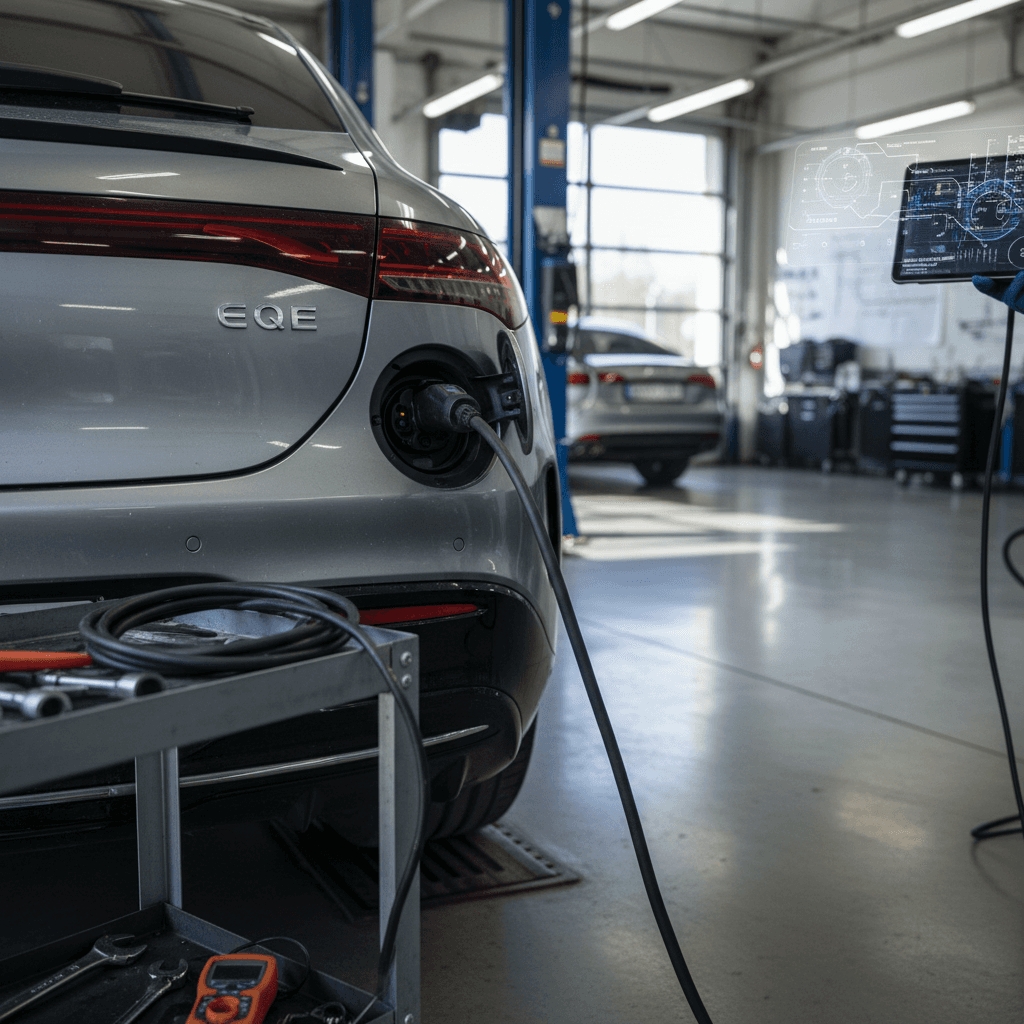
Used Mercedes EQE? Recall checklist for buyers
The EQE is a deeply complex, beautifully over‑engineered car. That can be wonderful when everything’s in sync, and expensive when it isn’t. If you’re shopping used, treat the recall list as a buyer’s checklist, not a deal‑breaker.
Mercedes EQE recall checklist for used shoppers
Confirm BMS recall status
If the EQE was built between early 2023 and mid‑May 2024, make sure the <strong>high‑voltage battery shutdown recall</strong> shows as completed. Ask for documentation.
Verify fuse / electrical campaigns
Ask the seller and dealer whether the car needed any <strong>fuse‑related or power‑distribution recalls</strong> and, if so, whether the parts were replaced.
Check for pedestrian sound recalls (AMG)
On an AMG EQE SUV, confirm there are no <strong>open AVAS / pedestrian warning sound recalls</strong> left outstanding.
Review software update history
Look for regular <strong>software updates</strong>, especially on early EQE builds. A car that’s never seen the inside of a dealer since delivery is a red flag.
Scan the dash for warnings
On the test drive, watch for 12‑volt, high‑voltage, or driver‑assist error messages. Intermittent warnings that magically clear themselves are often <strong>not</strong> a good sign.
Price in future downtime
If a recall is open but the seller is otherwise solid, negotiate price and plan for <strong>a day at the dealer</strong> to get software or parts work done after purchase.
How Recharged helps you shop EQE with recall and battery confidence
The problem with recall news is that it’s noisy. Every headline sounds apocalyptic. If you’re hunting for a used EQE, you don’t need more drama, you need a clear picture of this specific car. That’s exactly what Recharged is built to provide.
Why shop a used EQE through Recharged?
We focus on the two things that matter most: safety campaigns and real‑world battery health.
Recharged Score battery report
Every EV on Recharged gets a Recharged Score Report, including a deep look at verified battery health and how it compares to similar vehicles.
That’s crucial on EQE, where software and chemistry are still evolving.
Recall & safety review
We check each vehicle’s VIN against recall databases and verify that open safety campaigns are clearly disclosed, and, where possible, completed before sale.
No shrugging and “it’s probably fine.”
Financing, trade‑in & delivery
Recharged supports financing, trade‑ins, consignment, and nationwide delivery, plus an Experience Center in Richmond, VA if you’d rather kick the tires in person.
You do the fun part; we handle the paperwork.
Ready to find your next EV?
Browse VehiclesLeverage recalls to your advantage
FAQ: Mercedes EQE recalls and ownership questions
Frequently asked questions about Mercedes EQE recalls
Bottom line: Should EQE recalls scare you off?
The Mercedes EQE is a sophisticated, quiet, deeply capable EV, and yes, it has a recall record to match its complexity. The headline campaigns you care about are the high‑voltage battery shutdown fix, the electrical fuse work on some 2023–2024 cars, and (for AMG SUVs) the pedestrian warning sound update. None of these, taken alone, is a reason to walk away from an EQE; all of them are reasons to do your homework before you buy.
If you’re shopping used, treat the Mercedes EQE recalls list as a flashlight, not a horror story. Use the VIN tools, ask for records, and lean on platforms like Recharged that verify battery health and recall status up front. Do that, and you can enjoy the good stuff, the eerie silence, the instant torque, the lounge‑like cabin, without wondering what’s lurking in the service history.