If you’ve spent any time on EV forums, you’ve probably seen debates about Tesla Model Y highway noise level. Some owners say it’s whisper-quiet, others say it drums and booms on coarse concrete. The truth is in the middle, and it depends heavily on model year, wheels, tires, and even the roads where you drive.
Key takeaway
Tesla Model Y highway noise level: quick overview
- Most owners report the Model Y as average to slightly loud for cabin noise compared with other compact SUVs.
- Independent tests put older Model Y highway noise around 67–71 dB at 65–70 mph on typical pavement.
- Late-2024 and 2025 refresh models with added insulation and acoustic glass can measure around 64–66 dB at 70 mph in optimal setups, quiet for the segment.
- Wheel and tire choice easily swings noise by 3–6 dB, which is the difference between “fine” and “this is wearing on me.”
- Road surface matters a lot: smooth asphalt can feel premium; cut concrete with grooves can make even the newest Model Y sound boomy.
Model Y highway noise in context
How loud is the Tesla Model Y on the highway (in dB)?
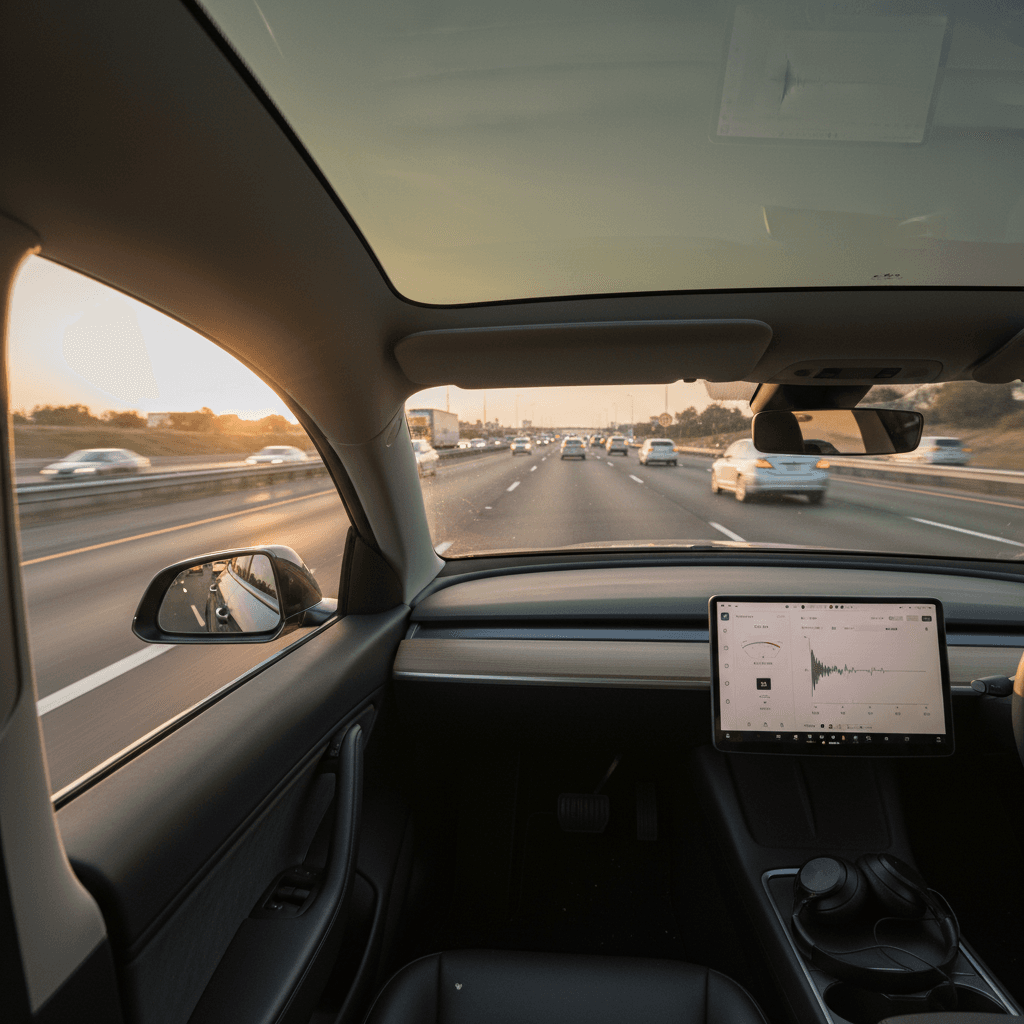
You won’t find an official decibel spec on Tesla’s website, so we have to triangulate from independent tests and owner measurements. Most serious measurements are taken with a sound meter at ear level in the front seats at a steady 60–70 mph on level highway.
Approximate Tesla Model Y highway noise levels
Derived from independent 2025 noise tests and large-sample owner measurements; actual numbers vary by road surface, temperature, and wind.
| Model / configuration | Speed & conditions | Approx. cabin noise |
|---|---|---|
| 2020–2022 Model Y (any trim) | 65–70 mph, mixed pavement | ~67–71 dB |
| 2023–early 2024 Model Y (acoustic front glass) | 65–70 mph, mixed pavement | ~65–69 dB |
| 2025 “new Model Y” w/19" wheels & touring EV tires | 70 mph, smooth asphalt | ~64–66 dB |
| 2025 Model Y Performance w/21" wheels | 70 mph, coarse asphalt or concrete | ~72–75 dB |
Use these as ballpark figures, not lab-grade specs.
For context, each 3 dB increase roughly equals a noticeable step up in loudness. So the difference between a well-spec’d 2025 Long Range on 19s and an early Performance car on 21s can feel like moving from a calm cabin to a constant, low-level roar.
Decibels aren’t the whole story
What changed for 2024–2025? The “new Model Y” and noise reductions
Tesla quietly kept improving the Model Y’s noise, vibration and harshness (NVH) over its lifecycle, and then made a very explicit push with the 2025 “new Model Y” refresh.
- Earlier running changes (roughly 2021–2023): added more sound-deadening in wheel wells, improved panel fit, and introduced acoustic front glass on more trims.
- Late-2024/2025 “new Model Y” update: Tesla claims about 20–22% reductions in road, impact, and wind noise thanks to revised suspension tuning, more insulation, and acoustic glass throughout.
- New roof glass coating reflects more heat, which lets the HVAC fan run slower at speed, less blower noise on hot highway drives.
- Redesigned door seals and slightly softer, better-damped suspension help cut the low-frequency “drumming” owners complained about in early cars.
Good news for used buyers
How Tesla Model Y highway noise compares to other EVs
If you’re cross-shopping the Model Y with other compact electric crossovers like the Hyundai Ioniq 5, Kia EV6, or Volvo XC40 Recharge, noise is one of the big differentiators.
Versus Hyundai Ioniq 5 & Kia EV6
- Multiple reviewers and owners describe the Ioniq 5 as noticeably quieter than a pre-refresh Model Y at 70+ mph, with a softer ride that filters out more coarse-pavement hum.
- The EV6 is similar: slightly firmer than the Ioniq 5 but still better at smothering sharp impacts and road roar, especially on European-style concrete.
- 2025+ Model Y narrows the gap; on smooth asphalt it can feel just as quiet, but on grooved concrete you still tend to hear more tire slap.
Versus premium gas crossovers
- Compared with a Lexus NX or BMW X3, early Model Ys feel a bit louder and more boomy on the highway, mainly because those vehicles are tuned as traditional luxury products.
- The latest Model Y on the right tires lands closer to a sporty luxury trim (think F Sport) than a top-shelf, “library-quiet” luxury package.
- If you’re coming from a mainstream gas crossover (RAV4, CR‑V, Tucson), even an older Model Y will often feel similar or slightly better on smooth roads.
Where Tesla still leads
6 biggest factors that change Model Y highway noise
If you’re evaluating a used Tesla Model Y, or trying to make sense of conflicting owner reports, these are the levers that actually move the needle on highway noise.
What really drives Model Y highway noise
Understanding these variables helps you pick (or tune) the quietest car.
1. Wheel size
All else equal, smaller wheels with taller sidewalls transmit less impact and pattern noise into the cabin. A Model Y on 19" wheels is almost always quieter than one on 20" or 21" wheels.
2. Tire type & brand
Touring-oriented, EV-specific tires with softer compounds and foam inserts can shave off several dB compared with stiff, performance-oriented rubber.
3. Model year & refresh
2020–2022 cars have the least insulation; 2023+ improve steadily; late-2024/2025+ "new Model Y" adds the biggest jump in acoustic glass and sound-deadening.
4. Road surface
Smooth asphalt vs. grooved concrete can feel like night and day. Owners often report their Model Y is quiet at 80 mph on fresh asphalt and suddenly boomy on older concrete.
5. Seal quality & build
Misaligned doors, hatch seals, or frameless window seals can create whistles and wind leaks that dominate the sound profile at 70+ mph.
6. Aftermarket changes
Roof racks, mud flaps, non-OE tires, or suspension changes can all add noise. Conversely, aftermarket sound-deadening kits can help tame it.
Quietest Tesla Model Y configurations (and ones to avoid)
If highway comfort matters to you, you don’t have to roll the dice. Certain Model Y builds and options are consistently quieter than others.
Aim for these specs if you want a quieter Model Y
Late-2023 or newer build
Look for a 2023+ VIN, and if possible a 2025+ "new Model Y" with the latest insulation and suspension tuning for a noticeable NVH improvement.
19" wheels with touring EV tires
The Long Range or RWD trims on 19" wheels, paired with quiet EV-specific tires, strike the best balance between efficiency, comfort, and noise.
Non-Performance trims
Performance models bring bigger wheels, stiffer suspension, and stickier tires, great for handling, not great for cabin hush at 75 mph.
Clean history, no body repairs
Poorly repaired doors or hatch areas are common sources of wind leaks. On a used car, check for consistent panel gaps and ask about accident history.
No permanent roof racks or box
Roof accessories can add a surprising amount of wind noise. If you only need them occasionally, choose easily removable systems.
Fresh door and hatch seals
On older cars, replacing worn rubber seals can claw back some of the quiet you’d expect from a newer Model Y.
How Recharged helps here
How to make a noisy Model Y quieter
Maybe you already own a Model Y, or you’ve found a used one you love, but it drones a bit too much on the interstate. There’s quite a lot you can do before you even think about changing vehicles.
Practical ways to reduce Model Y highway noise
Start with low-cost diagnostics, then move to targeted upgrades.
1. Diagnose the source
- On a short highway loop, pay attention to whether the sound is wind (hiss/whistle), tire roar, or a low-frequency boom from the rear.
- Lightly press a hand near window and door seals; if the pitch changes, you have a sealing issue that can often be fixed.
2. Fix leaks & rattles first
- Have a service center inspect and adjust door and hatch alignment and replace any suspect seals.
- Track down rattles from seat latches, trunk panels, or the cargo cover, small fixes that hugely improve perceived refinement.
3. Choose quieter tires
- When it’s time for replacement, prioritize EV-specific grand-touring tires with foam inserts and noise-optimized tread.
- If you live on rough concrete highways, consider dropping from 20" to 19" wheels for more sidewall compliance and less roar.
4. Add targeted sound-deadening
- Quality kits focus on rear hatch cavity, wheel wells, and underfloor areas, where the Model Y transmits a lot of structure-borne noise.
- DIY material placement can be effective, but be careful not to block drain paths or interfere with airbags and wiring.
What not to do
Highway test-drive checklist for a used Model Y
Highway noise is one of those things you can’t fully judge from a spec sheet. If you’re shopping used, especially from a private seller, build a short test route that lets you hear the car at speed.
Model Y highway noise test: 10-minute route
1. Start on city streets with HVAC off
Turn off the fan or keep it at the lowest setting so it doesn’t mask subtle rattles. Listen for buzzes or creaks over potholes and speed bumps.
2. Accelerate gently to 65–75 mph
Note when noise builds: is it mostly above 55 mph (wind-related) or always present (tire and structure-borne noise)?
3. Compare surfaces
Find a loop that includes <strong>smooth asphalt and older concrete</strong>. The Model Y’s behavior often changes dramatically between the two.
4. Perform a light crosswind check
On windy days, see if gusts trigger extra wind whistle around the A-pillars, mirrors, or hatch. Persistent whistling can point to misaligned trim or seals.
5. Sit in the rear seats
Low-frequency boom from the hatch area can feel stronger in the second row. If the rear feels boomy, factor in potential sound-deadening work.
6. Ask for wheel/tire and repair history
Note wheel size, tire model, and any collision or glass repairs. These details explain a lot about why one Model Y is louder than another.
Leaning on an expert
FAQ: Tesla Model Y highway noise questions, answered
Common Tesla Model Y highway noise questions
So, is the Tesla Model Y too noisy on the highway?
For most people, a well-spec’d Tesla Model Y is not too noisy on the highway, but configuration and model year matter a lot. Early cars on big wheels are merely “okay” by modern standards, while later 2024–2025 examples on 19-inch wheels and quiet EV tires can feel properly refined on smooth asphalt.
If you care about highway comfort, treat noise the way you’d treat range or charging: as a real shopping criterion. Pay attention to wheels and tires, test on your local road surfaces, and don’t be afraid to walk away from an otherwise nice car that booms or whistles at 75 mph. And if you’d rather have a guide in your corner, Recharged can help you compare used Model Y options, decode their build differences, and pair that with a Recharged Score Report so you know you’re getting both a healthy battery and a cabin you won’t mind spending hours in.