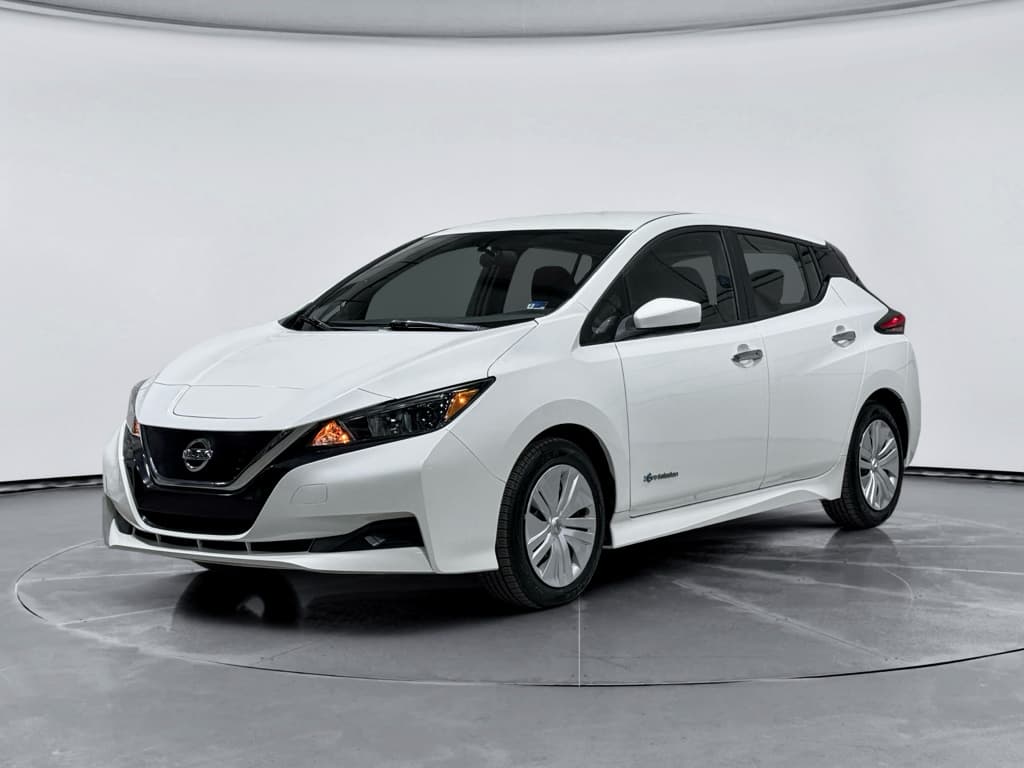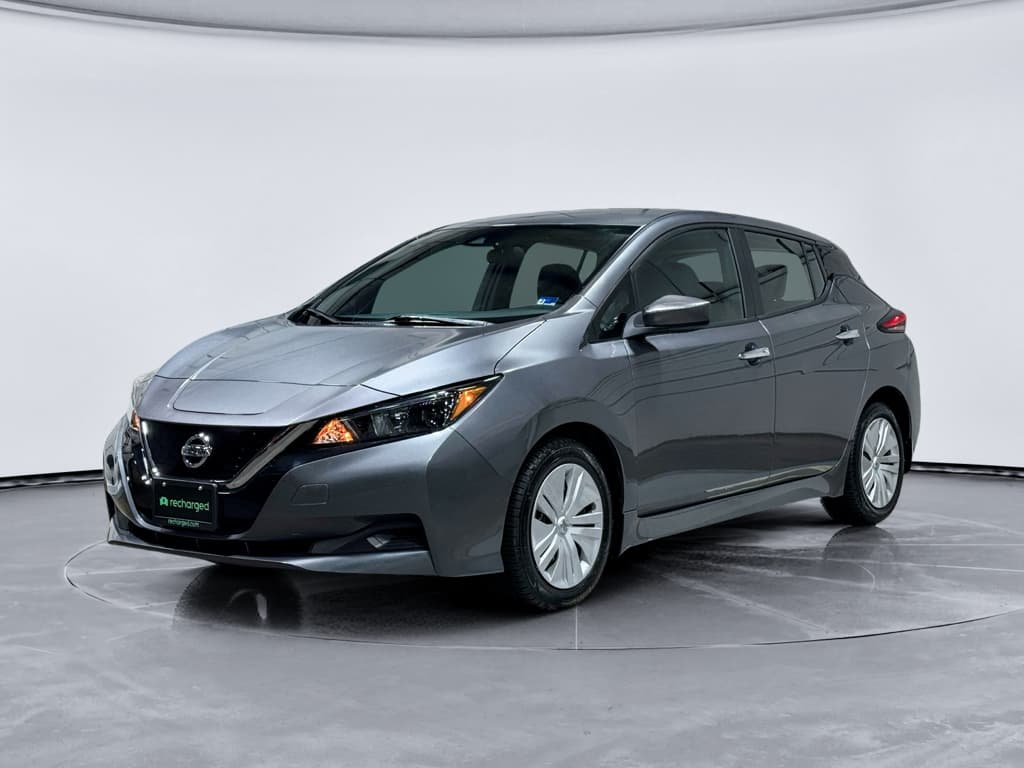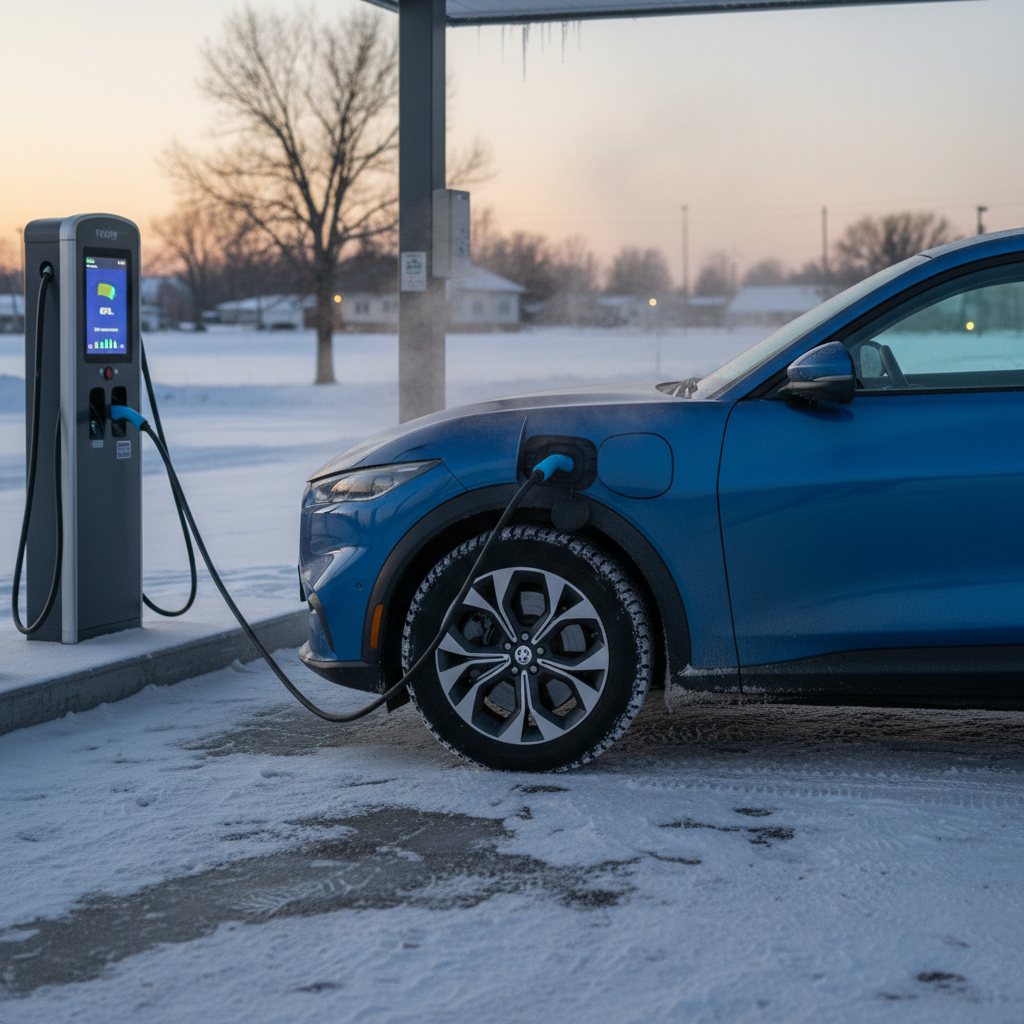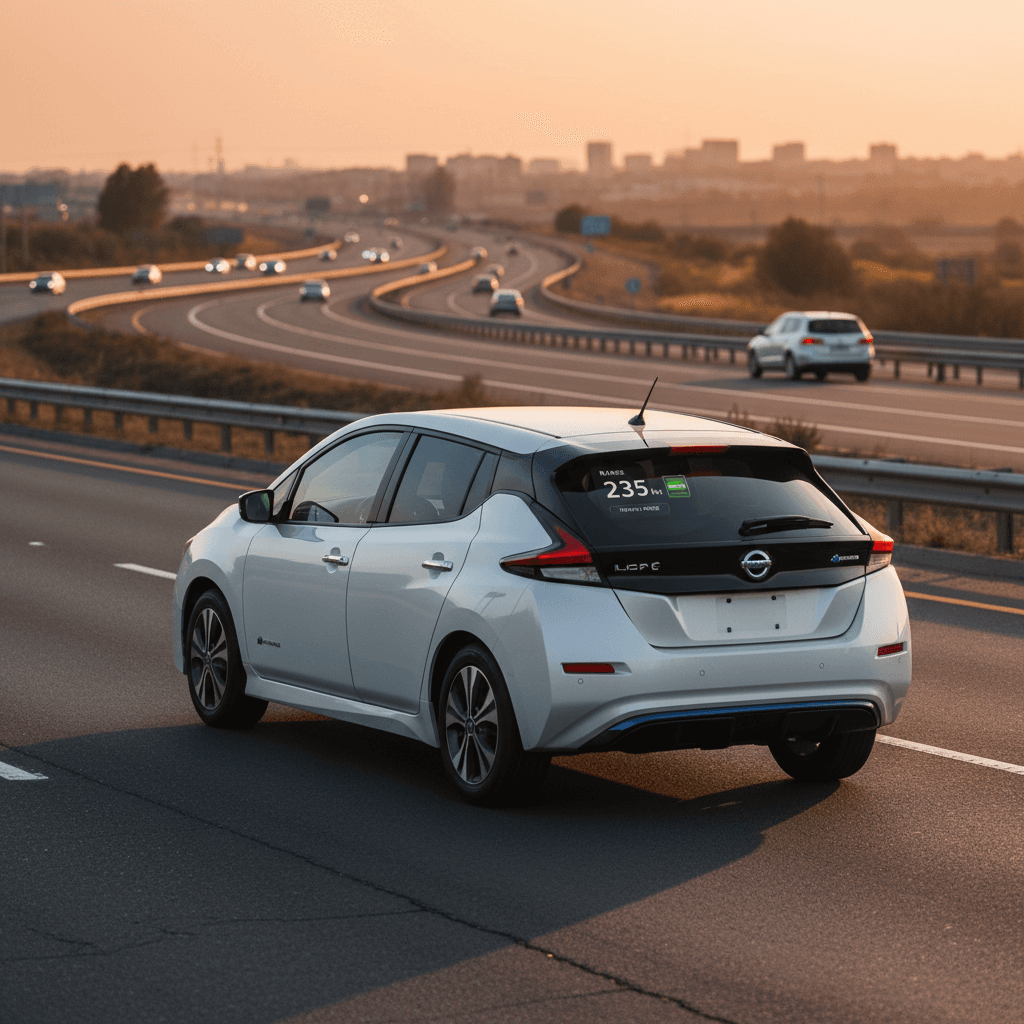
If you’re looking at a Nissan Leaf, especially a used one, the question that really matters isn’t the brochure number. It’s this: what is the Nissan Leaf’s real‑world highway range at 65–75 mph, in the conditions you actually drive in? This guide pulls together data, owner experience, and efficiency math so you can plan trips confidently and shop for a Leaf without guessing.
Quick answer: Leaf highway range in one chart
Why Nissan Leaf highway range is different from EPA ratings
Every Leaf is sold with an EPA range number, but those tests are based on a blended city/highway cycle at relatively modest speeds. Real drivers in the U.S. often sit at a cruise‑controlled 70–75 mph with climate control on, and that changes the picture dramatically, especially for the Leaf’s air‑cooled battery and relatively bluff hatchback shape.
- Highway aero drag rises with the square of speed. Going from 60 to 75 mph hits range much harder than most people expect.
- The Leaf’s early generations use resistive cabin heat, which can draw 3–5 kW by itself in winter, similar to what the motor might use cruising in town.
- EPA tests don’t simulate long, uninterrupted high‑speed stints where the battery, cabin heater, and motor are all working hard for hours.
Don’t equate EPA range with 75‑mph range
All Leaf batteries & EPA range at a glance
Before we talk about real‑world highway range, it helps to know which battery pack you’re dealing with. Here’s a simplified view of U.S.‑market Leafs up through the 2024 model year, which are the ones dominating today’s used‑EV market:
Nissan Leaf batteries & EPA range (U.S. models)
Approximate EPA combined range and battery size for major Nissan Leaf variants. Exact figures vary slightly by trim and year.
| Model years (typical) | Battery (usable) | Common trim names | EPA combined range |
|---|---|---|---|
| 2011–2015 | 24 kWh | S / SV / SL | 73–84 miles |
| 2016–2017 | 30 kWh | SV / SL | 107 miles |
| 2018–2024 | 40 kWh | S / SV | 149–151 miles |
| 2019–2022 | 62 kWh | S Plus / SV Plus / SL Plus | 215–226 miles |
| 2023–2024 | ~60 kWh | SV Plus (updated pack) | Around 212 miles |
EPA range is on a mixed driving cycle, expect significantly less at steady 70–75 mph, especially in winter.
CHAdeMO and highway use
Real‑world highway range by Leaf battery size
Let’s get into the numbers you actually care about: realistic Nissan Leaf real‑world range on the highway. The figures below assume a healthy battery (little degradation), 70 mph cruise, relatively flat terrain, and mild weather around 60–70°F with light climate control use.
Typical healthy‑battery Leaf highway range @ ~70 mph (mild weather)
24 kWh Leaf: city champ, highway limited
First‑gen Leafs with the 24 kWh pack are fantastic city cars but the least comfortable on the interstate. In mixed real‑world driving, owners often see 70–85 miles in mild weather. At 70 mph on the highway, you’re realistically looking at:
- Summer / mild weather (60–80°F): ~70–80 miles at 65–70 mph
- Cold weather at highway speed: often 45–60 miles if you’re using cabin heat heavily
- Planning buffer: For any highway trip longer than 45–50 miles in winter, you should plan charging stops or slower speeds.
Early Leaf + highway + winter = aggressive planning
30 kWh Leaf: a useful step up
The 2016–2017 30 kWh Leaf bumped EPA range to around 107 miles. On the highway you don’t get that full benefit, but you do get a more comfortable margin than the 24 kWh car:
- Mild weather, 70 mph: ~90–105 miles per charge
- Winter highway with heat: often 60–75 miles before you’ll want to recharge
- Sweet spot use case: 40–50 mile each‑way freeway commutes, especially if you can charge at both ends.
40 kWh Leaf (2018–2024): the modern baseline
The 40 kWh Leaf, rated around 149–151 miles EPA, is where the car finally feels like a fully‑fledged daily driver for many U.S. households. In mixed city/highway, real‑world owners often report 140–160 miles in good weather. On sustained highway runs at U.S. speeds, expect:
- Mild weather, 70 mph: about 120–140 miles if the battery is healthy and you’re not blasting HVAC.
- Colder weather (around freezing) with heat: more like 80–100 miles at 70 mph.
- Hot weather with A/C: A/C draws less than resistive heat, so you might still see 110–130 miles at 70 mph depending on wind and elevation.
How to think about the 40 kWh Leaf on the highway
62 kWh Leaf Plus: genuinely trip‑capable
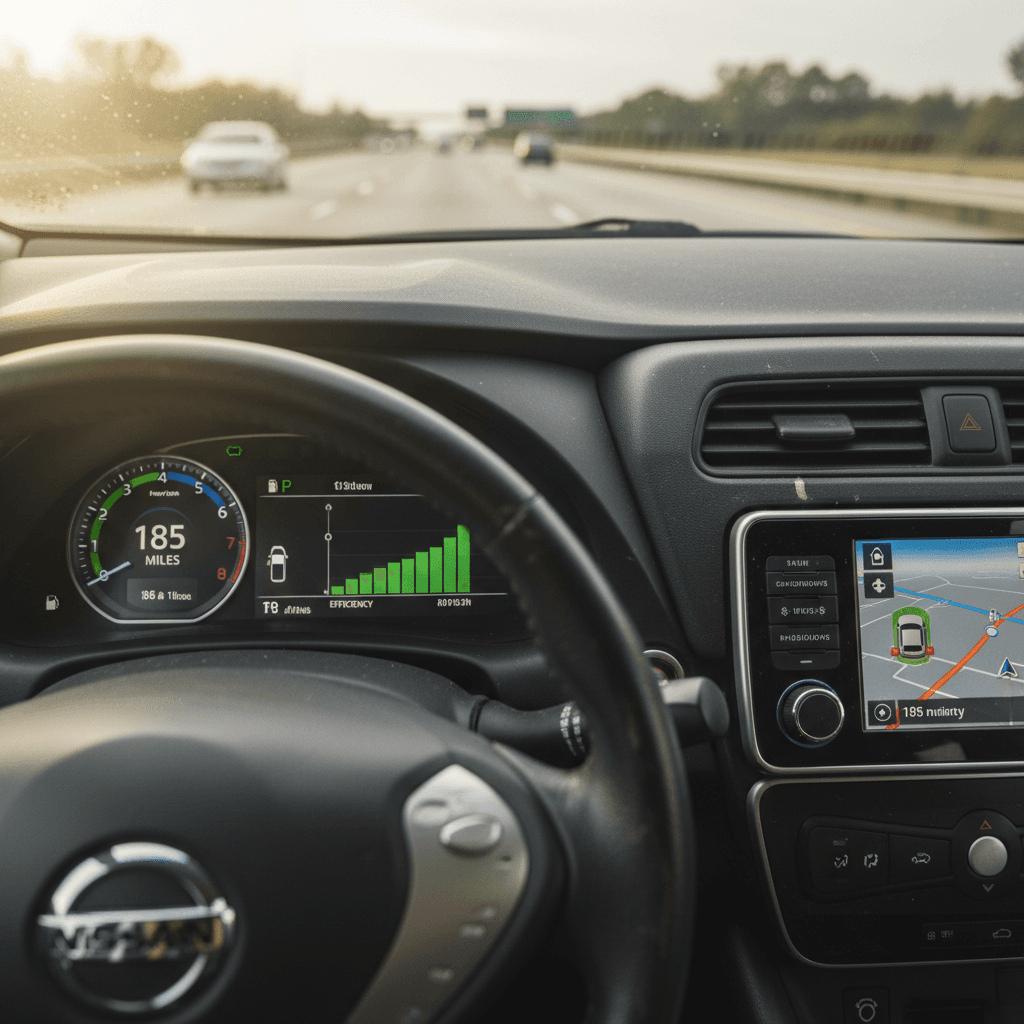
The Leaf Plus (62 kWh pack, slightly reduced to ~60 kWh usable in the latest years) is the first Leaf that can credibly handle U.S. interstates without feeling like a compromise, as long as CHAdeMO coverage works for your routes. With EPA ratings up to about 226 miles combined, here’s what owners and controlled tests tend to see:
- Mild weather, 70 mph: roughly 170–190 miles per charge in many independent tests and owner reports.
- Winter highway, around freezing with heat: more like 120–150 miles, depending on how warm you keep the cabin.
- Road‑trip use case: 120–150‑mile legs at 70 mph with a healthy arrival margin, or slightly longer if you slow to 65 mph and manage HVAC carefully.
Why the Plus is the Leaf to road‑trip
Speed, weather, and heating: how they kill Leaf range
Two Leafs with the same battery can behave completely differently on the highway depending on how and where they’re driven. A few physics‑driven factors matter more than anything else.
Three big killers of Nissan Leaf highway range
Understand these and you can predict your range within a surprisingly tight band.
1. Speed
Pushing from 60 to 75 mph can easily knock 15–25% off your range. Aerodynamic drag rises with the square of speed, and the Leaf is not a slippery sedan.
For long legs, dropping from 75 to 65 mph often saves more time in fewer charging stops than it costs in driving time.
2. Temperature
In cold weather, the battery is less efficient and the cabin needs more heat. Data from fleets shows Leafs often retain around 60–70% of their EPA range at freezing.
At 70 mph, that means a 40 kWh Leaf that might do 130 miles in spring can drop toward 80–90 miles in winter.
3. Cabin heat
Most Leafs use resistive heating, drawing several kW when the heater is working hard. That’s like permanently adding a second, invisible motor load.
Use heated seats and wheel first, and pre‑heat while plugged in when you can.
Winter highway rule of thumb
Planning a trip: realistic Leaf highway math
To translate all of this into something you can actually use, let’s walk through a couple of scenarios. Assume healthy batteries and flat terrain; if your Leaf has lost capacity, you’ll scale down these numbers accordingly.
Scenario 1: 40 kWh Leaf, 70‑mile commute
Setup: 2019 Leaf S (40 kWh), 70‑mile round‑trip commute, mostly interstate at 70 mph, mild weather, Level 2 at home, no workplace charging.
- Expected efficiency at 70 mph: roughly 3.2–3.5 mi/kWh in mild weather.
- Usable energy when new: about 37 kWh.
- Realistic usable range @ 70 mph: around 120–130 miles.
Result: This commute is easy. You’ll use about half the battery each day; even with some degradation, it stays comfortable.
Scenario 2: 40 kWh Leaf, 110‑mile highway round trip in winter
Setup: Same car, 55 miles each way at 70–75 mph, temps around 25°F, heater on.
- Cold‑weather efficiency at 70 mph with heat: maybe 2.2–2.6 mi/kWh.
- Realistic highway range: closer to 80–95 miles.
- 55 miles one‑way uses 60–70% of the battery in these conditions.
Result: Out‑and‑back with no charging stop starts to feel tight, especially as the pack ages. A fast‑charge near your destination or slowing down becomes important.
Leaf highway trip‑planning checklist
1. Start with battery health, not just pack size
A 62 kWh Leaf that has lost 15% capacity can have similar usable highway range to a healthy 40 kWh car. Always check state of health, not just the badge on the trunk.
2. Choose a realistic efficiency number
For sustained 70–75 mph, use ~3.0–3.3 mi/kWh in mild weather and 2.0–2.6 mi/kWh in winter as starting points. Multiply by usable kWh to estimate range.
3. Plan to arrive with a buffer
On longer legs, aim to arrive with at least <strong>10–15% state of charge</strong>. That covers headwinds, detours, or unexpected cold snaps.
4. Verify fast‑charging infrastructure
Because the Leaf uses CHAdeMO, check your route for reliable stations in the apps you trust. One closed or broken charger can rearrange your day.
5. Consider speed vs. stop trade‑offs
Slowing from 75 to 65 mph can add tens of miles of range. On many routes with sparse CHAdeMO, that’s the difference between a relaxed day and limping in at 2%.
Used Leaf shopping: battery health vs. highway range
When you’re buying a used Leaf, especially if highway range matters, the single most important variable is battery health. Two identical model‑year Leafs can have wildly different state of health depending on heat exposure, fast‑charging habits, and storage patterns.
What really matters for Leaf highway range when buying used
Pack size is step one. Verified battery health is step two, and just as important.
Battery state of health (SOH)
The Leaf’s air‑cooled packs, especially early 24 and 30 kWh versions, can lose capacity faster in hot climates. A car that started at 84 miles EPA might only have 60–65 miles when new, and 45–50 miles left on the highway today.
Ask for SOH data or a third‑party battery test, not just dashboard bars.
Driving pattern & climate history
Cars that spent their lives in Phoenix, parked outside and fast‑charged daily, age very differently than cars garaged in Seattle and mostly charged slowly.
Where and how the Leaf was used tells you as much about its future highway range as the odometer does.
How Recharged helps you see real range, not guesses
2026 Nissan Leaf highway range: what actually changes
Nissan is in the process of heavily updating the Leaf into a more crossover‑like shape with a liquid‑cooled 75 kWh battery and support for modern fast‑charging standards, including CCS and NACS. Early information points to EPA ranges in the 255–303‑mile window depending on trim.
The key highway‑range implications for you as a buyer:
- A 75 kWh liquid‑cooled pack should deliver materially better sustained highway range than today’s 60–62 kWh air‑cooled Leaf Plus, especially in extreme temperatures and over repeated fast‑charge sessions.
- With EPA ratings approaching 300 miles, a typical 70‑mph highway leg in mild weather could realistically be in the 190–230‑mile range with a comfortable buffer.
- Dual CCS/NACS ports will make public fast charging much less of a planning exercise than the CHAdeMO‑only Leafs, particularly in the U.S. where NACS access to Tesla Superchargers is becoming standard.
Where this leaves the used Leaf market
Practical tips to maximize your Leaf’s highway range
You can’t change physics, and you can’t magically turn a 24 kWh Leaf into a 62 kWh one. But you can meaningfully stretch whatever range you have with a few simple habits.
- 1. Slow down a notch. Dropping from 75 to 65 mph is often good for roughly 10–20% more range, depending on conditions.
- 2. Use Eco mode and gentle acceleration. It won’t rewrite the laws of thermodynamics, but smoothing your throttle makes efficiency more predictable.
- 3. Lean on seat and steering‑wheel heaters. They use far less energy than blasting cabin air heat, especially on shorter drives.
- 4. Pre‑condition while plugged in. Heating or cooling the cabin while you’re still on shore power preserves more battery for the highway portion of your trip.
- 5. Use percentage and mi/kWh, not just the guess‑o‑meter. Multiply recent mi/kWh by your estimated usable kWh to sanity‑check the car’s range estimate.
- 6. Keep tires properly inflated. Underinflated tires hurt both efficiency and safety; check pressures seasonally.
- 7. Travel lighter and cleaner. Roof boxes, bike racks, and heavy cargo all cost you range at highway speeds. Remove them when you don’t need them.
Turn your Leaf into a predictable tool, not a gamble
FAQ: Nissan Leaf real‑world highway range
Frequently asked questions about Nissan Leaf real‑world highway range
Bottom line: making sense of Leaf highway range
When you cut through the marketing, the Nissan Leaf is an honest car. It doesn’t hide its limitations, but it also doesn’t require magic to make the numbers work, just an understanding of how speed, temperature, and battery health shape real‑world highway range. For short‑to‑medium freeway hops, a 40 kWh Leaf is often plenty. For regular 100‑ to 150‑mile legs, the 62/60 kWh Leaf Plus is the one to look for, with the 2026‑onward Leaf promising to push that envelope further.
If you’re shopping used, the smartest move is to combine pack size, verified state of health, and your actual routes into one picture before you buy. That’s exactly what tools like the Recharged Score Report are designed to do: turn a fuzzy “can this make my trip?” into a clear yes or no, so you can enjoy the quiet, instant‑torque simplicity that made the Leaf a pioneer, without range anxiety running the show.