You don’t buy a Mercedes-Benz EQB because you’re trying to spend the least money possible. You buy it because you want a compact luxury SUV that happens to be electric. But once the new-car scent fades, what does Mercedes EQB long term ownership cost really look like over 5–10 years, and does it make more sense to buy one used?
The short version
5-year Mercedes EQB cost to own at a glance
Mercedes EQB 5-year cost snapshot (new)
Let’s translate that $68,000-ish 5‑year figure into something you can work with. For a new EQB, roughly half of what you “spend” over five years is depreciation, the invisible cost of value evaporating as the vehicle ages. The rest is a mix of electricity, insurance, state fees, financing, maintenance and, later in life, repairs.
Example 5-year cost to own: new Mercedes EQB (approximate)
High-level 5-year cost buckets for a new 2025 Mercedes EQB in the U.S. Actual numbers vary by trim, mileage, and location.
| Cost category | 5-year estimate | What it covers |
|---|---|---|
| Depreciation | $29,900 | Loss in value from new over 5 years. |
| Electricity (charging) | $3,000 | Home and public charging based on average U.S. usage. |
| Insurance | $17,700 | Premiums for a clean-driver luxury compact SUV. |
| Maintenance | $3,700 | Tires, brakes, cabin filters, inspections, wipers, fluids. |
| Repairs (out of warranty) | $2,500 | Wear‑and‑tear or unexpected items late in the 5-year window. |
| Financing costs | $6,600 | Interest on a typical 60‑month loan. |
| Taxes & state fees | $4,900 | Sales tax, registration, and other government fees. |
These numbers are directional, not promises, think of them as a reality check before you sign.
Numbers are a model, not your destiny
Depreciation: how fast does an EQB lose value?
Depreciation is where the Mercedes EQB does its most impressive magic trick: turning real dollars into abstract sadness. On paper, a new 2025 EQB is projected to lose roughly $30,000 of value in five years, landing at around $24,000 in residual value. That’s the single biggest line item in your long‑term ownership cost.
- Luxury EVs like the EQB typically see their steepest value drop in the first 2–3 years.
- The EQB shares its platform with the gas GLB, not a dedicated EV skateboard, which some buyers view as a downside, this can soften demand and resale values.
- Short real‑world range versus some rivals further nudges used‑market prices down, which is bad news if you buy new and great news if you’re shopping used.
Why this is good news for used buyers
From a 10‑year point of view, the picture is starker. Mercedes doesn’t publish 10‑year projections, but compact luxury crossovers commonly retain perhaps 20–30% of their original value at age 10, especially if their range and tech feel dated. That means the EQB is likely to be an excellent value as a used EV, but a costly indulgence if you insist on buying new and trading out every few years.
Electricity costs: what you’ll pay to power an EQB
The EQB is not the greenest kid in class. A 2024 EQB 350 4MATIC is rated around 39 kWh per 100 miles of driving. That’s efficient compared with a gas SUV, but a bit thirstier than the latest dedicated-platform EVs. To understand what that means for your wallet, you have to multiply that energy appetite by your electricity rate.
What EQB charging really costs per mile
Three simple scenarios based on U.S. electricity prices
Mostly home charging
Scenario: 90% home, 10% public.
- Rate: ~$0.15/kWh
- Energy use: 39 kWh/100 mi
- Cost/mi: about $0.06
- 15,000 mi/year: ~$900
Frequent DC fast charging
Scenario: 50% home, 50% DC fast.
- Home: $0.15/kWh, DC: ~$0.40/kWh
- Blended energy cost ~ $0.28/kWh
- Cost/mi: about $0.11
- 15,000 mi/year: ~$1,650
Apartment + public Level 2
Scenario: 20% free/discounted, 80% public L2.
- Effective rate: ~$0.25/kWh
- Cost/mi: about $0.10
- 15,000 mi/year: ~$1,500
Use efficiency to compare models, not to torture yourself
Over a 5‑year, 75,000‑mile span, a typical EQB owner who charges mostly at home might spend roughly $3,000 on electricity, less than half what many gas luxury crossovers burn in fuel over the same distance. That fuel delta is one of the major ways an EQB claws back some of its higher upfront price.
Maintenance, repairs, and warranty coverage
On paper, EVs are simple: no oil changes, no spark plugs, no multi-speed transmission. In practice, a Mercedes EQB still carries the running gear and expectations of a luxury brand. The good news is that routine maintenance is far lighter than an equivalent gas Mercedes; the bad news is that when something finally does need fixing, it’s not a Civic.
What maintenance looks like over 5–10 years
Tires every 25,000–35,000 miles
The EQB is a heavy, torque‑rich crossover. Expect to replace tires roughly every 25–35k miles depending on driving style and climate. With premium rubber and mounting, sets can easily run $900–$1,200.
Brake service later than you think
Regenerative braking means pads and rotors can last 60,000+ miles if you drive smoothly. But when they do need replacement, expect premium‑brand pricing.
Cabin filters and inspections
Routine inspections, cabin air filters, and coolant checks will make up much of your scheduled service. Budget a few hundred dollars a year on average, often rolled into prepaid service plans.
8‑year / 100,000‑mile battery warranty
Mercedes typically backs the high‑voltage battery for up to 8 years or 100,000 miles. That insulates you from catastrophic pack failures in the usual ownership window.
Out-of-warranty electronics risk
Past that 8‑year window, any major battery, inverter, or high‑voltage fault can be expensive. This is where a thorough battery health report becomes critical if you’re buying used.
Why battery health is your make‑or‑break metric
That’s exactly what the Recharged Score battery health diagnostics is designed for. On every eligible used EV we list, including the Mercedes EQB, you get a transparent report on pack condition, prior fast‑charging behavior and range performance, so you’re not guessing about the single most expensive component in the car.
Insurance and fees: the “soft” costs
The part of ownership we’d all like to ignore: insurance, taxes, and registration. For a new Mercedes EQB in the U.S., it’s reasonable to expect above‑average insurance premiums thanks to its luxury badge, higher parts prices, and repair complexity.
Insurance
Five‑year insurance costs for a new EQB can easily land in the mid‑teens to high‑$10,000s range, depending on your profile. Clean record in a quiet suburb? You’ll be toward the low end. Young driver in an urban ZIP code? Budget more.
Shopping a slightly older EQB and selecting sensible deductibles can trim this number meaningfully without under‑insuring yourself.
Taxes & state fees
At purchase, you’ll pay sales tax and registration based on your purchase price and state rules. Over five years, total taxes and fees can easily cross $4,000 on a new EQB.
Here again, buying used helps. A 3‑year‑old EQB with a price tag that’s $15,000–$20,000 lower than new not only saves you cash up front, it also cuts your tax bill.
Run the numbers with the *real* price
New vs used EQB: which has the lower long-term cost?
Here’s where the EQB gets interesting. As a new car, its 5‑year cost‑to‑own number is fine for the luxury EV segment but nothing remarkable. As a used car, especially around the 2–4‑year mark, it starts to look like a bit of a bargain, precisely because the first owner soaked up that big depreciation hit.
New vs used Mercedes EQB: simplified 5-year ownership picture
Illustrative comparison for someone who either buys a new EQB or buys a 3‑year‑old EQB and keeps it for 5 years. Numbers rounded for clarity.
| Buy new EQB (0–5 years) | Buy 3‑year‑old EQB (years 3–8) | |
|---|---|---|
| Purchase price | Highest (full MSRP or close) | Significantly lower than new |
| 5-year depreciation | Very high (~$30k) | Much lower; bulk already taken |
| Warranty coverage | Full new-car + battery warranty | Mostly battery powertrain warranty; basic may be expired |
| Insurance | Highest | Lower (older, cheaper vehicle) |
| Maintenance risk | Parts rarely worn out yet | More wear items, but still under battery warranty |
| Total cost to own | High but predictable | Often lower overall, with more variation by prior owner history |
Assumes similar annual mileage; actual figures will vary by market and trim.
Where Recharged fits into the used-EQB story
Ready to find your next EV?
Browse VehiclesHow the EQB compares to gas luxury SUVs
Cross‑shopping a Mercedes EQB usually means you’ve looked at things like the Mercedes‑Benz GLB 250, BMW X1/X3, Volvo XC40, maybe even the Audi Q3. In that company, the EQB’s story is less about being the cheapest to own and more about where the money goes.
EQB vs similar gas luxury SUVs: where the money moves
Same basic size and badge, different long-term math
Fuel vs electricity
Even with its so‑so efficiency, an EQB’s electricity bill is usually far lower than the fuel bill on a comparable gas SUV. Over 75,000 miles, that gap can easily be several thousand dollars in the EQB’s favor.
Maintenance & repairs
Gas luxury crossovers add oil changes, spark plugs, exhaust components, more complex transmissions and emissions systems to the long‑term bill. The EQB dodges most of that, though it keeps the same premium‑priced chassis parts and trim.
Depreciation profile
Early‑life depreciation on luxury EVs can be steeper than on their gas siblings as technology moves quickly and incentives sway demand. That’s painful for the first buyer but turns into opportunity in the used market.
Intangibles
The EQB is quieter, smoother in traffic, and feels more modern than many gas rivals. For some owners, those daily‑drive intangibles justify a few extra dollars a month on insurance or finance.
Total cost isn’t just dollars
Ways to lower your long-term EQB ownership cost
You can’t out‑negotiate physics, but you can make a handful of smart choices that move your Mercedes EQB from indulgence toward good sense. Here are levers you can realistically pull.
Practical ways to rein in EQB ownership costs
1. Buy gently used, not brand-new
Let somebody else pay the first 2–3 years of depreciation. A low‑mileage EQB that’s still under battery warranty often delivers 80–90% of the experience for far less money.
2. Charge mostly at home on a good rate plan
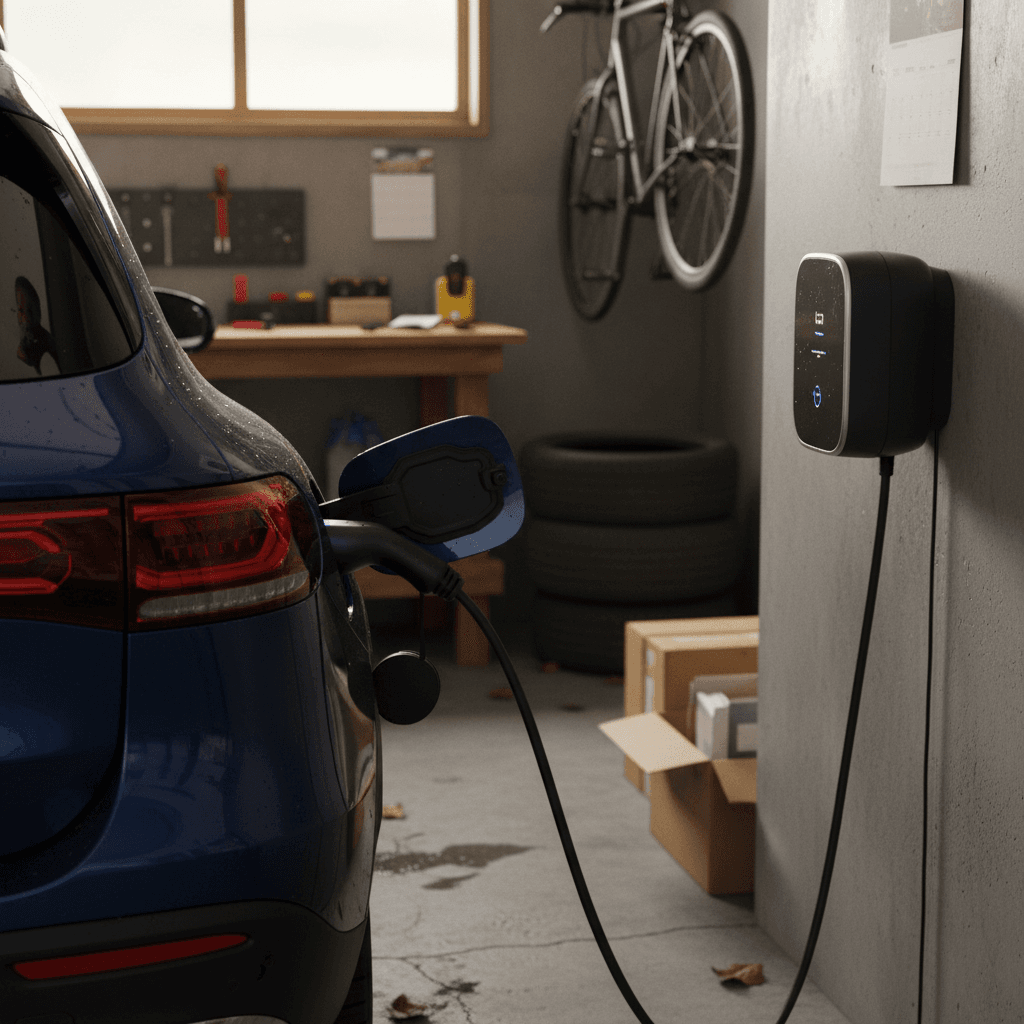
If you can install a Level 2 charger and move usage into off‑peak hours, your cost per mile plummets. Public DC fast charging is great for road trips, not for daily life.
3. Right‑size your wheels and trim
Big wheels look great but ding range and raise tire costs. If you care about cost over curb appeal, the more modest wheel/tire packages often save money twice: at the tire shop and on your power bill.
4. Shop insurance like you shop the car
Get quotes from multiple insurers before you buy, using the exact VIN. Ask about EV‑specific discounts, safe‑driver programs, and bundling policies.
5. Protect the battery
Avoid living at either extreme, don’t DC‑fast‑charge daily, don’t leave the pack at 100% for long periods, and don’t store the car empty. Those habits all help preserve range and resale value.
6. Use data when buying used
Instead of trusting a seller’s word about ‘great range,’ insist on a battery health report. Recharged’s Score Report gives you this by default on every EQB it lists.
FAQ: Mercedes EQB long-term ownership cost
Frequently asked questions about EQB ownership costs
Bottom line: is a Mercedes EQB worth it long-term?
If you define “worth it” purely as the lowest possible cost per mile, the Mercedes EQB is not your car. There are cheaper EVs, cheaper luxury vehicles, and certainly cheaper ways to move people and cargo. But if you’re after a compact luxury SUV with a smooth, electric driving experience, the EQB’s long‑term ownership cost is defensible, especially if you skip the new‑car sting and shop used.
The smart play is usually this: buy a 2–4‑year‑old EQB with a healthy battery, confirmed by data, and plan to keep it for at least 5 years while charging mostly at home. That lets you enjoy the quiet Mercedes‑EQ experience while someone else pays for the painful part of the depreciation curve.
If you’re curious what that looks like in real numbers for your budget, you can browse used Mercedes EQB listings on Recharged, compare Recharged Scores, and see monthly payment estimates side‑by‑side. The goal isn’t to talk you into an EQB; it’s to make sure that if you do buy one, you understand exactly what you’re signing up for, and how to make it work in your favor.