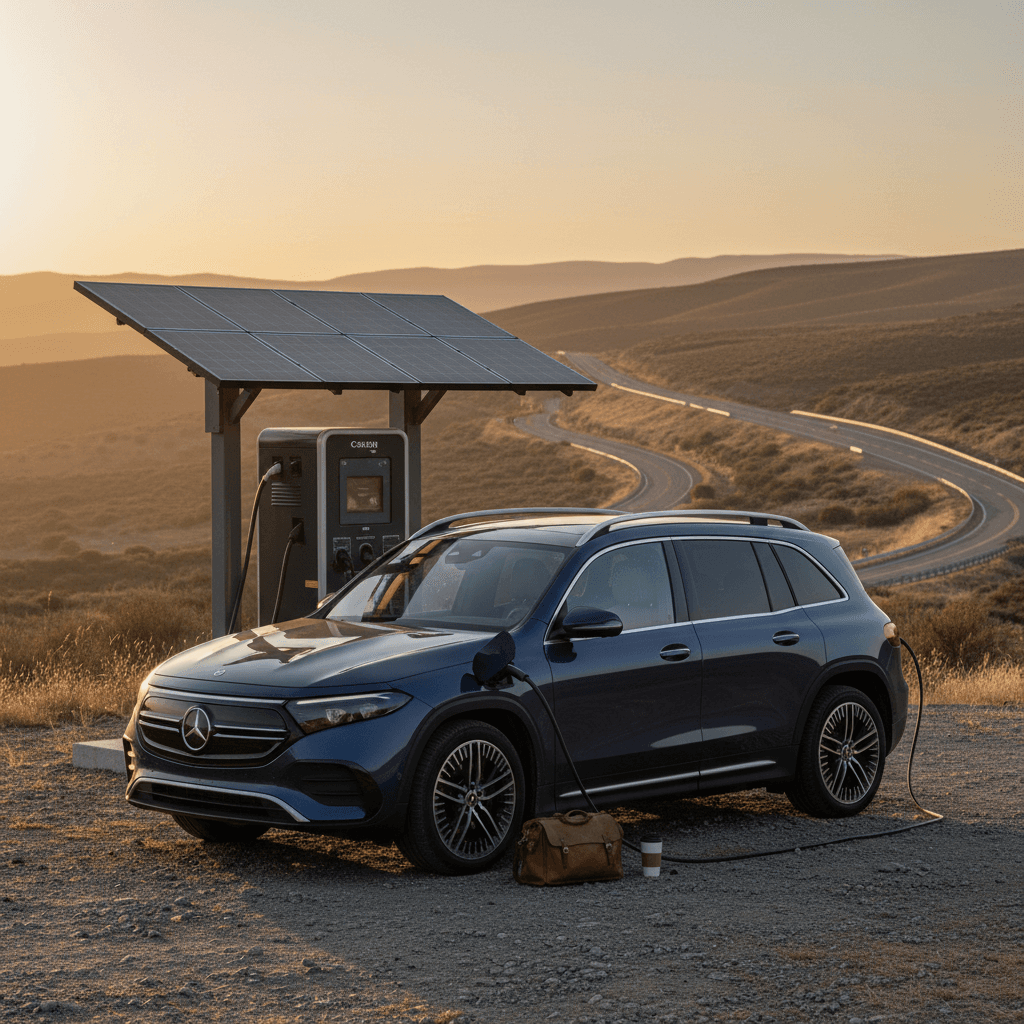
The Mercedes EQB is one of those rare EVs that makes sense in the school‑run, Costco‑run, soccer‑tournament reality most of us live in. Boxy, upright, honest about its mission. But when you point it at the horizon and ask it to be a long‑distance interstate cruiser, the limits of its modest battery and brick‑aerodynamics come into sharp focus. These Mercedes EQB long distance driving tips are about working *with* the car’s physics, not against them, so you arrive on time, not on a flatbed.
EQB at a glance
Why the EQB is a different kind of road-trip SUV
The EQB is not a slippery, wind‑cheating dedicated EV platform. It’s an electrified GLB: tall, square, and proud of it. That gives you real‑world advantages, excellent visibility, honest cargo space, an optional third row for short humans, but it means the **range drops faster at 75–80 mph** than in lower, more aerodynamic crossovers.
EQB strengths and weaknesses on long drives
Know what you’re working with before you plan a 600‑mile day
What the EQB does well
- Quiet, composed ride that feels like a proper Mercedes on the interstate.
- Upright seating and big glass keep fatigue down on long stints.
- Lots of usable cargo space for luggage, pets, and kid detritus.
Where it’s merely okay
- 100 kW DC fast charging is competitive but not class‑leading.
- AC Level 2 charging around 9.6 kW is fine for overnight top‑ups.
- Battery size is adequate, not huge, for U.S. highway distances.
Where it struggles
- Modest range by 2026 standards, especially on dual‑motor trims.
- Boxy shape hurts efficiency above ~70 mph.
- Mercedes navigation is improving but still not the gold standard for EV road‑trip planning.
Expectation reset
Know your real-world EQB range before you leave
EQB range baselines to plan around
EPA range is a ceiling, not a promise. On a long highway day, steady 70–75 mph, some hills, climate control on, you’re realistically looking at **150–190 miles between sensible fast‑charge stops** in most EQB trims. That’s the usable band where you’re not white‑knuckling the last 20 miles or nursing the pack from 5%.
- For an EQB 250+ FWD, plan around **180–190 highway miles** between 10–70% charges in mild weather.
- For EQB 300/350 4MATIC, treat **150–170 miles** as a realistic highway planning number at 70–75 mph.
- In winter (below freezing) or with strong headwinds, mentally knock off another **15–25%** from those numbers.
Test your own baseline first
Build a smart EQB charging strategy for long trips
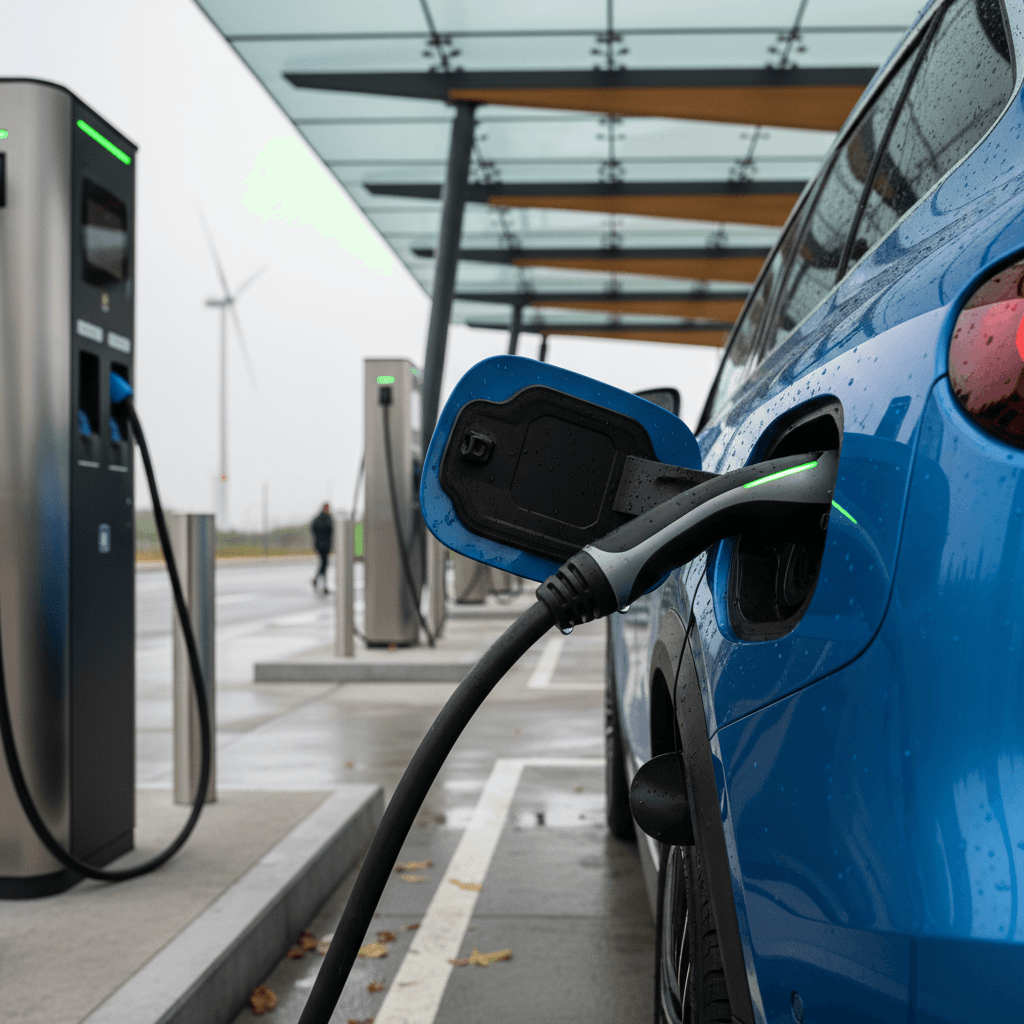
The EQB’s DC fast‑charging profile is quietly competent. On a strong CCS fast charger, you’re typically in the **30–35 minute window from 10–80%**, peaking near 100 kW when the battery is warm. The trick is to charge where the car is happiest: low to mid state of charge, warm pack, and not hanging around past 80% unless you absolutely must.
Where to charge your EQB on a road trip
Aim your fast‑charging sessions into the EQB’s most efficient state‑of‑charge window.
| SoC band | When to be in this band | What to do | Why it matters |
|---|---|---|---|
| 0–10% | Avoid if possible | Don’t plan to arrive below 5–7% regularly | Very low SoC increases stress and reduces your margin for closed or broken chargers. |
| 10–30% | Sweet spot for DC | Arrive at fast chargers in this range | The car can pull close to its peak DC rate here when the battery is warm. |
| 30–80% | Main charging window | Stay on DC until 70–80% | Best blend of time vs miles added; above ~80% the charging curve usually tapers hard. |
| 80–100% | Only when necessary | Use at home or when you have a long gap between chargers | Topping to 100% on DC is slow and not ideal for battery longevity if done constantly. |
These are guidelines, not hard rules. Weather, charger quality, and traffic all matter.
EQB DC fast-charging checklist
1. Precondition the battery
Whenever possible, **set the fast charger as your navigation destination** in the EQB. That lets the car warm the battery on the way so you actually see close to the advertised 100 kW peak instead of being stuck at 40–60 kW on a cold pack.
2. Target 10–20% arrival
Plan your stops so you roll into the charger with **around 10–20% state of charge**. You’ll get the best combination of charging speed and miles added per minute.
3. Unplug around 70–80%
Unless the next leg is very long or chargers are sparse, it’s usually faster overall to **leave around 70–80% and stop more often**, rather than sitting on the charger to 95–100%.
4. Prefer reliable networks
In the U.S., look for **well‑maintained CCS networks** along your route. If your EQB is updated for NACS and you’re using a Tesla adapter, favor newer sites with 250 kW posts and good uptime ratings in apps like PlugShare.
5. Avoid stacking high-speed legs
Back‑to‑back 80–85 mph stints followed by deep DC fast charges are the hardest use case for any pack. Mix in some **slower legs or longer breaks** if you’re hammering across whole states.
Good news on charge times
Using navigation and apps to plan your EQB stops
Mercedes’ own navigation with electric route planning is… alright. It will usually get you there, and it can prioritize compatible public chargers and precondition the battery when you navigate directly to one. Where it lags behind the best systems is choosing the smartest stops and being brutally honest about broken stations. That’s where third‑party tools earn their keep.
Pre-plan like you’re flying
Speed, climate & driving style: how to stretch range
If internal‑combustion cars are merely offended by speed, EVs are personally insulted by it. The energy consumption curve on the EQB climbs fast above 70 mph. Add winter temperatures, headwinds, and an enthusiastic right foot and you’ll watch the projected range melt like ice on a bonnet.
Four biggest levers for EQB highway efficiency
Small changes here can mean 20–40 extra miles of usable range
Cruise speed
Cabin climate
Wind & weather
Driving style
Cold weather reality check
Packing cargo and people without killing range
The EQB’s upright body is brilliant for Ikea runs and kid‑hauling, but weight and aero still matter when you’re crossing states. Every duffel bag, bike rack, and rooftop cargo box gets its pound of flesh in watt‑hours.
- Avoid roof boxes and bikes on the roof if you can. If you must use them, **assume a 10–20% range hit** and plan more stops.
- Pack heavy items low and forward, centered between the axles, to keep the EQB composed in crosswinds and during emergency maneuvers.
- If you’re running the third row up, know that the **aero wake gets messier**, and extra passengers mean more mass, again, add some margin to your range assumptions.
- Don’t treat the cargo area as a permanent storage locker. Clean out the unnecessary weight before a long drive. Ten small things add up.
Think in kWh, not just cubic feet
Comfort setup: how to arrive less fatigued
One of the EQB’s quiet superpowers is that it feels like a real Mercedes on a long slog, solid, quiet, and well‑damped. You can leverage that with a bit of setup so the car does more of the work and you do less.
EQB comfort & convenience checklist for long days
Dial in seat and wheel early
Spend the first ten minutes of the trip perfecting your **seat base, lumbar, and steering wheel** positions. Once they’re right, save them to memory so a rest‑stop driver swap doesn’t nuke your setup.
Use driver assistance wisely
Adaptive cruise and lane‑keep can reduce fatigue, but they’re not chauffeurs. Use them as **muscle relaxers, not brain removers**, especially in traffic and construction zones.
Tame the screen clutter
Before you leave, configure your **instrument cluster and center screen** to show only what matters: speed, remaining range, trip energy, and next turn. Less cognitive noise equals less fatigue.
Plan humane leg lengths
The EQB’s 10–80% charging rhythm naturally breaks your day into **2–3 hour chunks**. Lean into it. Your body and your passengers will thank you.
Pre‑load entertainment
Download playlists, podcasts, and kids’ content at home on Wi‑Fi. Rural fast‑charge stops often have **more chargers than bars** of cell service.
Protecting your EQB battery on long drives
Modern Mercedes battery packs are designed to handle road‑trip duty, but there’s a difference between *capable* and *careless*. A little restraint goes a long way toward keeping your EQB’s pack healthy for the long run, especially if you do several big trips a year.
Battery-health best practices on road trips
You don’t need to baby it, just don’t abuse it
Avoid chronic deep discharges
Favor AC for full charges
Watch heat and cold
When to slow down and back off
Sample EQB road-trip strategies
It’s easier to plan when you can see patterns. Here are a couple of sample strategies that line up with how the EQB likes to travel, assuming mild weather and reasonably healthy chargers.
EQB road-trip playbooks
Family weekend: 220–260 miles each way
Start at **90–100% from home Level 2**.
Drive the first leg down to ~20–25% SoC.
Fast‑charge from ~20% to ~75% (roughly 25–30 minutes).
Arrive at your destination with 25–40% and **top up overnight on Level 2**.
Repeat in reverse; you’ll likely only need one DC stop each way.
Cross‑state push: 500–600 miles in a day
Start at **100% at home** and plan the first leg to arrive around 20–25%.
Fast‑charge 20–75% (about 30 minutes) while you eat.
Repeat **two more 10–75% sessions** spaced roughly 150–180 miles apart.
Accept that you’re doing **3–4 DC stops**; use them as real breaks, not annoyances.
Aim to finish the day around 15–20% rather than squeezing in one last long, slow charge.
Winter trip with kids and gear
Pre‑condition the cabin and battery on plug before leaving.
Cut your planning range numbers by **20–25%** right up front.
Make your **first DC stop earlier**, around 30–35% SoC, to account for higher consumption and slower charging.
Keep cabin temps reasonable and lean on seat heaters.
If a storm is coming, build an extra **safety stop** into the day rather than gambling on a sketchy last leg.
Frequently asked questions about EQB road trips
Mercedes EQB long-distance driving FAQ
Key takeaways for long-distance EQB driving
The Mercedes EQB is not an endless‑range grand tourer; it’s a compact, pragmatic family EV that does its best work when you lean into its rhythms. Treat it like a **150–190‑mile highway car with 30‑minute coffee breaks**, plan your charging around the 10–80% band, keep your speed and packing habits reasonable, and you’ll discover it can cover serious ground without drama.
If you’re shopping for an EQB specifically with road trips in mind, or you already own one and want a clear picture of its battery health, platforms like Recharged can take a lot of guesswork out of the equation. Every used EV on Recharged comes with a **Recharged Score battery and charging report**, fair‑market pricing, and EV‑savvy guidance so you know exactly what kind of range and charging performance to expect before you ever set the cruise control.