If you own, or are thinking about buying, a Ford F‑150 Lightning, you’ve almost certainly heard about a **Ford F‑150 Lightning battery recall** or two. Between high‑voltage pack concerns, software fixes, and a major 2025–2026 rollaway campaign that touches the battery and drive systems, it can feel like the truck is always back at the dealer. This guide cuts through the noise so you know which recalls actually involve the battery, how serious they are, and exactly what to do next.
First, a quick reality check
Why F-150 Lightning battery recalls are in the headlines
The Lightning has lived under a brighter spotlight than most EVs. It’s the **first mass‑market electric full‑size pickup** from a legacy brand, it carries America’s best‑selling nameplate, and it launched into a recall‑happy era where regulators and journalists are rightly jumpy about lithium‑ion fires. Add a few genuine high‑voltage issues and a big 2025–2026 software recall that affects over 100,000 Lightnings, and you get scary headlines that don’t always distinguish between **battery‑adjacent software fixes** and **physical pack defects**.
F-150 Lightning recalls in context
Battery vs. non-battery recalls
Which F-150 Lightning battery-related recalls exist?
Ford and the National Highway Traffic Safety Administration (NHTSA) have opened multiple campaigns that touch the Lightning’s battery pack, its high‑voltage hardware, or software that controls how the battery and driveline behave. The details vary by **model year and build date**, but broadly, you can group the battery‑related issues into three buckets:
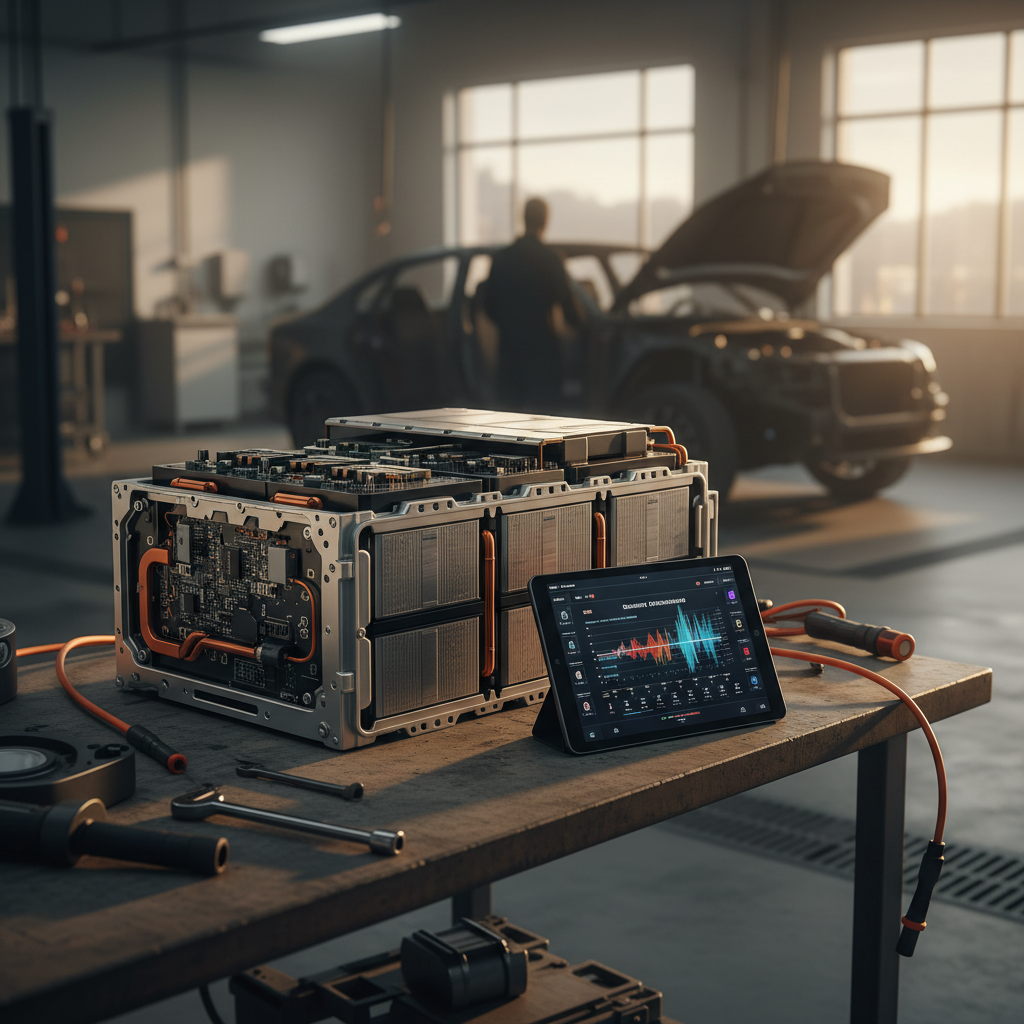
- High‑voltage pack hardware issues (fasteners, internal cell defects, potential fire risk)
- Battery control software and Battery Energy Control Module (BECM) updates
- Integrated park-module software defects that can let an EV or hybrid roll away, even though the root cause is software, not the cells themselves
For an individual truck, the only way to know which of these apply is to **run your VIN**. We’ll walk through that step‑by‑step below, then come back to what each recall does in practice.
High-voltage battery and fire-risk recalls
When people say “battery recall,” they usually mean **anything that might cause a fire**. For the F‑150 Lightning, there have been two particularly high‑profile categories: manufacturing defects in the pack itself, and hardware issues inside the pack that can cause arcing or overheating.
Key high-voltage battery recall patterns on the Lightning
Different campaigns, same goal: stop arcing, overheating, or unexpected shutdowns.
1. Cell or module defects
Some 2023–2024 F‑150 Lightnings are covered by recalls where individual cells or modules may have been manufactured out of spec. Misaligned electrodes or other defects can, over many charge–discharge cycles, increase the risk of an internal short and potential thermal event.
In these cases, Ford may instruct dealers to inspect and replace affected modules or the entire pack. Owners are often told to temporarily limit charging, typically to around 80%, until the remedy is complete.
2. High-voltage bus bar hardware
Another campaign targets a much smaller population of 2023 trucks where bus bar retention nuts inside the pack were loose or missing. That can create high resistance and electrical arcing, leading to a shutdown or, in the worst case, a fire risk.
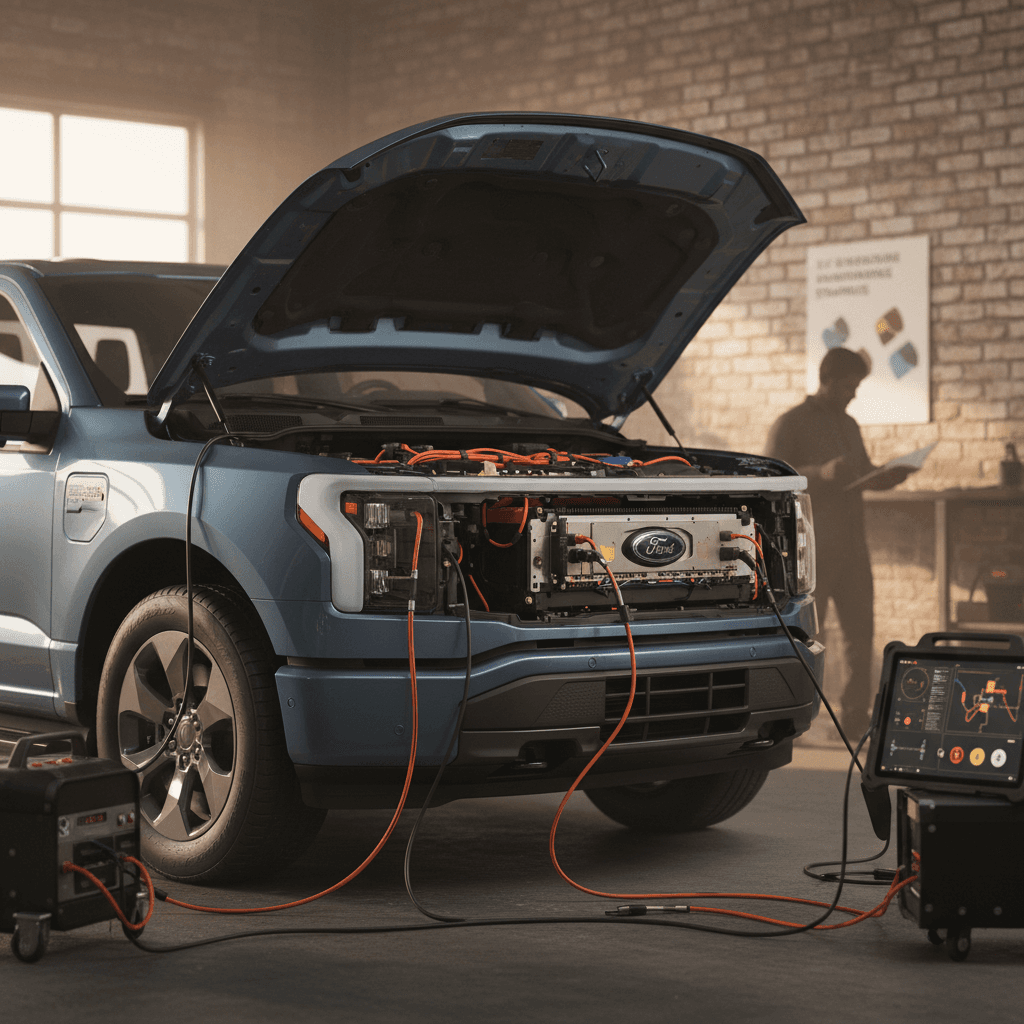
The fix is surgical but important: technicians open the pack, inspect and torque fasteners, and replace any damaged components. Done correctly, this restore the pack’s designed safety margins.
Take any fire-related notice seriously
One noteworthy trend: compared with the early days of EVs, automakers now move more quickly. If they see even a handful of warrantied pack failures with a shared root cause, they’ll launch a recall before there’s a headline‑grabbing parking‑garage fire. That’s exactly the kind of cautious behavior you want in a 9,000‑pound, skateboard‑battery pickup.
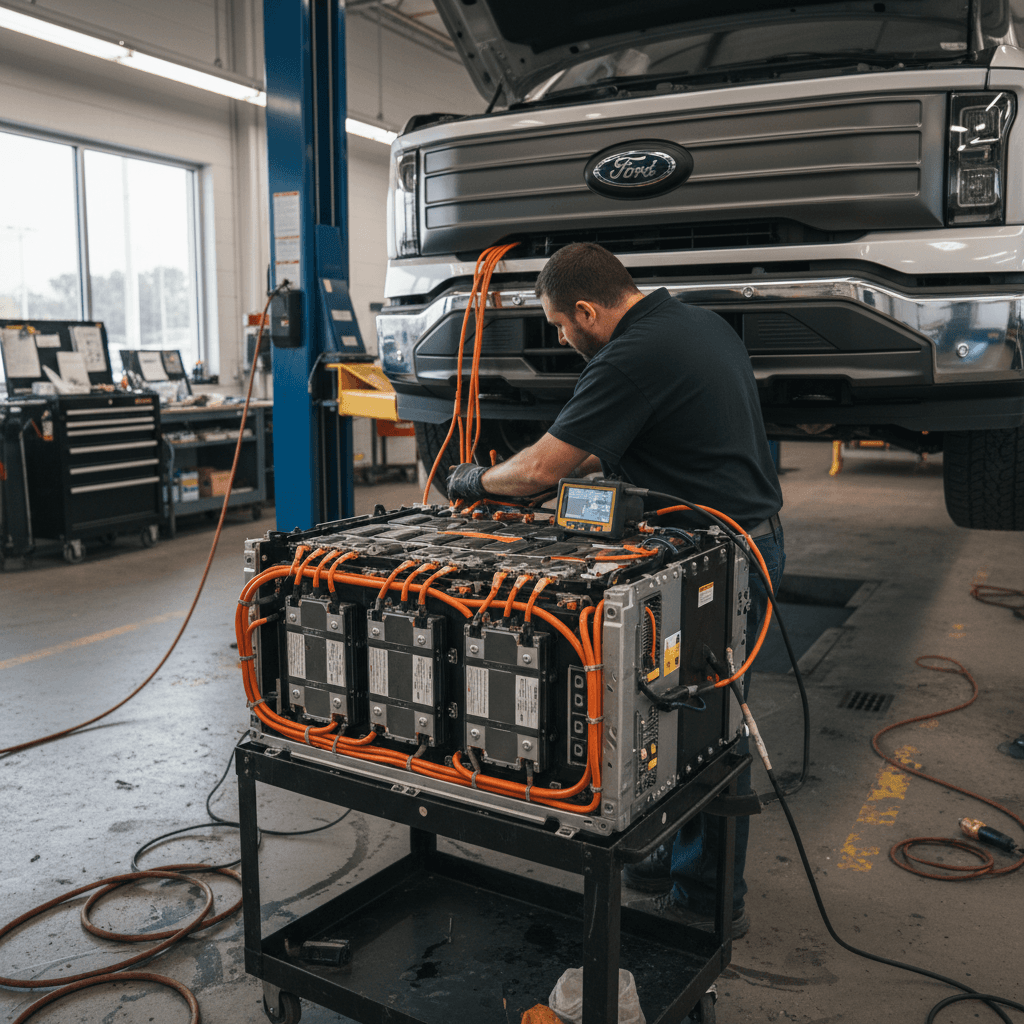
Battery software, BECM updates, and park/rollaway issues
Not every “battery recall” touches the cells. Increasingly, what’s being recalled is **software that supervises the pack and driveline**. On the Lightning, that shows up in two main ways: Battery Energy Control Module (BECM) updates and the large integrated park‑module recall that runs through 2025 and into 2026.
BECM & battery performance updates
The BECM is the Lightning’s air‑traffic controller for the high‑voltage pack. It decides how much power you can pull, when to shut things down, and how to interpret sensor data. Early on, Ford pushed updates to:
- Improve detection of abnormal cell behavior
- Reduce the chance of sudden loss of motive power
- Adjust how state‑of‑charge and range remaining are calculated
Some of these updates were framed as recalls; others arrived as customer satisfaction programs or over‑the‑air (OTA) updates. Functionally, they all aim to make the truck more conservative and more transparent about what the battery is doing.
Park-module software & rollaway risk
In late 2025, Ford announced a sweeping recall covering more than 272,000 EVs and hybrids, including over 104,000 F‑150 Lightnings, for a defect in the integrated park module. In certain edge cases, the system might fail to fully engage Park, letting the vehicle roll away.
Even though this is primarily a software and driveline control issue, it’s tightly coupled to what the battery and inverters are doing, especially on a truck with one‑pedal driving and heavy regen. The fix is a software update, delivered either OTA or at a dealer, and it’s free.
Watch for OTA updates you still need to accept
How to check if your F-150 Lightning is under a battery recall
Because there are multiple overlapping campaigns, guessing based on model year isn’t good enough. The only reliable method is to run your **full 17‑digit VIN** through official tools. Here’s how to do that in about five minutes.
Step-by-step: See all open recalls on your Lightning
1. Grab your VIN
You’ll find the VIN on your registration, insurance card, the driver's side door jamb sticker, or at the base of the windshield on the driver’s side.
2. Check NHTSA’s recall tool
Go to NHTSA’s official recall lookup site and enter your VIN. This pulls every safety recall, battery, software, steering, suspension, logged in the federal system.
3. Check Ford’s own recall portal
Ford’s owner site has a similar VIN lookup. Occasionally, you’ll see campaigns or customer satisfaction programs here that haven’t hit the NHTSA database yet.
4. Open your FordPass app
Under Vehicle Details or Service, look for recall notifications or “Customer Satisfaction Programs.” Lightning‑specific software updates often show up here first.
5. Call a dealer’s service department
If anything looks unclear, like a campaign that still shows “open” after service work, call a Ford or Lincoln dealer. Ask them to read off <strong>all open and all completed campaigns</strong> tied to your VIN.
6. Save screenshots or PDFs
For your own records (and for resale), save screenshots or printed PDFs of your recall status and any dealer repair invoices. This paper trail matters when you sell or trade the truck.
Why your app might still show a closed recall
What to do if your Lightning is affected
Once you’ve confirmed an open **Ford F‑150 Lightning battery recall** or related software campaign, the playbook is straightforward, but there are a few nuances that can save you time and anxiety.
Battery recall playbook for F-150 Lightning owners
What to do depending on the type of battery-related recall your truck has.
| Recall type | Typical guidance before fix | What the dealer does | What it costs you |
|---|---|---|---|
| High-voltage cell/module or fire-risk | Limit charge level, sometimes avoid DC fast charging, park outside after charging | Inspect pack; update software; replace affected modules or entire pack as needed | $0 (recall repairs are free) |
| Bus bar / internal fastener issue | Watch for warning lights, sudden loss of power; often no special driving limit beyond basic caution | Open pack, torque/replace hardware, inspect for damage | $0 |
| BECM / battery control software | Usually safe to drive; may see reduced performance or warnings until updated | Update BECM firmware via OTA or in-dealer programming | $0 |
| Integrated park-module rollaway risk | Use parking brake every time; avoid parking on steep grades until updated | Install updated software to ensure Park fully engages | $0 |
Always follow the exact instructions in your recall letter; this table is a quick starting point.
Good news: recall work doesn’t kill your warranty
- Schedule the appointment as soon as parts or software are available; don’t sit on a fire‑risk notice.
- Ask the service advisor to print the RO (repair order) and any recall bulletin numbers when you pick up the truck.
- After a BECM update, pay attention to how your **estimated range** behaves over the next week, small changes are normal; big swings may merit a follow‑up visit.
- If your truck is in for a major pack replacement, ask about a loaner or rental assistance. Many dealerships will help, especially for safety recalls.
Impact on range, battery life, and resale value
From an owner’s perspective, the real question behind every recall is, “How does this affect me long‑term?” With EVs, that usually means **range, degradation, and resale value**.
Range and degradation
Hardware‑driven pack recalls, like defective modules or arcing bus bars, are binary: either your pack is healthy or it isn’t. If Ford replaces modules or the entire pack, you’re effectively getting a redraw from the parts bin, often with tighter QC than early production.
Software‑only recalls can change how the truck reports range without changing the underlying chemistry. After a BECM update, some owners see:
- More conservative range estimates at low state of charge
- Fewer surprises near 0%, which is good for road‑trip planning
- Subtle changes in DC fast‑charge behavior to protect long‑term health
Resale value and buyer confidence
On the used market, a Lightning with documented recall repairs is generally more attractive than one whose owner never bothered. Completed campaigns tell a buyer the truck has had:
- Factory‑paid, up‑to‑date software and hardware fixes
- Professional eyes on the high‑voltage system
- A paper trail they can show to lenders and insurers
At Recharged, every used EV we sell, including F‑150 Lightnings, comes with a Recharged Score battery health report and verified recall status, so shoppers don’t have to parse NHTSA bulletins on their lunch break.
Keep a simple recall folder
Buying a used F-150 Lightning after these recalls
Shopping used is where recall history really matters. A well‑sorted 2022–2024 Lightning with all campaigns completed can be a stellar value; a neglected truck with open battery or park‑module recalls is someone else’s unfinished homework.
How to vet a used F-150 Lightning’s battery history
Whether you’re buying from a neighbor, a dealer, or an online listing, these are non‑negotiables.
Ask for a VIN upfront
Before you fall in love with the color or the wheels, ask the seller for the full 17‑digit VIN. If they hesitate, move on.
Run that VIN through NHTSA and Ford’s owner site to check for any open battery or park‑related recalls.
Demand repair documentation
For every recall the seller claims is “already done,” you should see some kind of paperwork: a dealer invoice, a repair order, or at least a screenshot from FordPass showing it as completed.
No docs, no deal, at least not at full market price.
Check real-world range
On a fully charged battery, take note of the truck’s projected range and compare it to the original EPA rating for that trim.
Big unexplained gaps might justify a pre‑purchase battery health test, like the Recharged Score report we provide on our used inventory.
How Recharged handles Lightning recalls on used trucks
- All known safety and battery‑related recalls checked and addressed before listing
- A Recharged Score battery health report based on real‑world pack diagnostics, not guesswork
- Expert EV advisors who can walk you through build dates, battery options, and long‑term running costs
FAQ: F-150 Lightning battery recalls
Frequently asked questions about F-150 Lightning battery recalls
Bottom line on F-150 Lightning battery recalls
The Ford F‑150 Lightning has had its share of drama, some of it deserved, some of it the price of being the first electric truck to wear America’s favorite grille. Battery‑related recalls range from serious, pack‑level defects that demand immediate attention to software updates that quietly make the truck more conservative and transparent. None of them mean the Lightning is doomed; they mean the manufacturer is still doing the hard, public work of maturing a brand‑new powertrain in a very old‑school segment.
If you already own a Lightning, your job is to stay current on recalls, keep clean documentation, and act quickly on any fire‑ or rollaway‑related notices. If you’re shopping for one used, the winning move is to favor trucks with fully documented recall histories and independent battery health data, exactly the kind of transparency Recharged builds into every EV we list. In a market this new, knowledge is range, and the right truck is the one whose past you can actually see.