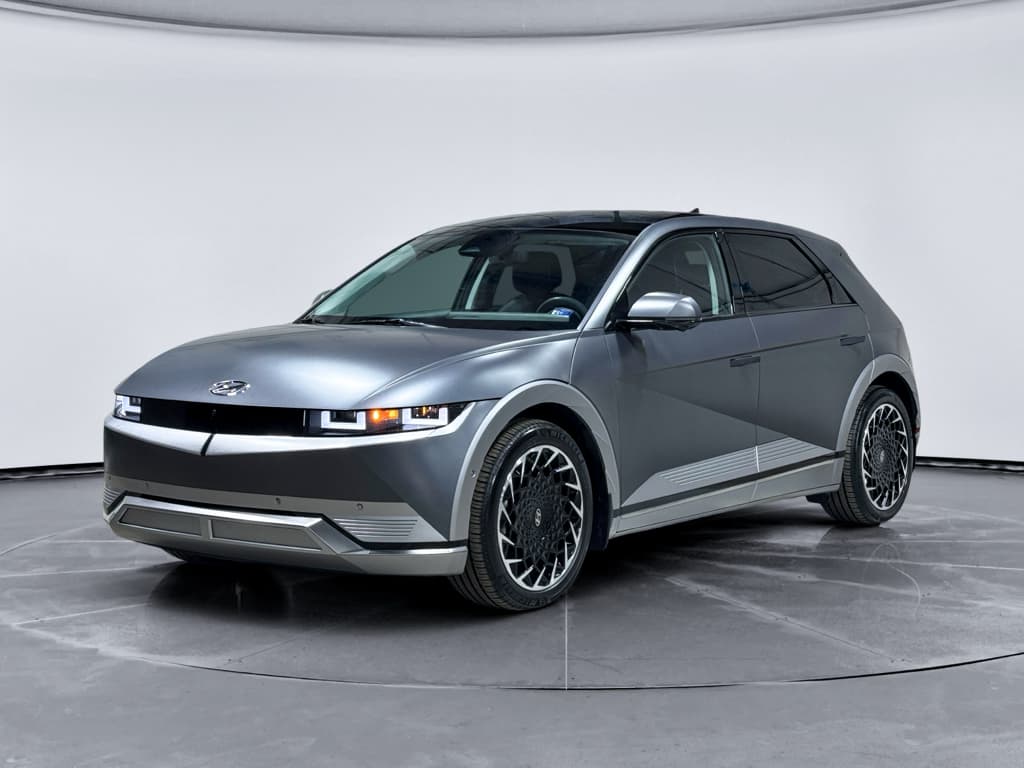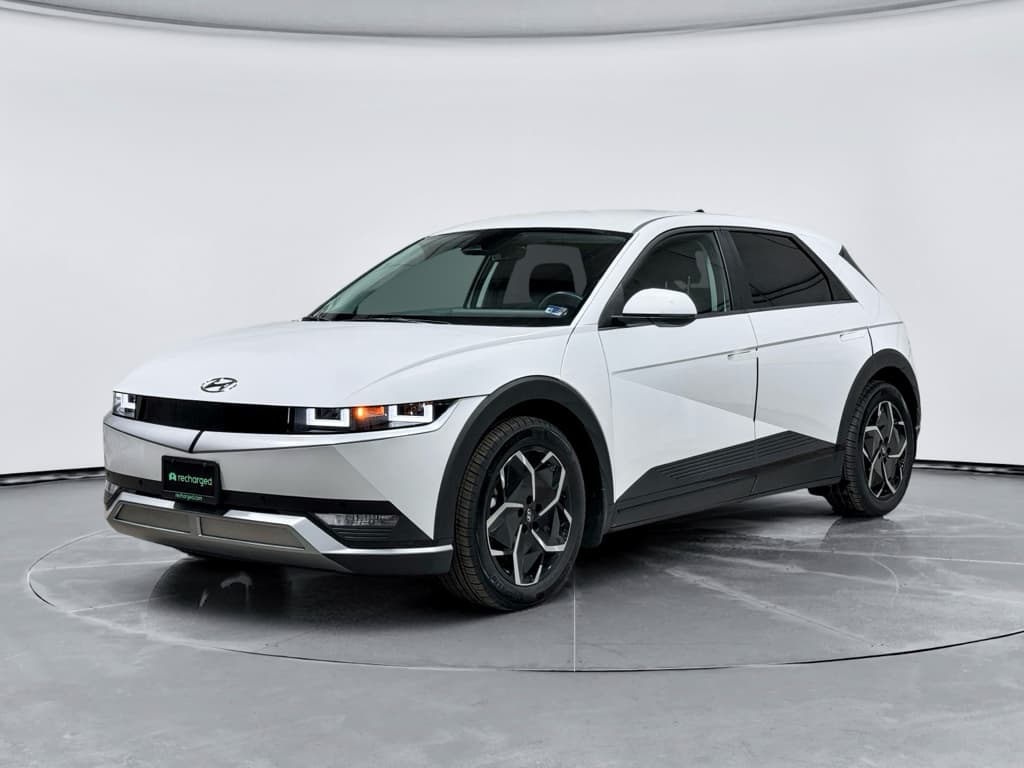
You’re shopping used and you’ve narrowed it down to two very different Hyundais: the all‑electric IONIQ 5 and the gasoline‑sipping Tucson Hybrid. Same brand, similar footprint, wildly different ownership experience. One turns your garage into a charging station; the other quietly demolishes gas bills while still running on regular fuel. So which one actually fits your life, and your budget?
Two great SUVs, two very different mindsets
Overview: Used IONIQ 5 vs Tucson Hybrid
Quick snapshot: IONIQ 5 vs Tucson Hybrid
On paper, a used Hyundai IONIQ 5 and a used Hyundai Tucson Hybrid are both five‑seat compact crossovers with family‑friendly cabins and long warranties. Under the skin they couldn’t be more different. The IONIQ 5 is a dedicated EV riding on Hyundai’s E‑GMP platform, offering 245–318 miles of EPA‑rated range depending on configuration, 800‑volt ultra‑fast DC charging, and spaceship‑quiet driving. The Tucson Hybrid keeps a turbocharged gas engine, a hybrid battery, and around 38 mpg combined, with a familiar refueling routine at any gas station.
If you mostly drive locally, have access to overnight charging, and like the idea of skipping gas stations entirely, the IONIQ 5 can be a revelation, and thanks to aggressive early depreciation, used examples are often compellingly priced. If you road‑trip often, live in an apartment without reliable charging, or just want something that “feels normal” but uses a lot less fuel, the Tucson Hybrid is the more forgiving choice.
Who Each SUV Really Suits
Which Hyundai fits your life?
Personality, not just powertrain, should drive this decision.
Used Hyundai IONIQ 5: Best for EV‑ready households
- You can reliably charge at home or work, ideally overnight on Level 2.
- Your daily driving is mostly local errands and commuting, with the occasional road trip.
- You care about smooth, quiet driving and modern tech more than towing or off‑road use.
- You like the idea of lower running costs and skipping oil changes.
Used Hyundai Tucson Hybrid: Best for mixed, long‑distance driving
- You take frequent highway trips or live in rural areas with sparse charging.
- You can’t easily install home charging (apartment, street parking, strict HOA).
- You want SUV practicality, strong fuel economy, and zero charging logistics.
- You prefer a more conventional ownership experience, gas stations, quick fill‑ups, known dealer infrastructure.
Start with your parking situation
Used Pricing & Depreciation
New EVs, including the IONIQ 5, saw heavy discounting and incentive swings between 2023 and 2025. The upshot: early IONIQ 5s have depreciated hard, with some analyses showing around 50%+ value loss in just a few years for 2022 models. That’s bad news for first owners, and an opportunity if you’re shopping used, because you’re letting someone else eat the steepest part of the curve.
The Tucson Hybrid, by contrast, has behaved more like a conventional compact SUV. Typical depreciation for recent models has been in the mid‑30 to low‑40‑percent range over several years. That means used prices tend to sit a bit higher, but the value curve is smoother and resale a bit more predictable.
How they typically stack up used (big‑picture view)
Illustrative example of how depreciation can position these SUVs on the used market. Real‑world prices vary by year, trim, mileage, and incentives.
| Model (illustrative) | Original MSRP (approx.) | Example used price window* | Typical depreciation window |
|---|---|---|---|
| 2022 Hyundai IONIQ 5 SE/SEL | $40,000–$50,000 | Often mid‑$20Ks to low‑$30Ks | Roughly 50%± over first few years |
| 2022 Hyundai Tucson Hybrid SEL | $32,000–$38,000 | Often high‑$20Ks to low‑$30Ks | Roughly mid‑30s to low‑40s % over similar time |
Depreciation punishes the IONIQ 5 more, but that can make it a bargain used compared with a Tucson Hybrid of the same age.
Depreciation vs value
Running Costs: Fuel vs Electricity
Hyundai IONIQ 5: Electricity is your fuel bill
Most U.S. IONIQ 5 trims land somewhere around 103–131 MPGe city and 85–101 MPGe highway, depending on battery and drivetrain. In practice, if you charge mostly at home at a typical residential rate, your “fuel” cost per mile will usually undercut even the thriftiest hybrids.
The real money saver is predictable home charging: plug in overnight, wake up with a full battery and no surprise $85 gas receipts. Public DC fast charging can be pricier, but for most owners that’s the exception, not the rule.
Hyundai Tucson Hybrid: Old‑school refueling, new‑school thrift
The Tucson Hybrid’s EPA combined rating hovers around 35–38 mpg, with many owners seeing mid‑30s in everyday use. That’s outstanding for a roomy compact SUV with available AWD and no plug required.
You’ll still be visiting gas stations, but far less often than in a non‑hybrid crossover. For drivers in apartments or those doing long highway slogs in cold weather, the simplicity can outweigh the running‑cost edge of an EV.
Do a back‑of‑the‑envelope cost per mile
Range, Refueling & Charging Experience
Range numbers don’t live in a vacuum; they live in your week. A used IONIQ 5 with the larger pack can offer an EPA range in the high‑200s to low‑300s miles. The standard‑range battery sits closer to the mid‑200s. That’s more than enough for most daily driving and even a lot of weekend travel, with the caveat that winter weather, high speeds, and roof boxes can trim those numbers.
The Tucson Hybrid’s "range" is as simple as a gas gauge and a calculator: with a combined rating around 38 mpg and a roughly 13.7‑gallon tank, you’re looking at about 500+ miles between fill‑ups if you’re gentle. On the road, that’s where the hybrid pulls away, no planning apps, no charging curves, no hunting for working fast chargers.
Living with range, day to day
How it actually feels, not just what the brochure says.
Daily commuting
IONIQ 5: Plug in a few nights a week and forget about it. Most owners treat it like their phone, top it up, don’t think about it.
Tucson Hybrid: Weekly or bi‑weekly gas stops, but nothing dramatic. Fuel economy barely changes your routine.
Road trips
IONIQ 5: 800‑V fast charging means 10–80% in around 20 minutes on a strong DC charger. Great where networks are dense; more planning required elsewhere.
Tucson Hybrid: Anywhere there’s gasoline, you’re in business. Stops are short and flexible, with no need to pre‑plan charging.
Cold climates
IONIQ 5: Range sags in deep winter, especially at highway speeds. Pre‑conditioning and home charging help.
Tucson Hybrid: Economy dips a bit in the cold but nowhere near as dramatically, and cabin heat is instant from the engine.
Space, Practicality & Comfort
The Tucson Hybrid is the more "conventional" SUV in shape and mission. With about 38.7 cubic feet of cargo space behind the rear seats and up to roughly 74.5 cubic feet with them folded, it’ll happily swallow Costco runs, strollers, and half of Ikea in one go. Ground clearance around 8+ inches and available AWD make it a confident companion on gravel driveways and sloppy winter roads.
The IONIQ 5 is trickier to pigeonhole. It’s officially a compact crossover, but with its on‑trend, long‑wheelbase proportions it drives and feels more like a roomy hatchback. Rear legroom is generous, the flat floor is EV‑friendly, and the sliding second row can prioritize passengers or cargo. The cargo area is slightly smaller than the Tucson’s on paper, but clever packaging and the lack of a bulky transmission tunnel make it easy to live with for families who don’t constantly load to the roof.
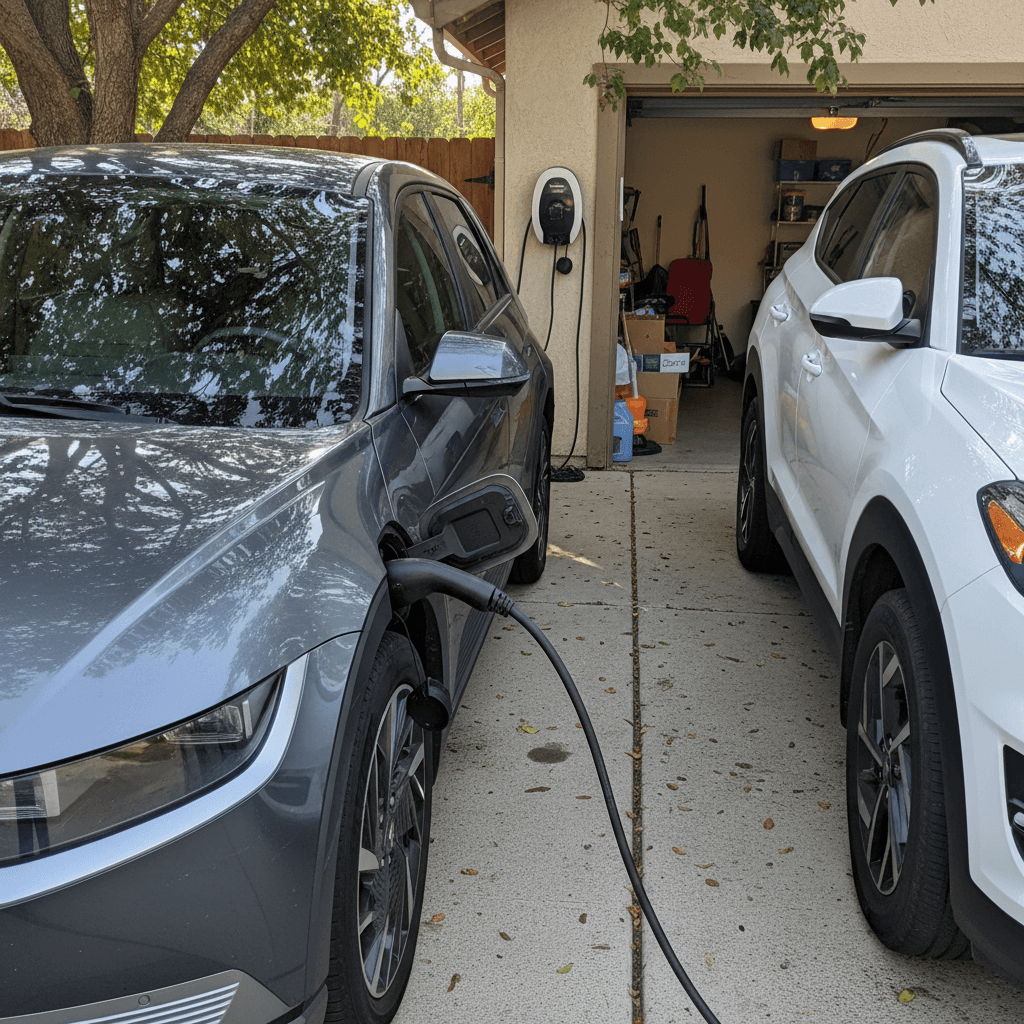
Cabin vibe: lounge vs living room
Driving Experience & Performance
On the road, the IONIQ 5 is the more characterful machine. Instant electric torque makes even the base rear‑drive version feel lively around town, and dual‑motor all‑wheel‑drive trims add genuinely quick acceleration. The ride is generally quiet and refined, leaning more cushy than sporty, and the low center of gravity from the battery pack keeps it composed in corners.
The Tucson Hybrid isn’t slow, but its mission is different. Depending on year and trim you’ll see a combined output in the low‑ to mid‑200‑horsepower range, with a smooth handoff between electric assist and turbocharged gas engine. It’s brisk enough for merging and passing, but you rarely think about performance; you just notice how infrequently you’re stopping for fuel.
IONIQ 5: Quiet, quick, and a bit futuristic
- Pros: Instant torque, nearly silent in town, strong highway passing power in dual‑motor versions, sophisticated tech feel.
- Cons: Heavier overall, range can shrink quickly at high speeds or in winter, requires mental adjustment to charging stops on long trips.
Tucson Hybrid: Calm, confidence‑inspiring commuter
- Pros: Familiar driving feel, smooth hybrid transitions, excellent mpg, predictable behavior in bad weather with AWD.
- Cons: Engine noise under hard acceleration, less “wow factor,” and you’ll keep paying for gasoline as prices swing.
Reliability, Warranty & Battery Health
Both vehicles benefit from Hyundai’s strong warranty play: in many cases you’ll see 5‑year/60,000‑mile basic coverage and 10‑year/100,000‑mile powertrain and hybrid/EV component coverage from the original in‑service date, which can transfer to subsequent owners. That’s a big part of why used Hyundais are so compelling, especially when there’s a big, expensive battery in the mix.
Hybrids like the Tucson have more than a decade of track record as mainstream appliances. The battery pack is smaller and cycles differently than a full EV, and real‑world reliability for Hyundai hybrids has generally been solid. The IONIQ 5 is newer and more complex, and early model years saw the usual handful of recalls and software updates you’d expect in a bleeding‑edge EV.
The used‑EV wild card: actual battery health
This is exactly where a platform like Recharged changes the equation. Every used EV on Recharged comes with a Recharged Score battery health report, using diagnostic tools to measure pack condition, estimate remaining capacity, and flag any out‑of‑pattern wear. For a used IONIQ 5, that kind of transparency is the difference between a screaming deal and an expensive science experiment.
How Recharged de‑risks a used IONIQ 5
Ready to find your next EV?
Browse VehiclesKey Specs: Used IONIQ 5 vs Tucson Hybrid
Hyundai IONIQ 5 vs Hyundai Tucson Hybrid: core numbers
Representative specs for popular U.S. configurations. Exact figures will vary by model year and trim, but this gives a directional sense of how they compare.
| Spec | Used Hyundai IONIQ 5 (typical US spec) | Used Hyundai Tucson Hybrid (typical US spec) |
|---|---|---|
| Powertrain | Full battery electric, RWD or AWD | 1.6L turbo gasoline + hybrid system, AWD on most trims |
| EPA range / economy | ~245–318 miles all‑electric range (battery size & drive affect this) | ~38 mpg combined; roughly 500+ miles per tank |
| Charging / refueling | 11 kW AC; 800‑V DC fast charging ~10–80% in about 18–20 minutes on strong DC | Standard gasoline at any station; 13.7‑gal tank (approx.) |
| Cargo (behind 2nd row) | Competitive for class, slightly less than Tucson on paper | ~38.7 cu ft; up to ~74.5 cu ft seats folded |
| Warranty (original) | 5 yr/60k basic; 10 yr/100k powertrain & EV components | 5 yr/60k basic; 10 yr/100k powertrain & hybrid components |
| Typical depreciation pattern | Steep early hit (~50%+ over first few years on early model years) | Milder (~mid‑30s to low‑40s % over similar window) |
| Ideal use case | Home charging, suburban commuting, shorter road trips, tech‑forward drivers | Mixed city/highway, long‑distance driving, no‑home‑charger households |
The IONIQ 5 wins on electric range and charging tech; the Tucson Hybrid counters with long gas range and massive cargo volume.
How to Choose Between a Used IONIQ 5 and Tucson Hybrid
5 questions to decide IONIQ 5 vs Tucson Hybrid
1. Can you install or consistently access home/work charging?
If yes, the IONIQ 5’s convenience and lower running costs become compelling. If no, the Tucson Hybrid’s fill‑and‑go simplicity likely wins.
2. How often do you drive more than 200–250 miles in a day?
Frequent long‑distance driving with tight schedules favors the Tucson Hybrid. Occasional road trips with some flexibility are perfectly compatible with the IONIQ 5’s fast‑charging abilities.
3. Do you value cutting fuel out of your budget, or just shrinking it?
The IONIQ 5 can virtually eliminate gasoline from your life if you plan around charging. The Tucson Hybrid slashes, but doesn’t remove, fuel costs, often enough for drivers who just want lower bills, not a lifestyle change.
4. How long do you plan to keep the vehicle?
If you buy and hold for many years, both can make sense, but the IONIQ 5’s early depreciation may already be priced into used examples. If you tend to swap cars every 3–4 years, the Tucson Hybrid’s gentler depreciation curve may protect more of your money.
5. Are you excited about EV tech, or slightly exhausted by it?
If EVs fascinate you, the IONIQ 5 is an enormously satisfying way to dive in. If you just want a comfortable, economical crossover that asks as little of you as possible, the Tucson Hybrid is the lower‑friction choice.
Don’t buy either on vibes alone
In the used market, the Hyundai IONIQ 5 is the more radical choice: a handsome, fast‑charging EV with big‑car space and small‑car running costs, discounted heavily by early‑adopter depreciation. The Hyundai Tucson Hybrid is the pragmatist: anonymous in the best way, roomy, efficient, and endlessly easy to live with, especially if you lack home charging or log serious highway miles.
If you’re EV‑curious and your life can accommodate charging, a well‑vetted used IONIQ 5 can feel like cheating, luxury‑adjacent experience for sensible money. If you want to quietly cut your fuel bill without reorganizing your life, the Tucson Hybrid is hard to fault. Either way, going used wisely starts with transparency: real‑world battery health on an IONIQ 5, realistic mpg and maintenance history on a Tucson. That’s exactly what Recharged was built for, matching you with the right electrified Hyundai, backing it with clear data, and helping you drive away knowing you chose with your head as well as your heart.