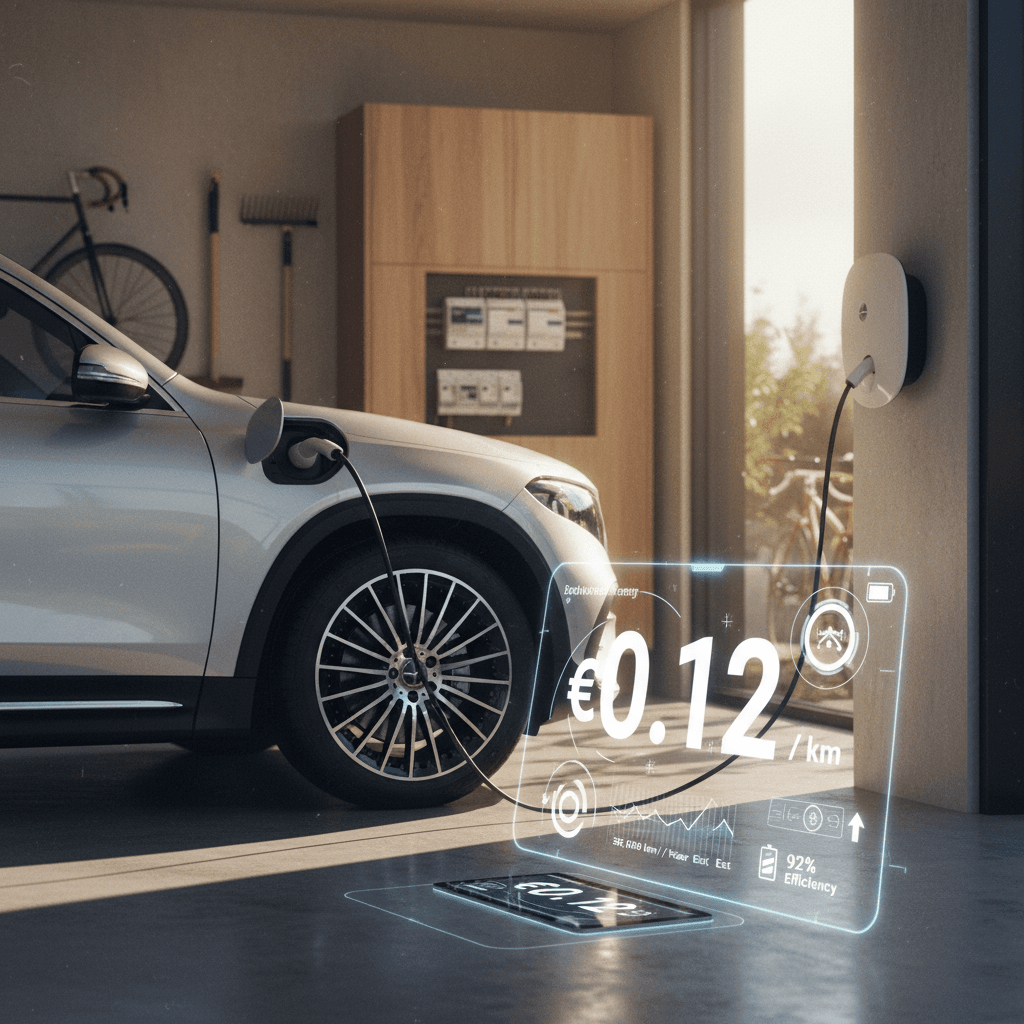
If you’re looking at a Mercedes EQB, you’re probably wondering not just what it costs to buy, but *what it costs per mile to drive*. The good news is that, in most parts of the U.S., a Mercedes EQB costs roughly 5–7 cents per mile to drive on home electricity, and usually under 10 cents per mile even if you mix in some public fast charging. In this guide we’ll walk through the math, show real‑world examples, and help you estimate your own EQB running costs.
Key takeaway up front
How much does a Mercedes EQB cost per mile to drive?
Let’s start with a simple, realistic range for the Mercedes EQB cost per mile to drive in the U.S. today (energy cost only, not maintenance or insurance):
Typical Mercedes EQB energy cost per mile (U.S.)
Approximate cost per mile to drive a Mercedes EQB in 2025–2026 under common electricity price scenarios.
| Scenario | Electricity price (¢/kWh) | Assumed EQB efficiency (kWh/100 mi) | Cost per mile (¢) | Cost per 1,000 miles |
|---|---|---|---|---|
| Low-cost region home charging | 13¢ | 28 | 3.6 | $36 |
| U.S. average home rate | 17.5¢ | 28 | 4.9 | $49 |
| High-cost region home charging | 25¢ | 28 | 7.0 | $70 |
| Mostly DC fast charging (public) | 35¢ | 30 | 10.5 | $105 |
These are ballpark numbers based on real‑world EQB efficiency and recent average U.S. electricity prices. Your actual cost will vary by state, driving style, and how much you fast‑charge.
Across those realistic scenarios, you’re generally looking at 3.5–7 cents per mile on home power, and about 10–11 cents per mile if you rely heavily on $0.30–$0.40/kWh public fast charging. That’s the big picture. Next we’ll unpack where those numbers come from so you can plug in your own rates.
EQB efficiency: what kWh per mile does it use?
To get to a cost per mile, you need to know how much energy the EQB actually uses. Different trims have different range and power, but they share very similar battery sizes and efficiency.
Mercedes EQB efficiency at a glance
EPA and independent testing of the 2024–2025 EQB 250+ suggest an energy use of roughly 3.2 miles per kWh, or about 31 kWh per 100 miles, including charging losses. In real-world mixed driving, some city, some highway, normal use of climate control, many owners fall in the 27–30 kWh per 100 miles range. That’s the efficiency band we’ll use for our cost-per-mile math.
Highway and winter will move the needle
Step-by-step: how to calculate your EQB cost per mile
You don’t have to trust generic averages. With two numbers, your local electricity rate and your actual EQB efficiency, you can calculate your own cost per mile in a minute or two.
DIY Mercedes EQB cost-per-mile calculation
1. Find your electricity rate
Look at your latest utility bill and find the total cost per kWh. Include delivery and fees where possible. Many U.S. homes are now around <strong>16–19¢/kWh</strong>, but some states are far lower or higher.
2. Estimate your EQB efficiency
Use the trip computer in your EQB. Reset it, drive for at least a few days, then note the value in <strong>kWh/100 mi</strong> or <strong>mi/kWh</strong>. If you don’t have an EQB yet, use 28–30 kWh/100 mi as a conservative starting point.
3. Convert efficiency to kWh per 100 miles
If your display shows mi/kWh, divide 100 by that number. Example: 3.1 mi/kWh → 100 ÷ 3.1 ≈ 32.3 kWh/100 mi.
4. Apply the basic formula
Use this formula: <strong>Cost per 100 miles = (kWh per 100 miles) × (electricity price per kWh)</strong>. Then divide by 100 for cost per mile.
5. Run a real example
Say your EQB averages 29 kWh/100 mi and your power is 18¢/kWh. 29 × $0.18 = $5.22 per 100 miles, or <strong>5.2¢ per mile</strong>.
6. Estimate your monthly cost
Multiply cost per mile by your monthly miles. If you drive 1,000 miles at 5.2¢/mi, your EQB’s “fuel” cost is about <strong>$52 per month</strong>.
Pro tip: use off‑peak rates if you have them
Mercedes EQB cost per mile examples (home vs. public charging)
Now let’s plug some realistic U.S. numbers into that formula so you can see how the Mercedes EQB cost per mile to drive changes depending on where and how you charge.
Four real-world EQB cost-per-mile scenarios
From low-cost home power to heavy DC fast charging
1. Low-cost home electricity
Assumptions
- Electricity: 13¢/kWh (cheaper-than-average state)
- EQB efficiency: 27 kWh/100 mi
Math
- Cost per 100 mi = 27 × $0.13 = $3.51
- Cost per mile ≈ 3.5¢
- 1,000 miles costs ≈ $35
2. Average U.S. home electricity
Assumptions
- Electricity: 17.5¢/kWh (near recent national average)
- EQB efficiency: 28 kWh/100 mi
Math
- Cost per 100 mi = 28 × $0.175 = $4.90
- Cost per mile ≈ 4.9¢
- 1,000 miles costs ≈ $49
3. High-cost coastal city
Assumptions
- Electricity: 25¢/kWh (expensive residential market)
- EQB efficiency: 29 kWh/100 mi
Math
- Cost per 100 mi = 29 × $0.25 = $7.25
- Cost per mile ≈ 7.3¢
- 1,000 miles costs ≈ $73
4. Mostly DC fast charging on the road
Assumptions
- Public fast charging: 35¢/kWh (common DC fast rate)
- EQB efficiency: 30 kWh/100 mi (higher at freeway speeds)
Math
- Cost per 100 mi = 30 × $0.35 = $10.50
- Cost per mile ≈ 10.5¢
- 1,000 miles costs ≈ $105
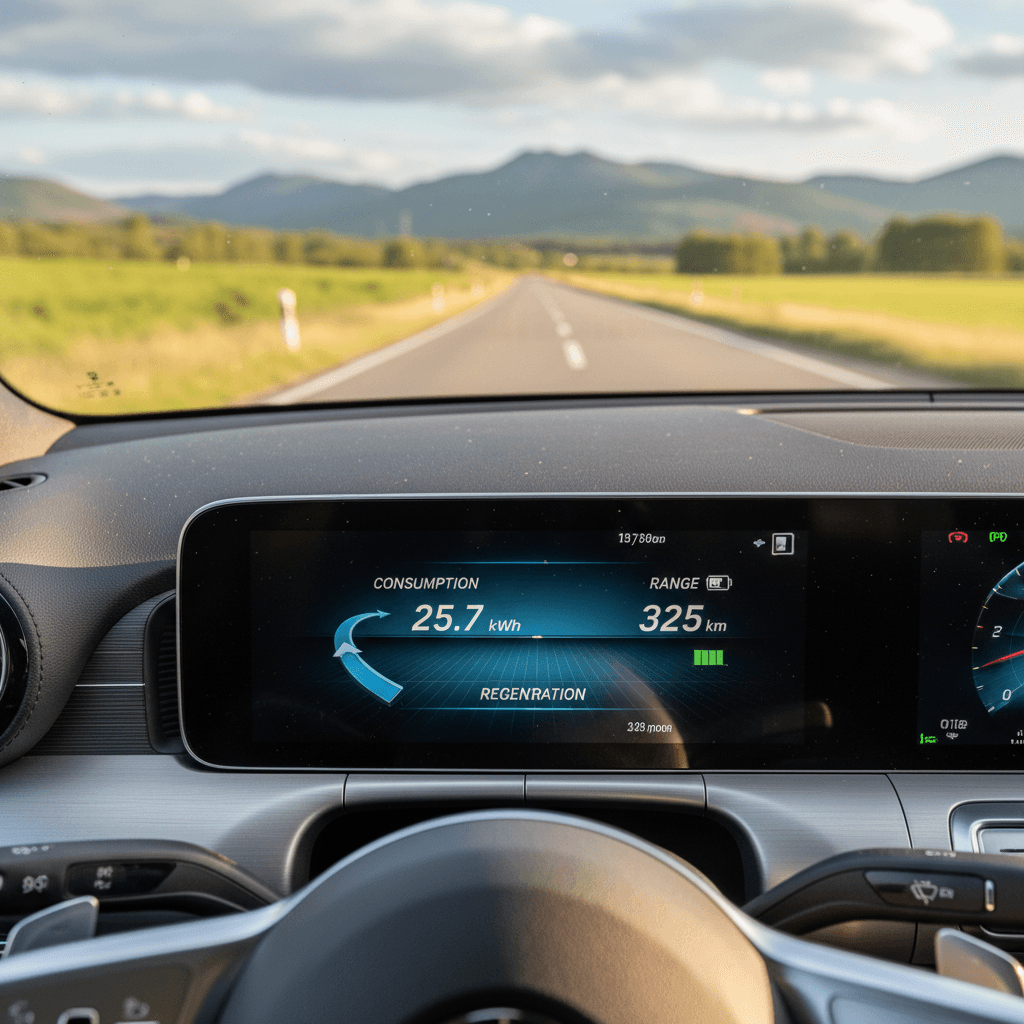
What this means for your budget
How does the EQB cost per mile compare to gas SUVs?
The Mercedes EQB competes with small luxury SUVs like the Mercedes GLB, BMW X1/X3, Audi Q4 e‑tron, and Lexus NX. To understand value, it helps to compare its cost per mile to a conventional gas SUV.
EQB vs. gas compact SUV: energy cost per mile
Approximate energy cost per mile for an EQB versus a comparable gasoline SUV, using mid‑2020s U.S. energy prices.
| Vehicle type | Assumed efficiency | Fuel price | Energy cost per mile | Cost per 1,000 miles |
|---|---|---|---|---|
| Mercedes EQB (home charging, avg U.S. rate) | 28 kWh/100 mi | $0.175/kWh | 4.9¢ | $49 |
| Mercedes EQB (heavy fast charging) | 30 kWh/100 mi | $0.35/kWh | 10.5¢ | $105 |
| Gas compact luxury SUV (25 mpg) | 25 mpg | $3.75/gal | 15¢ | $150 |
| Gas compact luxury SUV (22 mpg, city heavy) | 22 mpg | $3.75/gal | 17.0¢ | $170 |
Gas price and electricity price vary widely by state, but the relationship you see here, EVs typically costing much less per mile in energy, is common across most of the U.S.
On typical home electricity, the EQB’s energy cost per mile is often only one‑third that of a similar gas SUV. Even relying heavily on DC fast charging, you’re usually still ahead or roughly on par, before you factor in the EQB’s lower maintenance costs (no oil changes, fewer moving parts, less brake wear, etc.).
6 factors that change your EQB cost per mile
The headline number for the Mercedes EQB cost per mile to drive is helpful, but your personal result can swing up or down based on these six levers:
- Electricity price: The biggest variable. States with cheap power can cut your cost per mile in half versus high-cost coastal markets.
- How you charge: Home Level 2 is usually cheapest; DC fast charging is convenient but expensive. Workplace and free chargers can effectively bring your cost per mile near zero for those miles.
- Driving speed: The EQB is most efficient at city and moderate highway speeds. Long stretches at 75–80 mph can add several kWh per 100 miles.
- Weather and climate control: Cold temperatures and heavy HVAC use increase consumption, especially on short trips where the cabin has to be heated or cooled repeatedly.
- Tire choice and load: Bigger wheels, aggressive tires, roof boxes, and heavy cargo all hurt efficiency.
- Battery health and software: As the pack ages, usable capacity shrinks slightly, and software updates can adjust how the car manages energy and charging losses. This changes effective kWh per 100 miles a bit over time.
Don’t ignore demand charges
Tips to lower your Mercedes EQB cost per mile
You can’t control every factor, but a few simple habits can trim several cents off your EQB’s cost per mile over the life of the vehicle.
Practical ways to keep your EQB cheap to run
Focus on what you can control: where you charge, when you charge, and how you drive.
Prioritize home Level 2
Install or use a Level 2 home charger if you can. Home power is almost always cheaper than public fast charging, and you avoid session fees.
Charge off‑peak
If your utility offers time-of-use plans, schedule your EQB to charge at night when rates are lower. Many EQB owners cut their per‑mile energy cost by 20–40% this way.
Moderate your speed
Highway runs at 80 mph might be fun, but they’re expensive in energy use. Cruising closer to the speed limit often improves efficiency by 10–20%.
Precondition while plugged in
In extreme heat or cold, use the EQB’s preconditioning while it’s still plugged in. That way, cabin heating and cooling draw from the grid, not the battery.
Watch tires and cargo
Keep tires properly inflated and think twice about permanent roof boxes or heavy accessories. Small aerodynamic and rolling-resistance changes add up over thousands of miles.
Track your real numbers
Reset your trip computer monthly and note your kWh/100 mi. If the number climbs, ask why, new routes, colder weather, or something that needs attention.
Use workplace and free chargers strategically
Used Mercedes EQB ownership costs: what to watch
If you’re considering a used EQB, the cost per mile story gets even better: you’re paying a lower purchase price, while the per‑mile energy cost still undercuts gas SUVs. But there are a few extra variables to keep an eye on.
Battery health and usable range
Battery degradation doesn’t usually blow up your cost per mile overnight, but it does reduce range. If a used EQB has lost 8–12% of its original capacity, you’ll need to charge more often, and the car may run a bit closer to the less efficient part of its operating window on long trips.
A professional battery health report helps you understand how close the car still is to its original performance and how that might affect your day‑to‑day running costs.
Charging patterns from the previous owner
Used EQBs that were fast‑charged heavily still deliver similar cost per mile today, but fast charging is almost always more expensive than home power. When reviewing a used EQB, ask how the previous owner charged the car, mostly home Level 2, workplace, or DC fast charging.
Knowing this can help you predict your future cost per mile and whether you might change those habits.
How Recharged helps on used EQB costs
FAQ: Mercedes EQB cost per mile to drive
Frequently asked questions about EQB cost per mile
Bottom line: is a Mercedes EQB cheap to run?
When you put all the numbers together, the Mercedes EQB is one of the more affordable premium compact SUVs to run on a cost‑per‑mile basis. On typical U.S. home electricity, many owners see energy costs under 6 cents per mile, often less than half the fuel cost of a comparable gas SUV. Even if you live in a high-cost electricity state or fast‑charge regularly, the EQB still tends to be competitive with, or cheaper than, gasoline alternatives.
If you’re shopping for a used EQB, the equation can tilt even more in your favor: a lower purchase price, paired with low and predictable energy costs. That’s why having a clear view of battery health and a realistic cost-per-mile estimate is so valuable. On Recharged, every EV comes with a Recharged Score battery health report, transparent pricing, financing options, and EV‑savvy specialists who can help you decide whether an EQB fits your budget and driving patterns.
Run the simple formulas in this guide with your own electricity rate and driving habits. If the numbers look good, and for most drivers they do, you’ll have a Mercedes EQB that delivers the luxury experience you want with running costs that feel more like a compact commuter car than a premium SUV.