If you own, or are thinking about buying, a 2021 Porsche Taycan, understanding its recall history isn’t optional. The 2021 model year was early in the Taycan’s lifecycle, and it has been hit by several meaningful recalls involving loss of power, brake performance, and high‑voltage battery safety. This guide pulls together a clear 2021 Porsche Taycan recalls list, explains what each campaign actually fixes, and shows you how to verify that a specific car is up to date.
Model year vs. build date
Overview: Why 2021 Taycan recalls matter
The 2021 Taycan sits in a sweet spot for enthusiasts: still cutting‑edge fast, but now attainable on the used market. At the same time, it’s part of the first generation of Porsche’s all‑electric platform, which means early‑production bugs and software issues were inevitable. Some of those issues rose to the level of NHTSA safety recalls, including problems that can cause sudden loss of power, compromised braking, or increased fire risk in the high‑voltage battery.
On the upside, recalls are free, permanent fixes that follow the car for life. On the downside, an older Taycan that has not had them completed can be a genuine safety and reliability concern, and a red flag when you’re shopping used. The goal here is to give you a practical roadmap: what recalls exist for the 2021 Taycan, what symptoms they address, and how to check any car you’re considering.
2021 Taycan recalls at a glance
Quick reference: 2021 Porsche Taycan recalls list
Exact coverage varies by trim and build date, but most 2021 Taycan models in the U.S. have been subject to the following major recalls and campaigns:
Key 2021 Porsche Taycan recall campaigns
High‑level summary of major recalls that may affect 2021 Taycan models. Always verify applicability by VIN.
| Issue | Typical NHTSA ID / Campaign | Primary Risk | Core Fix |
|---|---|---|---|
| Loss of motive power due to software shutdown | 21V-486 (Porsche internal campaign code varies) | Sudden loss of drive power while driving | Reprogram power electronics and ECU software |
| Front brake hose cracking / leak | High‑volume campaign announced 2024 (NHTSA ID varies by trim) | Reduced braking performance, longer stopping distance | Replace front brake hoses with updated parts |
| High‑voltage battery short circuit / fire risk | 2024–2025 HV battery recall (e.g., 24V215 series) | Increased risk of thermal event or fire | Software diagnostics; inspect and replace modules as needed |
| Heater / high‑voltage component reliability (select cars) | Regional campaigns and TSB‑linked actions | Reduced cabin heat and slow DC charging in cold climates | Replace heater or related HV components |
Use this quick reference as a starting point, then confirm recall status with a VIN lookup.
Don’t treat this as a VIN‑level report
Loss of motive power software recall (21V-486)
One of the earliest and most important Taycan recalls addressed a bug that could cause the car to shut down its powertrain while driving. For 2020–2021 Taycans, including many 2021 builds, the power electronics and engine (motor) control unit software could incorrectly detect a fault and trigger a shutdown, leading to a complete loss of motive power.
- Typical NHTSA ID: 21V-486 (Porsche safety recall filed June 2021 for 2020–2021 Taycan and Taycan Cross Turismo).
- Impacted systems: power electronics, traction motor controller, and ECU software.
- Symptoms: warning messages such as “Motor control error – Stop vehicle in a safe place,” followed by the car coasting to a stop with little or no drive power. Steering and brakes remain, but acceleration is lost.
- Safety risk: loss of power in traffic increases crash risk, especially on highways or during passing maneuvers.
Why this recall matters so much
The remedy is a software reprogramming of the power electronics and control units. Dealers install updated logic that prevents false fault detection and unintended shutdowns. It’s a relatively quick visit, but until it’s done, you’re living with a known failure mode that can leave you stranded, or worse, vulnerable in fast‑moving traffic.
How to confirm the loss‑of‑power fix
Front brake hose cracking recall
In 2024, Porsche announced a major recall covering nearly all early Taycans, 2020 through 2025, for front brake hoses that can crack over time. If the front hoses crack and leak brake fluid, hydraulic pressure at the front axle can drop, increasing stopping distances and in extreme cases degrading braking performance.
This campaign includes many 2021 Taycan trims (Base, 4S, Turbo, Cross Turismo variants) built within specific date ranges. Not every 2021 VIN is affected, but a large share are. For a car that weighs as much and accelerates as hard as a Taycan, front brake integrity is non‑negotiable.
- Core problem: front brake hoses routed in a way that can lead to stress and cracking from steering and suspension movement.
- Primary risk: fluid loss at the front axle, reduced braking power, and longer stopping distances.
- Typical remedy: Porsche dealers replace the front brake hoses with updated, more robust parts and bleed the brake system.
- Owner cost: none; this is a safety recall and must be performed free of charge.
Used‑car tell: mismatched or spongy brakes
High-voltage battery short-circuit & fire risk recall
More recently, Porsche initiated a recall across 2020–2024 Taycans built with certain LG‑supplied high‑voltage battery modules. In affected packs, internal defects can cause a short circuit within a battery module, increasing the risk of a thermal event or fire even when the car is parked.
This campaign is complex and still evolving, but many 2021 Taycan VINs fall inside the production window. Porsche’s fix combines software diagnostics and monitoring with physical inspection and, where necessary, module replacement.
- Core problem: specific HV battery modules can develop internal short circuits over time.
- Safety risk: a short can create localized overheating and, in rare cases, a battery fire.
- Interim measures: for some owners, Porsche has advised temporarily limiting charge level (e.g., to 80%) until software and inspection are complete.
- Permanent remedy: updated battery management software, on‑board diagnostics, and replacement of suspect modules where data or inspection indicates elevated risk.
Don’t confuse this with normal EV battery degradation
For buyers, this recall cuts both ways. On one hand, it’s unnerving to read “battery” and “fire” in the same sentence. On the other, a car that has already been inspected, updated, and, if needed, had modules replaced is arguably lower risk than one that hasn’t yet been touched. The key is documentation.
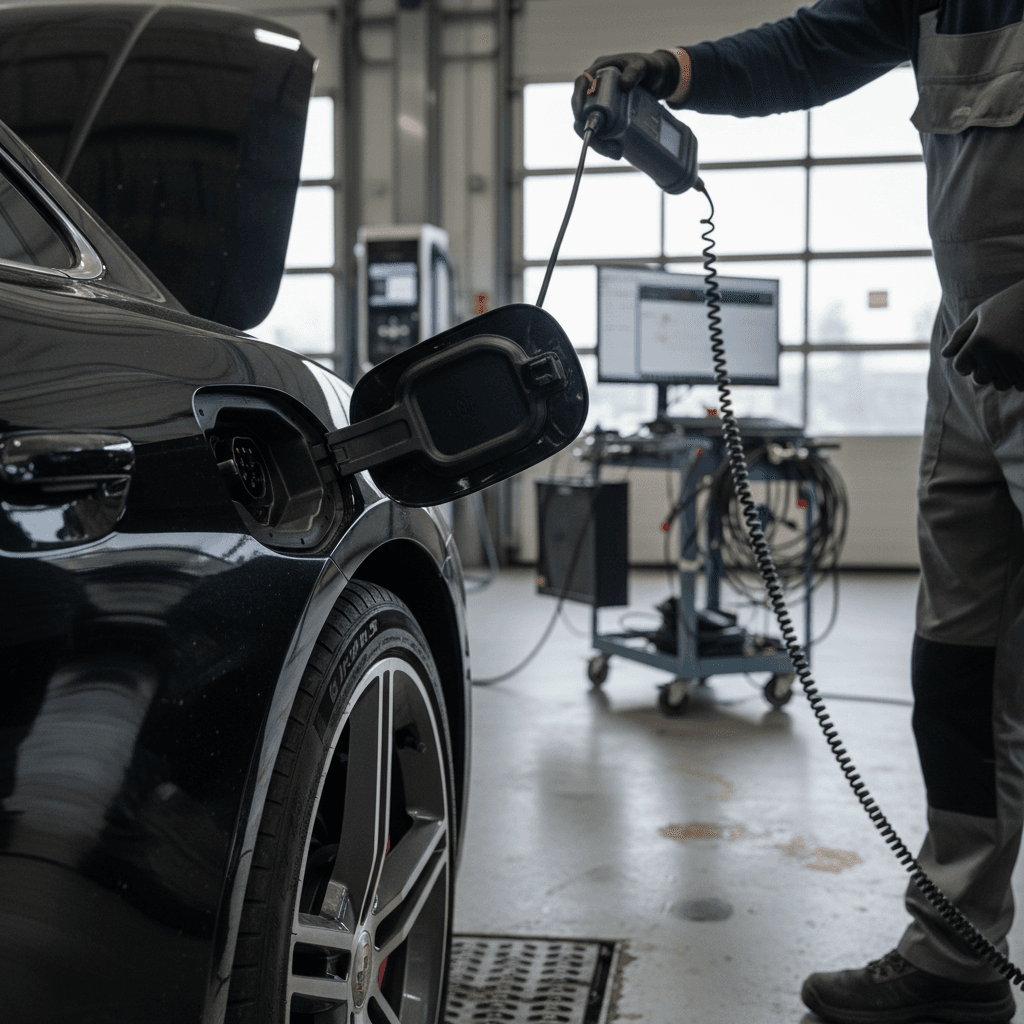
Other notable campaigns and service actions
Beyond formal NHTSA safety recalls, 2021 Taycans have also seen a steady stream of Technical Service Bulletins (TSBs) and regional campaigns. These don’t always show up the same way as recalls on public lookup tools, but they still shape the ownership experience.
Common non‑recall fixes seen on 2021 Taycans
These may show up as “service campaigns” or TSBs instead of full safety recalls.
Software refinement & OTA updates
HV heater & cold‑weather behavior
Mobile charger & ancillary components
Read between the lines on Carfax
How to check if a 2021 Taycan has open recalls
Because different 2021 Taycan trims and build dates fall into different campaigns, the only way to know what’s open on a specific car is to run its VIN. Fortunately, Porsche and NHTSA both make that straightforward, and it’s something you should do before you buy, not after.
Step‑by‑step: Check a 2021 Taycan for open recalls
1. Locate the full 17‑digit VIN
You’ll find it on the lower driver‑side windshield, the driver‑door jamb label, or in the vehicle’s registration/insurance documents. For an online listing, ask the seller to share it if it’s not already visible.
2. Run the VIN through NHTSA.gov
Go to the U.S. government’s <strong>NHTSA recall lookup</strong> site and enter the VIN. The tool will list all <strong>open safety recalls</strong> that still need to be completed. If it says “0 unrepaired,” you’re clear on federal campaigns at that moment in time.
3. Use Porsche’s own recall lookup
Porsche hosts a VIN recall lookup on its website as well. It can show Porsche‑specific actions that may not show up as U.S. safety recalls, especially for software and regional campaigns.
4. Call a Porsche dealer service advisor
Give a Porsche dealer the VIN and ask them to read back <strong>all completed and open campaigns</strong>. This is where you’ll see the detailed campaign codes and dates, which are invaluable when you’re assessing a used car.
5. Ask for service records or Carfax
For a used Taycan, service documentation should show recall and campaign work by date and mileage. A healthy pattern is <strong>regular annual software and campaign visits</strong>, not long gaps with no dealer interaction.
6. Re‑check before delivery
If you’re buying from a dealer, insist they <strong>complete all open recalls before you take delivery</strong> and list them on the buyer’s order. Software campaigns, in particular, are easy to knock out while the car is already in for inspection.
How Recharged handles recalls on used EVs
Ready to find your next EV?
Browse VehiclesWhat these recalls mean for used 2021 Taycan buyers
All early EVs are, in a sense, rolling software projects. The 2021 Taycan is no exception. Rather than treating its recall history as a deal‑breaker, you’re better off treating it as a checklist that separates well‑cared‑for cars from neglected ones.
Green flag: documented campaign history
A strong 2021 Taycan candidate will show:
- One or more visits in 2021–2022 for the loss‑of‑power software recall.
- Recent (2024–2025) documentation for the brake hose and HV battery campaigns.
- Regular dealer services with software updates, not long gaps with no service.
Red flag: open recalls and vague stories
Be cautious if a seller:
- Can’t explain which recalls have been done.
- Shows open campaigns on a VIN lookup but promises to “do them later.”
- Has warning lights, charging issues, or braking concerns brushed off as “just software.”
You don’t have to walk away automatically, but you should price in the hassle and risk, or insist the work be completed before you sign.
Use recall completion as negotiation leverage
Maintenance and battery health beyond recalls
Recalls fix discrete safety issues; they don’t guarantee that a 2021 Taycan’s battery, drivetrain, or electronics are in top shape. Two cars with identical recall histories can have very different real‑world reliability based on how they were driven and charged.
Key checks beyond the recall list
Especially important if you’re cross‑shopping multiple 2021 Taycans.
Drive quality & warning lights
Charging behavior
Battery health data
Why Recharged focuses on early‑generation EVs like the Taycan
FAQ: 2021 Porsche Taycan recalls
Common questions about 2021 Taycan recalls
Bottom line: Shopping a 2021 Taycan after these recalls
The 2021 Porsche Taycan is one of the most compelling performance EVs on the used market, and also one of the most complex. Its recall history shouldn’t scare you away, but it should focus your due diligence. Treat the loss‑of‑power, brake hose, and high‑voltage battery campaigns as non‑negotiable line items: they either appear in the car’s service record as completed, or they’re a project you’ll need to tackle immediately.
If you take a structured approach, VIN lookup, dealer verification, detailed test drive, and a serious look at battery health, you can end up with a 2021 Taycan that’s not just thrilling but also well sorted for the long haul. And if you’d rather not manage all those moving pieces yourself, consider finding one through Recharged, where recall checks, battery diagnostics, and expert EV support are built into the experience from the start.