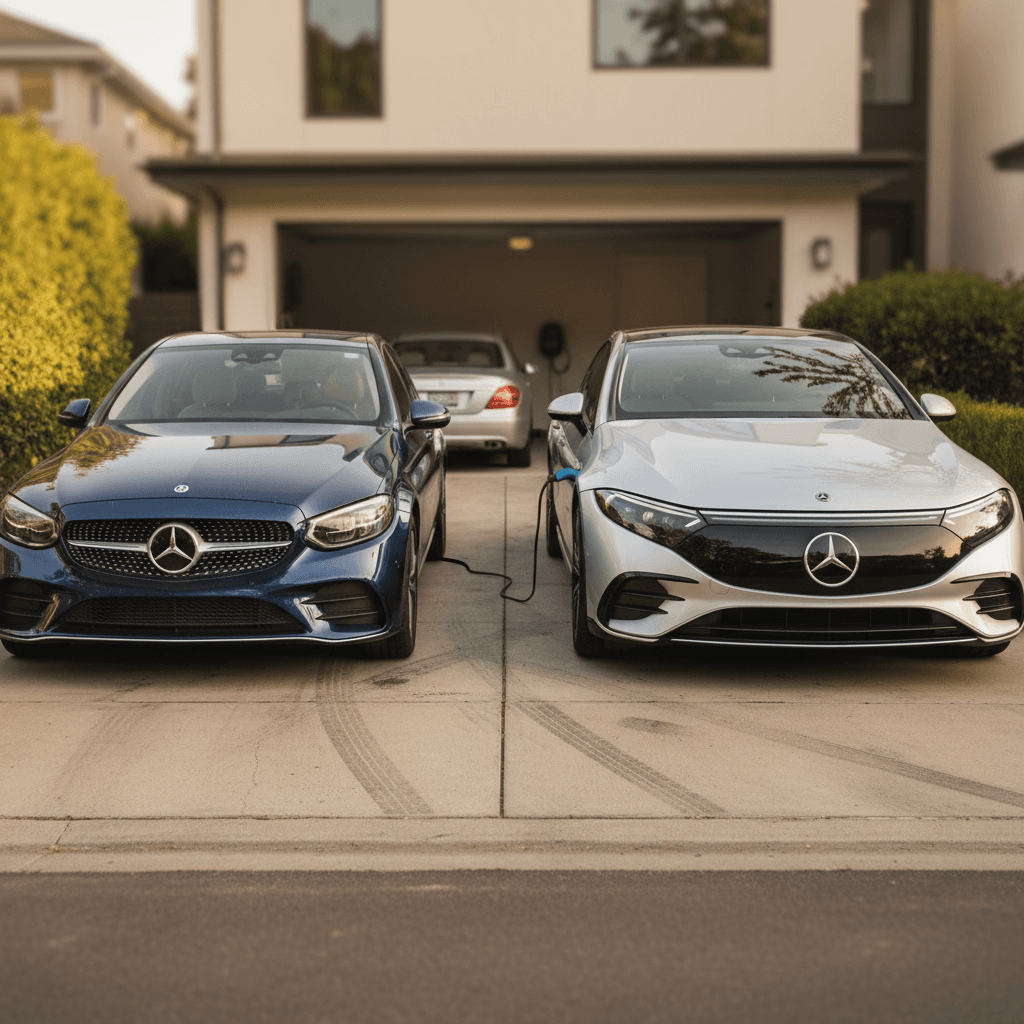
If you’ve spent years in a Mercedes C‑Class and you’re now looking at the all‑electric EQE, you’re not alone. Many owners are wondering whether a Mercedes C‑Class owner switch to Mercedes EQE is a natural upgrade or a risky leap into unfamiliar EV territory. This review-style guide walks you through what really changes, space, comfort, driving feel, charging, tech, and costs, so you can decide if the EQE fits your life, especially if you’re considering a used one.
Gas sedan to electric sedan
Why C‑Class Owners Are Eyeing the EQE
- You want to stay in the Mercedes family but cut fuel and maintenance costs.
- You like the C‑Class size and refinement but want more space and a quieter cabin.
- You’re curious about EV tech, especially Mercedes’ latest MBUX and driver assistance.
- You’re shopping used and seeing EQE prices drop faster than comparable gas models.
The EQE sedan (and EQE SUV) sit on a dedicated EV platform with a large battery (around 90 kWh usable in most trims) and support fast DC charging up to roughly 170 kW on compatible chargers. In plain English: the EQE is built from the ground up as an EV, not a converted gas model, and that’s a big part of why it feels different from a C‑Class the moment you pull away.
EQE Fast Facts for C‑Class Owners
Size and Comfort: From C‑Class to EV Platform
Cabin space and seating position
Coming from a C‑Class, the first thing you notice in an EQE sedan is the higher floor (battery under the cabin) and a bit more of a lounge‑like seating position. You sit slightly higher than in your C‑Class, but not SUV‑high, and the car feels wider and more cocooning.
Front seats are classic Mercedes: supportive, multi‑adjustable, and often paired with massage and dynamic bolsters on higher trims. If you liked your C‑Class seats, you’ll feel right at home here, just with more adjustment and thicker cushioning.
Rear seat and trunk practicality
The EQE rides on an EV‑specific platform, so rear legroom is better than in a C‑Class, especially for adults. The trade‑off is that the rear floor is higher because of the battery, so taller passengers may feel their knees sit a bit higher than ideal.
Trunk space is similar to a mid‑size luxury sedan: enough for luggage and weekly shopping, but you lose the under‑floor spare and some odd cubbies you might have had in the C‑Class. If you want a more practical cargo area, the EQE SUV variant is the better analogue to a C‑Class wagon or GLC.
Watch headroom and step‑in height
Driving Feel and Performance: Does the EQE Still Feel Like a Mercedes?
If you’re used to a C‑Class, especially a C300 or AMG‑line trim, you probably care a lot about how the car feels, not just how it looks on paper. The good news: the EQE still feels like a Mercedes, just one that swapped revs and shifts for instant torque and silence.
How the EQE’s Drive Compares to a C‑Class
Similar Mercedes character, very different powertrain
Instant torque instead of downshifts
Quieter, heavier, more planted
Acceleration vs agility
Try Eco and Comfort modes first
Range and Charging: Coming From Gas to the EQE
For most C‑Class drivers, the leap from gas stations to kilowatts is the biggest psychological hurdle. Instead of filling 12–15 gallons every week or two, you’re thinking about kilowatt‑hours, home charging, and DC fast chargers. The EQE makes this relatively painless, but there are a few realities to understand.
EQE Range & Charging Basics for Former C‑Class Owners
Approximate, real‑world snapshots to help you frame expectations when moving from gas to electric.
| Scenario | What You Did in a C‑Class | How It Looks in an EQE | What It Feels Like Day to Day |
|---|---|---|---|
| Daily commute (20–40 miles) | Filled up every 1–2 weeks at a gas station | Plug in at home Level 2; battery rarely drops below ~40–70% | Like "refueling" while you sleep, almost never think about range |
| Weekend errands (60–100 miles) | Maybe an unplanned gas stop if tank was low | Same home charging; car easily covers this on a partial charge | No range anxiety if you started with >40–50% |
| Road trip (250–400 miles) | One tank of gas, optional quick stop | Plan 1–2 DC fast‑charge stops of 20–30 minutes each | You build meal and restroom breaks around charging stops |
| Cold weather commute | Engine warms itself; range loss minor | Expect noticeable winter range hit, especially short trips | Preconditioning and home charging become more important |
Exact numbers vary by trim, wheel size, climate, and driving style, but these ballparks match what many EQE owners report in mixed driving.
Charging hardware in the EQE
How to Make Charging Feel as Simple as Fueling Your C‑Class
1. Install (or confirm) Level 2 home charging
If you own your home, a 240V Level 2 charger is the single biggest quality‑of‑life upgrade. It turns your EQE into an appliance you plug in at night, not a range‑management project.
2. Learn your local DC fast chargers
Download key apps (ChargePoint, Electrify America, EVgo, etc.) and favorite a few stations along your typical highway routes. Mercedes navigation can route through chargers automatically, but it’s smart to know your backups.
3. Aim for 20–80% on most days
For long battery life, Mercedes and most EV experts recommend daily charging in the middle of the pack, roughly 20–80%. Save 100% charges for road trips, just as you’d top off before a big drive in your C‑Class.
4. Use preconditioning in extreme weather
The EQE can pre‑condition its battery and cabin before you leave, improving winter range and comfort. Think of it as a more efficient version of remote start from your C‑Class, without idling a gas engine.
5. Practice one small road trip early
Plan a 150–200‑mile weekend trip soon after you get the car. After one or two DC fast‑charge sessions, the anxiety usually drops away and the routine becomes second nature.
Tech and MBUX: From Buttons to Hyperscreen
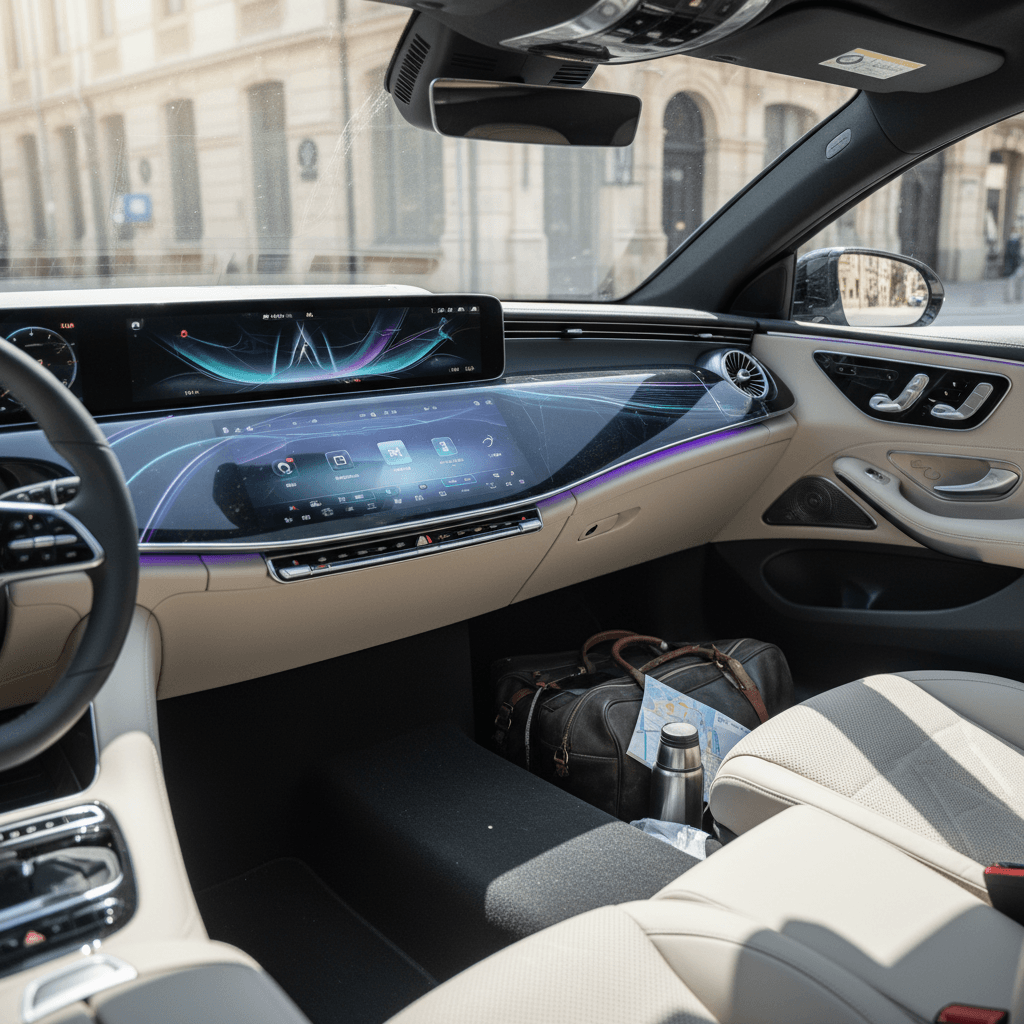
If your C‑Class predates the latest generation of MBUX, the EQE’s cabin can feel like a leap, from traditional knobs and a smaller central screen to a wall of glass and capacitive controls. Depending on spec, the EQE offers either a large central portrait‑style screen or the full Hyperscreen sweeping across the dash.
Tech Differences C‑Class Owners Notice Most
Where the EQE feels like the future, and where it can frustrate
Screen real estate
Complex menus
Driver assistance
Tech learning curve is real
Costs and Value: New vs Used EQE for C‑Class Owners
One of the biggest surprises for long‑time Mercedes drivers is how quickly many luxury EVs, including the EQE, depreciate compared with traditional models. That’s painful for first owners, but a serious opportunity if you’re cross‑shopping a new C‑Class against a lightly used EQE.
Fuel and maintenance savings
- Electricity vs gasoline: At typical U.S. residential rates, driving an EQE on home charging often costs the equivalent of paying $1–$2 per gallon in a gas car, sometimes less if you have off‑peak or EV‑specific utility rates.
- Less routine maintenance: No oil changes, fewer fluid services, and less brake wear thanks to regenerative braking. You’ll still have tires, cabin filters, and brake fluid changes, but the overall routine service cadence is lighter than a C‑Class.
Depreciation and used pricing
Luxury EVs have seen steep early depreciation, especially as new models and incentives roll out quickly. That means a 1–3‑year‑old EQE can often be priced similarly to, or even below, a new or nearly new C‑Class, despite offering more tech and a much lower running cost.
This is where platforms like Recharged come in: they focus on used EVs specifically, pairing battery‑health diagnostics with fair market pricing so you’re not guessing about how the pack has aged.
Why a used EQE can be a smart C‑Class upgrade
Everyday Ownership: What Actually Changes Day to Day
Setting aside specs and spreadsheets, what does life actually look like when you go from a C‑Class to an EQE? In practice, it’s less dramatic than you might think, provided your home charging is sorted.
- You stop thinking about gas stations. Instead, you plug in at home a few nights a week, like charging a phone.
- You pre‑heat or pre‑cool the cabin from an app, without worrying about idling a gas engine in your driveway.
- Traffic becomes quieter and calmer, especially in stop‑and‑go, where instant torque and one‑pedal driving shine.
- On road trips, you build meal and restroom breaks around 20–30‑minute charging stops rather than sprinting tank‑to‑tank.
- Software updates actually matter: new features, charging improvements, and bug fixes arrive over the air more than in a traditional ICE Mercedes.
What C‑Class Owners Tend to Love, and Hate, About the EQE
C‑Class to EQE: Biggest Upsides and Downsides
What stands out most once the honeymoon period is over
What you’re likely to love
- Silence and smoothness: No shifts, no idle vibration, just continuous pull.
- Home charging: Waking up with a “full tank” every day is addictive.
- Interior ambiance: Ambient lighting, large screens, and EV‑specific sound design feel futuristic.
- Running costs: Daily commuting costs plummet if you charge mostly at home.
What may annoy you
- Charging curve reality: You rarely see the advertised peak DC speed; most sessions sit below the headline number.
- Software quirks: Occasional lag or odd MBUX behavior is common feedback.
- Weight and feel: It’s heavier and more insulated than a C‑Class; sporty drivers may miss the lighter, sharper feel.
- Public charging variability: Station uptime and pricing can be inconsistent compared to simple gas stations.
Don’t underestimate public charging pain points
Used EQE Buying Checklist for C‑Class Drivers
If you’re leaning toward a used EQE instead of a new C‑Class, a structured inspection and battery‑health check are essential. EVs age differently than gas cars: the engine is simpler, but the battery and software matter much more.
Key Checks Before You Trade Your C‑Class for a Used EQE
1. Verify battery health, not just mileage
Two EQEs with the same odometer reading can have very different battery histories. Look for a quantified battery‑health report, like the <strong>Recharged Score</strong> that benchmarks pack condition against similar vehicles, rather than trusting the dash guess‑o‑meter alone.
2. Review charging history and habits
Ask how the previous owner charged: mostly home Level 2 at moderate charge levels is ideal. A history of frequent 100% fast charges in hot climates is a reason to dig deeper into battery health.
3. Test DC fast charging behavior
If possible, do a short DC fast‑charge session during your test drive. Watch how quickly the car ramps up and whether it holds reasonable speeds from ~20–60%. An EV‑savvy retailer like Recharged can often share prior charging‑curve data for the specific VIN.
4. Inspect tires, brakes, and suspension
The EQE is heavier than a C‑Class, so it can be harder on tires and bushings. Uneven tire wear or vague steering may point to alignment or suspension issues worth addressing before you sign anything.
5. Go through every driver‑assist feature
On your test drive, run adaptive cruise, lane‑keep, parking aids, and 360‑camera views. These systems are central to the EQE experience and more complex than what many C‑Class owners are used to, make sure they behave as advertised.
6. Confirm software and warranty status
Have the seller confirm the car is on the latest software and check remaining battery and vehicle warranty coverage. With a used EV, software support and warranty time left can be worth thousands of dollars.
How Recharged fits into this decision
FAQ: Switching from Mercedes C‑Class to EQE
Frequently Asked Questions About Moving from C‑Class to EQE
Is the Switch from C‑Class to EQE Worth It?
If you love the Mercedes experience and you’re ready to leave gasoline behind, the Mercedes C‑Class owner switch to Mercedes EQE can feel like a natural evolution rather than a radical break. You gain a quieter, more serene cabin, instant torque, lower running costs, and a tech package that makes many older C‑Class cabins feel dated overnight. In exchange, you accept more weight, a steeper tech learning curve, and the need to plan charging, especially on long trips.
For C‑Class drivers who can install home charging and are open to a bit of habit‑reshaping, a well‑chosen used EQE is one of the most compelling ways to move into an electric Mercedes with minimal compromise. Just make sure you treat the battery and charging history with the same seriousness you once reserved for engine and transmission health. Retailers that specialize in used EVs, like Recharged, exist precisely to make that transition simpler, pairing verified battery diagnostics, fair pricing, and EV‑savvy guidance so you can enjoy the benefits of the EQE without unwelcome surprises.