If you’re shopping for a used EV, the 2018 Chevy Bolt EV is a tempting proposition: big range for the money, hatchback practicality, and low running costs. But search for 2018 Chevy Bolt EV problems and you’re immediately buried in headlines about battery fires and recalls. The question in 2025 isn’t just “Is the Bolt good?” It’s “Is it safe, and what am I getting into if I buy one today?”
Key Takeaway
Overview: How Worried Should You Be About 2018 Bolt EV Problems?
Where the 2018 Bolt EV Shines
- EPA range around 238 miles when new, still competitive for commuting.
- Simple, roomy hatchback body with upright seating and big cargo area.
- Low running costs: no oil changes and minimal scheduled maintenance.
- Post‑recall replacement batteries often show excellent real‑world range.
Where Owners Report Problems
- Battery fire recall affecting all 2017–2019 Bolts, including 2018.
- DC fast charging that’s slower than newer EVs, especially in cold weather.
- Occasional infotainment glitches and camera/sensor issues as the cars age.
- Typical 7–8‑year‑old car wear: suspension, door locks, interior trim.
If You Remember Only One Thing
The Big One: 2018 Bolt EV Battery Fire Recall Explained
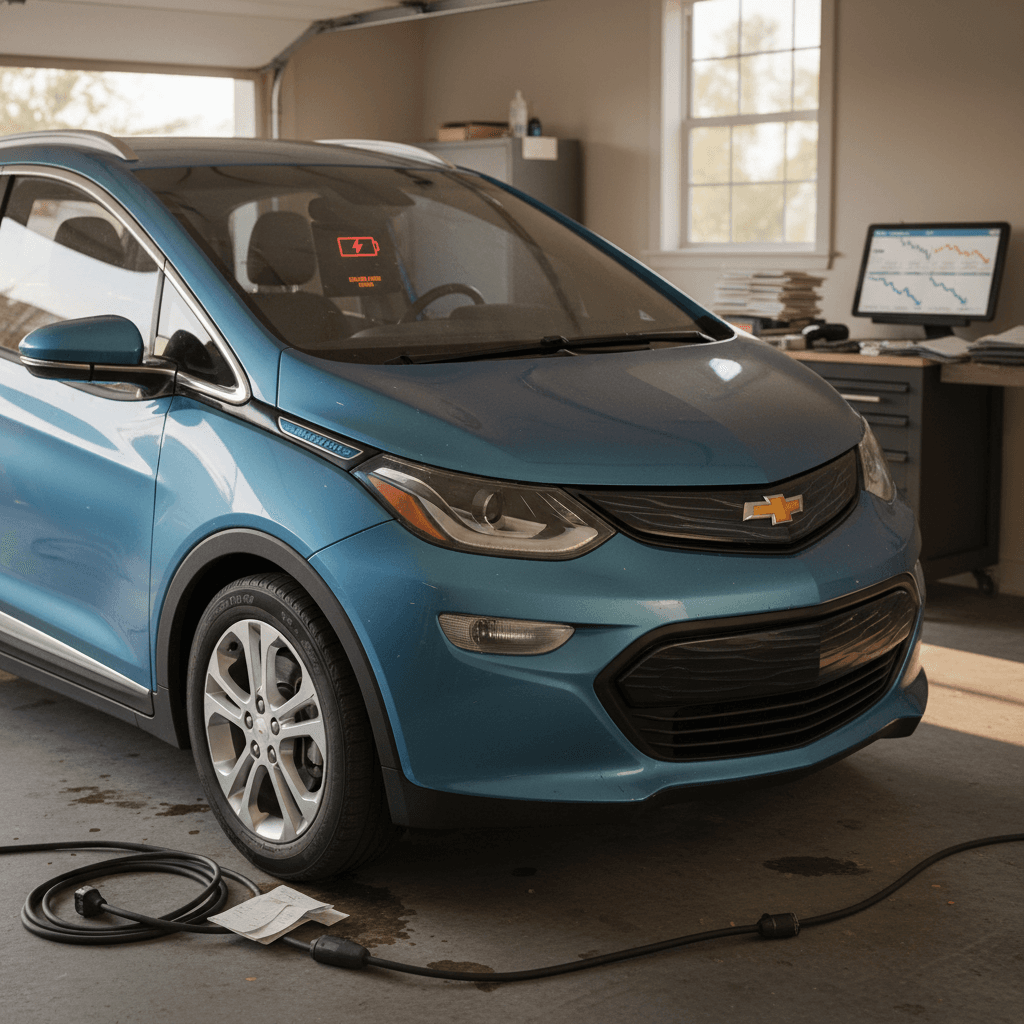
The biggest entry on the list of 2018 Chevy Bolt EV problems is not subtle: a high‑voltage battery defect that could, in rare cases, lead to a fire while the car was parked. GM ultimately recalled every first‑generation Bolt built through 2022, including all 2018 models, after a small number of fires were traced to manufacturing defects in LG Chem battery cells.
- The defect involved a combination of a torn anode tab and a folded separator in some cells, which could cause an internal short and thermal runaway.
- Early recalls tried software limits and charging caps, but new fires appeared even after those updates.
- GM’s final remedy was sweeping: replace the entire battery pack’s modules in affected cars at no cost to owners.
2018 Bolt EV Battery Recall Snapshot
Do Not Skip This Step
- Ask the seller for GM recall paperwork showing battery module replacement (not just a software update).
- Check the VIN with a Chevy dealer or manufacturer recall tool and confirm there are no open battery‑related campaigns.
- Look at service records for a note about “high‑voltage battery module replacement” or similar wording, and the date/mileage when it was done.
Post‑Recall Battery Life, Range & Degradation
Once the new pack is in, the obvious question is: how good is it? Long‑term owners of 2018 Bolts with replacement batteries generally report solid range and modest degradation after tens of thousands of miles. Many see real‑world highway range in the 210–230‑mile ballpark in mild weather, roughly in line with or slightly better than the original pack when new.
What Normal Degradation Looks Like
Signs Your 2018 Bolt’s Battery Is Healthy
Use both data and seat‑of‑the‑pants impressions
Consistent Range
If a full charge in mild temps still shows an estimated 200+ miles, you’re in good shape.
Gradual Decline
Range slowly tapers over years, not suddenly dropping 30–40 miles in a month.
No Warnings
No high‑voltage battery warnings, reduced‑power messages, or unexplained shutdowns.
Pro Tip: Get Objective Battery Data
Charging Quirks: DC Fast Charging Limits & Cold-Weather Behavior
Even on a perfect battery, the 2018 Chevy Bolt EV has charging behavior that catches new owners off‑guard. The car was designed in the early days of mainstream EVs, and its DC fast charging curve is conservative by 2025 standards.
How the 2018 Bolt EV Charges vs Newer EVs
Approximate real‑world DC fast charging behavior on a healthy battery
| State of Charge | 2018 Bolt EV (Max ~55 kW) | Modern Long‑Range EV (150 kW+ capable) |
|---|---|---|
| 10% → 50% | Often 40–50 kW, sometimes less when cold | 80–150 kW sustained in ideal conditions |
| 50% → 80% | Tapers sharply into 30s, then 20s kW | Still 70–100+ kW on many cars |
| 80% → 100% | Slow; better to switch to Level 2 | Slow on any EV, top‑off territory |
Numbers are typical, not absolute; charging speed always depends on temperature, software, and the specific charger.
Cold Weather Makes It Slower
- The car tops out around 50–55 kW on DC fast charging, even if the station advertises 150 kW or 350 kW.
- Charging speed drops as you approach 60–80% state of charge; road‑tripping is faster if you hop from ~10–20% up to ~60–70% instead of hanging on to 90–100%.
- Multiple back‑to‑back DC fast charge sessions can heat‑soak the pack; the car may slow charging to protect itself.
How to Get the Best Charging Experience in a 2018 Bolt
Arrive with a low state of charge
You’ll see the highest DC fast charge rates when you plug in between about 5–25% state of charge instead of 60–70%.
Precondition in cold weather
Use remote start or pre‑conditioning while plugged in to warm the cabin, and indirectly the battery, before a winter fast‑charge stop.
Don’t obsess over 100%
For road trips, charging from ~15% to ~70% and then driving again is usually quicker than sitting to reach 90–100%.
Favor Level 2 at home
Daily life is built around <strong>Level 2 charging</strong> (a 240V home or workplace charger). Fast charging is best reserved for trips.
Other Common 2018 Chevy Bolt EV Problems
Beyond the headline‑grabbing battery recall, the 2018 Bolt behaves like what it is: a first‑wave mass‑market EV based on economy‑car bones. Most issues are more annoying than catastrophic, but you’ll want to know where the rough edges are.
Non‑Battery Problems 2018 Bolt Owners Report
These show up in forums, complaint databases, and long‑term reviews
Infotainment Glitches
Random reboots, Bluetooth pairing hiccups, frozen CarPlay/Android Auto, and backup‑camera lag. Often fixed with software updates or a hard reset.
Interior Rattles & Trim
Buzzes from the hatch or dash, especially on rough roads. Typical for a compact car; sometimes cured with new clips or careful adjustment.
Sensor & Camera Issues
Occasional failures of the rear camera or parking sensors. A scan at a Chevy dealer will usually reveal whether it’s wiring, a module, or the sensor itself.
Brake & Regen Feel
Some drivers complain of grabby low‑speed brakes or inconsistent regenerative braking feel. Often more a quirk of tuning than a defect.
Range Estimator Anxiety
The “guess‑o‑meter” can swing wildly with temperature and driving style. That’s normal, but newcomers mistake it for sudden battery failure.
Age‑Related Wear
Standard stuff on any 7‑8 year‑old car: worn tires, tired shocks/struts, corroded brake hardware in snowy regions.
The Upside on Reliability
Ownership Costs, Warranty Coverage & Long-Term Reliability
One of the reasons the 2018 Bolt is so popular on the used market is that it’s cheap to run. Electricity is usually cheaper than gas per mile, and there are fewer moving parts to maintain. The wild card, of course, is the battery, both its reliability and its warranty coverage.
Typical Warranty Situation for a 2018 Chevy Bolt EV in 2025
Exact coverage can vary by state and replacement‑battery install date; always verify with GM.
| Component | Original Coverage | What Likely Applies in 2025 |
|---|---|---|
| High‑voltage battery | 8 yrs / 100,000 miles (often more in CA ZEV states) | If replaced, many cars have several years of battery warranty left. |
| Electric drive unit | 8 yrs / 100,000 miles in many states | Often still partially covered depending on mileage and in‑service date. |
| Bumper‑to‑bumper | 3 yrs / 36,000 miles | Expired on any 2018 Bolt by now. Repairs are out‑of‑pocket. |
| Corrosion | 6 yrs / 100,000 miles (perforation) | Some coverage may remain, but cosmetic rust is usually owner‑paid. |
If your car received a replacement pack, the high‑voltage battery warranty usually restarts from the replacement date, which is a big plus for used buyers.
Verify the Replacement Battery’s Warranty Clock
2018 Bolt EV Used-Buy Checklist
If you’re evaluating a 2018 Bolt in a driveway or at a dealer lot, here’s how to separate the great deals from the rolling question marks. This checklist assumes you already like how it drives; now you’re making sure the car will like you back.
Essential Checks Before You Buy a 2018 Chevy Bolt EV
1. Confirm Battery Recall Completion
Ask for paperwork showing high‑voltage battery module replacement. Use the VIN in a recall tool or with a Chevy dealer to confirm <strong>no open battery recalls</strong> remain.
2. Test Real‑World Range
On a full charge in mild weather, take a long mixed‑driving test. If the car projects under ~180–190 miles with gentle driving, dig deeper into battery health.
3. Inspect the Charging Hardware
Check the charge port for damage or corrosion. Test both Level 2 and, if possible, a DC fast charger to make sure the car starts charging promptly and holds a reasonable rate.
4. Scan for Warning Lights
Power the car on and look for service indicators. Anything related to the high‑voltage system, stability control, or airbag system should be addressed before you agree to buy.
5. Check Tires & Brakes
Uneven tire wear or pulsing brakes can signal neglected maintenance or alignment issues. They’re fixable, but factor the cost into your offer.
6. Evaluate Interior & Electronics
Test the infotainment system, backup camera, Bluetooth, and all power features. Glitches are often software‑related but still worth addressing before they become your problem.
Don’t Overpay for a Pre‑Recall Car
How Recharged Reduces Risk with a Used 2018 Bolt
The Bolt EV is one of the best values in the used‑EV world, as long as you don’t wing it. This is where a specialist marketplace like Recharged can tilt the odds in your favor.
Buying a 2018 Bolt EV Through Recharged
What we do differently from a generic used‑car lot
Recharged Score Battery Health
Every vehicle includes a Recharged Score Report with verified battery health, charging behavior, and fair‑market value analysis, so you’re not guessing about the pack.
Recall & History Verification
We confirm critical recalls like the Bolt battery campaign are completed and document them, then surface accident and service history so surprises are minimized.
EV-Specialist Support
Our EV experts walk you through range expectations, home‑charging plans, and how this specific 2018 Bolt fits your commute and road‑trip needs.
Financing & Trade-In
Recharged offers financing, trade‑in and instant offer options, and consignment, so you can move out of your gas car and into a Bolt in one smooth transaction.
Nationwide Delivery
See the car online, review the Recharged Score, complete paperwork digitally, and have your Bolt delivered to your driveway.
Experience Center
If you’re near Richmond, VA, you can visit our Recharged Experience Center to test‑drive EVs, including Bolts, and get hands‑on charging demos.
Ready to find your next EV?
Browse VehiclesFAQ: 2018 Chevy Bolt EV Problems
Frequently Asked Questions About 2018 Bolt EV Issues
Bottom Line: Is a 2018 Chevy Bolt EV Still Worth It?
The 2018 Chevy Bolt EV is a study in second chances. The battery fire recall was a serious problem, and it will always be part of the car’s story. But for shoppers who insist on documented recall repairs, verified battery health, and realistic expectations about charging speeds, a used 2018 Bolt can deliver a lot of electric miles for the money.
If your budget points you toward an older EV, the choice isn’t between “perfect” and “problem child.” It’s between a car whose issues you understand and one you don’t. A properly repaired 2018 Bolt, with a fresh battery, clean history, and transparent inspection from a specialist like Recharged, lands on the right side of that divide.