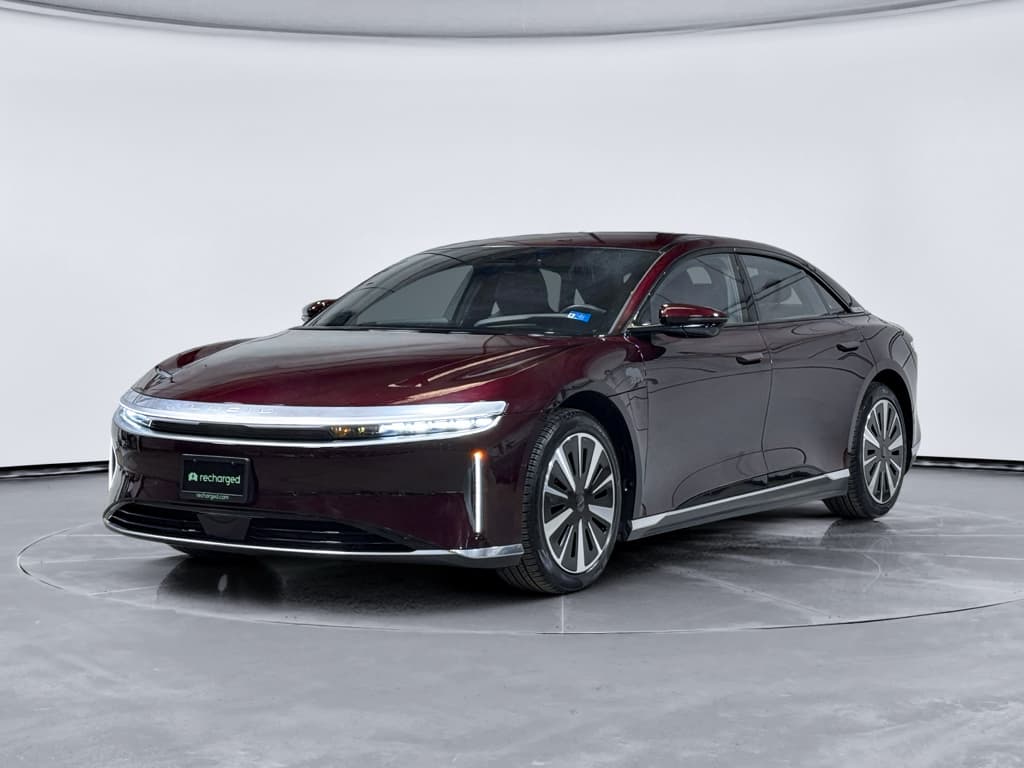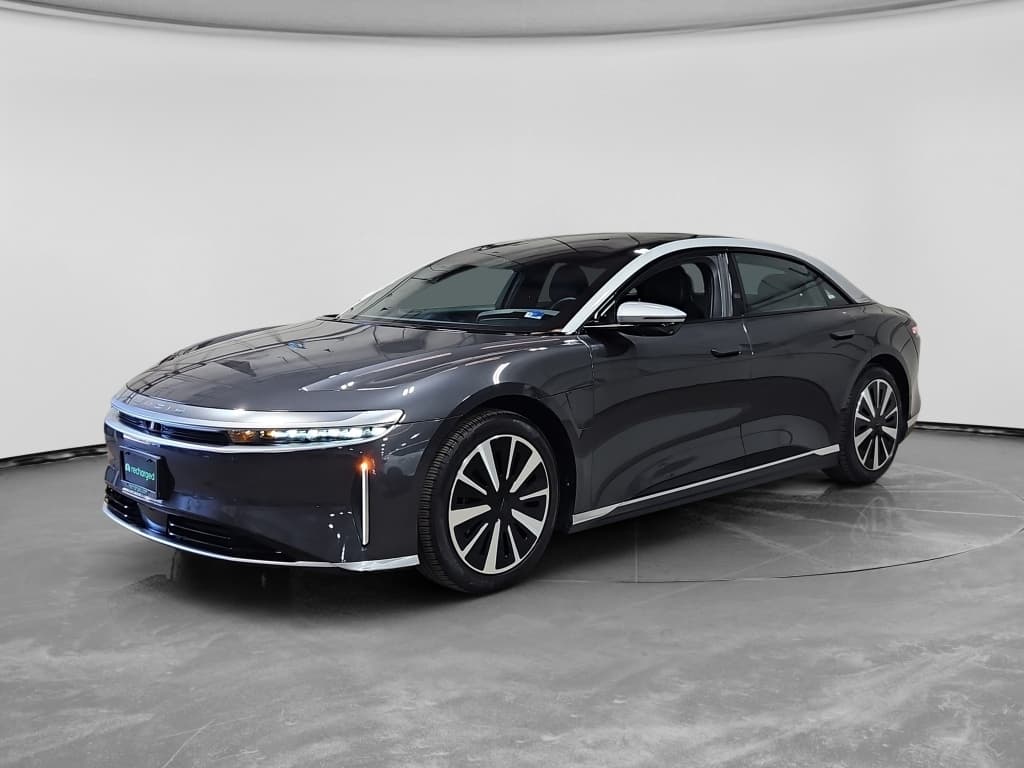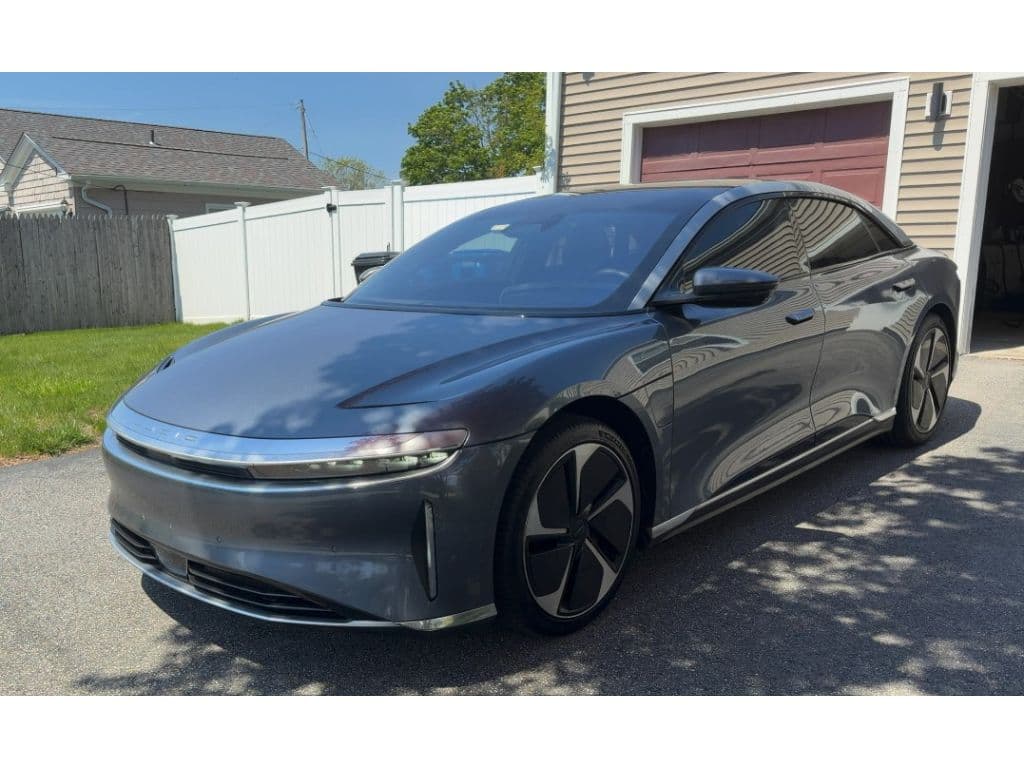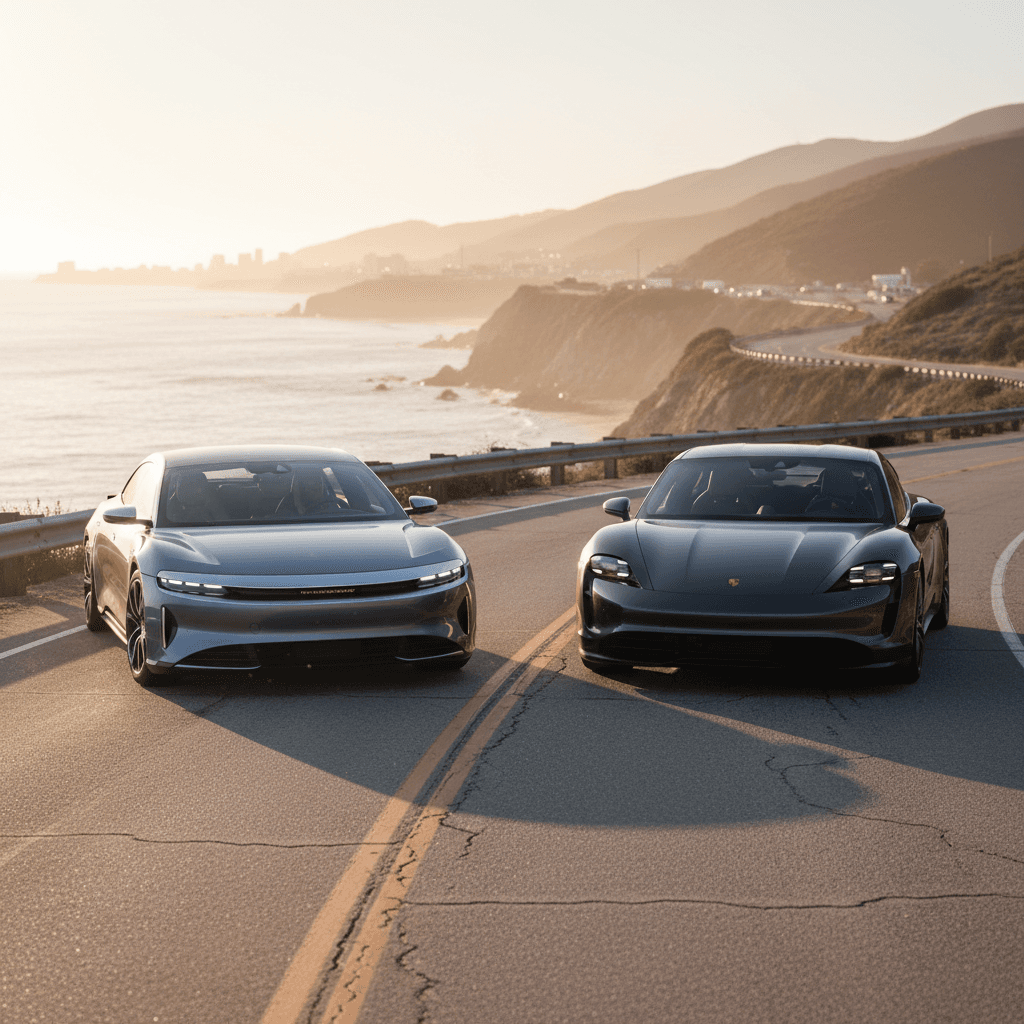
If you’re cross-shopping the Lucid Air vs Porsche Taycan, you’re not just buying an EV, you’re choosing between two very different visions of what a modern performance luxury car should be. One leans hard into range and efficiency, the other into heritage and driving feel. The question isn’t just “Lucid Air vs Porsche Taycan: which is better?” but “which is better for the way you actually drive and own a car?”
Two very different takes on the same idea
Lucid Air vs Porsche Taycan: quick verdict
When the Lucid Air is better
- You road trip a lot and want the longest range you can get.
- Efficiency and charging speed matter more than Nürburgring lap times.
- You want a huge, airy cabin and big trunk.
- You’re willing to put up with some younger-brand quirks for cutting‑edge tech.
When the Porsche Taycan is better
- Driving feel, steering, and braking are top priorities.
- You value established dealer and service networks.
- You prefer a tighter, sportier cockpit and Porsche build quality.
- You care more about brand cachet and resale than raw range numbers.
Bottom line
Pricing and lineups: where these cars overlap
Both cars span a wide price band, from relatively attainable luxury EV to eye‑wateringly expensive halo model. The overlap that most shoppers cross‑shop is in the $80,000–$140,000 window, whether new or lightly used.
Lucid Air vs Porsche Taycan: key trims and pricing (U.S., recent model years)
Approximate starting MSRPs before options and incentives; real‑world used prices vary widely by mileage and spec.
| Model | Typical new MSRP range | Powertrain highlights | EPA range (approx.) |
|---|---|---|---|
| Lucid Air Pure / RWD | ~$75,000–$80,000 | Single‑motor RWD | ~400+ miles (best‑case trims) |
| Lucid Air Touring | ~$80,000–$90,000 | Dual‑motor AWD, ~620 hp | ~370–380 miles |
| Lucid Air Grand Touring | $110,000+ | Dual‑motor AWD, 800+ hp | Up to ~500+ miles on select wheel/tire setups |
| Porsche Taycan (base RWD) | Around $100,000+ new | Single‑motor RWD | Mid‑200s miles (updated battery) |
| Taycan 4S | $115,000+ | Dual‑motor AWD | High‑200s miles |
| Taycan Turbo / Turbo S / Turbo GT | $175,000+ to well over $230,000 | High‑output dual‑motor AWD | Roughly mid‑200s to mid‑300s depending on spec |
Representative trims most buyers consider when comparing Lucid Air and Taycan.
Used market reality check
Range, efficiency, and charging: where Lucid really pulls ahead
Range and efficiency snapshot
Lucid built its brand around efficiency and long range. Even non‑halo trims like the Air Touring routinely post EPA figures in the high‑300‑mile range, and in independent testing the car often beats those numbers in gentle driving. Porsche went the other way: Taycan is optimized for repeatable performance, not absolute range, though the 2025 update significantly improves efficiency and usable capacity.
Range and charging: Lucid Air vs Porsche Taycan
Both are fast on a DC fast charger, but they don’t go equally far between stops.
Lucid Air: road‑trip king
- Best‑in‑class efficiency in most trims, often over 4 mi/kWh in mixed driving if you’re gentle.
- Massive battery pack on upper trims gives truly long legs between stops.
- 800‑volt architecture plus smart thermal management means very high peak charge rates and good sustained speed.
- For U.S. buyers, NACS adoption opens up access to the Tesla Supercharger network (with the right adapters and compatibility by model year).
Porsche Taycan: quick sprinter, shorter legs
- Earlier Taycans were notorious for conservative EPA ratings but better real‑world highway range than the label suggested.
- 2025 update boosts battery capacity and efficiency, but Lucid still has a clear advantage if you value fewer charging stops.
- Also runs an 800‑volt system, with very high DC fast‑charge rates and strong repeatability for back‑to‑back sessions.
- Comes with promotional free charging at some public networks on newer model years, which can reduce road‑trip costs.
Don’t just compare brochure numbers
Performance & driving feel: brute speed vs driver involvement
On paper, both the Lucid Air and Porsche Taycan play in supercar territory. In practice, how they deliver that performance, and how it feels on a back road, is very different. Lucid goes for effortless thrust and stability; Porsche obsesses over steering, braking, and chassis feedback.
How they drive: Lucid Air vs Taycan
Speed is easy in EVs; feel is not.
Lucid Air: devastating straight‑line pace
- Even mid‑trim Airs are genuinely quick; upper trims like Sapphire are in the "world’s quickest car" conversation.
- Power delivery is effortless and almost serene, you sense speed by how quickly scenery disappears rather than how the car shouts about it.
- Steering and braking are competent but more grand‑tourer than sports sedan: stable, calm, and tuned for covering distance.
- Best suited to drivers who want huge performance with minimal drama.
Porsche Taycan: driver’s car first, EV second
- Exceptionally precise steering, excellent body control, and some of the best brake feel in any EV.
- High‑performance variants (Turbo, Turbo S, Turbo GT) feel like full‑fledged Porsches that just happen to be electric.
- Even the base RWD Taycan offers engaging rear‑drive balance you can’t really get in the Air.
- If you prioritize track days or twisty roads over interstate cruising, Taycan is the more satisfying tool.
In a world where nearly any high‑end EV can vaporize a stoplight, meaningful differentiation is moving from 0–60 numbers to how a car makes you feel over 60 miles.
Interior, comfort, and practicality
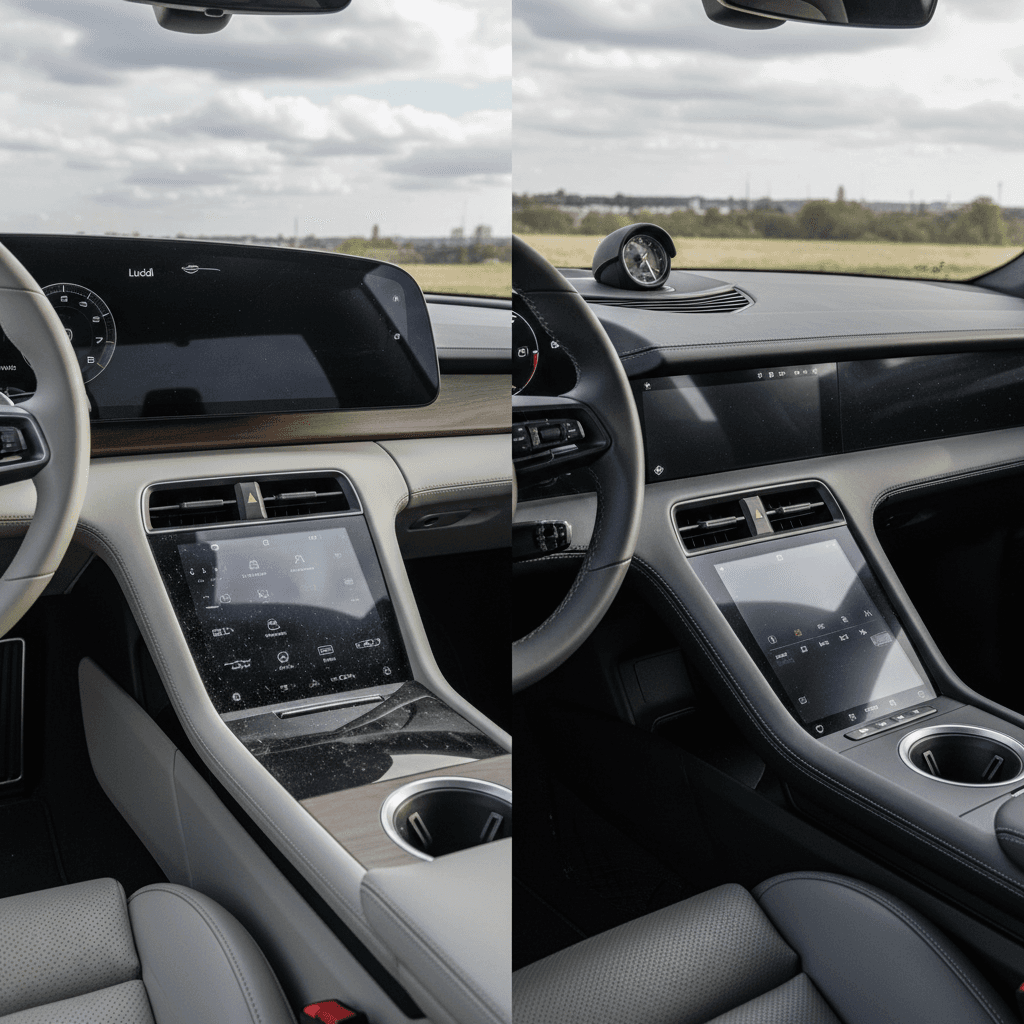
Inside, Lucid and Porsche diverge even more. The Air feels like a modern glass‑roof lounge on wheels; the Taycan is a classic low‑slung sport sedan with high‑quality materials and a more compact feel. Both are clearly premium, but your reaction will depend heavily on your ergonomic and aesthetic preferences.
Living with them every day
Cabin design, space, and practicality compared.
Lucid Air: airy and spacious
- Huge cabin, especially in back; more legroom than most sedans in this class.
- Large glass areas and available glass roof make it feel light and open.
- Trunk plus frunk combined give impressive cargo volume, useful for road trips.
- Some owners and reviewers note that material quality and fit still fall short of S‑Class or top‑end Porsche levels, but the design is modern and distinctive.
Porsche Taycan: intimate and high quality
- Lower seating position and higher beltline create a sports‑car‑like cockpit.
- Cabin feels tighter than the Air, especially in the rear, but materials and switchgear are typically Porsche‑solid.
- Sedan and Cross Turismo/Sport Turismo body styles offer different blends of practicality vs style.
- If you’re tall or regularly carry adults in back, the Lucid will feel roomier; if you love the feel of a traditional sports sedan, the Taycan wins.
Tech, software, and driver assistance
Both cars lean hard on screens and software, but they’re at different points in their maturity curve. Lucid pushes more bleeding‑edge UX and OTA updates; Porsche integrates tech more conservatively into a familiar luxury‑car interface.
Lucid Air tech
- Large, curved main display plus a lower “Pilot Panel” for climate and secondary controls.
- Regular over‑the‑air updates that add features, refine UX, and address bugs.
- Advanced driver‑assist suite (DreamDrive) with highway assist, lane‑centering, adaptive cruise, and more, depending on trim and options.
- Historically, software instability and UI lag have been common owner complaints, though later software versions have improved things.
Porsche Taycan tech
- Multiple screens but a more traditional Porsche layout, with physical controls where it matters.
- Driver‑assist systems are competent but conservative, tuned more for driver support than semi‑autonomy.
- Fewer dramatic over‑the‑air feature drops, more incremental improvements and dealer‑installed updates.
- Generally fewer complaints about basic stability or weird behavior, though the UX isn’t as futuristic as Lucid’s.
Where Recharged fits in
Reliability, recalls, and build quality
This is where the “startup vs established automaker” contrast really shows. Both cars are complex, both have had recalls, but the patterns are different, and they matter a lot if you’re planning to keep the car long‑term or buy used.
Reliability patterns: Lucid Air vs Porsche Taycan
Neither is a Camry, but risk profiles differ.
Lucid Air reliability story so far
- Below‑average overall reliability scores in early model years, driven mainly by software glitches and electronic issues, not batteries or motors.
- Multiple recalls for things like rear camera visibility, HVAC/defrost performance, wiring harness routing, and torque‑monitoring logic, many now addressed via recalls and software updates.
- Owners report a mix of experiences: some nearly trouble‑free, others with frustrating service and software cycles.
- Trend line is improving, but if you’re risk‑averse, this is the biggest strike against the Air compared with the Taycan.
Porsche Taycan reliability story
- Also not perfect, there have been recalls and some high‑voltage and charging‑system issues in earlier years, but overall reliability is closer to established premium norms.
- Benefit of Porsche’s mature dealer and service network: easier to get parts and skilled technicians in most U.S. metros.
- Fit and finish, panel alignment, and interior durability generally feel more consistent than on early Lucid builds.
- If your priority is minimizing hassle over the next 5–10 years, Taycan has the edge for now.
Startup risk is real
Ownership costs, incentives, and resale value
On paper, both Lucid Air and Porsche Taycan sit in “expensive to buy, relatively cheap to fuel and maintain” territory. Electricity is cheaper than premium gasoline, and there’s no engine oil or transmission fluid to change. But there are still important differences in depreciation, financing, and service.
Key ownership cost considerations
1. Depreciation hits hard, especially on Lucid
Both cars depreciate steeply from new, but as a newer brand, Lucid tends to drop faster in the first few years. That hurts if you buy new, but makes the Air <strong>very compelling as a used bargain</strong> if you’re comfortable with the brand risk.
2. Service and parts access
Porsche’s dealer network and parts pipeline are mature. Lucid relies on a smaller network and mobile service support, which can mean <strong>longer waits</strong> depending on your region.
3. Insurance and repair costs
High‑performance EVs with aluminum and complex electronics are structurally expensive to repair. Quotes can be higher for both cars than for a comparable gas sedan; Taycan may benefit from insurers’ greater experience pricing Porsche risk.
4. Incentives and tax credits
Eligibility for federal and state EV incentives changes frequently and can depend on assembly location and MSRP caps. On the used side, newer U.S. rules sometimes let you apply a <strong>used EV tax credit at point of sale</strong> if the car and your income qualify.
5. Financing and total cost of ownership
A slightly higher purchase price but better reliability can win over time. Platforms like Recharged can help you compare <strong>out‑the‑door monthly payments</strong> on different used Lucid and Taycan examples, factoring in warranty coverage and expected running costs.
Lucid Air vs Taycan: which is better for you?
By now it should be clear there’s no universal answer to “Lucid Air vs Porsche Taycan: which is better?” There is, however, a very clear answer once you plug in your own priorities. Use this as a quick decision framework.
Choose your path: Lucid Air or Taycan
You should lean Lucid Air if…
You regularly drive long distances and want <strong>the fewest possible charging stops</strong>.
You value <strong>space, comfort, and a quiet, futuristic cabin</strong> over a tight sports‑sedan driving position.
You’re a tech‑forward buyer who doesn’t mind a bit of software quirkiness in exchange for rapid innovation and big OTA updates.
You’re looking at the used market and see the Air’s steep early depreciation as an opportunity rather than a red flag.
You live near a Lucid service location or are comfortable with mobile‑service logistics.
You should lean Porsche Taycan if…
You care more about <strong>steering feel, brake modulation, and chassis control</strong> than raw range numbers.
You want <strong>established dealership and service support</strong> across more cities.
You expect to own the car for a long time and want a track record that looks closer to traditional premium brands.
You’re willing to accept shorter range and more frequent charging stops for a more engaging drive.
Brand heritage and resale value matter to you, Porsche still carries more universal prestige today.
A simple rule of thumb
Buying used: Lucid Air vs Taycan on the pre‑owned market
For many shoppers, the real battlefield isn’t the new‑car configurator, it’s the used listings. Both Lucid Air and Taycan can deliver huge value pre‑owned, but the risk profile is different. This is where data, battery health, and inspection quality matter more than marketing claims.
Used Lucid Air: high reward, higher variance
- Steep early depreciation means a used Air can offer massive range and performance per dollar.
- But you must pay attention to software version, recall status, and service history.
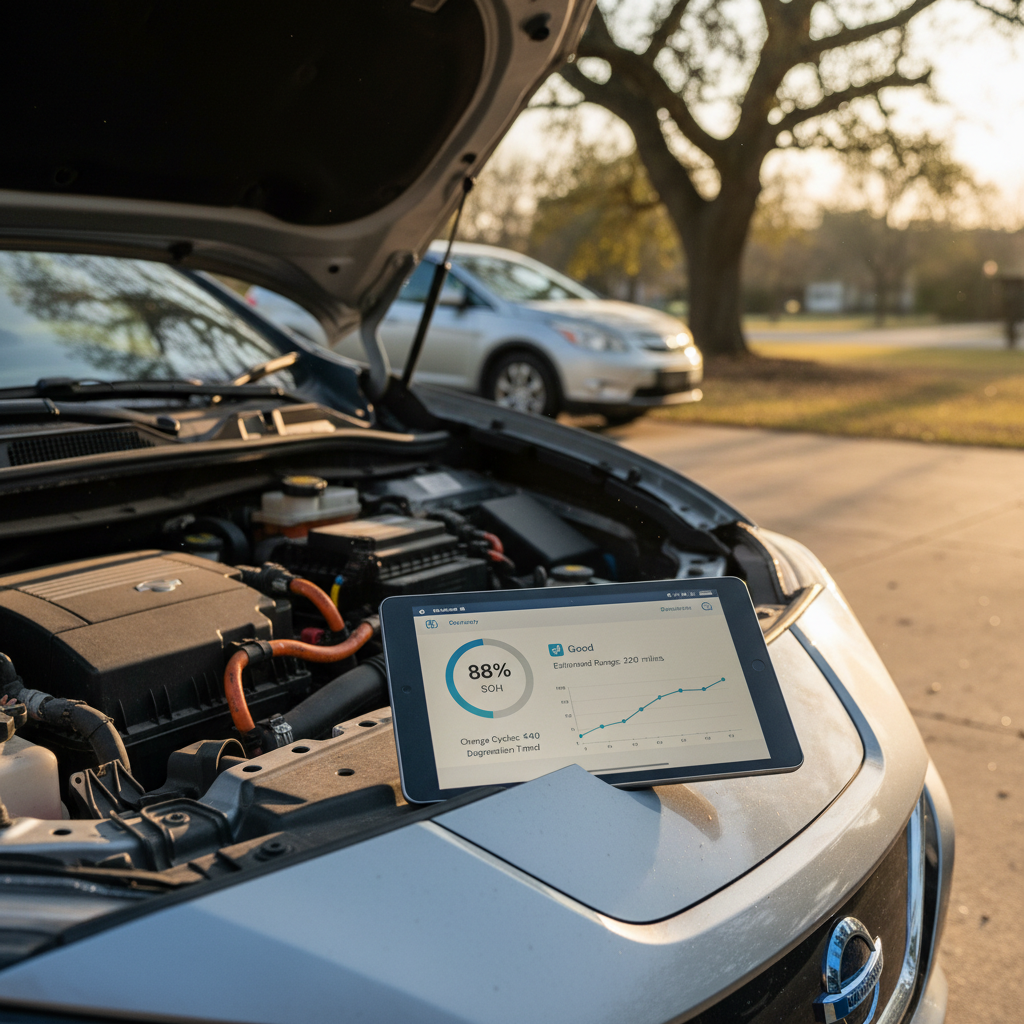
- Battery health is generally strong so far, but real‑world data sets are still smaller than Tesla or legacy brands.
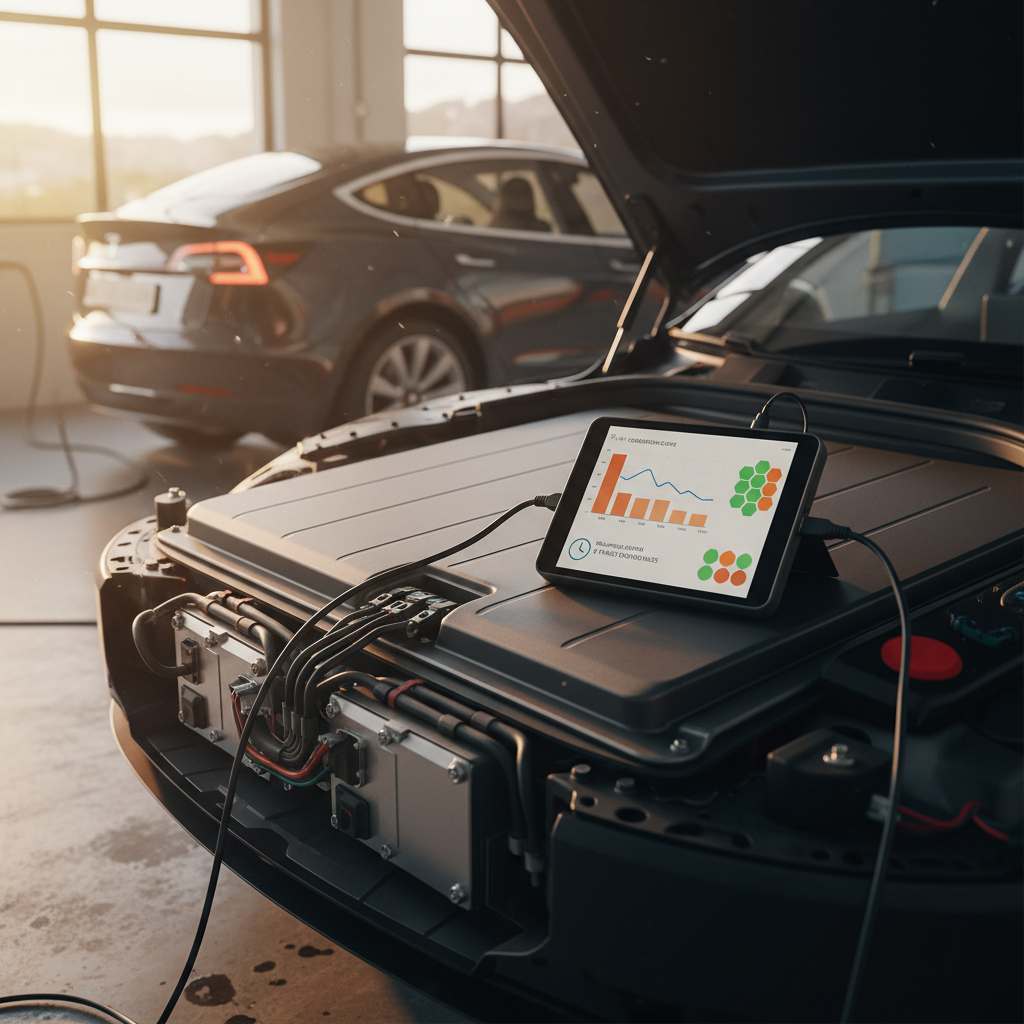
- A detailed battery report, like the Recharged Score, helps distinguish a great deal from a future headache.
Used Porsche Taycan: steadier, but not immune
- Holds value better than most startup EVs, but still depreciates faster than a 911.
- More consistent build quality, but check for high‑mileage fast‑charging use and prior track work if you’re shopping performance trims.
- Dealer CPO programs can add warranty coverage but at a price premium.
- A marketplace that understands EVs can help you compare different battery‑health profiles and fast‑charge histories side by side.
How Recharged can help
FAQ: Lucid Air vs Porsche Taycan
Frequently asked questions
In the early EV era, it’s tempting to chase whatever spec sheet looks most extreme. But living with a Lucid Air or a Porsche Taycan for years is about more than range and horsepower. It’s about how much you trust the brand, how you use the car, and how easily you can get it serviced when something inevitably needs attention. The Lucid Air is the visionary outlier, unmatched efficiency, huge range, and a cabin that feels like tomorrow. The Taycan is the disciplined athlete from an old‑money family, less radical on paper, but deeply satisfying in the way it drives and holds together over time. If you’re weighing specific cars on the used market, having objective battery‑health data, recall checks, and expert guidance, exactly what Recharged is built around, turns that high‑stakes choice into a smart, confident one.