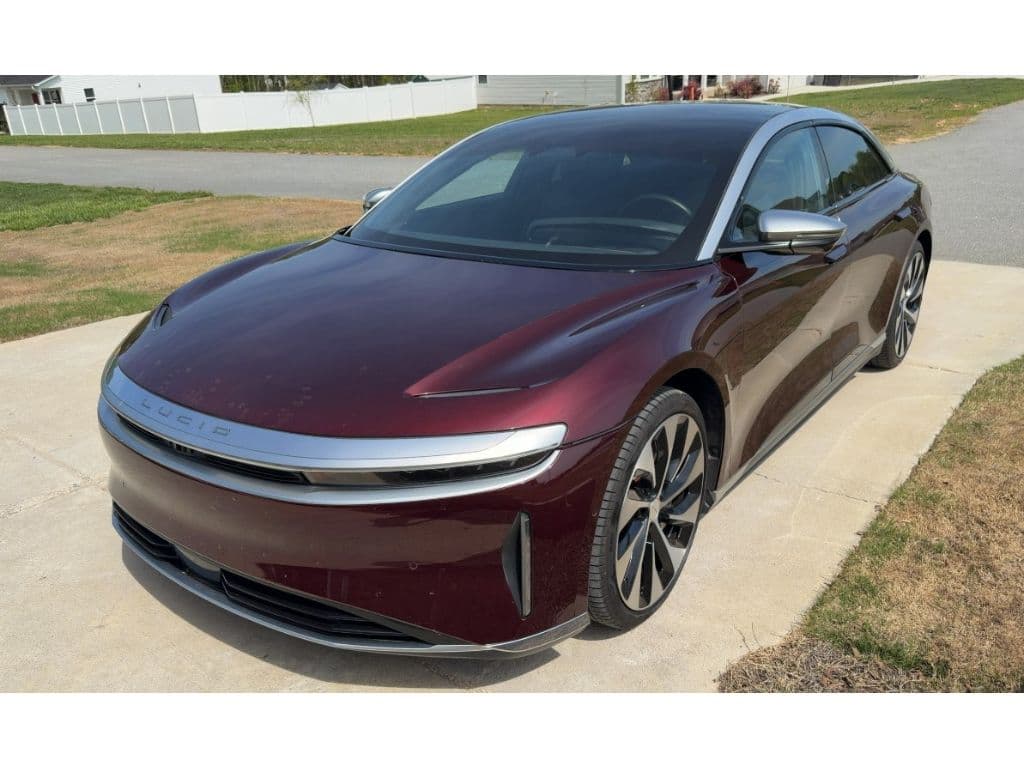
If you’re trying to make sense of the Lucid Air service schedule, you’ll notice it doesn’t look like a traditional luxury sedan’s maintenance booklet. There’s no engine oil, no spark plugs, and far fewer line items overall, yet an 800‑volt, 4‑figure‑horsepower EV still needs a plan. This guide walks you through what Lucid recommends, what owners actually see in the real world, and what to watch for if you’re shopping for a used Lucid Air.
Quick take
Lucid Air service schedule overview
Lucid positions the Air as a low‑maintenance luxury EV. Instead of fixed 5,000‑mile oil changes, the focus is on multi‑year checks of brake fluid and coolant, periodic cabin filter replacement, and regular tire care. Lucid’s own owner materials emphasize following the in‑car reminders and consulting a Lucid service center for specific intervals for your year and trim.
- Tire rotations and inspections every few thousand miles
- Cabin air filter replacement about every 2 years
- Brake fluid health check around the 4‑year mark (replace if needed)
- Thermal system / coolant checks at multi‑year intervals
- Software updates and diagnostics handled over‑the‑air or during visits
Always confirm with your owner’s manual
Official recommendations vs. real-world service
Lucid doesn’t publish a traditional, long, dealer‑style maintenance chart on its public site. Instead, you’ll see high‑level guidance in the owner’s manual and reminders in the car. Independent repair information and internal Lucid documentation point to a few key items:
How Lucid’s model translates into real life
What the documentation says vs. what owners actually do
Official guidance
- Follow in‑car reminders and owner’s manual.
- Have cabin air filter replaced about every 2 years.
- Check brake fluid health after ~4 years and replace if necessary.
- Inspect coolant and high‑voltage components only via Lucid service.
Real-world pattern
- Most owners see ~1 service visit per year for inspections and tire work.
- Brake fluid service often bundled with 3–4‑year inspections.
- Occasional additional visits for software quirks or warranty repairs.
- Plenty of minor issues handled via mobile service at home or work.
How to use this guide
Lucid Air service schedule by mileage and time
Because the Lucid Air is still a relatively new model, real‑world patterns matter as much as the paper schedule. The table below combines what’s known from Lucid documentation with what owners commonly report seeing at service centers.
Typical Lucid Air service schedule (planning guide)
Approximate intervals for a daily‑driven Lucid Air. Always follow in‑car reminders and your owner’s manual first.
| Mileage / Time | Service item | What’s done |
|---|---|---|
| Every 6,000–7,500 miles or 6–12 months | Tire rotation & inspection | Rotate tires; inspect tread, brakes, suspension, and steering components. |
| Every 12,000–15,000 miles | General inspection (often bundled with tire work) | Check underbody, suspension, steering, lights, wipers, and fluid levels. |
| Every ~2 years | Cabin air filter | Replace interior HVAC filter; check HVAC performance and odors. |
| Every 3–4 years | Brake fluid service | Test brake fluid for moisture; flush and replace if out of spec. |
| Every 4+ years or high mileage | Thermal system inspection | Inspect coolant levels and hoses; service as recommended by Lucid. |
| As needed | Wipers & washer fluid | Replace blades; refill washer fluid. |
| As needed | Wheel alignment | Adjust alignment when you see uneven tire wear, pulling, or after pothole impacts. |
| As needed | Software & hardware fixes | Over‑the‑air updates, plus in‑shop fixes for screens, trim, or drive‑unit concerns. |
Intervals will vary by build year, driving conditions, and software updates.
How often will a Lucid Air see service?
Free scheduled maintenance on newer cars
What the Lucid Air doesn’t need compared to gas cars
One reason the Lucid Air’s service schedule looks light is simple: there’s no combustion engine. That wipes a long list of familiar maintenance items off the calendar.
- No engine oil or oil filters
- No spark plugs or ignition coils
- No transmission fluid changes for a conventional automatic gearbox
- No exhaust system, catalytic converters, or emissions tests
- Far fewer belts, pulleys, and moving parts under the hood
Good news for long-term cost
Lucid Care, mobile service, and remote diagnostics
Lucid builds its service model around three pillars: Lucid Care, mobile service, and remote diagnostics. Instead of asking you to visit the service center for every minor issue, Lucid often comes to you or fixes problems over the air.
Ways your Lucid Air gets serviced
How work actually gets done in the Lucid system
Mobile service vans
Remote diagnostics & OTA
Service & satellite centers
Use the app to your advantage
Service experience and common owner complaints
Because Lucid is still scaling its network, service experience is more variable than with legacy luxury brands. Many owners praise the quality of the technicians and the convenience of mobile service, but it’s also common to see complaints about limited appointment availability and long lead times at busy service centers.
What owners like
- Mobile techs that come to the house for minor issues.
- Door‑to‑door transport and loaner arrangements for major work.
- Technicians who know the platform well and can address issues in one visit.
Where owners get frustrated
- Service centers booked out weeks or a month in advance in some markets.
- Uncertainty in states with no nearby service facility.
- Coordination delays with third‑party transport companies.
If you live far from a service center
Lucid Air maintenance cost: what to budget
Routine maintenance on a Lucid Air is not cheap in absolute dollars, it’s still a flagship luxury EV, but it’s relatively modest compared to what you might be used to with high‑end German sedans. Most of your scheduled spend will revolve around tires, brake fluid, and inspections.
Typical Lucid Air maintenance items and cost ranges
Ballpark costs at independent EV‑savvy shops and Lucid service centers. Actual prices vary by region and model year.
| Service | Typical interval | What to expect |
|---|---|---|
| Tire rotation & inspection | Every 6,000–7,500 miles | Around $60–$150 depending on shop and bundle of checks. |
| Cabin air filter | Every ~2 years | Roughly $80–$200 parts and labor. |
| Brake fluid check / flush | Every 3–4 years | Often $150–$300; may be combined with other inspections. |
| Coolant / thermal system inspection | Every 4+ years or as advised | Basic inspection may be included in a visit; deeper service can reach a few hundred dollars. |
| Alignment | As needed | $150–$250 if you notice pulling or uneven tire wear. |
| Wipers & washer fluid | As needed | $40–$120, depending on blades and labor. |
Collision repairs and out‑of‑warranty component failures sit outside this table and can be much higher.
EVs shift costs, they don’t erase them
Used Lucid Air? How to check service history
If you’re evaluating a used Lucid Air, understanding its service history is critical. Early software revisions, running changes to hardware, and Lucid’s evolving service network mean two cars with the same mileage can have very different backstories.
Service checklist for a used Lucid Air
1. Ask for Lucid service records
Request a printout or PDF of work performed at Lucid service centers or via mobile service. Look for brake fluid checks, tire and alignment work, and any recurring issues.
2. Verify recall and campaign work
Confirm that any software campaigns, safety recalls, or technical service bulletins have been completed. Lucid can typically confirm this by VIN.
3. Inspect tires and alignment
Uneven wear on the inside or outside edges can signal an alignment issue or hard use. On a heavy, powerful EV, this matters for both safety and cost.
4. Confirm remaining warranty and free maintenance
If the car is only 1–2 years old, there may be remaining factory maintenance or warranty coverage. Ask for the in‑service date and clarify what transfers to you.
5. Get an independent EV inspection
Where possible, have an EV‑experienced shop inspect brakes, suspension, and tires. At Recharged, every Lucid Air we list gets a <strong>Recharged Score</strong> with verified battery health and a detailed condition report.
How Recharged helps with used Lucid Airs
Ready to find your next EV?
Browse VehiclesDIY checks between services
You can’t and shouldn’t DIY high‑voltage work on a Lucid Air, but you can stay ahead of minor issues between formal services. A few minutes each month can prevent surprises and help your car feel fresh longer.
- Check tire pressures and look for uneven wear or sidewall damage.
- Top off windshield washer fluid and keep wiper blades fresh.
- Listen for new noises over bumps that could point to suspension issues.
- Pay attention to range changes that aren’t explained by weather or driving style.
- Keep the interior filter area free from clutter and avoid strong chemical cleaners in the HVAC intake.
Don’t open high-voltage components

Lucid Air service schedule FAQ
Frequently asked questions about Lucid Air service
Bottom line: making Lucid Air service simple
The Lucid Air service schedule is refreshingly short compared with the average luxury sedan, but that doesn’t mean you can ignore maintenance. Plan on an annual visit for tires and inspections, multi‑year checks of brake fluid and cabin filters, and occasional unscheduled stops for software or hardware quirks as the platform matures. If you’re shopping for a used Lucid Air, service history and access to a competent service center or mobile coverage matter just as much as options and color.
If you’d rather not decode all of this on your own, Recharged can help. Every used EV we list comes with a Recharged Score Report so you can see verified battery health, maintenance history, and fair pricing at a glance, and our EV specialists are happy to talk through what Lucid Air ownership will look like for your situation before you buy.