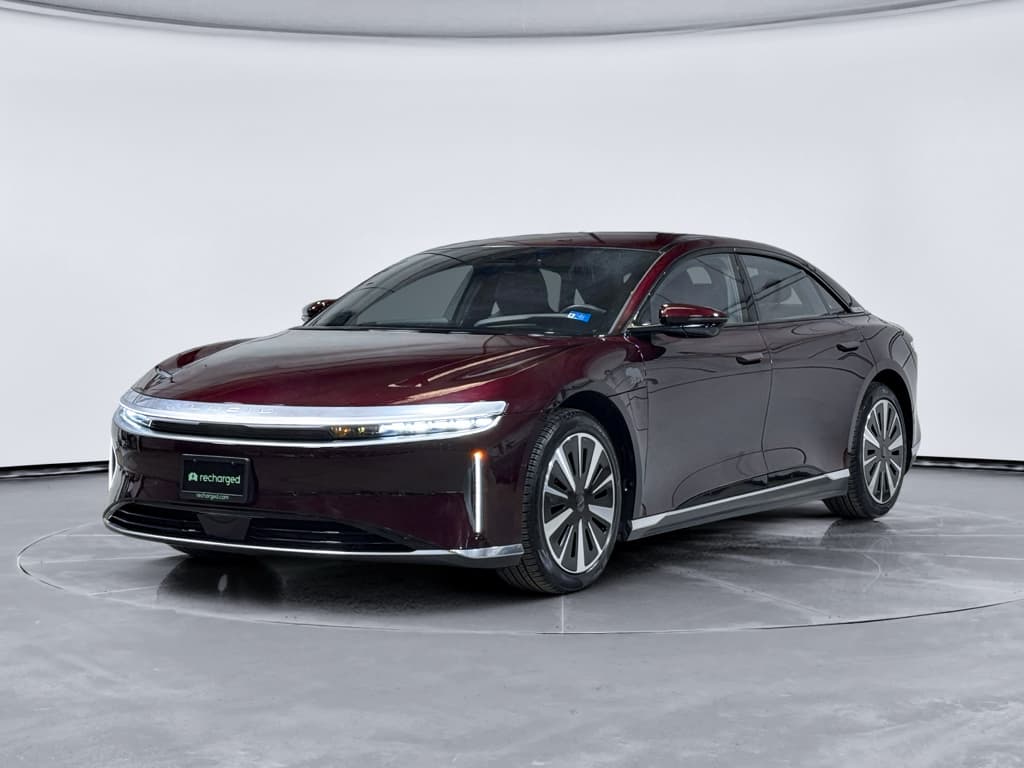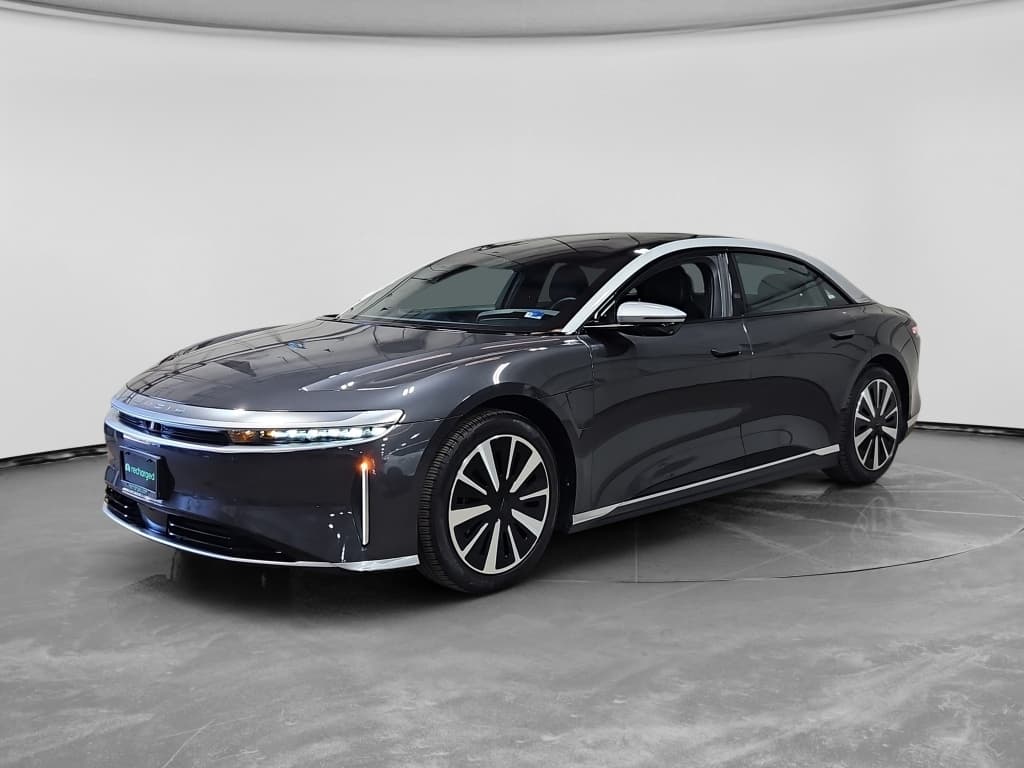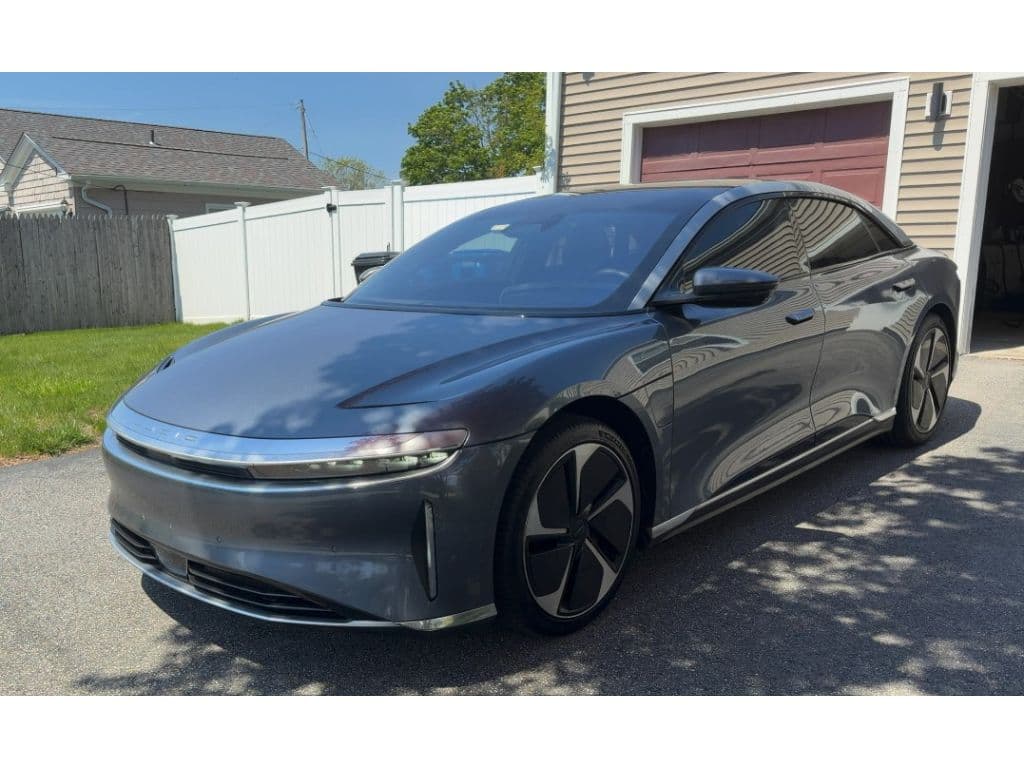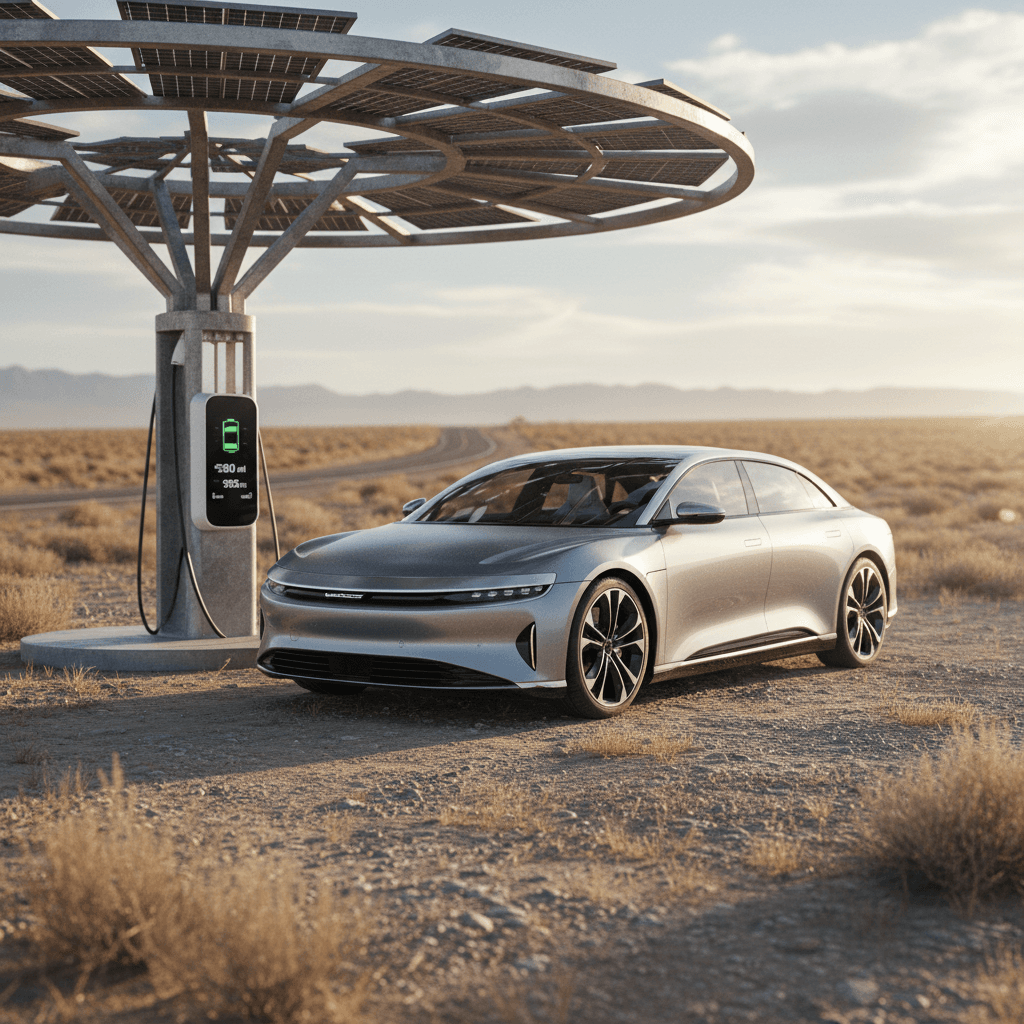
The 2026 Lucid Air is still the range king on paper, with multiple trims topping 400 miles of EPA‑estimated range. But if you’re shopping for a new or used Lucid, or just trying to plan a road trip, you don’t drive on paper. You care about Lucid Air real‑world range in 2026: highway at 75 mph, winter mornings, and that last anxious stretch to the charger.
Why the Lucid Air is range royalty
Lucid Air range in 2026 at a glance
2026 Lucid Air range snapshot (big picture)
Those headline numbers matter, but they’re not the whole story. To understand what you’ll actually see from a Lucid Air in 2026, you have to decode the EPA figures, look at independent range tests, and factor in how and where you drive.
EPA vs real‑world range: how to read the numbers
Lucid has been unusually candid about how tightening EPA test protocols have trimmed official range numbers without dramatically changing the cars themselves. Starting with the 2024 model year, the EPA test cycles became a bit harsher, so the same hardware can show fewer miles on the sticker even though real‑world range is similar.
- EPA range is a standardized lab test that mixes city and highway cycles with gentle acceleration, moderate speeds, and no brutal weather.
- Real‑world range is what you see at your typical cruising speed, with your climate control habits, on your local roads.
- Most EVs deliver 70–85% of their EPA rating on long highway trips at 70–75 mph. Lucid’s efficiency means the Air often lands toward the upper end of that band.
- At lower speeds around town, the Air can actually meet, or occasionally exceed, its EPA number in mild weather if you drive smoothly.
Don’t over‑promise your road trip
2026 Lucid Air lineup: EPA estimates vs real‑world expectations
Lucid hasn’t reinvented the Air for 2026 so much as refined it. The big news is an efficiency bump for the Touring and continued range leadership across the lineup. Exact 2026 EPA numbers are still settling as of spring 2026, but based on Lucid’s own guidance and recent 2024–2025 data, here’s where expectations land for cars on 19–20" wheels in good conditions.
Approximate 2026 Lucid Air range: EPA vs real world
These are directional targets based on Lucid’s published specs for 2025–2026 and independent testing history, not official guarantees. Real‑world ranges assume 70–75 mph highway cruising in mild weather, starting around 90–100% and ending near 5–10%.
| Trim (2026) | EPA‑estimated* | Typical highway range | Comfortable planning number |
|---|---|---|---|
| Air Pure (RWD/AWD) | ~420 mi | 300–330 mi | 270–300 mi |
| Air Touring (AWD) | ~431 mi | 310–340 mi | 280–310 mi |
| Air Grand Touring | Mid‑400s mi | 330–370 mi | 300–330 mi |
| High‑performance variants | Lower 400s mi | 280–320 mi | 250–290 mi |
Use this table as a planning tool, not a promise sheet.
About those asterisks
Highway range tests: what happens at 70–75 mph
Independent testers have been flogging the Lucid Air up and down American interstates for several years now, and the results are remarkably consistent: at real highway speeds, the Air goes farther than pretty much anything else on sale.
What independent highway tests show
A pattern emerges once you get the Lucid Air up to cruising speed.
75 mph torture tests
Car and Driver’s 75‑mph test has seen an early Grand Touring clear about 410 miles before tapping out, still the longest range they’ve recorded from any EV.
70 mph out‑and‑back
Out of Spec and others have run Air Grand Touring and GT trims at a set 70 mph, often landing in the 330–360 mile zone on a full charge, depending on weather and elevation.
High efficiency at speed
Even at 70–75 mph, the Lucid Air frequently holds 3.5–4.0 mi/kWh, where rivals slump closer to 3.0. That efficiency is what turns kWh into actual miles you can bank on.
A simple highway rule of thumb
City and mixed driving range: daily commuter realities
Where the EPA test cycle feels most honest is in mixed and city driving. The Lucid Air is a big, slippery bar of soap with a sophisticated heat pump and efficient drive units; driven gently in town, it’s almost comically frugal.
- At suburban speeds (30–50 mph) with light traffic and temps in the 60s–70s, many owners report energy use in the 4.0–4.5 mi/kWh range.
- On a 112 kWh‑ish battery pack, that can translate to 400+ usable miles if you run the pack deep, more if you’re very disciplined, less if you’re heavy on the throttle.
- For most commuters doing 30–60 miles a day, the Air behaves like an EV that practically never needs public charging; you’ll plug in at home once or twice a week, not every night.
- Short hops in cold weather are the exception: the fixed overhead of warming the cabin and battery hurts efficiency more than a long steady drive.
Winter weather: how much range do you lose?
All EVs suffer in the cold. Chemistry is chemistry. The Lucid Air is no exception, though its efficient drivetrain and heat pump soften the blow compared with some rivals.
Real‑world cold‑weather scenarios
What Lucid Air owners and testers actually see when temps plunge.
Light winter (30–45°F)
Expect roughly 10–20% less range than a mild‑weather day if you’re driving continuously and pre‑heat while plugged in.
Deep cold (0–20°F)
On sustained highway driving without much opportunity for heat soak, it’s realistic to see 20–35% range loss, sometimes more on short trips.
Short city hops
Lots of 5–10 minute drives in frigid weather are a worst‑case scenario; the fixed cost of warming the cabin and pack hits you every time. You might live below 3.0 mi/kWh until spring.
Beware optimistic range predictions in the cold
Lucid Air vs other long‑range EVs in 2026
By 2026 the luxury EV field is crowded with 300‑plus‑mile sedans and crossovers, but the Lucid Air still plays in its own league. Think of it less as “slightly better than a Tesla Model S” and more as “the car that makes everyone else’s EPA label look slightly embarrassing.”
2026 Lucid Air vs popular long‑range rivals (highway reality)
Approximate real‑world highway range at 70–75 mph in good weather, based on published EPA figures and independent testing trends.
| Model (2025–2026) | EPA range (best trim) | Typical highway range | Notes |
|---|---|---|---|
| Lucid Air Grand Touring | Mid‑400s mi | 330–370 mi | Still the benchmark for long‑haul efficiency. |
| Lucid Air Pure/Touring | Low 400s mi | 300–340 mi | Often out‑ranges larger‑battery rivals. |
| Tesla Model S Long Range | High 300s–low 400s mi | 270–320 mi | Strong, but usually a step behind Lucid at 75 mph. |
| Hyundai Ioniq 6 Long Range | Mid‑300s mi | 240–270 mi | Extremely efficient but smaller battery and footprint. |
| Mercedes EQE/EQS sedan | Low–mid‑300s mi | 220–260 mi | Heavier, less efficient at speed. |
Lucid’s advantage shows up more clearly at speed than on the spec sheet alone.
What this means if you hate stopping
Supercharger access & real‑world usable range
Starting in the second half of 2025, Lucid Air owners gain access to the North American Tesla Supercharger network. For 2026 owners, that’s not just a convenience feature; it fundamentally changes what “usable” range feels like on the road.
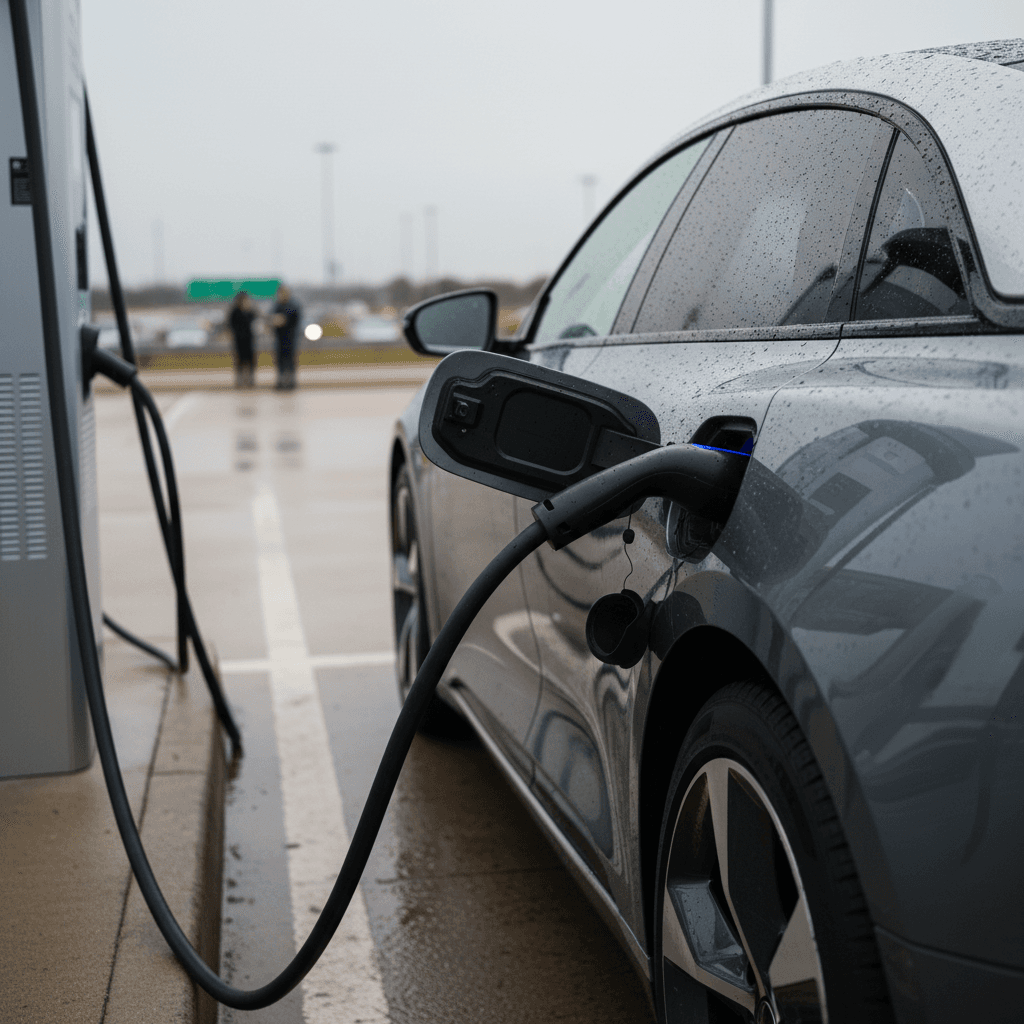
- You now have meaningful fast‑charging coverage on almost every major interstate corridor in the US.
- The Air’s long range lets you skip congested or out‑of‑service stations and aim for better‑situated chargers farther down the road.
- Because you’re charging less often, you can be choosier about where you stop: better food, safer locations, cheaper electricity.
- On used Lucid Airs, Supercharger access is a huge quality‑of‑life upgrade versus 2023–2024 road‑tripping.
Plan for comfort, not heroics
Used Lucid Air buyers: what range you should plan around
If you’re eyeing a used Lucid Air from 2022–2025, the natural question is: how much of that famed range is still there? Early data suggests Lucid’s big packs are holding up well, but real‑world range will depend on how the previous owner treated the car.
Range questions to ask before buying a used Lucid Air
1. What’s the current usable battery capacity?
Ask for a recent battery health or capacity report, ideally from a third‑party scan or a tool like Recharged’s <strong>Recharged Score</strong>. A healthy early Air often retains well over 90% of its original usable capacity after a few years.
2. How was the car charged?
Cars that lived on overnight Level 2 with occasional DC fast charging usually show less degradation than ones that fast‑charged multiple times a day.
3. What wheels and tires are fitted?
Big 21" wheels and sticky tires look fantastic but cost you range. If you care about long legs, hunt for an Air on 19" aero wheels or budget for a second wheel‑and‑tire set.
4. What’s the seller’s honest highway number?
Have the seller describe a typical highway trip: speed, conditions, and how many miles they comfortably drive between charges today. Cross‑check that with EPA figures to sanity‑check their expectations.
5. Has the software been kept current?
Lucid has continually refined efficiency, temperature management, and trip planning over‑the‑air. A car that’s been regularly updated will usually behave better on the open road.
6. Get a third‑party perspective
Consider buying through a marketplace that <strong>specializes in used EVs</strong>. At Recharged, every car includes a Recharged Score battery and range assessment so you’re not gambling on guesswork.
How to maximize your Lucid Air’s real‑world range
The Lucid Air starts with a huge advantage: it’s one of the most efficient EVs ever built. But you can squander that with big wheels, bad planning, and aggressive driving, or you can lean into the physics and make the car feel almost unfair.
Six high‑impact ways to stretch your range
None of these require hypermiling or white‑knuckle driving, just smart habits.
Pick the right wheels
If you’re ordering new, or shopping used, favor 19" aero wheels over 21" show‑pieces. The range difference can easily be 30–40 miles at highway speeds.
Drive the car it wants to be
The Air is happiest at a smooth, fast lope. Setting cruise at 70 instead of 80 mph can add 10–15% to your highway range without feeling slow.
Charge when it’s warm
Plan your longest legs and fastest charges when the battery is fully warm from driving. A hot pack charges faster and wastes less energy warming itself.
Use targeted heat
In winter, lean on seat and steering‑wheel heaters before cranking cabin temperature. They use far less energy and keep you just as comfortable on short trips.
Trust but verify trip planner
Use Lucid’s built‑in route planning, but cross‑check once with an app like A Better Routeplanner until you know how your specific car behaves in your climate.
Avoid deep cycles daily
For battery health, try to keep daily use between 20–80%. Save 0–100% deep discharges for road‑trip days when you’re actually using the full pack.
Set a realistic mental number
FAQ: Lucid Air real‑world range in 2026
Frequently asked questions about Lucid Air range
Bottom line: is the Lucid Air’s real‑world range worth it?
If you strip away the marketing adjectives and look purely at miles‑per‑charge in the real world, the 2026 Lucid Air is still the reference point. It doesn’t just edge rivals; on the highway it can feel like you’ve bolted an extra battery module under the floor. You stop when you want a meal, not when the state of charge orders you off the road.
That said, range is only part of the story. To get the most from a Lucid Air you have to buy (or spec) the right wheels, respect the seasons, and understand that EPA labels are more poetry than prophecy. Do that, and you own an EV that turns road‑trip planning from a game of musical chairs into something closer to classical cruising: long legs, deliberate pauses, and an easy rhythm.
If you’re considering a used Lucid Air, the stakes are higher because you’re inheriting someone else’s habits along with their hardware. That’s where a specialist like Recharged earns its keep, every car we list comes with a Recharged Score battery and range report, transparent pricing, and EV‑savvy support, so the miles you see on delivery day still feel like the miles you read about here.