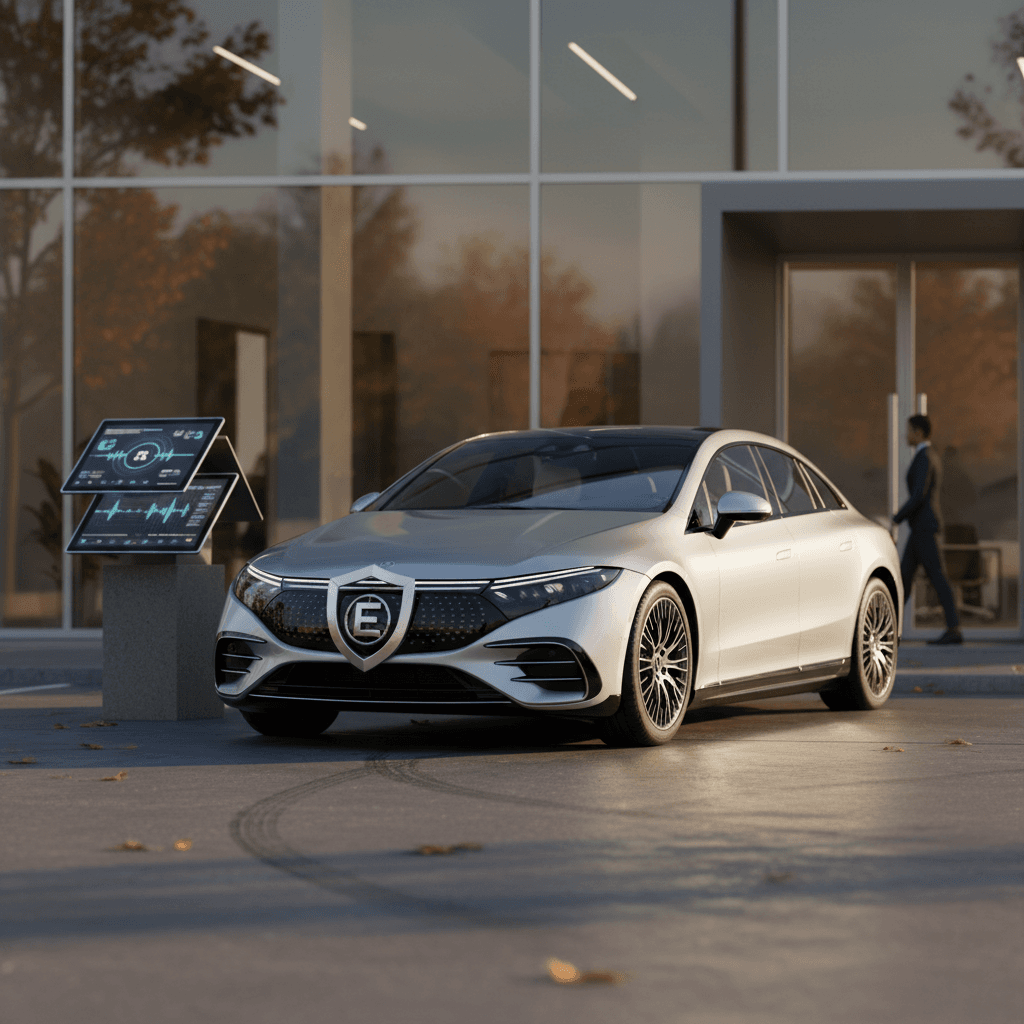
If you’ve started shopping quotes, you’ve already discovered that Mercedes EQS insurance isn’t cheap. Between the six‑figure MSRP, complex EV hardware, and luxury‑car repair bills, insurers price the EQS like the flagship it is. The good news: with the right strategy you can get the cheapest insurance possible for a Mercedes EQS without gutting your coverage.
Quick take
Why Mercedes EQS insurance is so expensive
- High MSRP and repair costs: New EQS sedans and SUVs easily crest $100,000 when optioned, and complex bodywork, sensors, and glass make collision claims expensive.
- EV‑specific repair complexity: Battery packs, high‑voltage components, and aluminum-intensive bodies require specialized shops and more labor time after a crash.
- Advanced driver‑assist tech: Systems like Drive Pilot and a dense sensor suite help avoid crashes but are costly to repair or recalibrate after even minor fender‑benders.
- Luxury‑segment rating: Insurers price the EQS more like an S‑Class than a mainstream EV. Theft risk is lower, but severity of claims tends to be high.
- Newer model history: The EQS is still a relatively new nameplate. With limited long‑term loss data, some carriers build in more margin for uncertainty.
EV insurance trend to know
What Mercedes EQS insurance really costs in 2025
Typical Mercedes EQS insurance numbers in 2025 (U.S.)
Online rate tools and carrier data put a new Mercedes EQS in the ballpark of low‑$3,000s to upper‑$4,000s per year for full coverage for a typical middle‑aged driver with a clean record. That’s more than many gas S‑Class competitors, but not wildly out of line for a large, six‑figure luxury EV. If your first quote is pushing well above that range, it’s a sign you’ve either hit an especially pricey carrier, live in a very expensive state, or have risk factors you can actively work on.
Anchor yourself with a benchmark
Factors that make EQS insurance cheaper or pricier
Biggest levers on your EQS premium
Some you can’t control, others you absolutely can
Where you garage it
Driver profile
Trim & configuration
Coverage limits & deductibles
Annual mileage & use
Credit & insurance history
13 strategies to get the cheapest insurance on a Mercedes EQS
You can’t turn an EQS into a budget econobox, but you can absolutely avoid overpaying. Think in layers: the car you pick, how you insure it, and how you present your risk profile all matter.
High‑impact ways to lower EQS insurance costs
1. Start with the right EQS trim
If you’re still shopping, understand that <strong>cheaper trims are cheaper to insure</strong>. An EQS 450 sedan or SUV generally carries lower premiums than higher‑power or fully loaded models thanks to lower replacement cost and parts pricing.
2. Consider buying lightly used instead of new
Insurance is tied to vehicle value. A 2‑ or 3‑year‑old EQS with a strong <a href="/articles/mercedes-eqs-resale-value-2025">depreciation discount</a> can cost noticeably less to insure than a brand‑new build, while still giving you nearly all the tech and range.
3. Adjust comprehensive and collision deductibles
Raising your comp/collision deductible from $500 to $1,000 can shave a meaningful amount off your premium. Just be honest about how much you could comfortably cover out of pocket after a claim.
4. Right‑size your liability limits (don’t underinsure)
State minimums are rarely enough for a vehicle that started life in six‑figure territory. Many EQS owners target at least <strong>$250,000 / $500,000</strong> bodily injury and strong property‑damage limits, but you can often fine‑tune limits rather than simply maxing everything out.
5. Take advantage of telematics or low‑mileage programs
If your EQS is a weekend or road‑trip car, usage‑based programs or pay‑per‑mile insurance can significantly undercut standard full‑time rates, especially when your annual mileage is under 7,500.
6. Bundle your policies
Multi‑policy and multi‑car discounts still matter a lot at the luxury end. Bundling your home or renters insurance with the same carrier as your EQS can easily deliver 10–20% off combined.
7. Ask how your safety tech is factored in
The EQS is loaded with active safety and crash‑avoidance tech. Some carriers explicitly discount for these systems; others don’t. When you’re price‑shopping, ask how they treat advanced driver‑assist features and compare answers.
8. Shop carriers that understand EVs
Some insurers still treat EVs as exotic outliers. Others have built specific pricing models and even <strong>EV‑friendly repair networks</strong>. Online‑first and newer carriers sometimes rate EVs more competitively than legacy brands.
9. Clean up tickets before renewal
If you have minor violations close to aging off your record, time your carrier switch or renewal for after those dates when possible. A clean record is one of the biggest "cheap EQS insurance" multipliers.
10. Re‑shop after the first policy term
First‑year pricing on a new model can be conservative. After 12 months of claim data, some carriers adjust downward. Make it a habit to re‑shop your EQS insurance at every renewal, not just when you buy the car.
11. Verify how aftermarket wheels or wraps are treated
Visual customization can raise both the car’s value and repair complexity. If you’re trying to keep premiums low, keep mods simple and make sure your insurer knows exactly what’s on the car so there are no unpleasant surprises after a claim.
12. Use higher deductibles only where claims are rare
Many EQS owners raise <strong>comprehensive</strong> deductibles (hail, glass, theft) less than <strong>collision</strong> deductibles (you hit something). Think about your local risks, hail states and dense cities might demand different strategies.
13. Don’t forget old‑fashioned discounts
Defensive‑driving courses, good‑student discounts for younger drivers on the policy, and professional/affinity group rates still stack. Ask every insurer explicitly which discounts they applied and which you might still qualify for.
When “cheap” and “safe” align
Picking coverage levels that still protect an EQS
Coverage you probably shouldn’t skimp on
- Liability coverage: With a luxury car, you have more to lose in a lawsuit. Cutting liability to the state minimums to save $200 a year is almost never worth it.
- Uninsured/underinsured motorist: EQS repairs are expensive. If a minimally insured driver hits you, this is what keeps you from eating the difference.
- Gap / loan‑lease coverage: If you’re financing or leasing a new EQS with low down, consider gap until depreciation levels off and you’re not upside‑down.
Places you can responsibly optimize
- Deductibles: As mentioned, a $1,000 deductible instead of $500 makes sense if you have that cash reserve and a low crash risk.
- Optional bells and whistles: Roadside assistance, rental reimbursement, and OEM‑parts riders are nice, but some owners already get similar perks from Mercedes or credit cards.
- Use‑case alignment: If your EQS is a second car that rarely sees rush‑hour traffic, make sure your insurer is rating it accordingly, not as a daily city workhorse.
Don’t chase price by dropping full coverage too soon
Why a used Mercedes EQS can be cheaper to insure
Insurance companies care about what it costs to repair or replace your car today, not what it cost new. That’s where the EQS’s notable depreciation becomes a back‑door gift to the second owner.
New vs. used Mercedes EQS: how insurance can shift
Illustrative ranges for many U.S. drivers with clean records; your exact numbers will vary by state and carrier.
| Ownership scenario | Vehicle value context | Typical insurance impact | What to watch |
|---|---|---|---|
| Brand‑new EQS 450 sedan, financed | Highest MSRP, high loan balance, limited real‑world data | Highest premiums; lender may require low deductibles and high coverage | Harder to tweak coverage without running into finance‑company requirements. |
| 2‑ to 3‑year‑old EQS bought CPO or used | Large chunk of depreciation already taken, lower replacement cost | Premiums often 10–20% lower than a comparable new model | Still expensive to repair; don’t underinsure just because you bought used. |
| Older, paid‑off EQS with cash buyer | No lienholder, significantly reduced market value | Most flexibility on deductibles and optional coverages | Tempting to drop full coverage too early, make sure you could really walk away from the car’s value. |
Depreciation and lower financed amounts can work in your favor on a used EQS.

Present a clean vehicle story
How Recharged helps lower your total EQS ownership costs
Insurance is only one piece of EQS ownership math. Where you really win is by combining a competitive premium with the right car at the right price and with the right battery health. That’s precisely where Recharged focuses.
Buying a Mercedes EQS through Recharged
Tools to keep your EQS affordable, not just impressive
Recharged Score battery health
Fair market pricing
Flexible ways to buy and sell
Ready to find your next EV?
Browse VehiclesPair financing with smarter insurance
FAQ: Mercedes EQS cheapest insurance questions
Frequently asked questions about cheap Mercedes EQS insurance
Bottom line: getting truly cheap EQS insurance
You’re never going to insure a Mercedes EQS for Corolla money, and that’s okay. The goal isn’t to beat physics or pricing tables; it’s to avoid overpaying for the risk you actually present. Start with the right car (a sensibly optioned, possibly used EQS), layer in strong but calibrated coverage, then aggressively shop carriers and discounts. If you approach those steps methodically, “Mercedes EQS cheapest insurance” stops being a contradiction and becomes a realistic target.
If you’re still deciding which EQS is right for you, or whether a used example makes more sense than new, Recharged can help you see the full ownership picture, from battery health and resale value to monthly payment and insurance strategy, before you ever sign a contract.