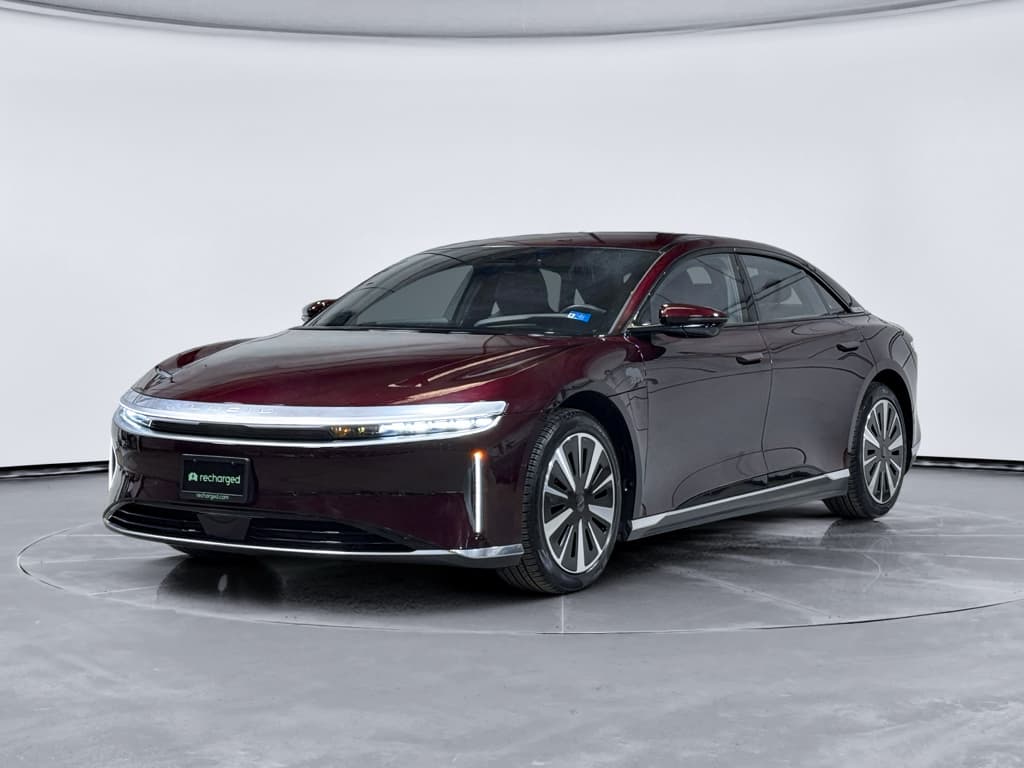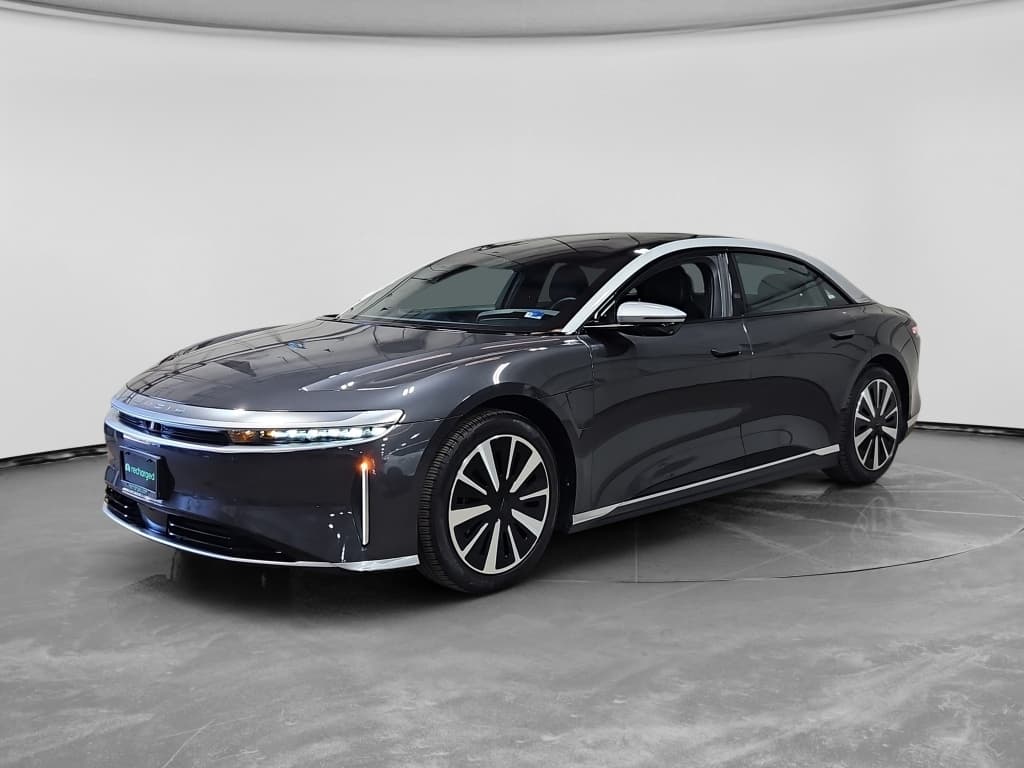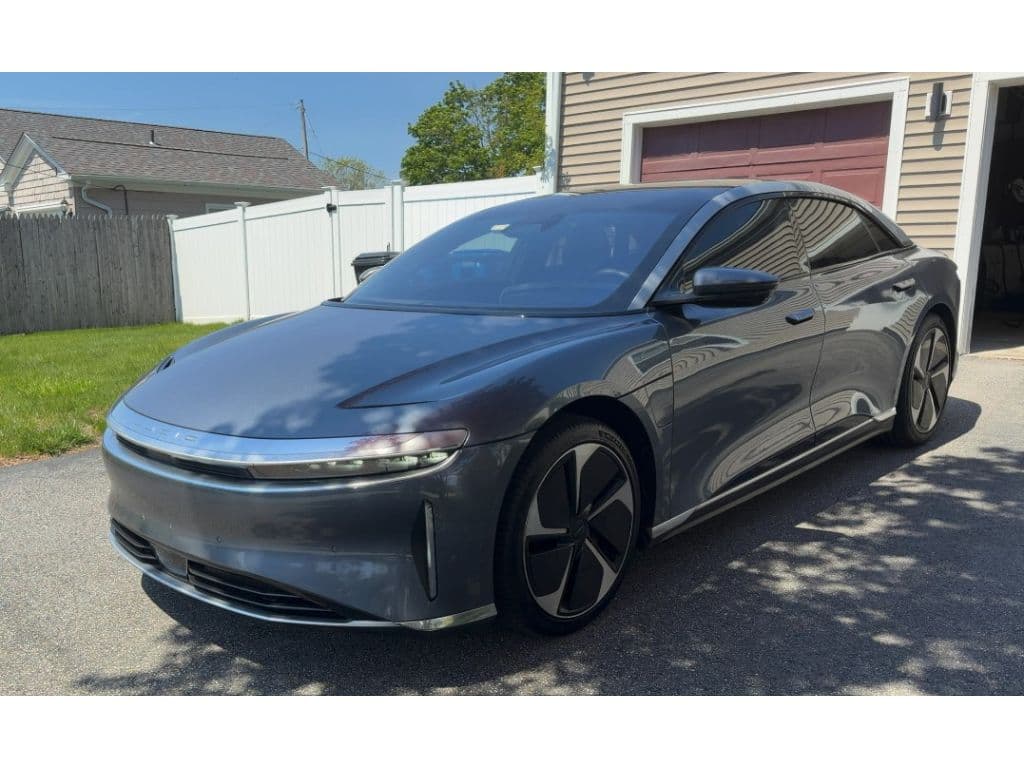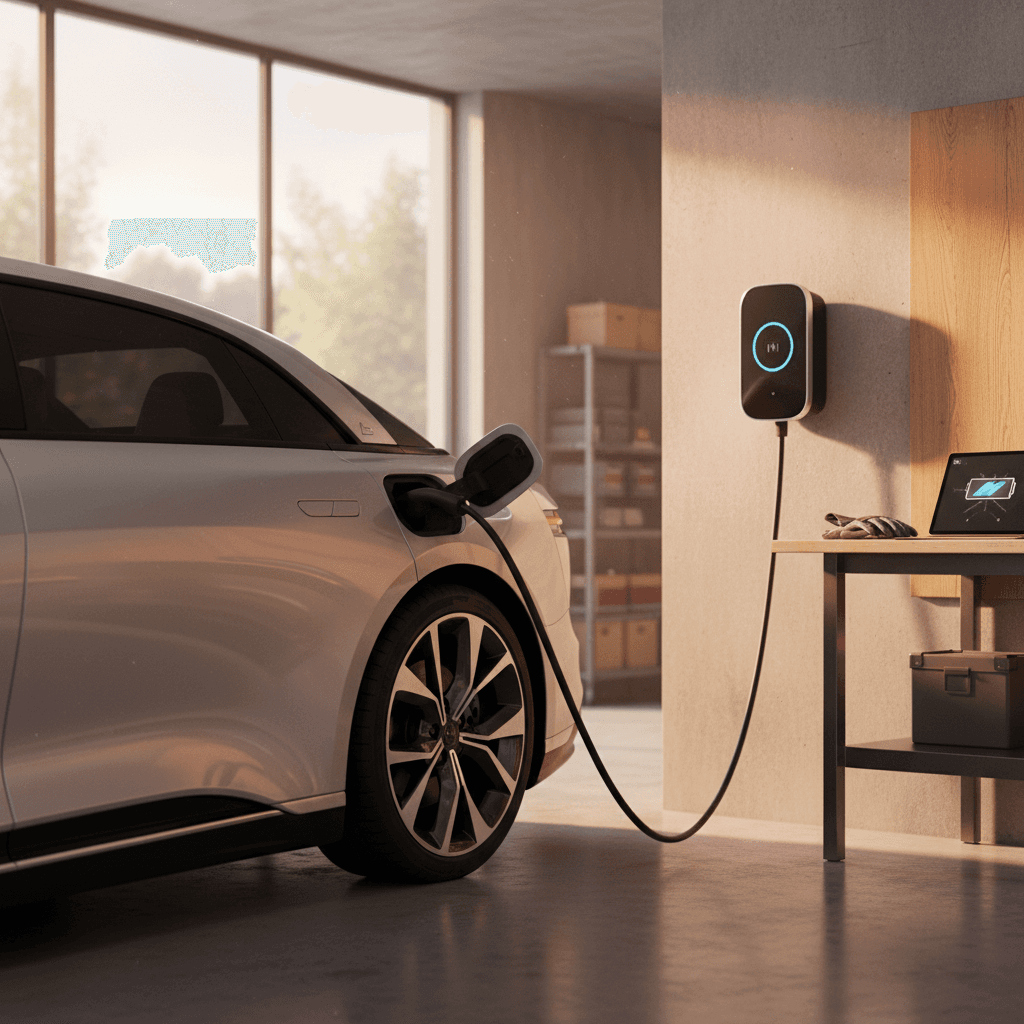
If you’ve just bought a Lucid Air, or you’re cross‑shopping one on Recharged, your biggest day‑to‑day decision isn’t CCS vs Tesla Superchargers. It’s what to put on your garage wall. With a huge battery and up to 19.2 kW of onboard AC charging, the Lucid Air can use everything from a simple 32A box to an 80A powerhouse. This guide breaks down the best home charger options for the Lucid Air, what you actually gain from 80 amps, and how to avoid overpaying for installation you’ll never use.
Why home charging matters more than public fast charging
Lucid Air home charging basics
Every Lucid Air uses the CCS1 combo port for DC fast charging and a standard J1772 inlet for AC Level 2 charging. Underneath that port is one of the most capable onboard chargers in the market: up to 19.2 kW (240 V, 80 A) on many trims. That means, at least on paper, the car can take advantage of the most powerful residential Level 2 chargers available.
- Level 1 (120 V wall outlet): ~2–4 miles of range per hour – fine for emergencies, not ideal for a Lucid Air as your primary solution.
- Level 2 (240 V, 30–80 A): ~25–75+ miles of range per hour, depending on amperage – this is what you want for daily home charging.
- DC fast charging (public): Great for road trips, but far more expensive and harder on the battery than regular home Level 2 charging.
Check what came with your Lucid
How much charging power does a Lucid Air actually need?
What different home chargers look like in practice
The average US driver covers about 30–40 miles per day. A 40A Level 2 charger can replace that in roughly an hour. Even if you routinely do 80–100 miles per day, a 40–48A charger will comfortably refill your Lucid overnight. The 80A capability is impressive, but it’s overkill for most households unless the car regularly arrives nearly empty and needs to leave again in a few hours.
Quick rule of thumb
Lucid Connected Home Charging Station: pros, cons, and who it’s for
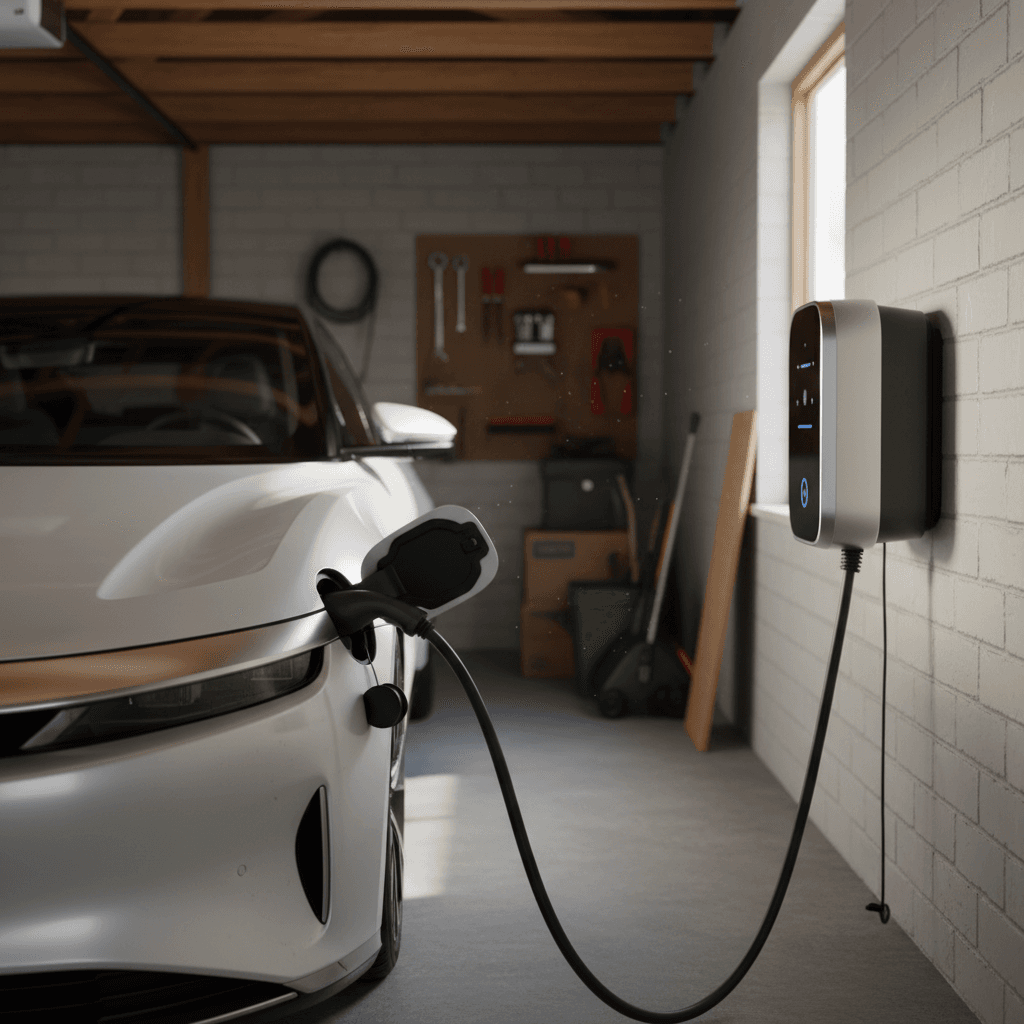
Lucid sells its own wallbox, the Lucid Connected Home Charging Station, marketed as an 80A, Wi‑Fi‑enabled Level 2 charger designed specifically for the Air. It’s a sleek unit that matches the car’s design language and, properly installed, can deliver the full 19.2 kW that the Air can accept.
Lucid Connected Home Charging Station at a glance
Great hardware, if you can actually use what it offers
Key advantages
- Up to 80A output when hard‑wired on a 100A circuit, unlocking the Air’s full 19.2 kW AC capability.
- Brand‑matched design and app integration with Lucid’s ecosystem.
- Good for future vehicle‑to‑home or advanced Lucid features if they’re activated later.
Tradeoffs to consider
- Requires a dedicated 100A breaker and heavy‑gauge wiring, often the costliest part of the install.
- Not every home has panel capacity; upgrades can run into thousands of dollars.
- Real‑world benefit over a 48A charger is often minimal for typical overnight charging.
Don’t force 80A onto an undersized electrical service
Best third‑party home chargers for the Lucid Air
You don’t have to buy Lucid’s own wallbox to get excellent Lucid Air home charging. Any quality J1772 Level 2 charger that can supply 40–48A on a 240 V circuit will work well. Here’s how the Lucid unit compares conceptually to the most common third‑party options you’ll see recommended for long‑range EVs.
Lucid Air home charger types compared
How the Lucid wallbox stacks up against common third‑party Level 2 options.
| Charger type | Typical max amps | Circuit requirement | Approx. power to Lucid Air | Best for |
|---|---|---|---|---|
| Lucid Connected Home Charging Station | 80A (adjustable) | 100A hard‑wired | Up to 19.2 kW | High‑mileage drivers, frequent same‑day turnarounds, future Lucid features |
| Premium 48A smart charger (ChargePoint, Emporia, etc.) | 48A | 60A breaker | ~11.5 kW | Most Lucid Air owners who want app control and load management |
| Mid‑range 40A charger | 40A | 50A breaker | ~9.6 kW | Owners with moderate daily miles and limited panel capacity |
| Lucid Mobile Charging Cable on NEMA 14‑50 | 32–40A (model‑dependent) | 50A NEMA 14‑50 outlet | ~7.7–9.6 kW | Renters or those wanting flexibility to take the charger on the road |
Exact prices vary, but this comparison shows what you actually gain or give up with each route.
The sweet spot for most Lucid Air owners
Smart Wi‑Fi chargers
- Let you schedule charging for off‑peak electric rates.
- Many can share power with another EV or appliance automatically.
- Some integrate with solar or home‑energy monitoring.
- Preferred if your utility has time‑of‑use pricing or you have multiple EVs.
“Dumb” but durable chargers
- Often cheaper and simpler to set up.
- Rely on the Lucid’s onboard scheduling instead of an app.
- Great if you just want to plug in and forget it.
- Paired with Lucid’s scheduled charging, they’re still very efficient.
80 amps vs 40–48 amps: which is really “best”?
It’s tempting to assume that because the Lucid Air can accept 80A AC, the “best” home charger must also be 80A. But from a practical and economic perspective, that’s not always true. The right answer depends on how you drive, how long the car sits at home, and what your house’s electrical system can safely support.
When 80A makes sense, and when it doesn’t
Think in use cases, not just specs
You frequently arrive nearly empty
Your car sits overnight
Your panel is constrained
Run your own back‑of‑the‑envelope
Installation costs and electrical requirements
With any Lucid Air home‑charging setup, the installation often costs more than the charger itself. That’s especially true if you chase the full 80A capability. Understanding the basics will help you have a more productive conversation with your electrician, and avoid surprises.
Home‑charging installation checklist for Lucid Air owners
1. Check your main service size
Look at your electrical panel label or ask an electrician whether you have 100A, 150A, 200A or more. An 80A EV charger typically needs a 100A breaker, which is much easier to accommodate on a 200A service than a 100A one.
2. Pick a realistic charger amperage
Instead of defaulting to 80A, ask what breaker size and wire your panel can support without a costly upgrade. For many homes, a 50A or 60A circuit (supporting 40–48A charging) is the “just right” option.
3. Decide on hard‑wired vs NEMA 14‑50
Hard‑wiring is required for many 80A units and can be slightly more efficient. A NEMA 14‑50 outlet offers flexibility, you can unplug the charger or use a mobile EVSE if you move.
4. Plan charger placement
Aim for a spot where the cable comfortably reaches the Lucid Air’s charge port on the driver’s side rear quarter panel, even if you occasionally park nose‑in.
5. Get multiple bids
Quotes for the same job can vary dramatically. Ask each electrician to price both a 50–60A circuit and, if feasible, a 100A circuit so you can compare cost vs benefit.
Factor in permits and code requirements
Future‑proofing: NACS, Tesla access, and bidirectional power
Lucid Airs sold today still use the CCS/J1772 port, but Lucid now offers a NACS adapter for Tesla Supercharger access. Meanwhile, Lucid has publicly talked about bidirectional capabilities like RangeXchange and potential vehicle‑to‑home features. Those trends affect what “future‑proof” means for your home charger, even though they don’t change the basic Level 2 hardware you install today.
Tesla NACS and Supercharger access
- Your home Level 2 charger still uses J1772, even if you charge at Tesla Superchargers on the road via a NACS adapter.
- A quality J1772 wallbox will remain useful even as public networks move toward NACS, thanks to adapters and Lucid’s port design.
- There’s no need to wait for a NACS‑port Lucid to invest in a solid home charger.
Bidirectional and vehicle‑to‑home potential
- The Lucid Air’s 19.2 kW onboard charger and AC hardware support future bidirectional features.
- True vehicle‑to‑home will likely require a Lucid‑approved ecosystem: specific hardware, transfer switches, and software.
- For now, choose a safe, code‑compliant Level 2 charger; don’t overpay for speculative V2H promises from third parties.
What about solar homes?
Step‑by‑step: choose the right home charger for your Lucid Air
Different paths for different Lucid Air owners
Daily commuter (30–70 miles/day)
Install a 40A or 48A Level 2 charger on a 50–60A circuit.
Use the Lucid app or charger app to schedule off‑peak charging.
Skip the expense of 80A hardware unless you foresee much heavier use.
High‑mileage driver or frequent road‑tripper
Ask an electrician whether your panel can support a 100A circuit safely.
Compare pricing for Lucid’s 80A wallbox vs a 48A smart charger + more DC fast charging on trips.
If 80A install costs are extreme, a 48A unit plus occasional DCFC will usually pencil out better.
Renter or apartment dweller
Focus on a 32–40A portable EVSE plus landlord‑approved NEMA 14‑50 or hard‑wired circuit where possible.
Pair home charging with public DC fast charging near work or along your commute.
Confirm any HOA or building rules before you buy hardware.
Used Lucid Air shopper
Ask the seller if a Level 2 charger is included or already installed at home.
Use the <strong>Recharged Score</strong> on a used Lucid Air listing to understand battery health; then size your home charger for your real‑world range needs.
Budget separately for charger hardware and installation when comparing vehicles.
If you’re shopping a used Lucid Air through Recharged, our EV‑specialist advisors can help you translate your daily mileage, panel capacity, and driving patterns into a clear home‑charging plan. Because we see charging behavior across many different EV households, we can sanity‑check whether that 80A dream setup will actually pay off, or if a simpler 40–48A solution is smarter for your situation.
FAQs: Lucid Air home charging and best chargers
Frequently asked questions
Bringing it all together
The Lucid Air’s 19.2 kW onboard charger and big battery make it one of the most capable EVs on the market, but that doesn’t mean you have to max everything out at home. For the vast majority of owners, the “best” home charger for a Lucid Air is a well‑installed 40–48A Level 2 unit on a 50–60A circuit, with Lucid’s own 80A wallbox reserved for the rare household that truly needs rapid same‑day turnarounds and has the electrical capacity to match.
If you’re considering a used Lucid Air, or comparing it with other long‑range EVs, Recharged can help you look at the whole picture: battery health, realistic charging speeds, installation costs, and how a particular car will fit into your home’s electrical reality. Use the Recharged Score report and EV‑specialist support to choose the right car, and the right charger, so your daily routine feels simple, predictable, and fully powered.