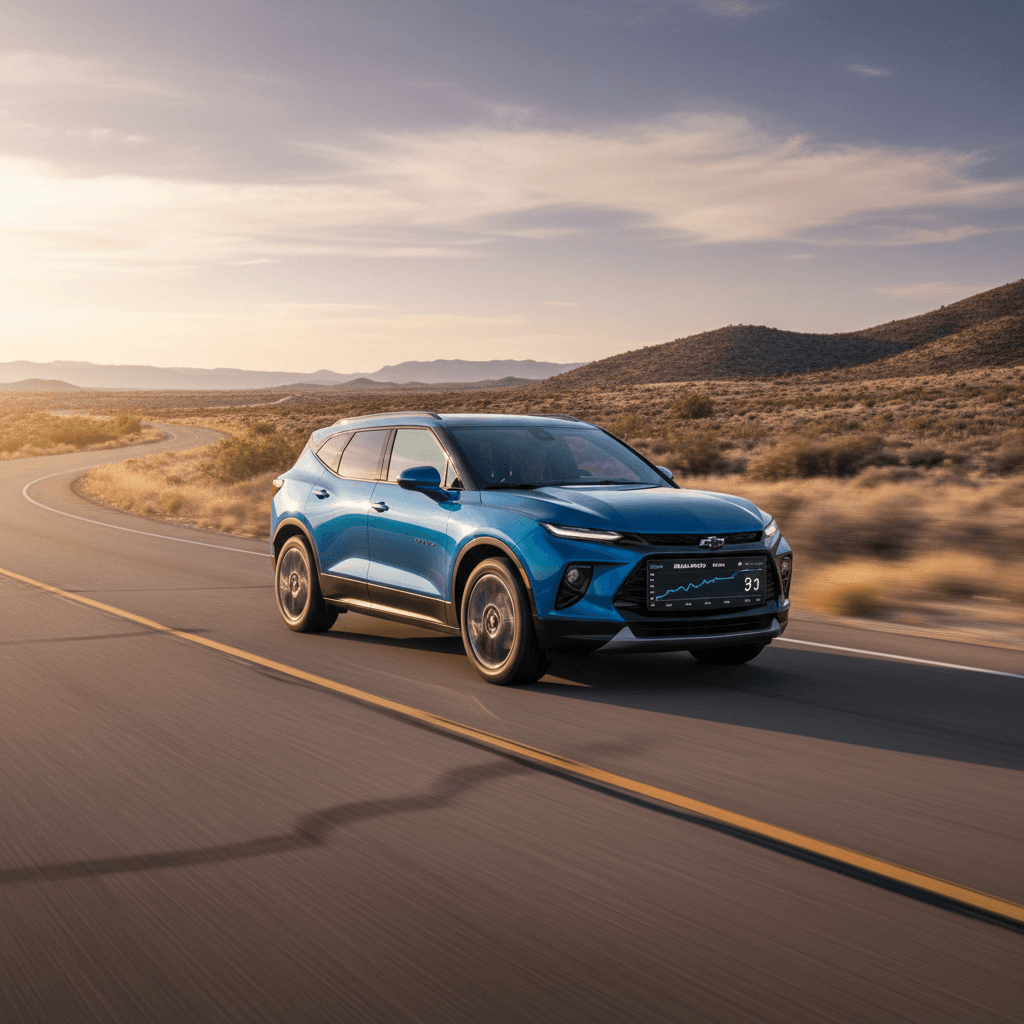
If you’re looking up a 2024 Chevy Blazer EV range test, you’re asking the right question. On paper, Chevy’s Ultium-powered midsize SUV offers over 300 miles of range in some trims, but what you actually see in the real world depends heavily on trim, driving style, and conditions. For anyone considering a new or used Blazer EV, understanding that gap between EPA and reality is the difference between a relaxed road trip and white-knuckle range anxiety.
Key takeaway up front
Why the 2024 Blazer EV’s Range Matters More Than the Sticker Number
On a spec sheet, the Blazer EV looks competitive. The RS rear-wheel-drive model pairs a large ~102 kWh pack with an EPA rating north of 320 miles in 2024 and roughly 334 miles for 2025, while all-wheel-drive versions with the smaller 85 kWh pack sit in the high-200-mile range. Those are solid numbers for a midsize SUV, and Chevy clearly benchmarked rivals like the Mustang Mach-E and Hyundai Ioniq 5.
But EPA range is a controlled test, not a promise. Real-world 2024 Chevy Blazer EV range tests, whether done by journalists on a 70–75 mph highway loop or by owners commuting and road-tripping, inevitably come in below the window sticker. The goal isn’t to catch Chevy out; it’s to understand what the Blazer EV actually does when you load it with people, set the cruise control, and turn on the climate system.
EPA vs. your life
Battery, Trims, and Official EPA Range Explained
Before you can make sense of any 2024 Blazer EV range test, you have to know which version you’re looking at. Chevy has already cycled through several trims and powertrains in just a couple of model years, which complicates comparisons and used buying decisions.
2024–2025 Chevy Blazer EV: Battery and EPA Range by Trim
Approximate EPA ratings for early Blazer EV trims. Always verify the specific configuration you’re shopping.
| Model year & trim | Driven wheels | Battery (usable est.) | EPA rated range |
|---|---|---|---|
| 2024 Blazer EV RS | RWD | ~98–102 kWh | ≈324 miles |
| 2025 Blazer EV RS | RWD | ~98–102 kWh | 334 miles |
| 2024–2025 Blazer EV LT | AWD | ~80–85 kWh | ≈279–283 miles |
| 2024–2025 Blazer EV RS | AWD | ~80–85 kWh | ≈279–283 miles |
| 2025+ Blazer EV LT | FWD | ~80–85 kWh | EPA pending when launched; expect just over 300 miles based on pack size |
The RS RWD is the range leader, while AWD trims trade range for traction.
A note on battery size
Core 2024–2025 Blazer EV Range & Charging Specs
How to Think About a 2024 Chevy Blazer EV Range Test
Most public “range tests” of the 2024 Blazer EV fall into two broad buckets: controlled media tests on fixed loops and organic owner reports. Both matter, but you have to read them with a filter.
Two Common Types of Blazer EV Range Tests
Both are useful if you know what you’re looking at.
Instrumented media tests
Car magazines and YouTube channels often:
- Drive a fixed highway loop, usually 65–75 mph.
- Start at 100% and stop near 0–5%.
- Use warmer-weather conditions when possible.
- Record energy consumption (kWh/100 mi) and actual miles traveled.
These tests are good for apples-to-apples comparisons across EVs.
Owner-reported tests
Real owners share data from:
- Daily commutes with mixed city/highway driving.
- Long road trips with elevation and weather changes.
- Winter drives with heat on and loaded cargo.
More chaotic, but they reveal how the Blazer behaves in real life.
On the Ultium platform, we’ve seen a consistent pattern emerge across GM’s SUVs: they tend to match or come reasonably close to EPA range in fair-weather, mixed-speed driving, but drop off more sharply at U.S. interstate speeds than the sticker suggests. The Blazer EV is no exception. Its big battery and relatively tall crossover body make it efficient for its size, but not a hypermiler.
How to read a result
Real-World Blazer EV Range: City vs Highway
We don’t have a single canonical “official” 2024 Blazer EV range test that covers every trim and condition. Instead, we have a growing stack of media drives and owner trips that line up around a few realistic benchmarks. Here’s how to translate the EPA label into something closer to what you’ll see day-to-day.
City & mixed driving
- RS RWD (EPA 324–334 mi): In milder weather (50–80°F), expect roughly 260–290 miles in mixed use if you’re not driving aggressively.
- LT/RS AWD (EPA ≈279–283 mi): Roughly 220–250 miles in the same conditions.
- Why it’s closer to EPA: Stop-and-go driving lets the Blazer EV’s regen do its job, and aerodynamic drag is lower at moderate speeds.
For many suburban commuters, this is the scenario you’ll see most often, and where the Blazer feels truly comfortable.
Steady highway driving (70–75 mph)
- RS RWD: Plan on ~230–260 miles between 100% and a 10% buffer.
- LT/RS AWD: Roughly 190–220 miles over the same SOC window.
- At 80+ mph: Range can fall another 10–15%, especially with headwinds.
Ultium SUVs carry a lot of frontal area, so aerodynamic losses ramp up quickly at U.S. interstate speeds.
Highway speeds are brutal
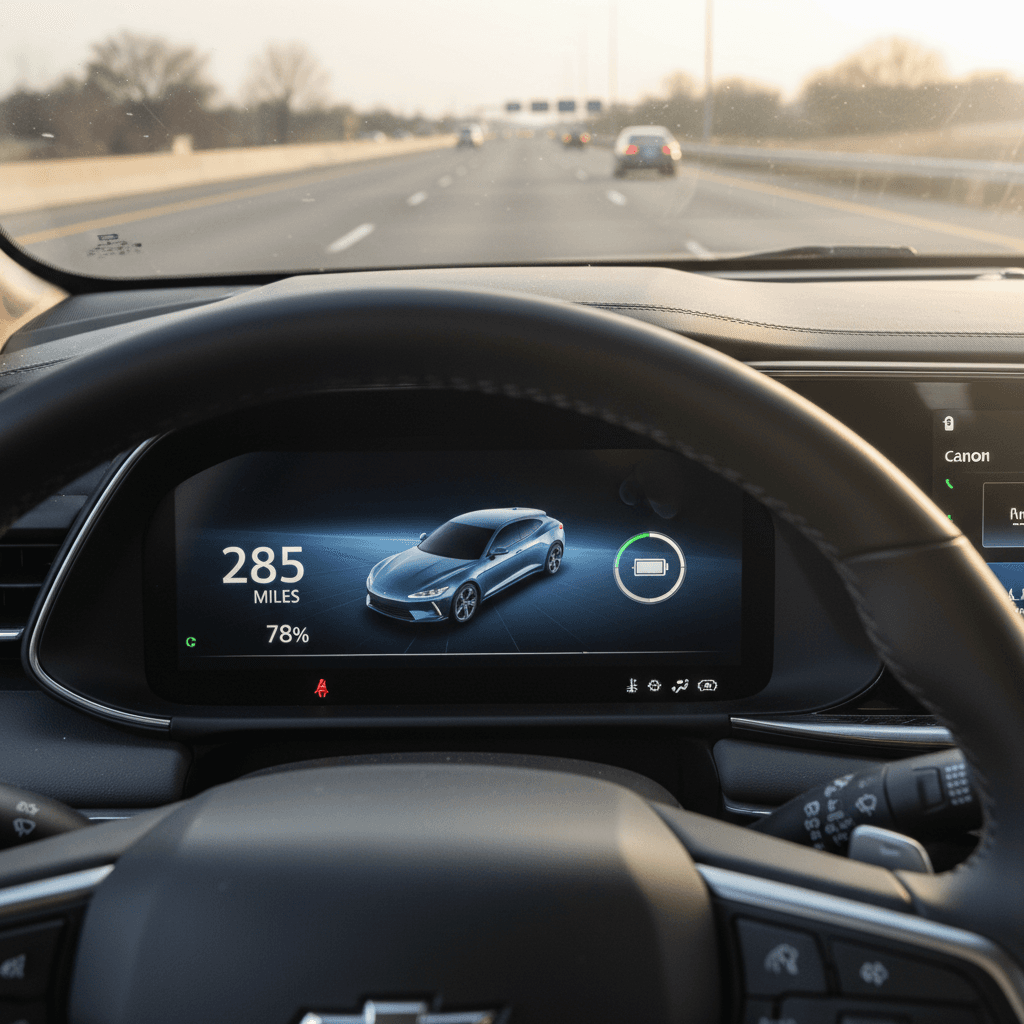
The Hidden Range Killers: What Shrinks Your Blazer EV’s Range
The 2024 Blazer EV isn’t unusually fragile on range, but like any EV, a few factors can take a big bite out of what the EPA says you “should” get. Understanding these will make any range test, and your daily driving, much more predictable.
Main Range Killers for the Blazer EV
All EVs are affected, but big crossovers feel it more.
Cold weather
Below ~40°F, the Blazer EV’s battery chemistry is less efficient and cabin heating is expensive.
- Expect 20–30% range loss in real winter.
- Precondition while plugged in whenever possible.
Elevation & headwinds
Climbing long grades or driving into a stiff headwind can spike energy use.
- Mountain passes can easily add 10–20% energy consumption.
- You recover some going downhill, but not all.
Speed & aero drag
The Blazer EV’s SUV shape and weight mean aero drag ramps fast.
- At 75–80 mph, plan on a noticeable efficiency hit.
- Roof boxes and racks make it worse.
Payload & towing
Passengers, cargo, and trailers all increase the energy required.
- Full cabin + luggage will trim range.
- Towing (up to 3,500 lbs on some trims) can cut range by ~40–50%.
HVAC usage
Heating soaks the most energy; A/C is a smaller but still real load.
- Seat and wheel heaters are more efficient than cabin heat.
- Auto climate often balances comfort and efficiency well.
Tires & wheels
RS models wear wider, stickier tires and larger wheels.
- Great for grip, but they hurt efficiency vs narrower LT tires.
- Aftermarket wheels can quietly cost you 10–15 miles.
Don’t run it to 0% on purpose
How to Run Your Own 2024 Blazer EV Range Test Safely
If you own, or are test-driving, a Blazer EV, the most relevant range test is the one you run on your actual routes. Here’s a structured way to do that without abusing the battery or stranding yourself.
DIY Blazer EV Range Test: Step-by-Step
1. Pick a realistic route
Choose a loop or out-and-back that matches your real use: a highway segment at your normal cruising speed, a commute, or a mixed route. Ideally, include convenient charging near your endpoint.
2. Start from a known state of charge
Begin at 80–90% rather than 100% to mimic daily life and reduce time at high SOC. Note your starting percent, displayed range, and odo reading.
3. Use a consistent driving style
Drive as you normally would for that scenario, if you usually set cruise at 73 mph, do that. Avoid hypermiling unless you want best-case numbers.
4. Track temperature and conditions
Make a simple note: outside temperature, wind (calm, headwind, crosswind), whether HVAC is on, and how many passengers/cargo you have. This context explains a lot.
5. Finish with a safe buffer
Aim to end your test with 10–20% remaining. Record ending SOC, odo, and displayed energy consumption (mi/kWh or kWh/100 mi).
6. Convert to practical range
Take miles driven and divide by the percent of battery used. For example, 160 miles using 60% SOC suggests ~267 miles from 100% to 0%, then subtract 10% as a comfort buffer for daily planning.
Shortcut: use energy, not just SOC
Maximizing Range in a New or Used Blazer EV
The Blazer EV’s large battery gives you headroom, but there’s no sense wasting it. A few habits and settings can move you from the lower end of the real-world range spectrum to the upper end without turning every drive into a science experiment.
- Use the most efficient drive mode for routine trips, avoid sportier settings unless you really need the response.
- Set a reasonable highway cruise (70 instead of 78 mph can be worth dozens of miles on a big pack).
- Precondition the cabin and battery while plugged in during very hot or cold days.
- Favor seat and steering wheel heaters over blasting cabin heat in winter.
- Keep tires at the recommended pressures; underinflation quietly saps range and adds wear.
- If you’re buying used, prefer cars on stock wheels and tires unless the seller can show range-friendly replacements.
What “good” looks like
Shopping for a Used Blazer EV? How Recharged Helps
Because the Blazer EV launched into a rapidly shifting market, and Chevy has already tweaked trims, pricing, and even discontinued certain configurations, used examples will vary widely. That makes consistent, independent data especially important if you’re trying to judge whether a particular Blazer EV will deliver the range you need over the long haul.
Battery health quantified
Every Blazer EV sold through Recharged comes with a Recharged Score Report. That report includes:
- Verified battery health based on real diagnostic data, not just a guess from the dash.
- Charging history patterns that can hint at pack stress (for example, constant DC fast charging).
- Insights into how much real-world range you should expect today, not when the car was new.
Range expectations and cost clarity
Beyond battery health, Recharged gives you:
- Fair market pricing backed by EV-specific comps.
- Guidance on how different Blazer EV trims (RS RWD vs LT/RS AWD) will fit your use case.
- Financing, trade-in, and nationwide delivery, so you can shop by range needs first, not just ZIP code.
If you want, our EV specialists can even walk you through how your daily driving and road-trip patterns line up with each Blazer EV on our marketplace.
Talk through your range needs
2024 Chevy Blazer EV Range Test: FAQ
Frequently Asked Questions
The 2024 Chevy Blazer EV sits in that interesting middle ground: it has enough battery to be genuinely useful across a wide range of driving patterns, but not so much that you can ignore fundamentals like speed, weather, and charging habits. If you treat the EPA label as a ceiling, not a guarantee, and you use even a few of the strategies above, the Blazer EV delivers a confident, predictable ownership experience. And if you’re shopping the used market, pairing that knowledge with verified battery data, like the Recharged Score Report, turns your next range test from a leap of faith into an informed decision.