If you assume every electric car is whisper quiet, your first highway run in the wrong EV will cure you of that idea in about ten seconds. Some models are beautifully hushed; others serve up a steady roar of wind and tire noise, plus a chorus of beeps and synthetic sounds. This guide ranks the **loudest electric cars** in the ways that actually matter day to day, and shows you how to pick the right noise level when you’re shopping, especially for a used EV.
Loud doesn’t always mean bad
Why some electric cars feel loud
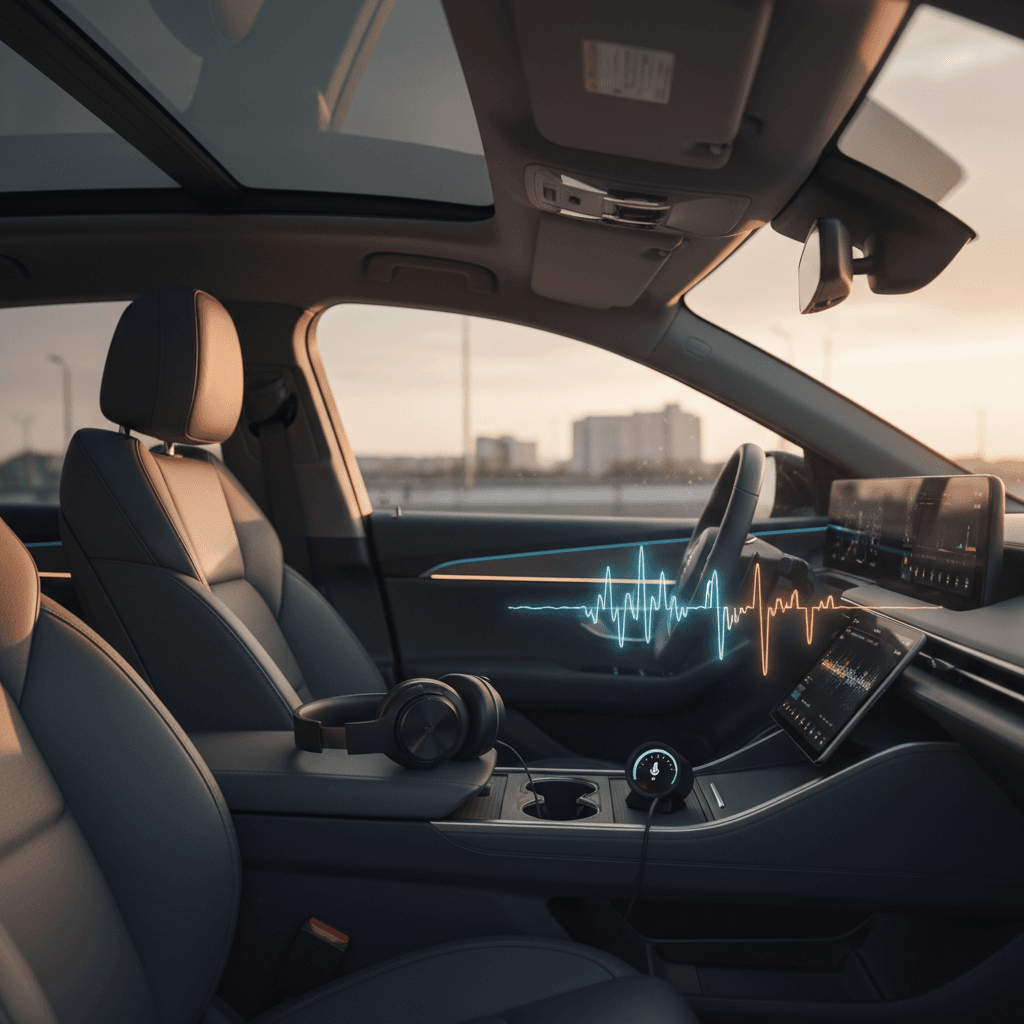
When you remove an engine and exhaust, you also remove the biggest “masking noise” you’re used to. In an EV, what’s left gets pushed to the foreground: **tire roar**, **wind noise** around mirrors and pillars, HVAC fans, and a growing layer of digital beeps and chimes. On models with big wheels and stiff suspensions, that soundscape can feel surprisingly harsh, especially above 60–70 mph.
- Tires – Wide performance tires and aggressive tread patterns can add a constant low-frequency hum, especially on concrete.
- Aerodynamics and door seals – Frameless doors, upright SUVs, and big mirrors create more wind hiss around 65–75 mph.
- Cabin insulation – Budget EVs often skip the expensive sound-deadening that makes luxury models feel like rolling studios.
- Artificial sounds – Low-speed pedestrian warning systems and reverse alerts are required on newer EVs, and some brands set them much louder than others.
- Chimes and alerts – Lane-keep beeps, parking sensors, seatbelt reminders and speed warnings all add to the noise floor.
Regulators want your EV to make noise
How we ranked the “loudest” electric cars
Ask ten different publications for the loudest electric cars and you’ll get ten different answers, because not everyone measures noise the same way. Rather than pretend there’s one perfect number, this ranking leans on three pillars that line up with what you’ll actually hear from the driver’s seat.
Three ways an EV can be "loud"
So instead of a single master spreadsheet, you’ll see **three different “loudest” rankings** below: 1. EVs widely reported as noisy inside at highway speeds. 2. EVs known for obnoxious external warning sounds in town. 3. Comparisons where a reasonably quiet EV makes a louder one stand out instantly on a back-to-back drive.
Loudest electric cars ranked by real‑world experience
Here’s where expectations collide with reality. Many shoppers expect EVs to feel like rolling libraries. Then they merge onto the freeway in a budget crossover on 20-inch wheels and discover that silence is very much a luxury feature.
1. Loudest-feeling EVs at highway speeds
Based on tested cabin noise plus owner complaints about wind and tire roar
Tesla Model 3 & Model Y (earlier years)
Plenty of owners love their Teslas, but when they step into a Hyundai Ioniq 5, Kia EV6, BMW i4, or VW ID.4, they often use the same phrase: "I can’t believe how much quieter this is". The original Model 3 and early Model Y are notorious for wind hiss around the mirrors and pillars, plus coarse road noise over broken pavement.
Later refreshes added better glass and sealing, which helps, but if you’re coming from a Lexus or quiet ICE sedan, Tesla’s minimalist cabin will still sound busy.
Sporty crossovers on big wheels
Think dual-motor performance crossovers with 19–21 inch wheels. The big contact patch that makes these EVs stick in corners also sends a lot of texture into the cabin. Some trims of mainstream EV crossovers, the kind tuned for style more than serenity, sound louder inside than their gasoline siblings because there’s no engine to drown out the tires.
If you see low-profile tires and a firm ride, assume more roar on rough freeways.
Entry-level compact EVs
Affordable hatchbacks and smaller crossovers often skip expensive sound-deadening materials and fancy acoustic glass. At city speeds they’re pleasantly quiet, but at 70 mph you’ll hear wind around the A-pillars and a coarse hum from the rear tires.
The upside: they can feel lively and connected; the downside: you might not want to take three states’ worth of interstate in one shot.
How to feel the difference in five minutes
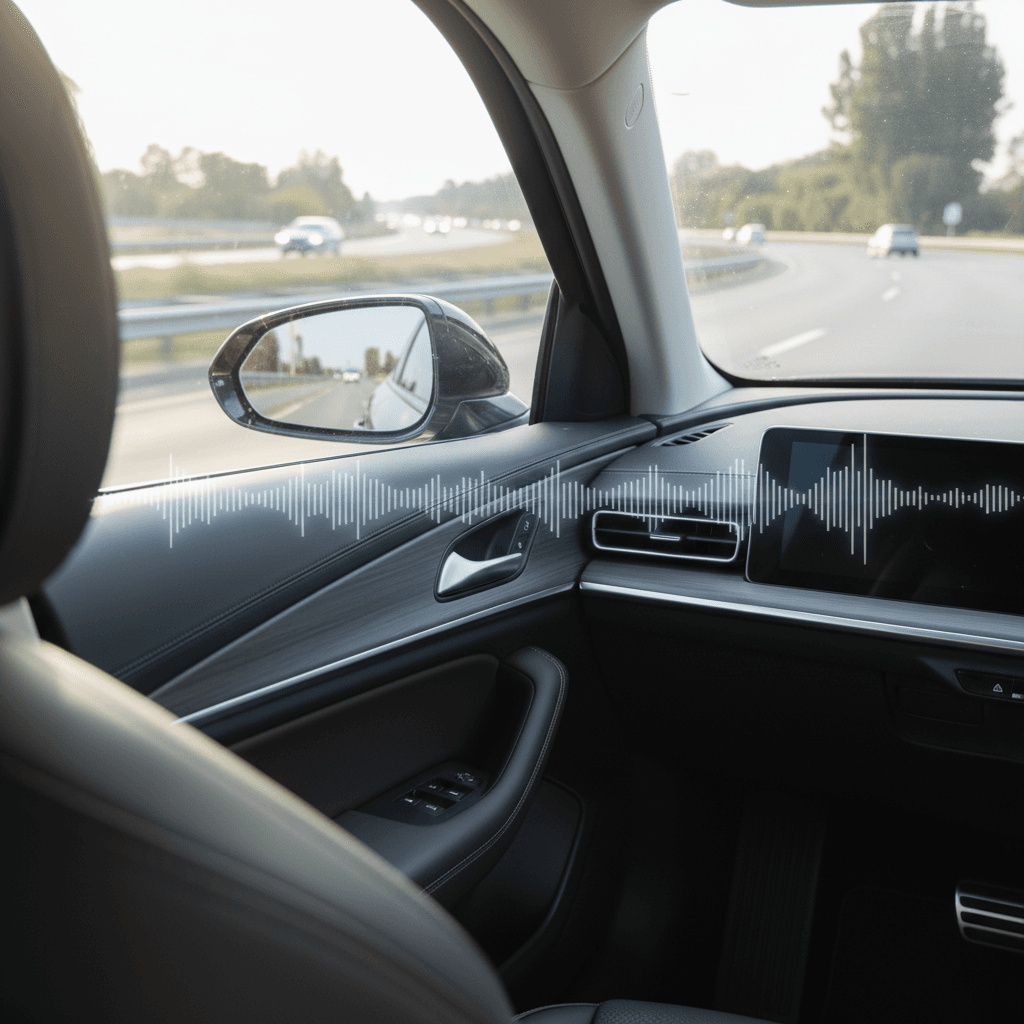
How fake EV sounds and alerts change what you hear
The other kind of “loud” is the one your neighbors complain about. Modern EVs are required to play an **acoustic vehicle alerting system (AVAS)** tone at low speeds so pedestrians can tell they’re moving. Some brands set these sounds just loud enough to do the job. Others…not so much.
2. EVs that sound loudest outside
Pedestrian warnings and alerts that get noticed, for better or worse
Shouty pedestrian warning tones
Certain hybrids and EVs are infamous in owner forums for their low-speed warning sounds, especially in reverse. Small SUVs and hatchbacks with high-pitched, repeating tones can be heard half a block away in a quiet neighborhood. It’s safe, but it’s not subtle.
If you back out of an apartment garage every morning at 6 a.m., this matters as much as cabin noise.
Beeper-heavy driver assistance suites
Even a very quiet EV can feel loud if it never shuts up. Lane-keep alerts, proximity sensors in traffic, 35 mph school-zone chimes, and attention warnings stack up quickly in some cars. Others rely more on gentle steering nudges and dashboard graphics.
During a test drive, toggle the driver-assistance settings and notice how much the car talks to you. If it feels like a pinball machine, that’s a kind of loud, too.
Don’t defeat safety systems
Quiet vs loud EVs: which is right for you?
When you want the quietest EV you can find
- Long highway commutes: Daily 60–80 mph driving rewards excellent insulation, laminated glass, and smaller wheels with comfort-oriented tires.
- Work calls in the car: If your car doubles as a mobile office, a low cabin dB level will make Bluetooth calls far less fatiguing.
- Noise-sensitive passengers: Kids who nap, partners who get headaches, or anyone with sensory sensitivity will appreciate a calm, isolated cabin.
In practice that means leaning toward larger, more premium EVs, or mainstream models known for quiet, think the electric equivalents of a comfortable touring sedan or soft-riding SUV.
When a louder, more “talkative” EV makes sense
- City driving and tight neighborhoods: A stronger low-speed warning sound can be reassuring around dense foot traffic.
- Enthusiast drivers: Extra road feedback through the chassis and cabin can make a performance EV feel more connected.
- Coming from a noisy ICE car: If your benchmark is a 15-year-old compact with worn tires, even a “louder” EV will feel like a major upgrade.
The key is expectation management. If you’re trading out of a Lexus LS, don’t expect a bare-bones compact EV on 20-inch wheels to meet your idea of quiet.
Test-driving a used EV: listen for these sounds
On a used EV, you’re not just listening for how the car was designed, you’re listening for how it’s aged. Tires, door seals, worn suspension parts, even accident repairs can turn a once-quiet EV into a noisy one. Here’s a simple checklist you can run in a single test drive.
EV noise checklist for your next test drive
1. Start in a silent parking lot
With the windows up and climate control on low, ease away at walking pace. Listen for whines, clunks, or scraping, those aren’t normal “EV sounds,” they’re clues about drivetrain or brake issues.
2. Cruise at 35 mph on smooth pavement
At neighborhood speeds, focus on <strong>whistles or whooshes</strong> around the mirrors and window seals. These can indicate misaligned doors or poorly done windshield replacements.
3. Take it up to 65–70 mph
This is where the loud EVs reveal themselves. Does the car boom over expansion joints? Do you hear a rushing roar from one corner? A truly quiet EV will let you talk in normal tones without the stereo covering anything up.
4. Try different road surfaces
Concrete, fresh asphalt, and patched older surfaces all sound different. A noisy EV will go from tolerable to tiring very quickly on coarse concrete slabs, exactly the stuff you see on big interstates.
5. Toggle driver-assistance systems
Turn lane-keep, collision warnings, and park assist on and off. Judge whether the alert strategy fits your tolerance for beeps. Some systems can be dialed back; others are in-your-face by design.
6. Listen outside as someone else drives
Stand on the sidewalk and have the car drive past you at 10–20 mph, then reverse. You’ll hear how intrusive the pedestrian warning and reverse sounds really are in your neighborhood context.
How Recharged helps here
Ready to find your next EV?
Browse VehiclesCan you make a loud EV quieter (or a quiet EV louder)?
You can’t turn a budget crossover into a Bentley, but you do have some control over how much noise you live with. Before you write off a car, or spend money trying to fix it, know which tweaks actually move the needle.
Common EV noise tweaks and what they actually do
Simple changes that can tame (or enhance) your EV’s soundscape
| Change | Effect on cabin noise | Best for | Notes |
|---|---|---|---|
| Switching to touring tires | Often reduces tire roar on coarse pavement | Highway commuters | Look for EV-rated all-season touring tires; avoid aggressive tread if quiet is the goal. |
| Dropping wheel size (20" → 18") | Softer ride, less impact noise from sharp bumps | Performance trims that ride harshly | May require different tires and, on some models, different wheels entirely. |
| Door seal refresh / adjustment | Cuts wind hiss around windows and doors | Older EVs or cars with windshield replacement | Sometimes as simple as adjusting the window frame or replacing a compressed seal. |
| Aftermarket sound-deadening | Can shave off some road boom, but rarely transforms a car | Enthusiasts willing to pull interior panels | Labor-intensive; results vary widely by installer and car design. |
| Alert and chime settings | Reduces perceived “digital noise” inside | Drivers who hate constant beeps | Most EVs let you adjust volume or sensitivity, but mandated safety tones remain. |
| Tire choice in the other direction | Adds a bit more roar and texture | Drivers who want more road feel or sportiness | Stick with load and speed ratings; remember more noise is the tradeoff. |
Focus on reversible changes first. If a car is fundamentally too loud for your taste, it’s better to choose a quieter model than to chase perfection with mods.
When not to fight the car
Where Recharged fits into your search for the right EV
Noise doesn’t show up in a spec sheet, and most listings don’t say, “great car, a bit boomy at 75 mph.” That’s where a specialist helps. Recharged is built around used electric vehicles, so we see the same models, trims, and tire combinations over and over, and we know which ones feel serene and which ones are chatty on the highway.
- Recharged Score battery diagnostics give you a clear view of pack health, so you’re not trading quiet for unknown range.
- Transparent condition reports flag things like mismatched tires or accident repairs that can affect cabin noise.
- EV‑savvy guidance from specialists who’ve actually driven these cars, not just read the brochure.
- Financing, trade‑in and nationwide delivery so you can focus on picking the right car, not the paperwork.
If you tell a Recharged specialist, “I’m noise‑sensitive and drive 70 miles of interstate a day,” that will point us toward very different cars than if you say, “I live downtown and just want people to hear me backing out of an alley.” Either way, the goal is to match the **character of the EV**, including how loud it feels, to the way you actually live.
FAQ: loudest electric cars ranked
Frequently asked questions about loud EVs
Bottom line on loud EVs
When you see a headline about the **loudest electric cars ranked**, don’t picture a drag-strip decibel contest. In the EV world, “loud” is a mix of wind, tires, synthetic warning sounds, and digital chatter from the safety systems. Some cars are genuinely hushed at 75 mph; others keep up a steady commentary you’ll either love as “feedback” or hate as fatigue.
The smart move is to decide up front what kind of soundtrack you want from your next EV, then **test it the way you’ll actually drive it**. If you’re shopping used, lean on expert inspections and people who know these cars well. Recharged was built for that exact moment, helping you find a used EV where the battery, the price, and yes, the noise level all fit the life you’re really living.