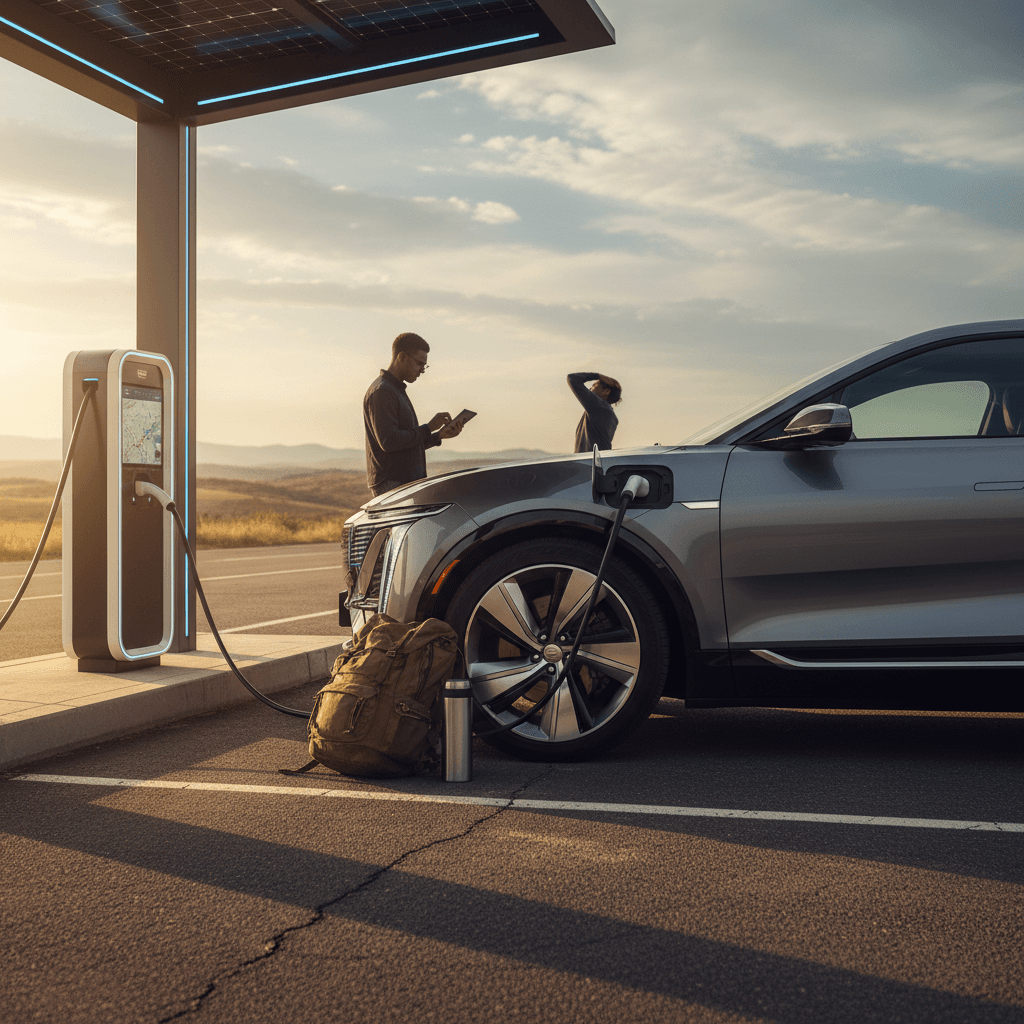
If you own, or are eyeing, a Cadillac Lyriq, it’s natural to wonder how well it handles long-distance driving. With an Ultium battery, DC fast charging, and available Super Cruise, the Lyriq has the right hardware for road trips, but getting the most out of it requires some smart strategy. These Cadillac Lyriq long-distance driving tips will help you turn that luxury EV into a relaxed, confidence-inspiring highway cruiser.
Quick Lyriq range & charging snapshot
Why the Cadillac Lyriq works for long trips
Cadillac Lyriq highway road‑trip fundamentals
On paper, the Lyriq is well suited to long distances: a large battery, competitive range, and DC fast charging that can add a meaningful chunk of miles in 20–30 minutes. Add in Cadillac’s available Super Cruise driver-assistance system, excellent for reducing fatigue on supported highways, and the Lyriq is one of the more comfortable EVs for crossing states. The key is learning how your specific trim behaves on the open road and building a repeatable routine around that behavior.
Know your Lyriq’s real-world range
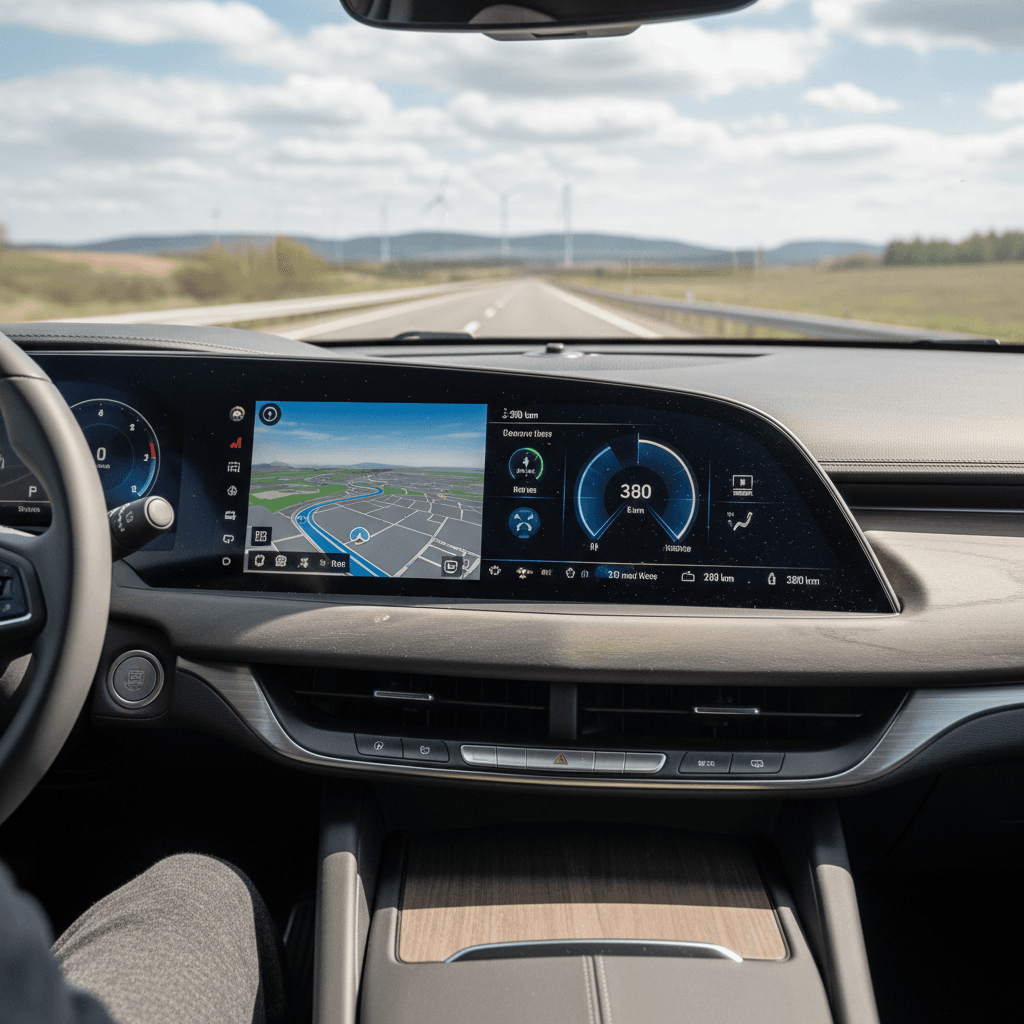
The starting point for any long-distance plan is understanding how far your Lyriq can realistically go on the highway, not just what the window sticker says. EPA estimates in the low‑300‑mile range assume moderate speeds and ideal conditions. At 70–80 mph with climate control running, most Lyriqs will post lower numbers.
Typical Lyriq range behavior by configuration
Think in terms of usable highway range, not just EPA labels.
Single‑motor RWD
EPA: roughly 314–326 miles depending on year and wheel choice.
Highway reality: Many owners see ~260–290 miles at 70 mph in mild weather, less in winter or at higher speeds.
Dual‑motor AWD
EPA: generally just over 300 miles when fully charged.
Highway reality: Expect something closer to ~240–270 miles at typical U.S. interstate speeds.
Your usable buffer
For planning, subtract a safety buffer of 15–20% from what the car projects. On a 300‑mile estimate, treat 230–250 miles as your “doable without stress” distance.
Run a local “test loop” before a big trip
Also remember that the Lyriq’s range estimator learns from your recent driving. If you’ve been doing short, low‑speed city trips, your projected range may look generous when you merge onto the interstate. It will recalibrate after 20–30 minutes at highway speed, so avoid planning your entire charging schedule off the initial number you see when you leave home.
Smart charging strategy for Lyriq road trips
Long-distance EV travel isn’t about finding one charger and filling to 100%. It’s about chaining together a series of efficient stops. The Lyriq’s DC fast‑charging curve is strongest at lower states of charge, so you’ll typically travel faster overall if you charge more often but not as high each time.
Efficient DC fast‑charging strategy for the Lyriq
Use lower state-of-charge (SoC) windows to take advantage of the Lyriq’s stronger charging speeds.
| Scenario | Start charging at… | Stop charging around… | Why it works |
|---|---|---|---|
| Ideal, good charger | 10–15% SoC | 60–70% SoC | You ride the fastest part of the charging curve and get back on the road quickly. |
| Sparse chargers ahead | 20–25% SoC | 80–90% SoC | You spend longer at one stop to create a big buffer through a charger‑poor stretch. |
| Overnight hotel stop | 5–20% SoC | 90–100% SoC | You’re parked anyway, so you can take the battery near full without worrying about time. |
| Cold weather or heavy headwinds | 15–25% SoC | 70–80% SoC | Extra margin helps counter reduced efficiency without wasting time going to 100%. |
You don’t have to hit 100% at every stop, focus on the quickest portion of the charging curve.
Beware the last 20%
DC fast‑charging best practices for Lyriq owners
1. Start low for faster speeds
The Lyriq’s charging power is highest when the battery is relatively empty. If practical, arrive at fast chargers between 10–25% state of charge rather than “topping off” from 50–60%.
2. Use preconditioning when available
If your Lyriq supports battery preconditioning for DC fast charging, enable it in the navigation or charging menu before you reach the station, especially in cold weather. A warmer pack can accept higher power and shorten your stop.
3. Prefer higher‑power stations
Look for stations rated 150 kW or above. The Lyriq can exceed 150 kW under ideal conditions; plugging into a 50 kW unit will work, but it extends your stop dramatically.
4. Avoid hopping between chargers unnecessarily
If a station is working and giving you reasonable power, it is often faster overall to finish your intended session than to disconnect and try another port, especially at busy sites.
5. Use AC charging when time is cheap
At hotels or rentals with Level 2 charging, plug in overnight and let the Lyriq charge slowly to 90–100%. It’s almost always cheaper and more convenient than an early‑morning DC fast‑charging detour.
Using Super Cruise and driving modes wisely
One of the Lyriq’s most appealing long-distance features is available Super Cruise, GM’s hands‑free driving system for mapped highways. Used correctly, it can make 500‑mile days feel much less tiring. But you still need to think about energy use, driving modes, and how often you let the car stretch its legs.
Getting the most from Super Cruise
- Use it on mapped interstates. Super Cruise is designed for divided highways with good lane markings and consistent traffic flow, ideal conditions for efficiency.
- Let it smooth your inputs. Computer‑controlled acceleration and braking are usually more gentle than a human right foot, which can slightly improve range over a long day.
- Stay engaged. Hands‑free doesn’t mean attention‑free. You still need to watch the road, especially around merging traffic or construction zones that can increase energy use.
Picking the right drive mode
- Tour mode is usually the sweet spot for road trips, with balanced performance and efficiency.
- Sport mode sharpens throttle response and can encourage harder acceleration, fun, but it will cost you some range.
- Snow/Ice or similar modes can help in bad weather, but be prepared for higher consumption due to traction control and lower temperatures.
Whatever mode you choose, remember that speed is the biggest lever you control for range; drive mode just fine‑tunes how the car feels.
Set a “comfort speed” for the whole trip
Route planning, apps, and charging networks
Good tools turn an EV road trip from a math exercise into a normal drive with a few planned breaks. The Lyriq’s built‑in navigation can route through chargers, but many owners find third‑party apps more transparent about station status, pricing, and reliability.
Useful planning tools for Lyriq long-distance trips
Combine in‑car nav with one or two trusted apps.
In‑car navigation
Use the Lyriq’s native nav to monitor live range estimates and rerouting. When you program a DC fast‑charging stop into the system, it can help with battery temperature management on the way there.
Third‑party planning apps
Apps like A Better Routeplanner (ABRP), PlugShare, or Chargeway let you enter your specific car and typical highway speed to estimate consumption. They also crowd‑source station reliability, so you can avoid problem sites.
Network apps
Download apps for the networks you’ll use most, Electrify America, EVgo, or regional providers. They show real‑time availability, pricing, and allow starting sessions from your phone if a payment terminal is finicky.
Tesla Supercharger access is evolving
How weather, speed, and driving style affect range
No matter how sophisticated the battery, physics still wins. Pushing a big, luxurious SUV through the air at high speed uses a lot of energy, and heating or cooling a large cabin takes its toll as well. Understanding these factors helps you decide when to slow down a little or build in an extra charging stop.
How key factors impact your Lyriq’s highway range
Use these tendencies as rough guidelines when planning long trips.
| Factor | Effect on range | What you can do |
|---|---|---|
| Cruising speed | Going from 65 to 80 mph can cut range dramatically because aerodynamic drag rises quickly. | If you’re range‑constrained, keep cruise between 65–72 mph instead of the high‑70s. |
| Headwinds & elevation | Strong headwinds and long climbs raise energy use; sustained tailwinds and descents help. | Check wind forecasts and topography on long days. Add a buffer or an extra stop when facing long climbs or storms. |
| Temperature | Cold batteries and cabin heating both reduce range; very hot days with strong A/C loads can also trim it. | In winter, precondition the cabin while plugged in and plan shorter legs between fast chargers. |
| Driving style | Hard acceleration and late braking waste energy, especially in stop‑and‑go traffic around cities. | Use smooth inputs, one‑pedal driving where you like it, and anticipate slowdowns instead of jabbing the brakes. |
Exact numbers vary trip to trip, but directionally these patterns hold true for most Lyriq drivers.
Watch cold‑weather range on remote routes
Packing and cargo tips for long journeys
The Lyriq’s generous interior and cargo area make it an easy vehicle to live out of for a few days, but how and what you pack can still influence both efficiency and comfort. It’s less about shaving ounces and more about avoiding obvious range‑killers and keeping your essentials accessible.
- Avoid roof boxes unless you truly need them; they can dent highway range by increasing drag.
- If you use a hitch rack for bikes, assume some additional drag and build more buffer into your charging plan.
- Pack a small DC fast‑charging “go bag” with your charging cards, gloves, wet wipes, and a flashlight so you’re not hunting through luggage at night.
- Keep snacks and water within reach to avoid impulse high‑speed detours or pushing on when you’re tired.
- Use the divided under‑floor cargo space to keep charging cables and adapters organized and clean.
Charging etiquette and station strategies
A good portion of every modern EV road trip happens at charging stations. A bit of etiquette goes a long way toward making those shared spaces more pleasant, and sometimes faster, for everyone, including you.
Lyriq owner’s quick guide to charging etiquette
Choose stalls thoughtfully
If you’re at a station where chargers share power between paired stalls, plug into a stand‑alone or lightly used unit when possible. That gives your Lyriq the best chance to reach its higher power levels.
Don’t idle on the plug
When you’ve hit your target state of charge, or charging has slowed to a crawl, unplug and move, even if the station isn’t full. It’s a courtesy to other drivers and keeps you on schedule.
Queue fairly at busy stops
If a line has formed, ask who arrived last and slot in. Many stations have informal queues; following the system lowers everyone’s stress level.
Keep cables tidy and safe
Re‑hang cables where the next person can easily reach them, and avoid leaving them where someone could trip or drive over them.
Use the time well
Plan to stretch, use the restroom, or grab a snack while you charge. When you treat charging stops as planned breaks, you’re less likely to overstay just to avoid stopping later.
Maintenance and pre-trip checklist for your Lyriq
Even though EVs have fewer moving parts than gasoline vehicles, a bit of preventive attention before a long drive is always wise. You want your Lyriq’s battery, tires, brakes, and software all working in your favor before you commit to a long day on the interstate.
Pre‑trip checklist for a long‑distance Cadillac Lyriq drive
Update software and maps
Check for available over‑the‑air updates before you leave. Fresh software can improve charging behavior, navigation, and driver‑assistance performance.
Inspect tires and pressures
Set pressures to the door‑jamb recommendation when cold. Underinflated tires hurt efficiency and can increase the risk of damage when fully loaded.
Verify charging accounts and cards
Make sure your accounts with major networks are active, payment methods updated, and RFID cards or app logins packed where you can reach them.
Test your home charging routine
A week before you depart, confirm your home Level 2 charger is delivering expected power and that you can reliably charge to your usual trip‑start SoC.
Review emergency gear
Pack a basic roadside kit: reflective triangle, portable air compressor, tire repair or sealant (per manufacturer guidance), warm layers, and a phone power bank.
Plan your first two stops
Even if you like to improvise later, lock in your first and second charging stops while you’re still near familiar territory. It takes the pressure off at the beginning of the day.
Road-tripping a used Cadillac Lyriq
If you’re considering a used Lyriq, or already bought one, you may wonder if it’s still road‑trip ready. The short answer is that modern battery packs, when treated reasonably, tend to retain most of their usable capacity for many years. The bigger differences often come down to software revisions, charging‑curve tweaks, and how previous owners cared for the car.
What to check on a used Lyriq before long trips
- Battery health indicators. Compare displayed range at 100% to what the model was rated for when new, adjusting for your wheels and climate. A moderate drop is normal; a dramatic difference might warrant a deeper inspection.
- DC fast‑charging history. Frequent high‑power fast charging isn’t necessarily a deal‑breaker, but ask about typical use. A vehicle that mostly charged on Level 2 at home is likely to have an easier past.
- Warranty coverage. GM’s battery warranties are generous. Know your in‑service date and mileage so you understand how much coverage remains.
How Recharged can simplify the decision
When you shop a used Cadillac Lyriq through Recharged, every vehicle comes with a Recharged Score, a detailed report that includes verified battery health and fair‑market pricing. Our EV specialists can walk you through how that specific Lyriq has been used and what kind of long‑distance performance you can expect.
If you already own an EV and want to step up to a Lyriq that’s more road‑trip capable, Recharged also offers trade‑ins, instant offers, financing, and nationwide delivery, all handled through a fully digital experience.
Cadillac Lyriq long-distance FAQ
Frequently asked questions about Lyriq long-distance driving
Key takeaways for stress-free Lyriq road trips
The Cadillac Lyriq has all the ingredients of a capable long‑distance EV: a sizable Ultium battery, respectable DC fast‑charging performance, and a cabin built for quiet, comfortable miles. To make the most of it, think like an EV driver rather than a traditional gas‑station hopper, plan legs around efficient charging windows, keep a reasonable buffer, and let tools like Super Cruise and good route‑planning apps reduce the mental load.
If you’re just starting to explore the Lyriq and considering a used example, remember that the long‑range experience begins with the particular vehicle you choose. A transparent view of battery health, charging behavior, and prior use, like you get with a Recharged Score Report on every Recharged vehicle, helps you buy with confidence and hit the road knowing what to expect. With a little preparation and the right car, the Lyriq can turn long distances into exactly what a luxury EV should: calm, quiet, and surprisingly easy miles.