If you own or are shopping for a li-ion electric car, the battery is the heart of the whole story. It determines how far you can go, how often you need to charge, how the car ages, and what it’s worth when you eventually sell or trade it in. The good news: modern lithium‑ion EV batteries are far tougher and longer‑lived than most people think.
Quick definition
Why li-ion electric car batteries matter
Li-ion EV batteries by the numbers
Lithium‑ion packs unlocked the modern EV boom because they combine high energy density (lots of energy in a relatively small, light package) with good cycle life and fast‑charging capability. Without li‑ion chemistry, we wouldn’t have practical 300‑mile electric crossovers or pickups.
For you as a driver or used‑EV shopper, understanding the basics of li‑ion batteries answers three big questions: How long will this car feel “like new”? What’s normal battery wear? And how do I avoid a problem child? Let’s start with how these batteries are built and why chemistry matters.
How li-ion batteries in electric cars actually work
From cell to pack
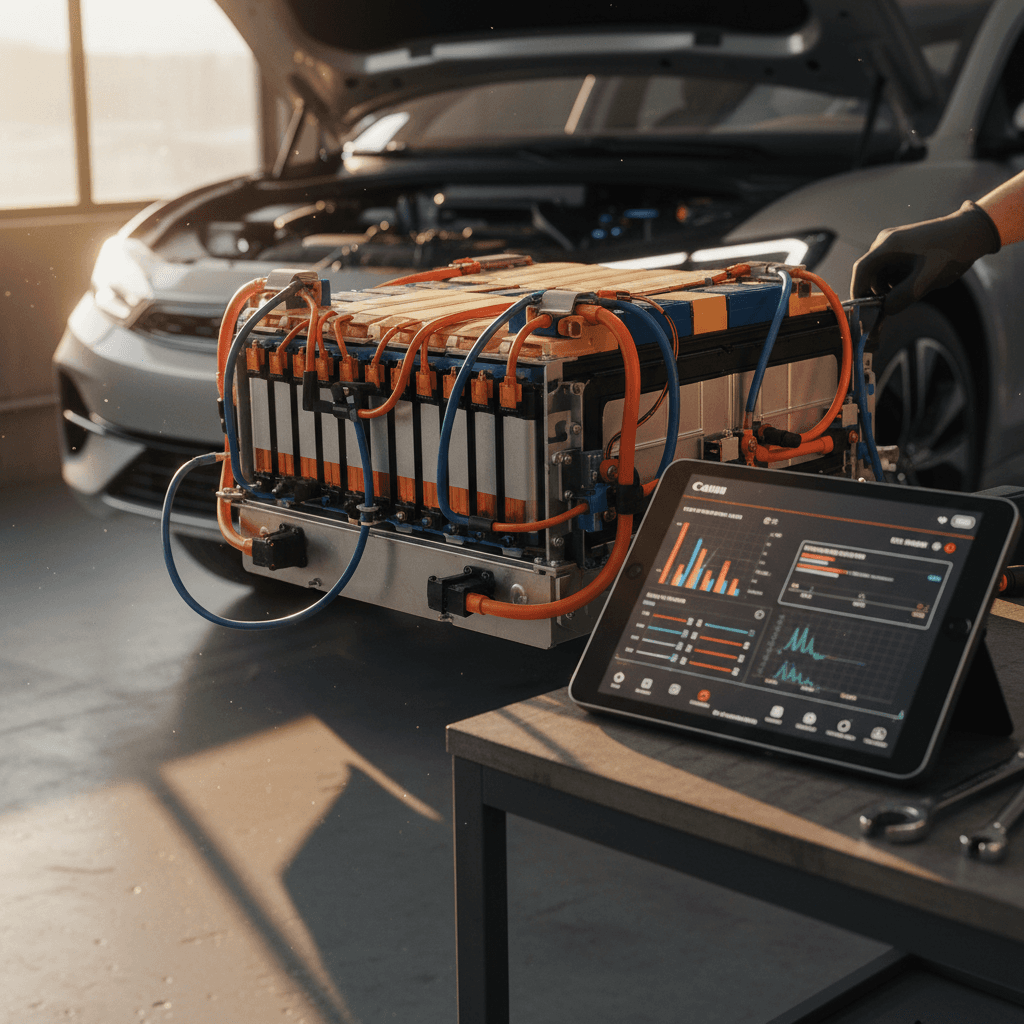
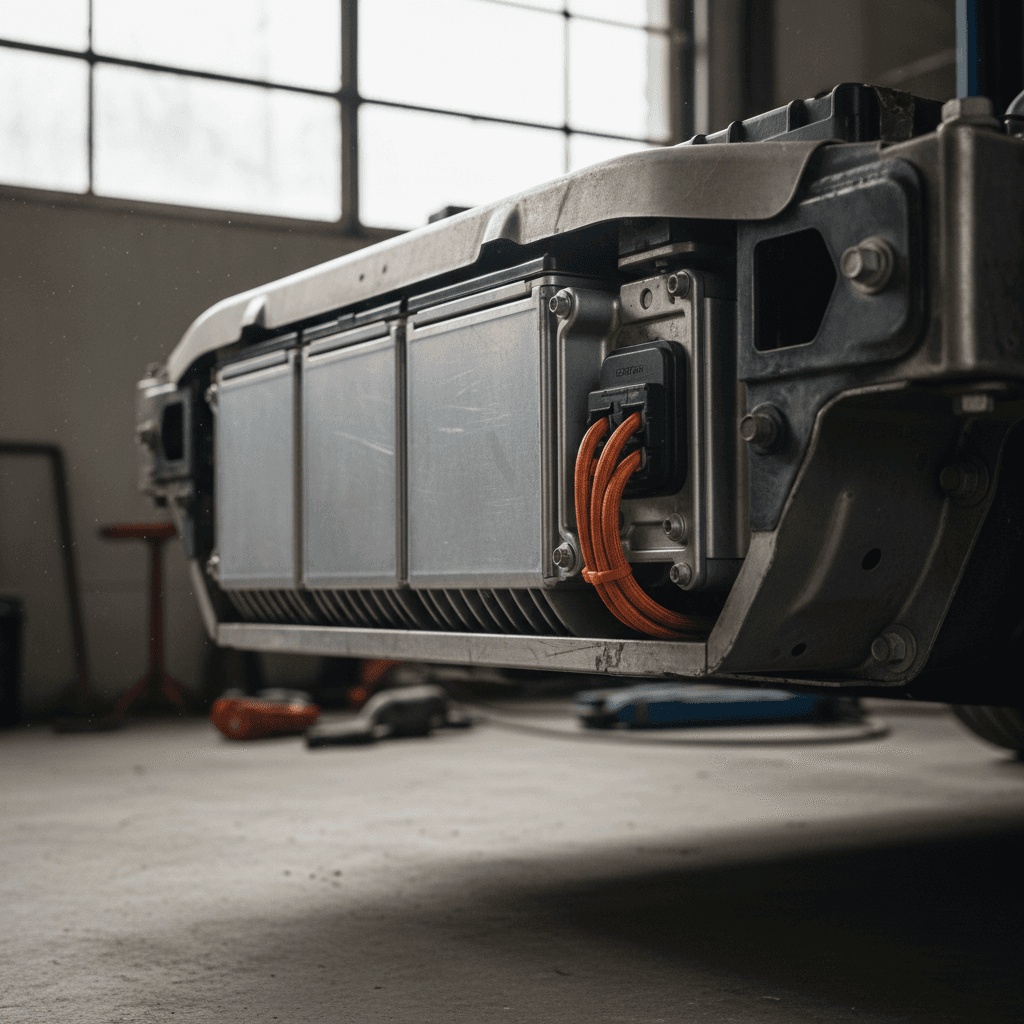
Every li‑ion electric car battery starts with individual cells. Dozens or even thousands of these cells are grouped into modules, and modules are bolted together into the full pack that sits under the floor, in the tunnel, or behind the rear seats.
- Each cell stores a small amount of energy.
- Modules organize cells and help with cooling.
- The pack adds structure, crash protection, and plumbing for cooling or heating.
The chemistry inside
Inside each cell are two electrodes (anode and cathode) separated by an electrolyte that lets lithium ions move. When you drive, ions flow one way and electrons power the motor. When you charge, everything runs in reverse.
Different cathode materials, like NMC or LFP, change how much energy the cell can store, how long it lasts, how much it costs, and how it behaves in extreme temperatures.
Don’t stress about individual cells
The main li-ion chemistries in EVs
Common li-ion chemistries in electric cars
Same “li‑ion” label, very different personalities
NMC (Nickel Manganese Cobalt)
NMC is widely used in modern EVs from Hyundai, Kia, VW, Ford, and others.
- Pros: High energy density, strong performance.
- Cons: Uses cobalt/nickel, somewhat more sensitive to high temps and fast charging.
NCA (Nickel Cobalt Aluminum)
Popularized by early Tesla packs, NCA offers very high energy density and power.
- Pros: Excellent range, strong acceleration.
- Cons: Also uses cobalt, needs good thermal management to maximize life.
LFP (Lithium Iron Phosphate)
Rapidly gaining ground in mass‑market EVs, especially from Tesla, BYD, and others.
- Pros: Very long cycle life, more tolerant of 100% charges, lower fire risk, no nickel/cobalt.
- Cons: Slightly lower energy density; cold‑weather performance can be weaker.
How to tell which chemistry you have
Range and battery life: what you can really expect
The top fear around li‑ion electric car batteries is, “Will it be a brick in five years?” The data we have from hundreds of thousands of EVs on the road says: no. Most modern packs are aging gracefully.
Typical li-ion EV battery life in the real world
These are ballpark expectations for well‑cared‑for batteries, not guarantees for a specific car.
| Vehicle age | Typical remaining capacity | What that feels like day-to-day |
|---|---|---|
| 1–2 years | 95–98% | Range might drop a few miles, barely noticeable. |
| 5–6 years | 85–90% | A 300‑mile car might feel like a 260–270‑mile car. |
| 8–10 years | 75–85% | Still perfectly usable for most commutes; long road trips need a bit more planning. |
| 12–15 years | ~70% | Often the point where owners consider a replacement or the car moves into second‑car duty. |
Most modern EV batteries should remain usable for the life of the vehicle with normal care.
Warranties set the floor, not the ceiling
What really causes li-ion EV batteries to degrade
Lithium‑ion cells don’t “wear out” overnight. They slowly lose capacity as their internal chemistry ages. On average, modern EV packs are seeing around 1.8–2.5% capacity loss per year, but your results depend heavily on how and where the car is used.
- Time: Even if you barely drive, the calendar keeps ticking. Some early loss in the first couple of years is normal, then the curve flattens out.
- High temperatures: Heat is the enemy. Hot climates and frequent use immediately after fast charging can speed up degradation.
- High state of charge: Parking at 100% for days at a time stresses many chemistries (LFP is more tolerant than NMC/NCA).
- Deep discharges: Frequently running the pack very low (e.g., below 5–10%) can add wear over time.
- Fast charging: Occasional DC fast charging is fine; relying on it for almost every charge will generally age the pack faster, especially in hot weather.
The 20–80% sweet spot
"Most modern EV batteries are proving more durable than the cars they power. In many cases, the pack can live a second life in stationary storage long after the car has come and gone."
Safety: li-ion vs other battery tech
News headlines love a good battery fire story, but they rarely mention how rare they really are. Statistically, EV fires, li‑ion batteries included, are far less common per mile than fires in gasoline vehicles. Automakers design packs with multiple layers of protection: cooling systems, crash structures, fuses, contactors, and software guardians that constantly monitor for trouble.
Safety layers in a li-ion electric car battery
More than just a big box of cells
Physical protection
- Rigid aluminum or steel casings.
- Crash structures and crumple zones around the pack.
- Isolation from cabin and high‑voltage cables routed away from impact zones.
Thermal & electronic safeguards
- Liquid cooling or advanced air cooling to keep cells in their comfort zone.
- Battery management system that can limit power, stop charging, or disconnect the pack if it senses a problem.
- Software updates that refine limits over the vehicle’s life.
When li-ion gets risky
Solid-state and next-gen batteries: should you wait?
You’ve probably seen headlines about solid‑state batteries promising 10‑minute fast charges and 600‑mile ranges. Automakers from Toyota and Honda to Stellantis, BYD, and major suppliers are racing to commercialize them, talking about demonstration fleets around 2027 and larger‑scale production closer to 2030.
Solid‑state cells replace the flammable liquid electrolyte in today’s li‑ion batteries with a solid material. In theory, that means higher energy density, better safety margins, and very fast charging. In practice, manufacturing is hard and expensive, and the industry is still ironing out durability and scaling challenges.
What this means if you’re car shopping now
How to take care of a li-ion electric car battery
Simple habits that extend li-ion EV battery life
1. Use home or Level 2 charging when you can
Regular overnight Level 2 charging at home or work is gentle on the pack. DC fast charging is great for road trips, but making it your daily fuel stop will generally age the battery faster.
2. Avoid living at 0% or 100%
It’s fine to charge to 100% for a trip and occasionally run low, but avoid parking for days at either extreme. Many cars let you set a daily charge limit around 70–85%, use it.
3. Be kind in extreme heat
In very hot weather, try not to fast‑charge repeatedly back‑to‑back, and avoid leaving the car parked fully charged in the blazing sun for days if you can help it.
4. Don’t worry about everyday acceleration
Using the car’s performance once in a while won’t destroy the battery. High stress comes more from temperature and charge habits than the occasional full‑throttle merge.
5. Keep software up to date
Automakers continually refine charging curves, thermal management, and range estimates. Keeping your car updated can improve both battery longevity and your state‑of‑charge accuracy.
6. Monitor battery health over time
Pay attention to range estimates, especially at consistent temperatures and driving patterns. If you see a sudden, significant drop, that’s a good reason to ask for a diagnostic check.
Buying a used EV with a li-ion battery
A used li‑ion electric car can be a bargain, quiet, quick, and often thousands less than a comparable new EV. The key is understanding the battery’s true state of health, not just the odometer reading. This is exactly where a specialist marketplace like Recharged focuses its effort.
What to look for in a used li-ion electric car
Battery health should be as routine as checking tires and brakes
Battery health report
Ask for a verified battery health report, not just a dashboard range guess. At Recharged, every car includes a Recharged Score Report with detailed pack diagnostics and degradation estimates.
Warranty coverage
Confirm whether the original battery warranty is still in effect and whether it’s transferable. An 8‑year / 100,000‑mile warranty with a 70% capacity minimum is common on modern EVs.
History & usage patterns
Check for accident or flood history, and ask how the car was used. Heavy fast‑charging, rideshare duty in extreme climates, or frequent towing can all influence battery wear.
How Recharged helps
Ready to find your next EV?
Browse VehiclesFAQ: li-ion electric car batteries
Frequently asked questions about li-ion electric car batteries
The bottom line on li-ion electric car batteries
Lithium‑ion batteries turned electric cars from science projects into everyday transportation. For most drivers, a li‑ion electric car offers years of quiet, low‑maintenance driving with only modest range loss over time, especially if you charge smart, avoid extreme heat when you can, and keep an eye on software updates.
If you’re shopping used, the battery doesn’t need to be a mystery. Look for verified health data, a clear history, and pricing that reflects the pack’s condition. That’s exactly what Recharged was built for: pairing transparent battery diagnostics with expert guidance, fair market pricing, financing, trade‑ins, and nationwide delivery. Do that, and the biggest question about owning a li‑ion electric car, “Will the battery last?”, has a reassuringly simple answer: yes, and probably longer than you think.