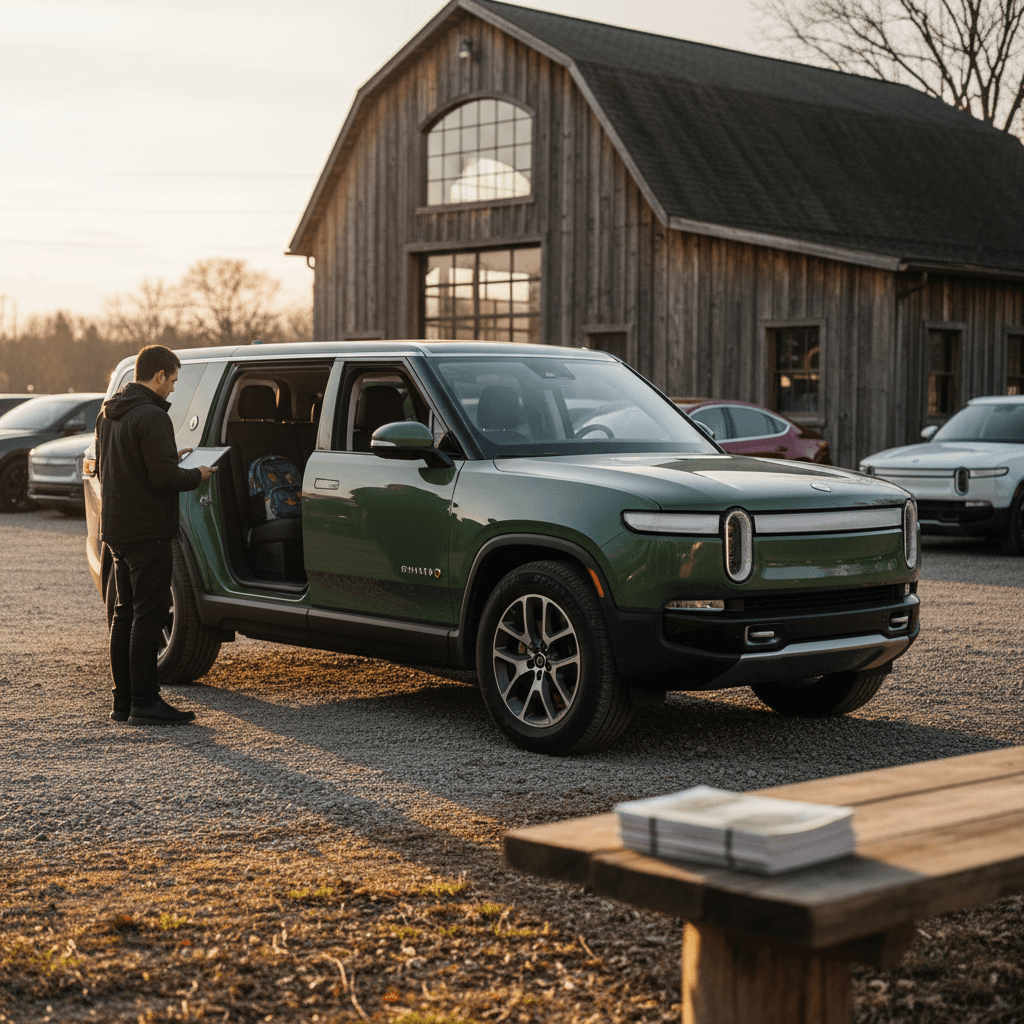
The 2023 Rivian R1S is one of the most interesting EVs on the road: a three-row, off‑road‑capable electric SUV that looks like a concept car that somehow made it to production. If you’re eyeing a 2023 R1S, especially on the used market, this buying guide will walk you through trims, range, charging, common issues, and how to shop smart so you get the right truck, not just the right color.
Quick take
Why the 2023 Rivian R1S Is a Big Deal
Rivian’s R1S is an all‑electric, three‑row SUV that can tow, rock‑crawl, and ferry kids to school in eerie silence. In a market where most EVs skew toward crossovers and sedans, the 2023 R1S stands out: proper ground clearance, legit off‑road hardware, and a cabin that feels more boutique hotel than rental counter.
R1S in three quick ideas
What draws buyers to the 2023 Rivian R1S
Adventure-first EV
The 2023 R1S isn’t a compliance car with a lift kit. Its air suspension, off‑road modes, and short overhangs were engineered to go where Suburbans fear to tread.
Serious battery options
Large and Max packs deliver 300–400 miles of EPA range depending on configuration and wheels, enough for real road‑tripping if you plan charging stops well.
Family hauler with character
Three rows, clever storage, and a warm, minimalist interior give you family practicality without feeling like a rideshare shuttle.
Used‑buyer advantage
2023 Rivian R1S Trims and Powertrains Explained
Rivian doesn’t use traditional trim labels like “XLT” or “Premium.” Instead, the 2023 R1S lineup is built around motor configuration, battery pack, and option packages (Adventure Package, All‑Terrain tires, etc.). Here’s how to decode what you’re seeing in listings.
2023 Rivian R1S configurations at a glance
The most common 2023 R1S setups you’ll see on the used market.
| Config | Motors | Approx. HP | Battery options (2023) | EPA range ballpark* | Personality |
|---|---|---|---|---|---|
| Dual Motor | 2 (one per axle) | ~600 hp | Large, Max | ~320–400 mi | Best efficiency, still very quick |
| Performance Dual Motor | 2 (software‑uprated) | ~700 hp | Large, Max | Slightly less than Dual | More shove, same hardware |
| Quad Motor | 4 (one per wheel) | ~835 hp | Large only | ~290–320 mi | Wild acceleration, crazy off‑road control |
Always confirm configuration from the original window sticker or vehicle build sheet before you buy.
About that “Launch Edition”
For 2023, the big story is Rivian’s in‑house Enduro dual‑motor drive units arriving alongside the existing Quad Motor trucks. Dual‑motor models trade some stunt‑driver theatrics for better efficiency, longer range, and simpler hardware. If you’re cross‑shopping used examples, those are not small virtues.
Who should pick Dual Motor?
- Road‑trippers who prioritize range over 0–60 bragging rights.
- Drivers who mostly see snow rather than Moab.
- Buyers who like the idea of less complex hardware over the long term.
Who should pick Quad Motor?
- Performance junkies who want instant, violent shove.
- Owners who actually plan to use Rock Crawl and Rally modes.
- Buyers who value the most exotic spec, even at the cost of range.
Max pack + Quad Motor? Not on 2023s
Battery Packs, Range, and Real-World Miles
The battery is the single most expensive component in a 2023 R1S and the single biggest factor in how the truck fits your life. Rivian’s packs are nicknamed Standard, Large, and Max, with 2023 buyers mostly choosing between Large and Max on the R1S.
2023 R1S range snapshots (approximate)
Why range numbers vary so much
- Large pack: roughly 129–135 kWh usable, the most common 2023 R1S battery.
- Max pack: roughly 150 kWh usable, offered mainly with Dual and Performance Dual Motor.
- Standard pack: shows up more on R1T pickups than on R1S SUVs, but you may see a few.
For most families, a Dual Motor Large Pack R1S with 21‑inch wheels is the sweet spot: realistic 280–320 miles of highway range, more in town, and better efficiency than the quad‑motor bruiser. The Max pack is wonderful if you do long Western‑state drives, but its rarity keeps prices higher.
Cold‑climate buyers
Charging the 2023 Rivian R1S: Home and Road
Charging life with a 2023 R1S splits into two worlds: the predictability of home charging, and the mildly improvisational jazz of public fast‑charging networks.
How the 2023 R1S charges
Key specs and what they mean in daily use.
| Charging type | Power | What it means | Best use case |
|---|---|---|---|
| Level 1 (120V outlet) | 1–1.5 kW | ~3–5 miles of range per hour. Painfully slow for a big battery SUV. | Emergency only. |
| Level 2 (240V home or public) | Up to 11.5 kW | ~25–30+ miles per hour on a 48A home charger. | Daily charging if you own a home. |
| DC fast charging | Up to ~200 kW peak | 10–80% in ~40–45 minutes on a healthy, high‑power station. | Road‑trips, long days, quick top‑ups. |
Actual charge times depend on temperature, state of charge, and the quality of the charging station.
Rivian Adventure Network vs third‑party
Home charging reality check
- Plan on a 240V Level 2 setup, either Rivian’s own wall charger or a third‑party 40–48A unit.
- Overnight, you can easily go from 10–20% to 80–90% on a Large pack.
- If you rent, check out apartment and condo charging options before you commit to a big‑battery SUV.
Public DC fast charging reality check
- Rivian supports CCS fast charging; newer adapters will open NACS (Tesla) Superchargers depending on region and timing.
- Plan stops around 10–60% state of charge for the fastest sessions.
- Factor in occasional broken or limited stations, build slack into tight itineraries.
Don’t buy more battery than you can charge
Ride Quality, Interior, and Family Utility
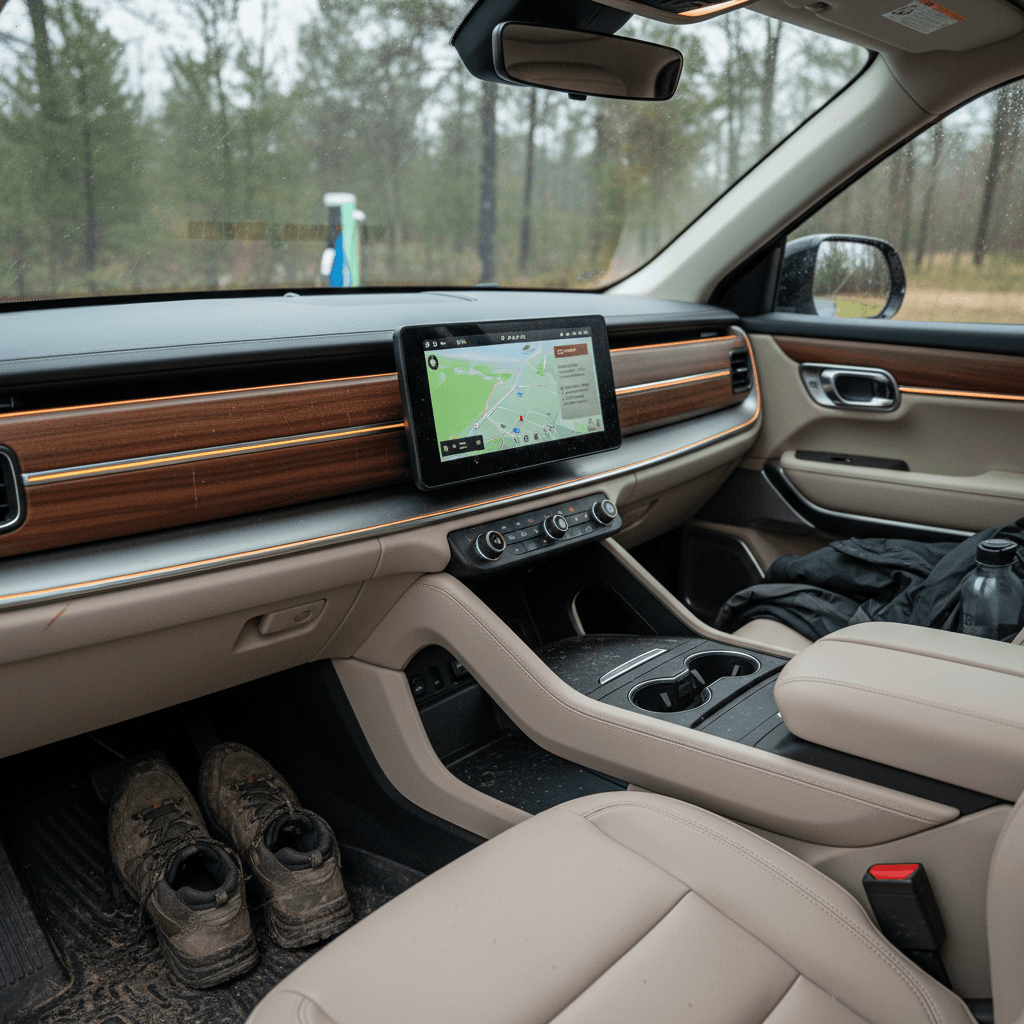
On the road, the 2023 R1S feels like a contradiction in motion: tall and heavy, yet weirdly quick and agile. The adjustable air suspension and active dampers can swing from comfortably firm to borderline cartoonish depending on mode and tire choice.
Everyday livability: hits and misses
What owners tend to love, and grumble about
Cabin & seating
Supportive front seats, adult‑usable second row, and a third row that’s fine for kids or short trips. Materials feel premium and distinctive, not copy‑paste German luxury.
Noise & ride
Some owners report more road and suspension noise than expected in a six‑figure SUV, especially on 20" all‑terrain tires. Others find it perfectly acceptable for an off‑road‑capable vehicle.
Cargo & practicality
Flat load floor with rows folded, plus a front trunk. The R1S isn’t as cavernous as a Suburban, but it’s a very usable family hauler.
Test‑drive in the right mode
Common Issues and Owner Complaints
The 2023 R1S is an early‑generation EV from a young automaker. It is not a Camry. You’re trading some finished‑product polish for innovation, performance, and character. Here are patterns that show up often in owner reports and forums.
Known pain points to ask about
Panel alignment & trim fit
Early trucks sometimes left the factory with <strong>uneven panel gaps, misaligned liftgates, or loose interior trim</strong>. Inspect body lines in good light and run your hands along door and hatch seals.
Suspension noises & ride changes
Over‑the‑air (OTA) updates have tweaked damping and ride height logic, and some owners report <strong>clunks, knocks, or a harsher ride</strong> after updates. Listen over speed bumps and rough pavement.
Wind & road noise
Because the R1S is boxy and often wears aggressive tires, expect more <strong>whoosh and rumble</strong> than in a Model X or EQS SUV. Excessive whistling may point to door‑seal or glass alignment issues.
Door, hatch, and glass issues
There have been scattered reports of sticky doors, power tailgate glitches, and minor windshield or roof glass creaks. Cycle all doors and hatches, and listen carefully on a highway test drive.
Software quirks & infotainment bugs
Rivian pushes frequent OTA updates, which is great, until one introduces a new glitch. Make sure the truck is on <strong>current software</strong>, and test nav, cameras, Bluetooth, and driver‑assist features.
Service access & turnaround
Rivian’s service network is still growing. Ask the seller which service center they’ve used, how long repairs took, and whether mobile service handled most issues at their home or work.
Don’t skip a pre‑purchase inspection
What a Used 2023 Rivian R1S Costs Today
Used values move quickly, but by 2026 the 2023 R1S has done the steepest part of its first‑owner depreciation curve. That’s tough for original buyers and very good news for you.
Typical pricing bands for used 2023 R1S
These are directional ranges for U.S. vehicles with normal mileage and clean histories; actual prices vary by region and spec.
| Configuration | Mileage band | Condition example | Relative price level |
|---|---|---|---|
| Dual Motor Large Pack | 20–40k miles | Well‑equipped Adventure, 21" wheels, good service history | Most attainable |
| Performance Dual Large | 20–40k miles | Sportier spec, 21–22" wheels, more options | + modest premium |
| Quad Motor Large | 15–35k miles | Heavier options, 20" AT tires, earlier build dates | Highest, holds value best |
| Max Pack Dual Motor | 15–40k miles | Rarer configuration, road‑trip focused buyers chase them | Niche high demand |
Use this as context, not a hard quote. Unique builds, low miles, or distressed sales can fall outside these bands.
Where Recharged fits in
2023 Rivian R1S Buying Checklist
Before you wire large money for a 7,000‑pound electric Swiss Army knife, walk through this checklist. It’s written with used buyers in mind, but most of it applies if you’re buying from Rivian directly as well.
Step‑by‑step 2023 R1S buyer checklist
1. Confirm build spec from source
Don’t rely on the ad. Use the original window sticker, Rivian app, or seller’s Rivian account screenshot to verify <strong>model year, motor configuration, battery pack, wheel/tire size, and options</strong>.
2. Evaluate battery health, not just range claims
Ask for recent range figures at 100% charge and compare them to EPA numbers, but don’t stop there. A <strong>formal battery health report</strong>, like the Recharged Score, gives you a clearer view of long‑term pack condition.
3. Inspect bodywork, glass, and seals
Slowly circle the truck, looking for panel gap irregularities, paint mismatches, or wavy reflections. Check door and hatch seals for pinches or tears, and inspect windshield and roof glass for chips or cracks.
4. Drive it in the worst conditions you can find
Find broken pavement, speed bumps, and a stretch of highway. Listen for <strong>clunks, rattles, or wind whistles</strong>. Switch between drive modes and suspension settings; note any strange changes in behavior.
5. Stress‑test the software
Pair your phone, run nav, switch drive modes, test cameras, adjust driver‑assist settings, and reboot the infotainment screen. Any system that glitches on a 15‑minute drive will not improve with your ownership.
6. Verify service history and warranty coverage
Ask for service invoices or screenshots from the Rivian app. Cross‑check remaining <strong>comprehensive and battery/drivetrain warranties</strong> by build date and mileage. Confirm that recalls or campaigns have been completed.
7. Confirm your home charging plan
Before purchase, decide where and how you’ll charge. If you need a new 240V circuit, talk to an electrician or explore Recharged’s <a href="/articles/home-ev-charger-installation">home charging installation resources</a> so you’re ready on day one.
8. Get an independent or marketplace‑backed inspection
Whether through a third‑party EV specialist or a platform like Recharged that bakes diagnostics into every listing, insist on <strong>verified battery data and a physical inspection</strong> before you sign.
Who Should, and Shouldn’t, Buy a 2023 R1S
Great fit if…
- You want a distinctive, adventure‑ready family EV with real off‑road chops.
- You have (or can install) reliable Level 2 home charging.
- You’re comfortable with the idea of owning a first‑generation product from a young automaker.
- You value character and capability over vault‑like silence.
Think twice if…
- You live far from a Rivian service center or mobile‑service coverage.
- You want zero‑drama reliability and dealer ubiquity above all else.
- You can’t install home charging and rely solely on public infrastructure.
- You dislike the idea of frequent software updates changing how the car feels.
A sweet spot spec to hunt for
2023 Rivian R1S FAQ
Frequently asked questions about the 2023 R1S
Final Thoughts: How to Shop Smarter
The 2023 Rivian R1S is not the rational choice. It’s the choice you make when you want an EV that can blast down a fire road on Saturday, sneak through a school pickup lane on Monday, and still feel like an event every time you push the start button. As a used buy in 2026, it’s finally reaching price points where that fantasy becomes attainable for more people.
Shop it like what it is: a complex, high‑performance, first‑generation EV. That means verifying battery health, digging into service history, and taking the time to test real‑world ride quality and software behavior, not just the 0–60 figure. If you’d rather outsource some of that homework, a curated marketplace like Recharged wraps in battery diagnostics, pricing analysis, financing, trade‑in options, and even nationwide delivery, so you can focus on picking the right spec, not worrying what’s hiding under the floor.
If you land on the right truck, the 2023 R1S pays you back in theater: the silent launch, the way it shrugs off rough roads, the cabin that feels like a modern lodge. Do the diligence up front, and you’re not just buying an SUV, you’re buying into one of the most interesting chapters in the EV story so far.