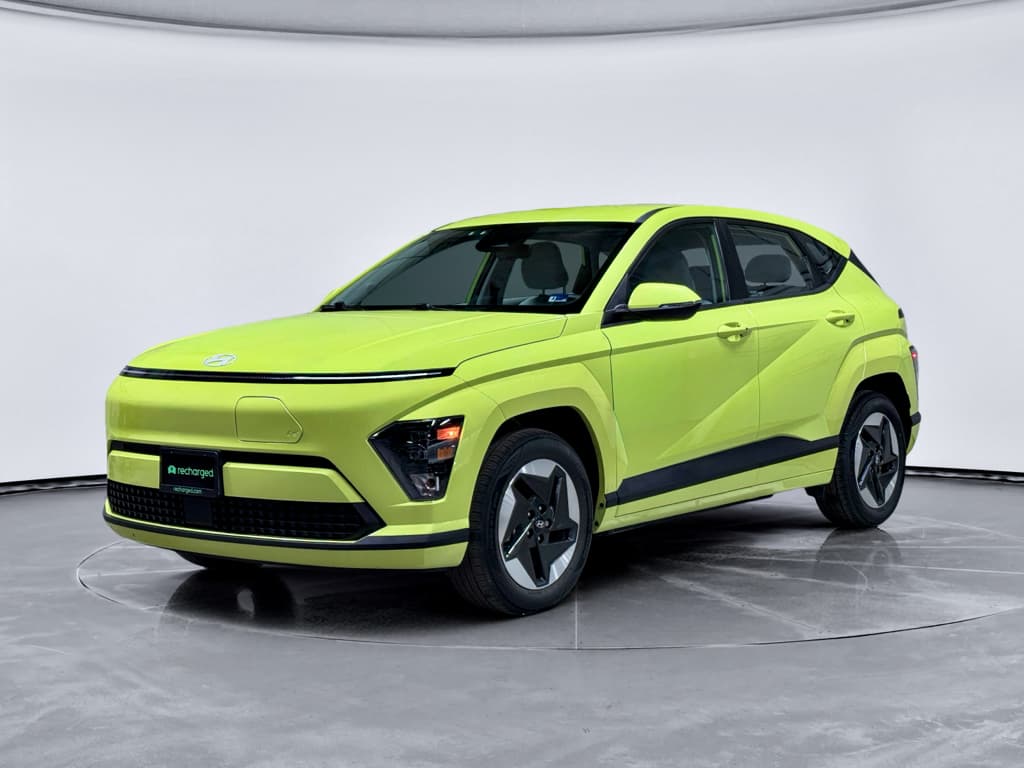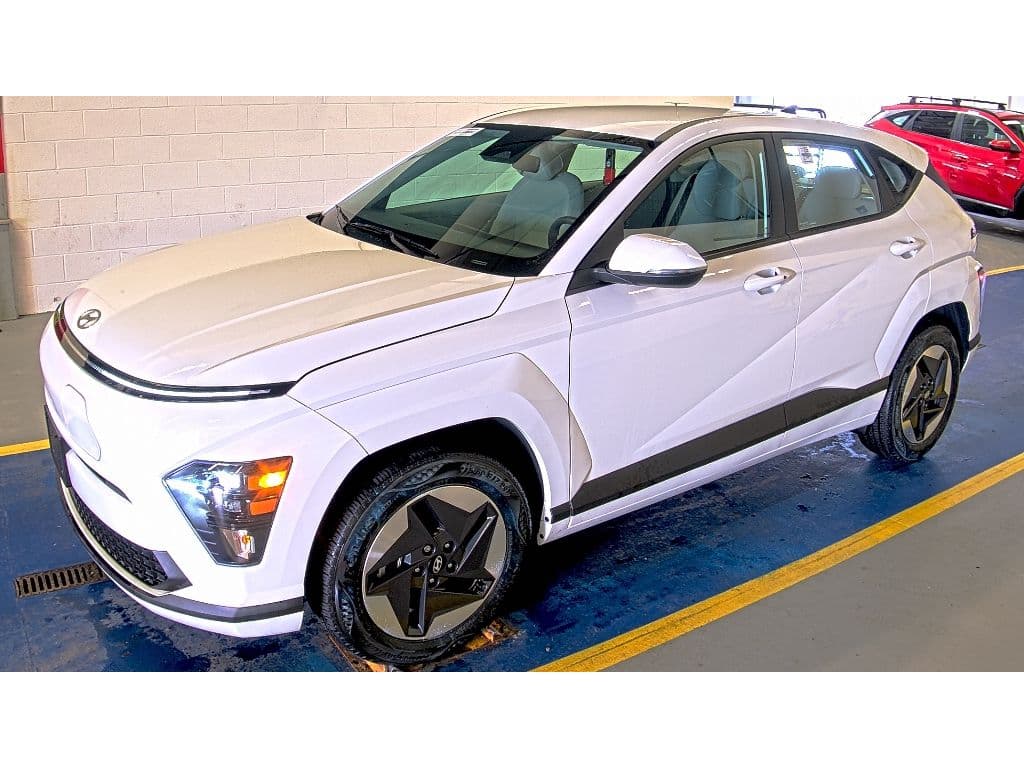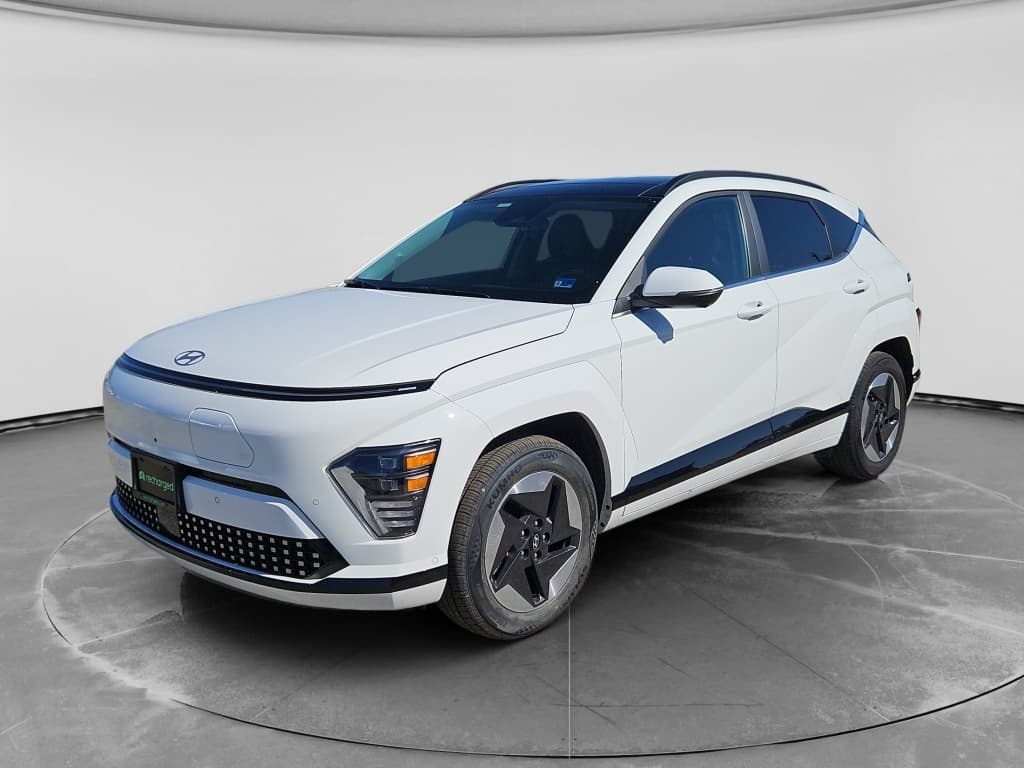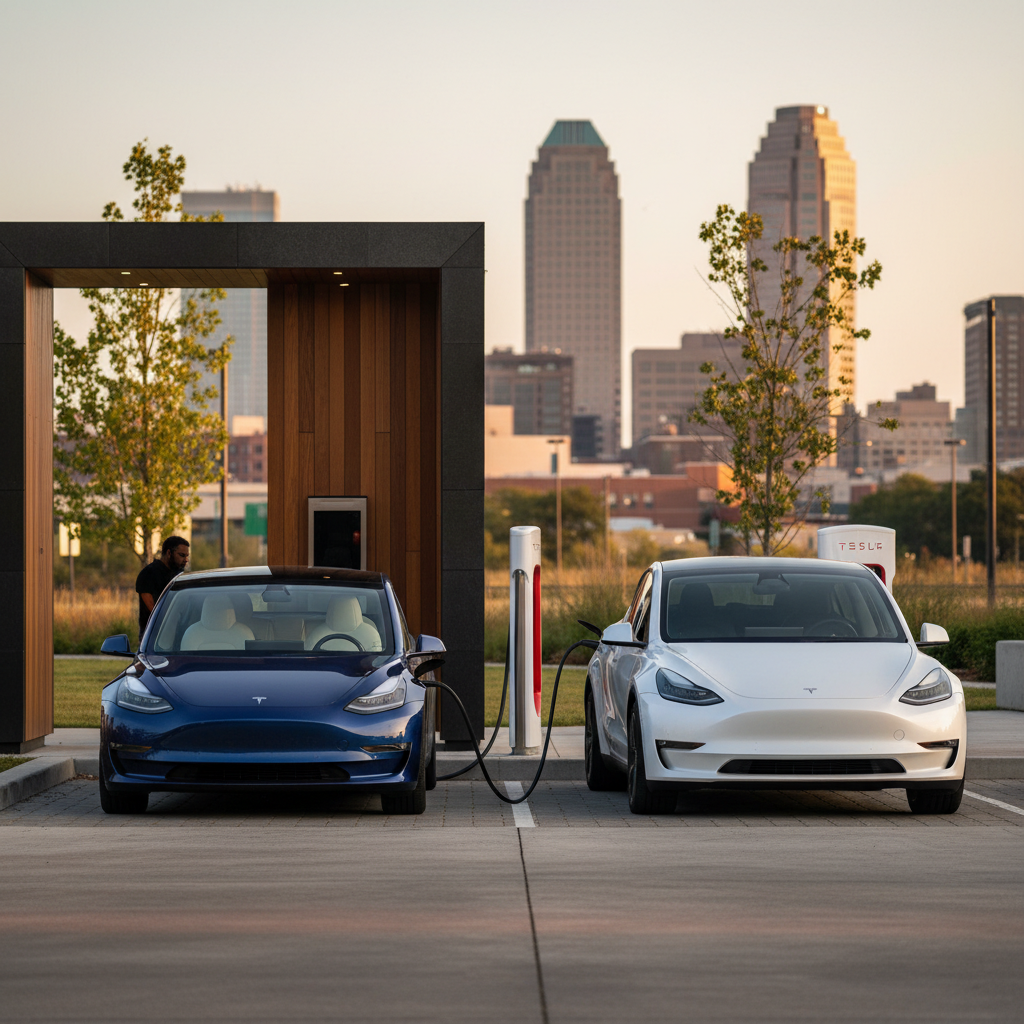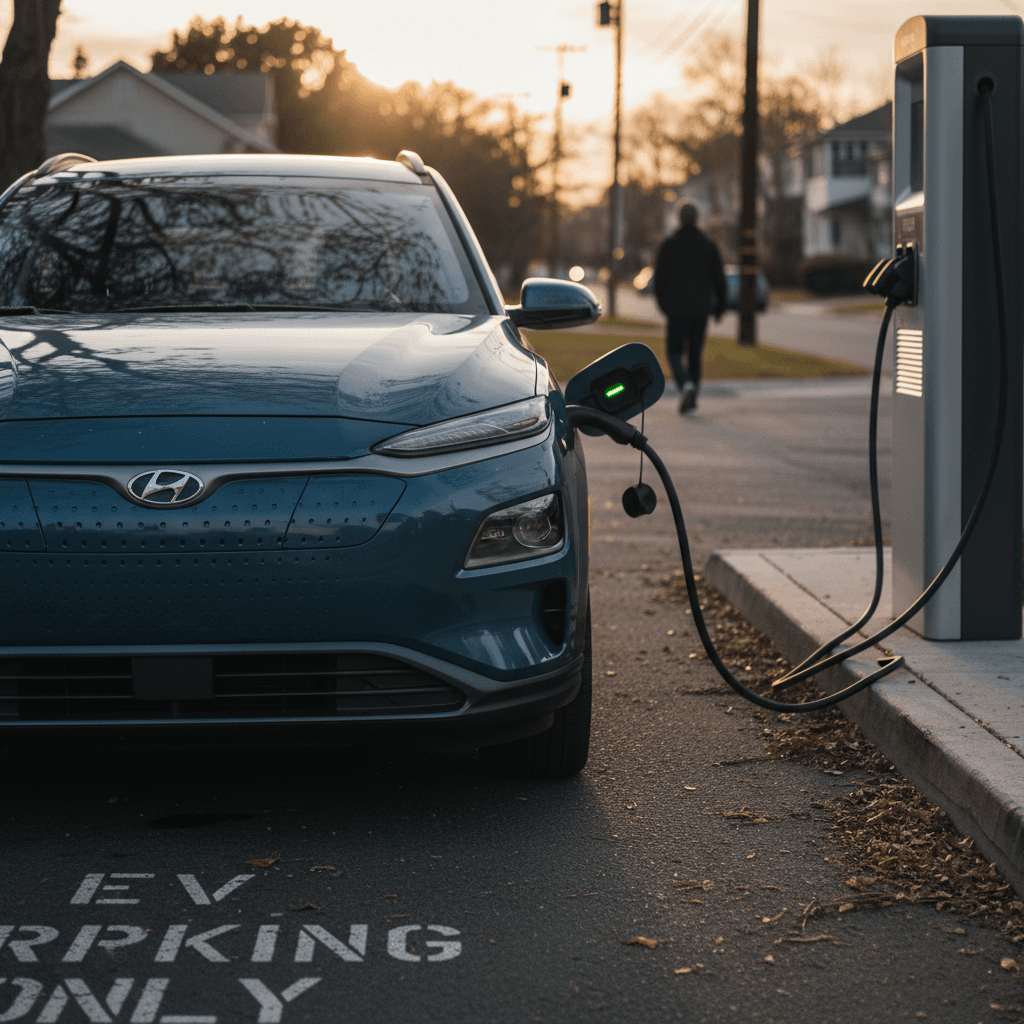
The 2025 Hyundai Kona Electric is one of the few genuinely affordable small electric SUVs in the U.S. market. It blends solid range, a smart new interior and fresh N Line styling with pricing that undercuts many bigger-name EVs. If you’re cross-shopping compact crossovers or deciding between a new Kona Electric and a used EV, this guide walks you through trims, pricing, range, charging, and ownership costs, plus how Recharged can help if you’re leaning toward used.
Quick snapshot
Why the 2025 Kona Electric matters
Hyundai completely redesigned the Kona Electric for the 2024 model year, then refined the formula for 2025. Mechanicals stay the same, but the lineup now includes a sport-flavored N Line trim and more cabin tech. For shoppers, that means you get a thoroughly modern EV on a proven platform, without paying flagship-money prices. In a market dominated by larger electric SUVs and premium badges, the Kona Electric 2025 occupies an important space: compact footprint, realistic pricing, and everyday practicality.
2025 Kona Electric: Key numbers at a glance
Incentives can change the math
2025 Kona Electric trims and pricing
For 2025, Hyundai offers the Kona Electric in four trims: SE, SEL, N Line and Limited. All are front‑wheel drive with a single electric motor. The SE uses a smaller battery with less range, while SEL, N Line and Limited step up to a larger pack and more power. Official MSRP varies slightly by source and may not include destination, but you can use these ballpark figures as a guide when comparing offers.
2025 Hyundai Kona Electric trims overview
Approximate starting MSRPs are for reference only. Dealer pricing, incentives and destination charges will change what you actually pay.
| Trim | Approx. starting MSRP | Battery | Horsepower | EPA range | Who it fits best |
|---|---|---|---|---|---|
| SE | ≈$33K–34K | 48.6 kWh | 133 hp | 200 miles | City-focused drivers who mostly charge at home and want the lowest entry price. |
| SEL | ≈$37K–38K | 64.8 kWh | 201 hp | 261 miles | Commuters and small families who value range and comfort features. |
| N Line | ≈$39K–40K | 64.8 kWh | 201 hp | 230 miles | Style-conscious drivers who want the sportier look and don’t mind a bit less range. |
| Limited | ≈$41K–42K | 64.8 kWh | 201 hp | 261 miles | Shoppers who want the full feature set, including advanced driver aids and premium touches. |
Use this as a high-level cheat sheet before you dive into test drives or quotes.
Which 2025 Kona Electric trim matches your life?
Think in terms of how you actually drive, not just what looks good on paper.
Kona Electric SE – budget-first urban commuter
If you mostly drive in town, keep daily miles under 60–70, and have reliable home or workplace charging, the SE’s 200‑mile range is plenty. You get the same basic body and modern cabin as pricier trims at a lower upfront cost.
Kona Electric SEL – the sweet spot
The SEL brings the larger 64.8‑kWh battery, 201‑hp motor, and up to 261 miles of range alongside comfort upgrades like heated seats. For most shoppers, this is the best balance of price, performance and features.
Kona Electric N Line – sporty on a budget
The new N Line trim adds 19‑inch wheels, sporty styling and unique seats. You lose some range (down to about 230 miles) because of the larger wheels, but if aesthetics matter and your daily driving is modest, it’s a compelling middle ground.
Kona Electric Limited – fully loaded
The Limited trim is for buyers who treat the Kona Electric as a primary family car and want top-shelf driver assistance, surround-view cameras and convenience tech. It’s the priciest Kona Electric but still undercuts many larger EVs.
Watch the fine print on pricing
Range, batteries and charging speeds
Mechanically, the 2025 Kona Electric carries over its 2024 redesign. That’s mostly good news: you get predictable performance and charging behavior, and a clear difference between the smaller and larger battery packs. All trims use a permanent-magnet synchronous motor driving the front wheels, and all have DC fast-charging capability plus an onboard AC charger for Level 2 home or workplace charging.
2025 Kona Electric batteries, range and charging
These are manufacturer and EPA figures; your real-world results will vary based on temperature, speed and driving style.
| Trim | Battery capacity | EPA range | Onboard AC charger | DC fast charge (10–80%) |
|---|---|---|---|---|
| SE | 48.6 kWh | 200 miles | ≈11 kW | ≈43 minutes on 100‑kW DC |
| SEL | 64.8 kWh | 261 miles | ≈11 kW | ≈43 minutes on 100‑kW DC |
| N Line | 64.8 kWh | 230 miles | ≈11 kW | ≈43 minutes on 100‑kW DC |
| Limited | 64.8 kWh | 261 miles | ≈11 kW | ≈43 minutes on 100‑kW DC |
Consider both range and charging time when planning your daily use and road trips.
Real-world range reality check
- All trims support Level 2 AC charging up to roughly 11 kW, which can take the battery from near empty to full in about 5–6 hours at home if you have a properly installed 240‑volt circuit.
- A 100‑kW DC fast charger can take the battery from 10% to 80% in about 43 minutes, making the Kona Electric viable for long-distance road trips with planning.
- The larger 64.8‑kWh pack not only boosts range but also gives you stronger acceleration (201 hp). If you regularly merge onto busy highways or pass at speed, you’ll notice the difference versus the SE.
Home charging sweet spot
Interior space, tech and daily comfort
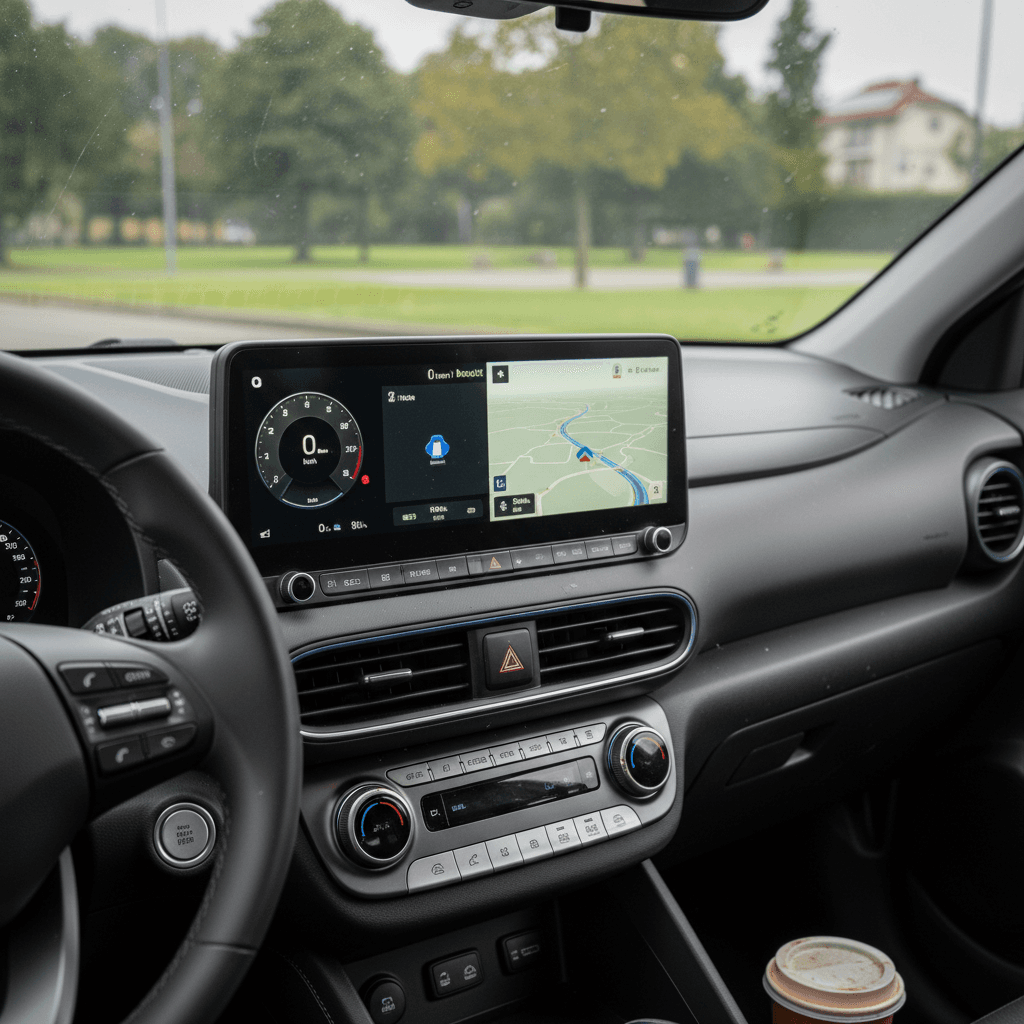
One of the biggest upgrades in the latest-generation Kona Electric is inside. Hyundai pushed the wheels closer to the corners, stretching the wheelbase versus the old model and carving more space out of the cabin. You get dual 12.3‑inch screens on most trims, straightforward physical controls for critical functions, and a layout that feels more like a scaled‑down Ioniq 5 than a budget runabout.
Interior highlights that matter in everyday driving
Small EV SUV, grown-up cabin.
Usable rear seats
The 2025 Kona Electric offers adult-friendly rear legroom for short and medium trips. Three across is tight, but two adults or kids in car seats work well.
Dual 12.3" displays
Most trims get a 12.3‑inch digital gauge cluster plus a 12.3‑inch central touchscreen with navigation, Apple CarPlay and Android Auto.
Practical cargo area
With the rear seats up, you’ll fit groceries, strollers or weekend bags. Fold them down and the cargo space expands enough for bikes or larger boxes.
Standard safety tech is strong
What’s new for 2025 (including N Line)
Because the Kona Electric was fully redesigned for 2024, the 2025 model year is about incremental improvements rather than a clean-sheet overhaul. Hyundai’s main headline is the addition of the N Line trim, plus some feature shuffles and wider availability of tech that early adopters asked for.
- New N Line trim brings sportier styling, unique seats and 19‑inch wheels, while keeping the same 64.8‑kWh battery and 201‑hp motor used in SEL and Limited.
- Vehicle-to-Load (V2L) bi‑directional charging capability is standard across the Kona Electric range, letting you power tools, camping gear or even another EV in a pinch with the right adapter.
- Top trims gain expanded ambient interior lighting and other small refinements that make the cabin feel more upscale.
- Color and wheel options change slightly year over year, so if you care about paint and interior combinations, confirm what’s available in your region before ordering.
What V2L means in real life
Kona Electric vs. Ioniq 5 and other rivals
Hyundai now offers multiple EV crossovers, and it’s easy to wonder whether you should stretch from a Kona Electric into a larger Ioniq 5, or look at rivals like the Tesla Model Y, Kia EV6 or Chevrolet Equinox EV. The answer depends on how much space you need, what you’re willing to spend, and how often you road‑trip.
Kona Electric vs. Hyundai Ioniq 5
- Size: Kona Electric is a subcompact; Ioniq 5 is a compact-to-midsize with more interior and cargo space.
- Platform: Ioniq 5 rides on an 800‑volt E‑GMP platform for ultra‑fast charging; Kona Electric uses a more conventional 400‑volt setup.
- Price: A similarly equipped Kona Electric generally costs several thousand dollars less than an Ioniq 5.
- Who it suits: Kona Electric is better for city and suburban households that can live with a smaller footprint. Ioniq 5 favors families that need more space and want the fastest charging tech.
Kona Electric vs. other small EVs
- Tesla Model Y / compact crossovers: Typically more expensive but offer longer range and access to Tesla’s latest charging ecosystem.
- Kia Niro EV / compact hatchbacks: Close rival in size and concept; deciding factors often come down to styling and dealer experience.
- Upcoming budget EVs: New models arriving in 2025–2026 may target similar price points, but the Kona Electric is here now with known specs and real‑world track records.
Don’t over-buy on size
Home charging and road-trip usage
The 2025 Kona Electric is at its best when you treat public fast charging as a supplement, not your primary fuel source. Daily life is simple if you can plug in at home or work, then rely on DC fast chargers only for road trips or occasional top‑offs.
Charging setup checklist for Kona Electric owners
1. Confirm where you’ll charge most
If you have a garage or driveway, plan for a dedicated 240‑volt circuit. Apartment dwellers should map out nearby Level 2 and DC fast chargers before committing.
2. Match your home charger to the car
The Kona Electric’s onboard charger tops out around 11 kW, so there’s no benefit to buying a faster wall box. Focus instead on reliability, cable length and smart‑charging features.
3. Learn your local fast-charger network
Download apps for major networks near you and note which locations reliably offer 100‑kW or faster plugs, restrooms and food options.
4. Plan winter margins
In cold climates, give yourself extra buffer on long drives, think arriving at chargers with 10–20% remaining instead of single digits.
5. Use scheduled charging
If your utility offers time-of-use rates, program the Kona Electric or your home charger to start overnight when electricity is cheapest.
Safety first on home installs
Should you buy a new or used Kona Electric?
The 2025 Kona Electric is attractive new, but the presence of earlier model years (especially pre‑redesign Konas) means the used market can be tempting. The right answer depends on how much you prioritize the updated interior and extra space versus up‑front savings.
Reasons to choose a new 2025 Kona Electric
- Latest design and space: The 2025 model benefits from the recent redesign with a roomier cabin and modern tech.
- Full warranty: You get a new‑car bumper‑to‑bumper warranty plus Hyundai’s battery coverage (typically 8 years/100,000 miles, check the fine print).
- Custom spec: You can order the exact trim, color and options you want, including the N Line or Limited.
- Current incentives: Manufacturers often push attractive lease deals or APR offers on new EVs to stay competitive.
Reasons to consider a used Kona Electric
- Lower purchase price: Early‑generation Kona Electrics and 2024 models may offer thousands in savings versus new, especially off‑lease units.
- Slower depreciation: Let the first owner absorb the steepest drop in value; you buy at a more stable price point.
- Plenty of range for many drivers: Even slightly older Kona EVs still deliver respectable range for commuting and errands.
- More EV for the same payment: The monthly cost on a used Kona Electric may be similar to a smaller or less‑equipped new car.
Pay attention to battery health on used EVs
How Recharged helps with used Kona Electrics
If you’re leaning toward a used Kona Electric instead of a 2025 model, you don’t have to guess about battery health or hidden history. Recharged was built to make EV ownership simple and transparent, whether you’re trading in, buying or selling.
Why shop a used Kona Electric through Recharged
Transparent battery data, fair pricing and EV‑specialist help, end to end.
Recharged Score battery diagnostics
Every EV we sell, including the Kona Electric, comes with a Recharged Score Report that measures real battery health, not just what the dash guess‑o‑meter says.
Fair, data‑driven pricing
We benchmark Kona Electric prices against the broader used‑EV market, so you can see how your car’s mileage, options and battery health translate into value.
Trade‑in, financing and delivery
Recharged offers financing, trade‑ins, consignment and nationwide delivery. You can complete the entire process digitally or visit our Experience Center in Richmond, VA.
Ready to find your next EV?
Browse VehiclesBecause our specialists focus only on EVs, they can walk you through questions like Level 2 home charging, realistic winter range for your specific commute, and whether a 2025 Kona Electric or a slightly older model gives you more value for your monthly budget.
2025 Kona Electric FAQ
Frequently asked questions about the 2025 Kona Electric
Bottom line: Is the 2025 Kona Electric right for you?
If you want an EV that’s easy to live with, reasonably priced and sized for real-world parking spaces, the Kona Electric 2025 deserves a close look. It won’t win drag races against high‑end performance EVs, but it delivers honest range, usable tech and the peace of mind that comes with a mainstream brand and modern safety suite. The new N Line adds personality, while SEL and Limited trims remain the sweet spot for range and comfort.
The final decision is how you balance monthly budget, space needs and charging access. If you’re set on a brand‑new EV with the latest styling, a 2025 Hyundai Kona Electric in SEL or Limited form is a strong value. If you’d prefer to let someone else take the early depreciation hit, a thoroughly inspected used Kona Electric with a clear Recharged Score Report can put similar capability in your driveway for less. Either way, getting these details dialed in before you sign makes it far more likely that your next EV will fit your life, not the other way around.