If you drive an electric vehicle in North Carolina, you might be wondering whether EVs still get special treatment in the carpool lane. North Carolina EV HOV lane rules have changed in the wake of a major federal shift in late 2025, and the details can be confusing, especially if you remember hearing that EVs could use HOV lanes solo in the past.
Why this matters now
Overview: North Carolina EV HOV lane rules in 2026
Key facts North Carolina EV drivers should know
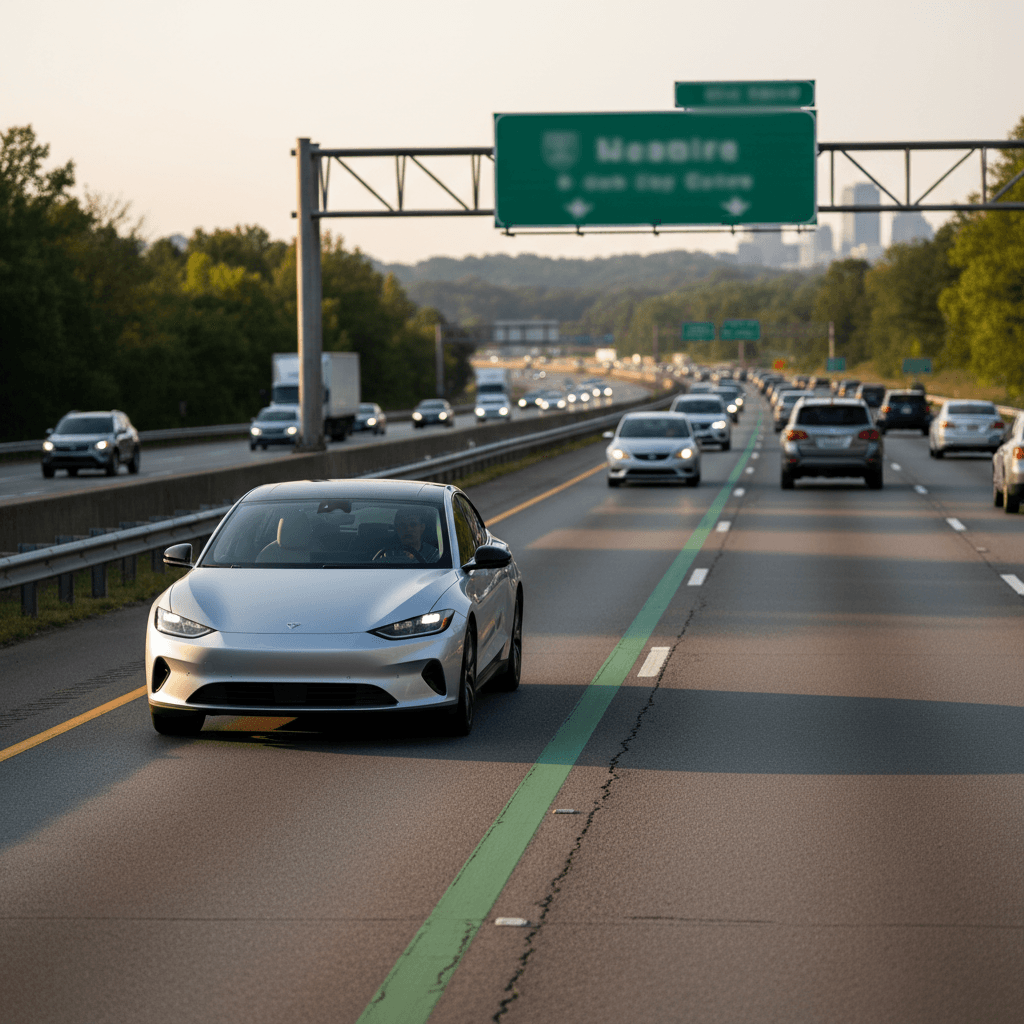
The short version: in North Carolina today, your electric vehicle is treated like any other car for HOV purposes. You don’t get to ride in the carpool lane solo just because you drive on electrons. To use an HOV or express lane without paying extra, or to use it at all during restricted hours, you must meet the same occupancy and transponder rules that apply to gas vehicles.
Don’t rely on outdated EV HOV advice
How HOV and express lanes work in North Carolina
Before you focus on EV‑specific questions, it helps to understand how North Carolina’s high‑occupancy and express lanes work in general. The state uses a mix of traditional HOV rules and high‑occupancy toll (HOT) lanes, where some vehicles can ride free while others pay a variable toll.
Types of higher‑speed lanes you’ll see in NC
Same pavement, different rules depending on signage
Standard HOV lanes
These lanes require a minimum number of occupants, typically 2+ people, during posted hours. If you don’t meet the occupancy rule, you can’t be there, regardless of whether you drive an EV or a gas car.
Express / HOT lanes
On the I‑77 Express Lanes north of Charlotte, qualifying high‑occupancy vehicles travel free, while solo drivers (and some two‑person vehicles) pay a dynamic toll based on congestion.
Static vs. dynamic rules
Some HOV rules are in effect only at rush hour, while express‑lane tolls change minute‑to‑minute. Always read roadside signs, those override anything you heard from a friend or an old article.
Where EV status does and doesn’t matter
Did EVs ever get special HOV access in North Carolina?
Yes, but it was quieter and more limited than in places like California. Under federal authority that started back in 2005, states could let certain low‑emission and alternative‑fuel vehicles, including plug‑in EVs, use HOV lanes with just the driver in the car. North Carolina was one of the states that technically offered that exemption, and, unusually, it didn’t require a special sticker or plate.
For years, federal and state summaries described North Carolina as allowing qualified plug‑in electric, natural gas, and fuel‑cell vehicles to use HOV lanes regardless of occupancy. In practice, that applied to a small number of segments and was not as widely publicized as big‑state decal programs. Many NC EV drivers never knew the perk existed.
Why you won’t see EV decals in North Carolina
What changed for EV HOV access after September 30, 2025
The real pivot point for North Carolina EV HOV lane rules wasn’t a Raleigh press conference; it was a line in federal law. Under 23 U.S.C. 166, the authority for states to let low‑emission and alternative‑fuel vehicles bypass HOV occupancy rules was set to expire on September 30, 2025 unless Congress extended it. That expiration date came and went without an extension.
- As of October 1, 2025, federal permission to give solo EVs special HOV treatment effectively ended.
- States that had given EVs access via decals or plates (California, Virginia, New York, and others) began revoking those privileges.
- North Carolina, which had allowed certain alternative‑fuel vehicles in HOV lanes without decals, now treats EVs like any other vehicle for HOV purposes.
Critical point for NC EV drivers
North Carolina EV HOV lane rules by road type
Now let’s translate the legal backdrop into something you can use on your commute. Different North Carolina corridors play by slightly different rules, but one theme runs through all of them: your EV doesn’t get you a free pass.
2026 North Carolina EV HOV rules at a glance
Always check posted signage and NCDOT/NC Quick Pass resources for the specific corridor you’re using, but this table captures the big picture for EV drivers.
| Road type / corridor | Who can use lane at rush hour? | Does EV status help? | What EV drivers should do |
|---|---|---|---|
| Traditional HOV lane on NC interstate (where signed) | Vehicles meeting posted occupancy (often 2+), buses, motorcycles | No. EVs follow the same occupancy rule as gas vehicles. | Use HOV lane only if you have the minimum number of people. Don’t assume EV gives you a solo pass. |
| I‑77 Express Lanes (Charlotte region) | Any vehicle that pays toll; free for HOV 3+ with correct Quick Pass setup; motorcycles, transit vehicles, first responders on duty | No special discount or free ride just for being an EV. | Treat your EV like any other car: pay the toll when solo, or meet HOV 3+ and set HOV status correctly to ride free. |
| General‑purpose lanes | All vehicles, any fuel type, no special occupancy requirement | Not applicable, no HOV restriction here. | If you’re solo in an EV, stick to these lanes unless you meet HOV rules or choose to pay HOT tolls where available. |
| Future HOV/HOT projects in NC | To be determined by NCDOT and project operators | Unknown, but federal law no longer supports solo EV exemptions. | Watch NCDOT and NC Quick Pass updates. Expect occupancy and toll rules to be the same for EVs and non‑EVs. |
This table focuses on how your EV status interacts with HOV rules, not on every possible detail of each roadway.
Your best information sources
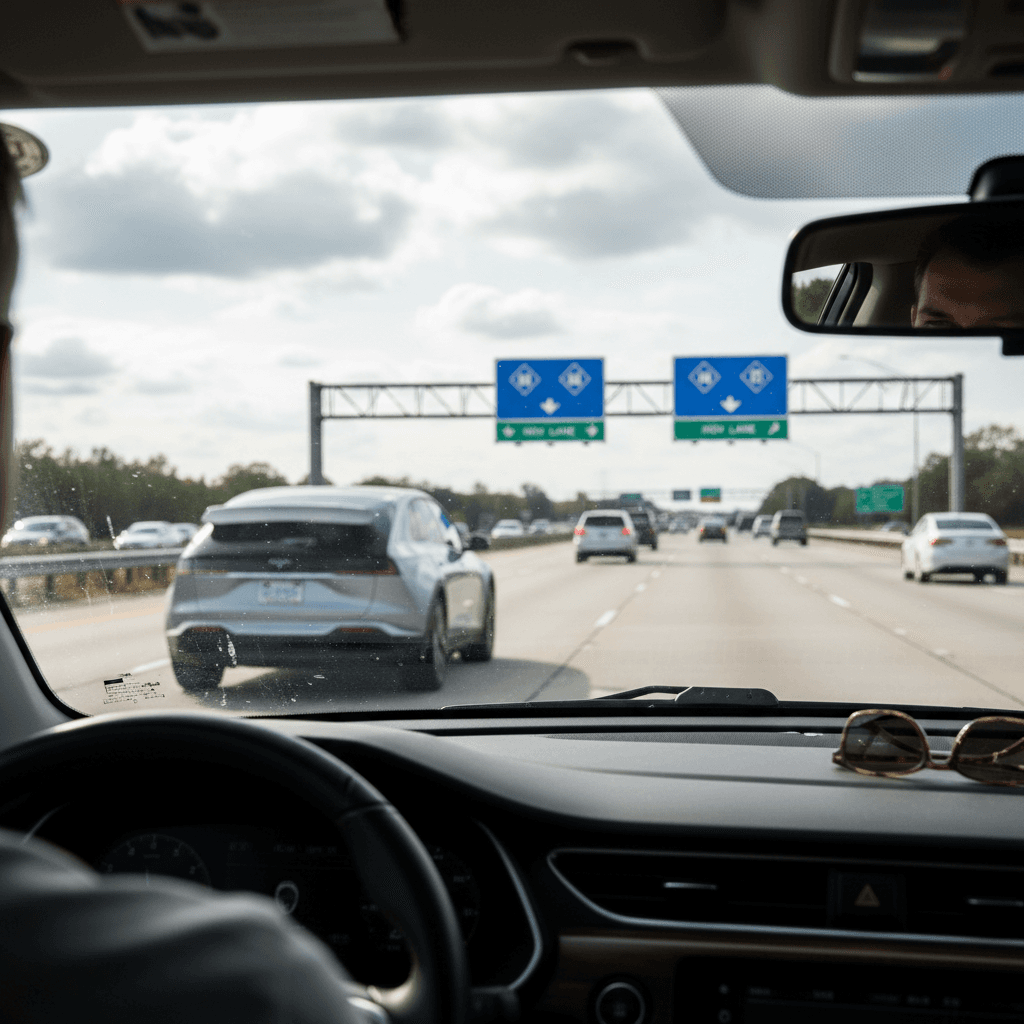
Step-by-step: How to use HOV or express lanes in an EV
Checklist for NC EV drivers before you use an HOV or express lane
1. Identify the lane type
Watch for diamond‑symbol signs and electronic message boards. Is this a standard HOV lane, an express/HOT lane like I‑77, or just a left lane with no special rules?
2. Confirm the occupancy requirement
Look for language like “HOV 2+” or “HOV 3+” and any time windows. If it says HOV 3+, you need three or more people in the car, not just an EV badge on the back.
3. Decide whether you’ll pay a toll
On I‑77 Express Lanes, you can usually enter solo in your EV by paying the market‑rate toll. If you don’t want to pay, you must meet the HOV 3+ requirement and set HOV status correctly.
4. Set up NC Quick Pass (for I‑77)
If you commute on I‑77 Express Lanes, open a NC Quick Pass account and install the correct transponder. Use the app or Flex switch to set HOV status when you have 3+ people.
5. Keep proof of occupancy obvious
Enforcement is visual. Make sure passengers are clearly visible and seatbelts are on. Dark tints and cluttered cabins make it harder to avoid mistaken stops.
6. When in doubt, stay in general lanes
If you’re not 100% sure about the rules on a given segment, it’s safer, and usually cheaper in the long run, to stay out of the restricted lane until you’ve checked the official guidance.
Common mistakes EV drivers make with HOV lanes
Because HOV incentives for EVs were heavily advertised in a few big states, a lot of North Carolina drivers picked up “rules” that never quite applied here, or that expired in 2025. Here are some of the missteps that can turn an otherwise smooth commute into an expensive morning.
Top HOV mistakes to avoid in your EV
Most of these come from outdated information, not bad intentions
Assuming EVs still ride solo in HOV lanes
Federal authority for solo low‑emission vehicles in HOV lanes ended on September 30, 2025. Treat your EV like a standard car: if you don’t meet the posted occupancy, you don’t belong there.
Confusing HOV status with EV status
On I‑77 Express Lanes, NC Quick Pass has a special HOV status, but it’s about how many people are in the car, not what powers it. You won’t ride free solo just because you drive an EV.
Ignoring updated signs after 2025
Some corridors updated signage and messaging as federal rules changed. If you memorized what the sign said in 2023, that memory may be out of date today.
Thinking “green” equals “exempt”
Environmental benefits don’t automatically translate into traffic exemptions. After 2025, most states, including North Carolina, shifted back to occupancy‑based HOV enforcement.
Ticket risk for EV drivers
How HOV rules should factor into your EV shopping and commute
When high‑occupancy perks first arrived, some shoppers justified paying more for an early hybrid or EV largely on the promise of riding solo in the carpool lane. In 2026, that calculation looks very different, especially in North Carolina, where charging access and electricity rates matter far more than HOV freebies.
What to prioritize for an NC EV commuter
- Home or workplace charging: The ability to leave home each morning with a full battery is worth more than a few minutes in an HOV lane.
- Realistic highway range: Look for an EV that can comfortably cover your round‑trip commute at interstate speeds, even in winter.
- Fast‑charging options on your route: North Carolina is investing NEVI funds to fill charging gaps; check where new stations are planned along your corridor.
- Comfort in regular lanes: Quiet cabins and driver‑assist features make stop‑and‑go traffic more tolerable when you can’t bypass it.
Why HOV perks are now a bonus, not a pillar
- With federal authority for solo EV HOV access gone, any future perks are likely to be limited, local, and changeable.
- Time savings from a well‑planned charging routine often outweigh the marginal gain from an occasional HOV shortcut.
- Choosing the right used EV with healthy battery life will affect your commute every single day, not just when an HOV lane happens to be open.
- When you shop used, tools like the Recharged Score battery health report can help you separate solid commuter candidates from range‑anxious bargains.
How Recharged can help NC commuters
FAQ: North Carolina EV HOV lane rules
Frequently asked questions about NC EV HOV lanes
Bottom line for North Carolina EV HOV lane rules
If you’re an EV driver in North Carolina in 2026, the bottom line is simple: treat HOV and express lanes as occupancy‑based, not fuel‑type‑based. The era of broad federal solo EV HOV exemptions ended on September 30, 2025, and North Carolina now expects electric vehicles to follow the same carpool rules as everyone else.
For your wallet and your daily stress level, you’ll usually get more value from choosing the right EV and charging setup than from chasing lane perks that may not exist on your route. If you’re evaluating a used EV for your North Carolina commute, consider browsing vehicles on Recharged, each one comes with a Recharged Score battery health report and expert guidance, so you can pick a car that fits your life in every lane, not just the carpool lane.