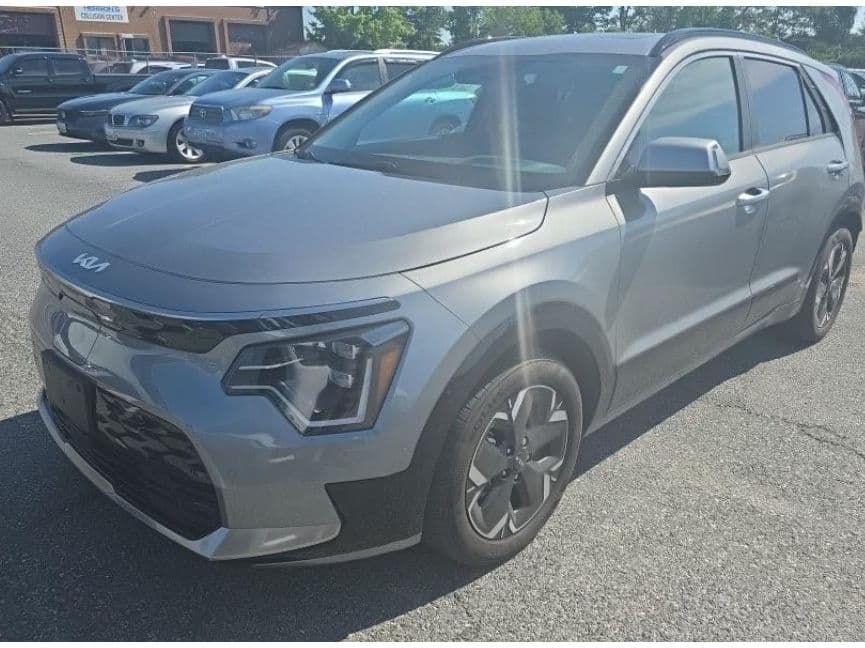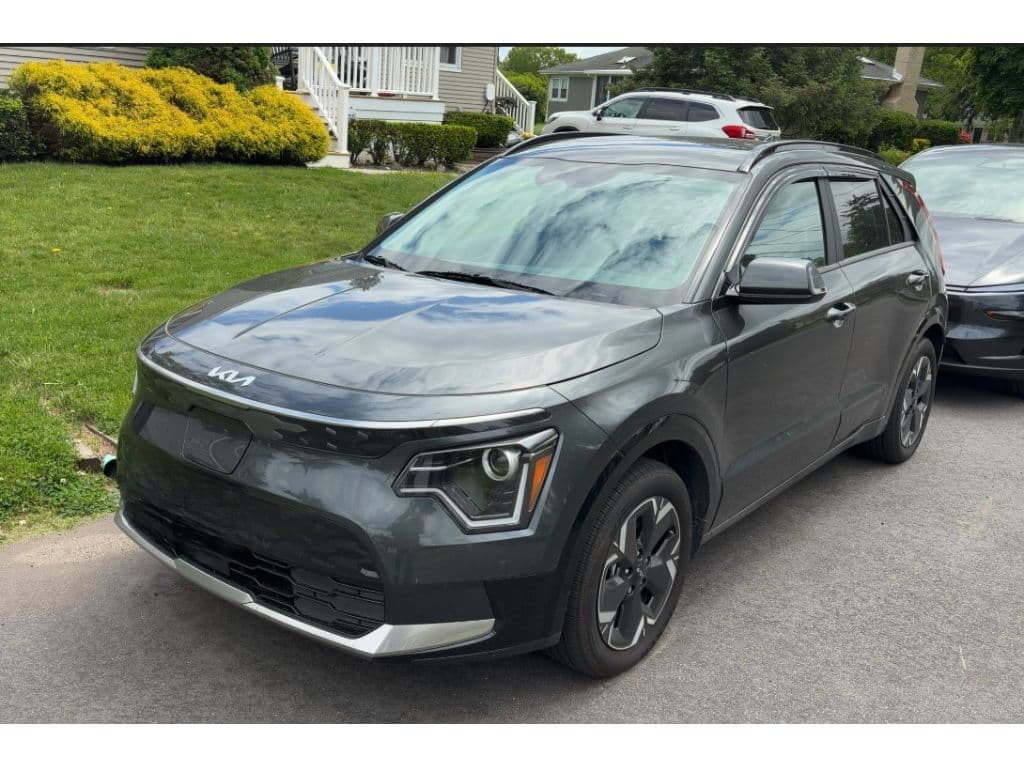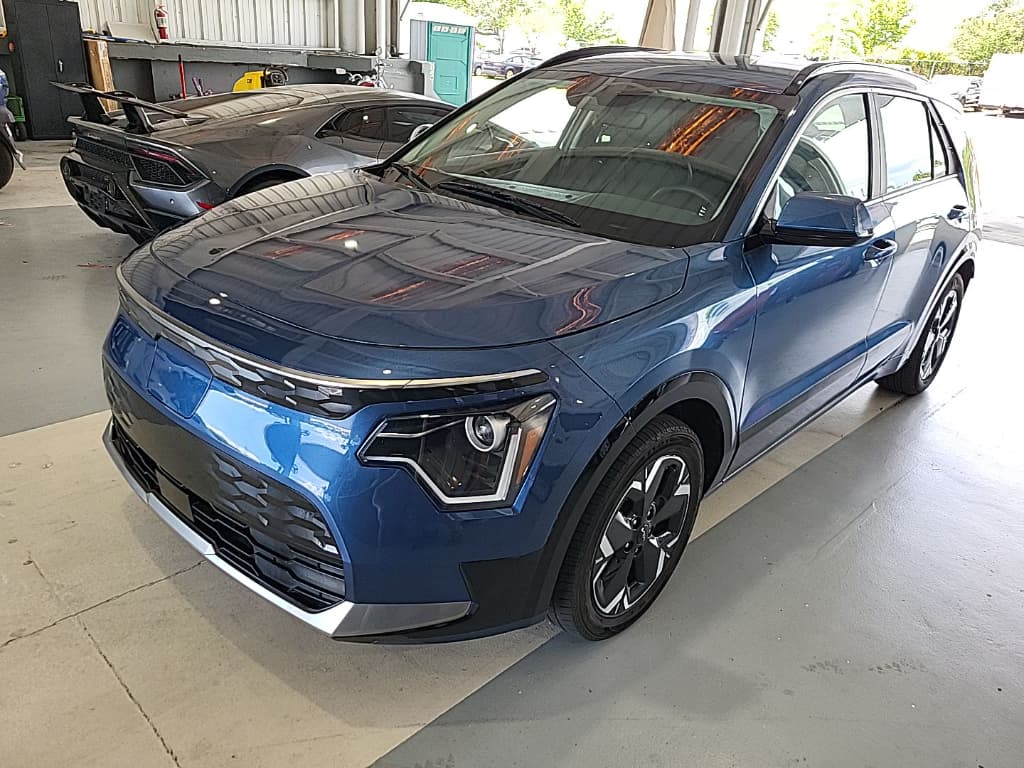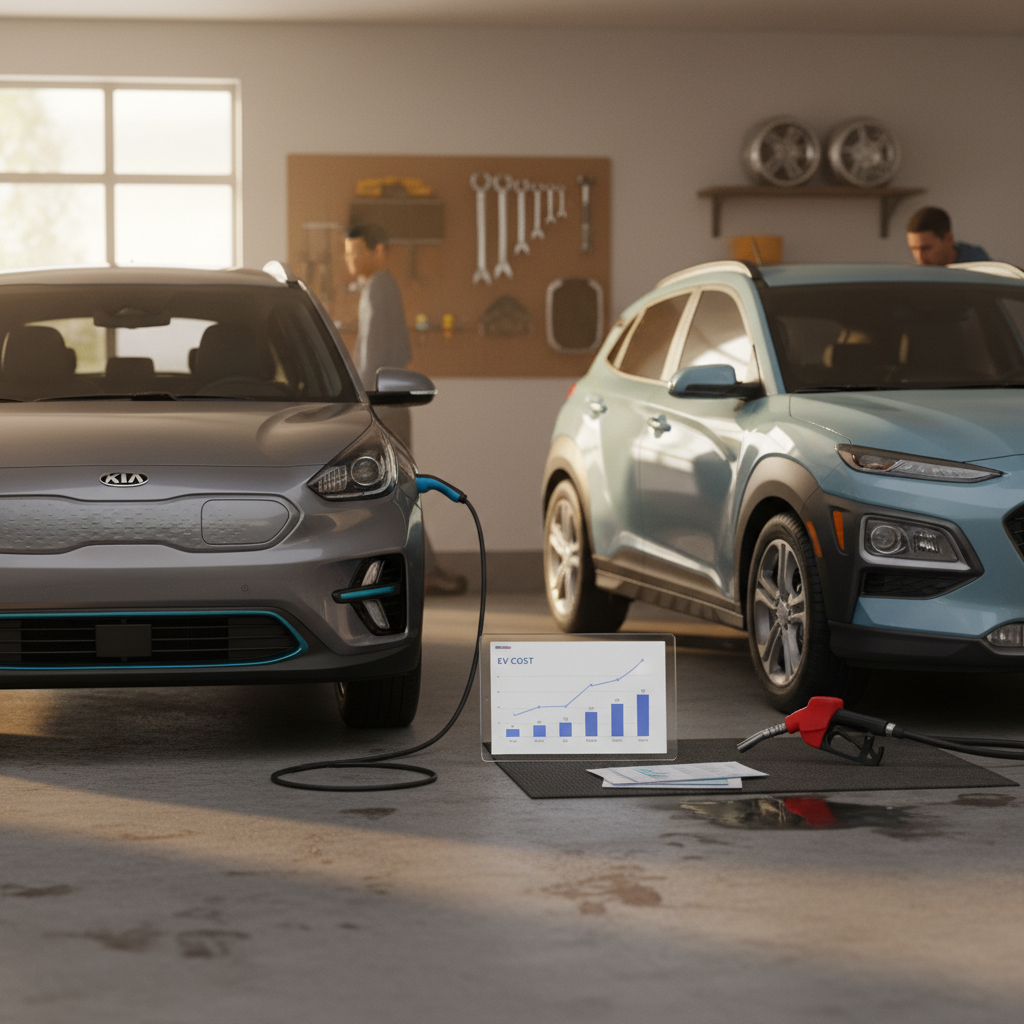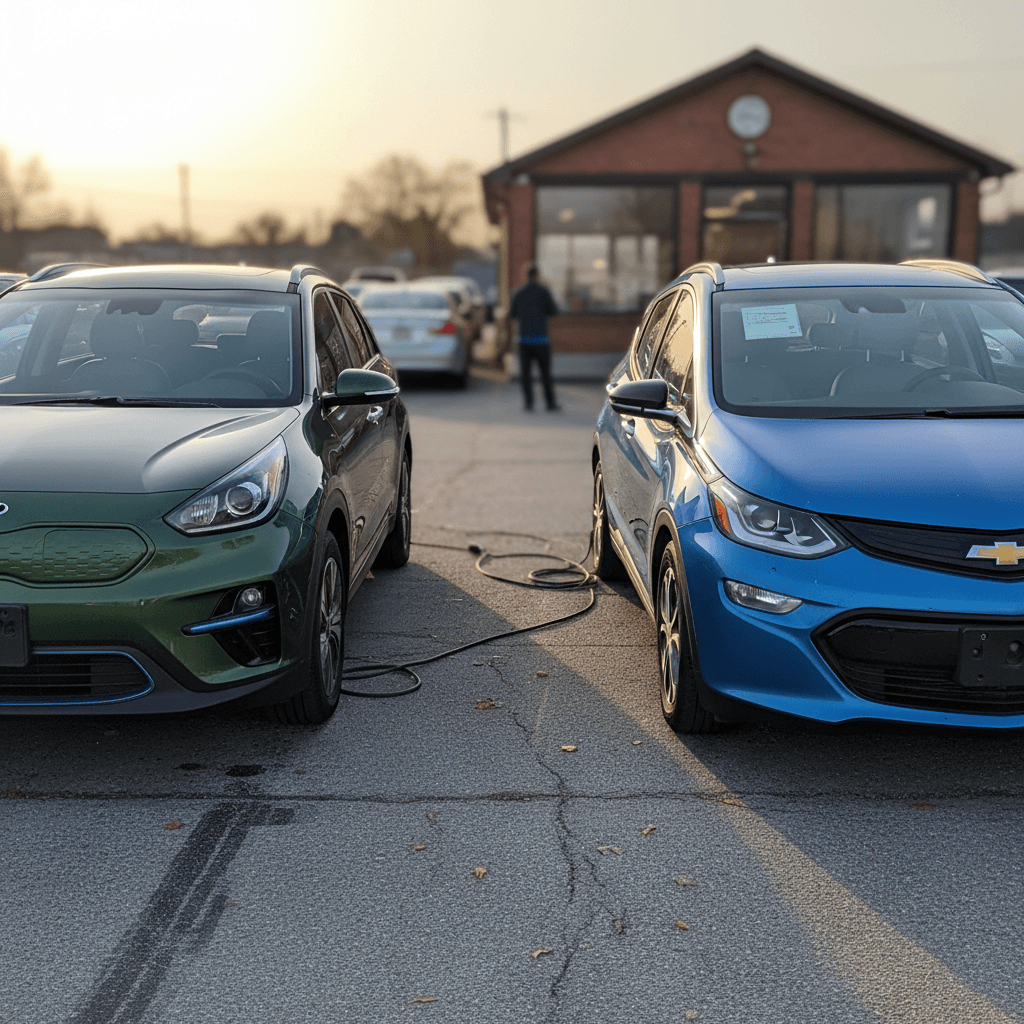
Putting the Kia Niro EV vs Chevrolet Bolt EV side by side makes sense if you’re hunting for an affordable used electric car with real-world range and hatchback practicality. Both were among the most accessible new EVs in the U.S., and today they anchor the value end of the used EV market. But they don’t drive, charge, or age the same, and those differences matter when you’re shopping used.
Two strong but different used EV bets
Kia Niro EV vs Chevrolet Bolt EV: Overview
To keep this comparison grounded in what you’ll actually find on the used market, we’ll focus on second-generation U.S. Kia Niro EVs (2023–2025+) and the more common 2019–2023 Chevrolet Bolt EV. Earlier first-gen Niro EVs and the slightly larger Bolt EUV are out there too, but they’re niche enough that most shoppers start with these core years.
How these two EVs are positioned
Same mission, different personalities
Kia Niro EV
Body style: Subcompact crossover (taller roof, more cargo flexibility)
- 64.8 kWh battery, about 201 hp
- EPA range roughly in the mid‑250s (trim dependent)
- Slower DC fast charging but strong daily usability
- Newer interior design and infotainment
Chevrolet Bolt EV
Body style: Compact hatchback (shorter, easy to park)
- 60–65 kWh battery depending on year
- EPA range up to 259 miles on later models
- Respectable DC fast charging for its era
- Aggressive pricing on the used market, but with recall history to understand
Model years matter
Core Specs: Niro EV vs Chevy Bolt EV at a Glance
Key specs comparison: Kia Niro EV vs Chevrolet Bolt EV
Approximate U.S.-market specs for popular used model years. Always verify configuration on the specific vehicle you’re considering.
| Kia Niro EV (2023–2025) | Chevrolet Bolt EV (2020–2023) | |
|---|---|---|
| Body style | Subcompact crossover | Compact hatchback |
| Battery capacity | ~64.8 kWh | ~66 kWh (2020+) |
| EPA range (best-case trims) | Mid‑250-mile ballpark | 259 miles (2020+ EPA rating) |
| Power | ~201 hp FWD | ~200 hp FWD |
| Peak DC fast charge | ~75–85 kW (short peaks) | ~55 kW typical peak |
| Onboard AC charger | Up to ~11 kW (Level 2) | Up to 7.2 kW (Level 2) |
| Seat capacity | 5 | 5 |
| Cargo behind 2nd row | More crossover-like volume | Less, but good for a small hatch |
| Active safety tech | Modern Kia Drive Wise suite (trim-dependent) | Chevy Safety Assist on later years (trim-dependent) |
Spec snapshot for common used Kia Niro EV and Chevrolet Bolt EV configurations.
Use specs as a starting point, not the final answer
Range and Efficiency: Which Goes Farther on a Charge?
When you’re comparing the Kia Niro EV vs Chevrolet Bolt EV, range is usually at the top of the list. Both qualify as true road‑trip capable EVs, but the Bolt EV carved out its niche as one of the most efficient electric cars you could buy new.
Bolt EV: Slight edge on rated range
Later‑year Bolt EVs with the larger battery carry an EPA rating of up to 259 miles on a full charge in ideal conditions. That’s excellent for an affordable, compact EV and part of why the Bolt became a go‑to choice for budget‑minded commuters and fleets.
The Bolt’s compact footprint and efficient powertrain let it stretch each kilowatt‑hour a bit further than many rivals, including some crossovers.
Niro EV: Competitive range, more usable space
Current‑generation Niro EVs with the 64.8 kWh pack land in the mid‑250‑mile range ballpark on official ratings, depending on trim and wheels. In practice, owners often see highway ranges close to the Bolt’s, especially at moderate speeds.
Where the Niro EV pulls ahead is in how it packages that battery: you get a taller seating position and more versatile cargo area without a major penalty in efficiency.
Efficiency vs comfort trade-offs
Charging Experience: Home and DC Fast Charging Compared
Charging behavior is one of the biggest real‑world differences between the Kia Niro EV and Chevy Bolt EV. Both can handle road trips, but neither is a DC fast‑charging rocket ship by 2026 standards. The details of how each charges will matter if you often rely on public infrastructure.
High-level charging comparison
Home charging: Overnight is easy in both
On Level 2 home charging (240‑volt), both cars can go from a low state of charge to full overnight. The Niro EV’s stronger onboard charger (up to roughly 11 kW on a properly sized circuit) means shorter sessions if you regularly arrive home with a low battery. The Bolt EV tops out around 7.2 kW, which is still more than enough for typical commuting as long as you’re plugged in most nights.
Plan your home setup around your car
DC fast charging: Niro’s specs vs real-world behavior
On paper, the Niro EV supports roughly 75–85 kW peak DC fast charging, while the Bolt EV typically peaks closer to the mid‑50‑kW range. In practice, Niro owners often see sessions in the 40–70‑kW window with charge times from 10–80% running in the low‑to‑mid‑40‑minute range on a healthy charger. Bolt EV owners usually see slower peak numbers but a relatively predictable curve once the pack is warm.
Cold weather can dramatically slow both
- If you mainly road‑trip a few times a year, either car can work, you’ll just plan slightly longer stops than drivers in newer 800‑volt EVs.
- If you’re a heavy fast‑charger user (rideshare, delivery, frequent long‑distance), the Niro’s higher theoretical peak helps a bit, but its conservative charging curve means you should budget your time carefully either way.
- For mostly home‑charged commuters, Level 2 capability matters more than DC speed. Here, the Niro EV’s higher onboard charger is a quiet advantage.
Interior Space, Cargo, and Everyday Practicality
On the lot, the biggest immediate difference you’ll feel between the Kia Niro EV and Chevrolet Bolt EV is how you sit in each one. The Bolt is a tallish compact hatch; the Niro EV is very much a small crossover, and that shows up in headroom, cargo flexibility, and perceived roominess.
Everyday usability: crossover vs hatchback
Think about people, pets, and gear before you think about kilowatts
Kia Niro EV practicality highlights
- Taller seating position that many drivers find more comfortable for longer trips.
- More SUV‑like cargo hold with a wider hatch opening and better loading height.
- Rear seat space that’s more accommodating for adults or rear‑facing child seats.
- Often easier to install roof racks or cargo boxes on crossover‑style rails (trim‑dependent).
Chevy Bolt EV practicality highlights
- Shorter overall length, great for tight urban parking and narrow garages.
- Surprisingly usable cargo area for such a small footprint, especially with seats folded.
- Low lift‑over height that’s handy for groceries and small cargo.
- Easier to maneuver for new EV drivers or those downsizing from a larger vehicle.
Quick rule of thumb
Driving Feel, Safety Tech, and Features
Power and acceleration between the Kia Niro EV and Chevrolet Bolt EV are broadly similar on paper, around 200 horsepower driving the front wheels. Where they really diverge is in suspension tuning, cabin design, and the feel of their driver‑assistance tech.
Behind the wheel of the Niro EV
The Niro EV’s tuning skews toward comfort. The ride is generally compliant, road and wind noise are kept in check for this price class, and the seating position is more SUV‑like. Regenerative braking modes and paddles give you some flexibility in how aggressive you want one‑pedal driving to feel.
Current‑generation Niro EVs also benefit from Kia’s newer infotainment and Drive Wise safety suite on many trims, including adaptive cruise control and lane‑centering features that can reduce fatigue in highway traffic.
Behind the wheel of the Bolt EV
The Bolt EV drives more like a tall compact hatchback. Turn‑in is sharp, and the car feels light on its feet around town. The ride can feel choppier on broken pavement, in part because of the short wheelbase.
Later‑year Bolts offer key safety tech such as automatic emergency braking and lane‑keeping assist, but availability varies by model year and trim. The interface is simpler than Kia’s newer systems, which some drivers prefer and others find dated.
Check exact safety equipment on each VIN
Reliability, Recalls, and Battery Health
Battery health is where used EV shoppers should spend extra time, especially when cross‑shopping a Bolt EV with its widely publicized recall and a newer‑generation Niro EV.
Chevy Bolt EV: Important recall history
The Bolt EV’s story includes a high‑profile battery recall affecting earlier model years. GM ultimately replaced packs in many vehicles, leaving some used Bolts on the market with effectively newer batteries and extended battery warranties tied to the replacement date.
If you’re considering a Bolt EV, it’s critical to confirm whether the recall work was completed, what battery pack it has now, and how much warranty coverage remains. A well‑documented, post‑recall Bolt can still be a strong value, but one with missing paperwork is a red flag.
Kia Niro EV: Newer design, fewer headline issues
The current‑generation Niro EV hasn’t faced the same level of battery controversy in the U.S., and its 64.8 kWh pack has generally performed as expected for daily driving. That said, any used EV’s pack can degrade based on how it was charged and stored.
Because the Niro EV is newer than most Bolts on the market, you’re often buying fewer years of real‑world degradation and more remaining warranty, but typically at a higher price.
Never skip a battery health check on a used EV
Used Pricing, Incentives, and Total Value
Pricing moves quickly in the used EV world, but some patterns have been consistent through 2024 and into 2026. The Chevrolet Bolt EV usually shows up as one of the lowest‑priced used EVs per mile of range, while the Niro EV tends to command higher prices thanks to its crossover form factor and newer design.
How value typically stacks up
Exact numbers will depend on mileage, condition, and local incentives
Chevy Bolt EV value profile
- Generally lower purchase prices than Niro EV for similar mileage and year.
- Good cost‑per‑mile of range, especially on post‑recall cars.
- Older average age in the used pool, which may mean more wear on interiors and suspensions.
- May or may not qualify for used EV tax credits depending on current federal and state rules.
Kia Niro EV value profile
- Higher asking prices, reflecting newer model years and crossover appeal.
- Better perceived resale potential as crossovers remain in high demand.
- More remaining factory warranty on many 2023+ examples.
- Some buyers are willing to pay extra for the added space and newer tech.
Total cost beats sticker price
Which EV Is Right for You? Key Use-Case Scenarios
Choosing between the Kia Niro EV vs Chevrolet Bolt EV comes down to how you actually live with a car: your commute, your parking situation, your passengers, and how often you road‑trip. Here are some common scenarios and which model tends to fit best.
Match the EV to your life
Urban commuter on a budget
You park on the street or in a tight garage where length matters.
Most trips are under 50–60 miles a day.
You rely heavily on public Level 2 or workplace charging.
You’d rather stretch your dollars than have SUV‑like space.
<strong>Best fit:</strong> Chevrolet Bolt EV, especially a post‑recall car with solid documentation.
Small family with mixed city/highway driving
You regularly use the back seat for kids or adults.
You take a handful of 200–300‑mile road trips each year.
You want a more comfortable ride and taller seating position.
You value newer safety tech and infotainment.
<strong>Best fit:</strong> Kia Niro EV, assuming it fits your budget.
First EV for a two-car household
You have another gas or hybrid vehicle for long trips.
The EV will cover commuting, errands, and local weekend duty.
You can charge at home overnight most days.
You’re flexible on body style and mainly care about value.
<strong>Best fit:</strong> Either works, shop individual condition, battery health, and price, not the nameplate.
High-mileage driver or gig worker
You rack up 20,000+ miles per year.
You lean on fast charging more frequently than the average driver.
Downtime at chargers is money lost.
You want the most predictable, durable setup you can afford.
<strong>Best fit:</strong> Lean toward the Niro EV for its newer hardware and stronger Level 2 charging, but scrutinize DC fast‑charge behavior and warranty coverage for either model.
Quick Buying Checklist for Niro EV and Bolt EV Shoppers
Key checks before you commit
1. Verify battery health
Request a <strong>battery health report</strong> based on real diagnostics, not just an estimated range display. At Recharged, every vehicle includes a Recharged Score with pack health baked in so you can compare cars apples‑to‑apples.
2. Confirm recall and warranty status
For Bolt EVs, confirm the battery recall has been completed and ask for documentation. For both models, check remaining factory battery and powertrain warranty based on in‑service date and mileage.
3. Inspect charging behavior
If possible, watch the car charge on both Level 2 and a DC fast charger. Look for unexpected disconnects, unusually low power levels, or error messages. Slow charging on a warm day may hint at battery or thermal issues.
4. Check for accident and flood history
Pull a full history report and have the vehicle inspected. Structural repairs, flood damage, or poorly repaired collisions can affect long‑term reliability and the performance of high‑voltage components.
5. Evaluate tires, brakes, and suspension
EVs are heavy. Uneven tire wear, tired shocks, or worn bushings can show up earlier than you’d expect, especially on high‑mileage Bolts used for ride‑hailing or delivery.
6. Test the tech you’ll actually use
On a long test drive, try adaptive cruise, lane‑keeping, one‑pedal driving, and the infotainment system. Make sure the driver‑assistance features you care about are present and behaving as expected.
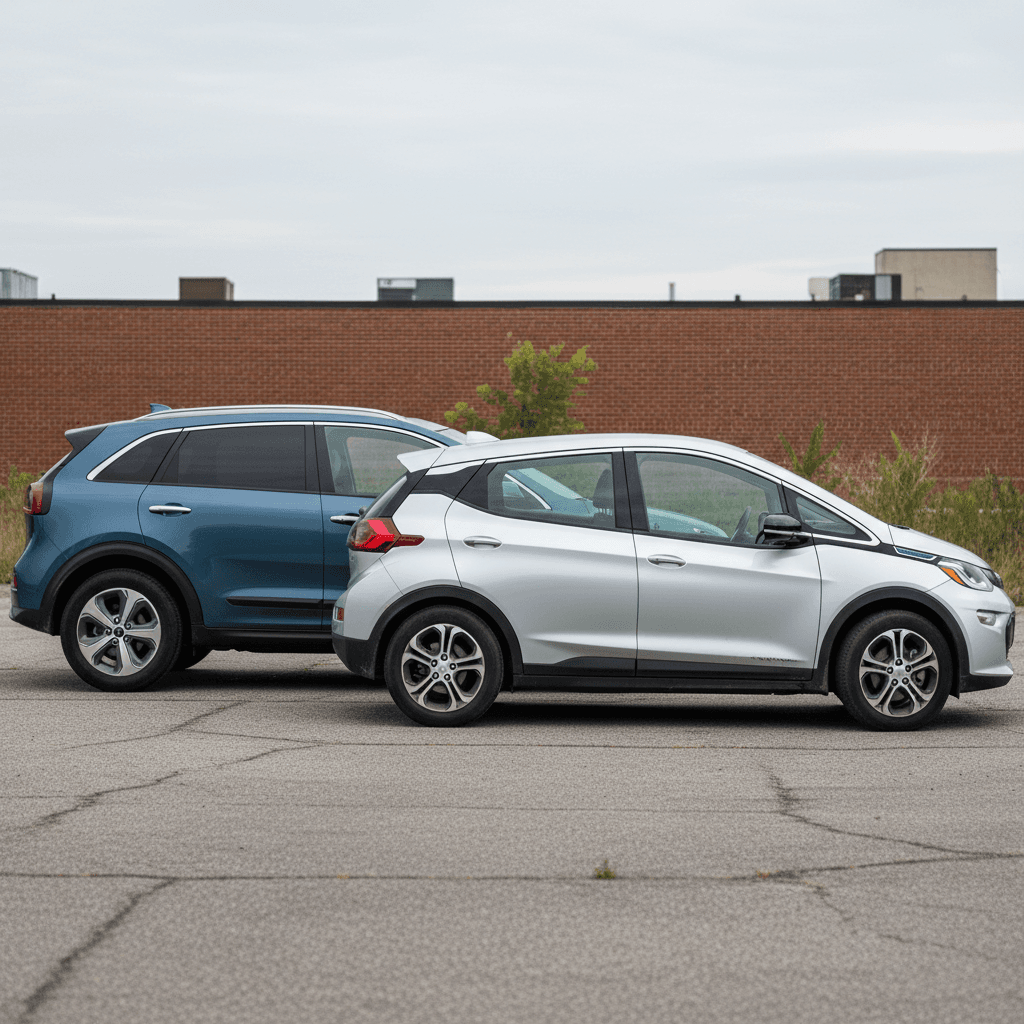
FAQ: Kia Niro EV vs Chevrolet Bolt EV
Frequently asked questions
Bottom Line: How to Shop These EVs With Confidence
Stacking the Kia Niro EV vs Chevrolet Bolt EV reveals two compelling but distinct paths into affordable electric driving. The Bolt EV offers standout range per dollar and a compact footprint that shines in the city, so long as you carefully verify its recall and battery history. The Niro EV costs more on average but counters with crossover practicality, newer tech, and stronger home‑charging hardware, advantages you’ll feel every day you own it.
No matter which way you lean, the smartest move is to judge the specific car in front of you, not just the badge on the hatch. Look closely at battery health, charging behavior, safety features, and total ownership costs. If you’d rather not decode that alone, Recharged can help you compare used Niro EVs and Bolt EVs side by side with verified battery diagnostics, pricing transparency, and EV‑savvy support from first click to delivery.