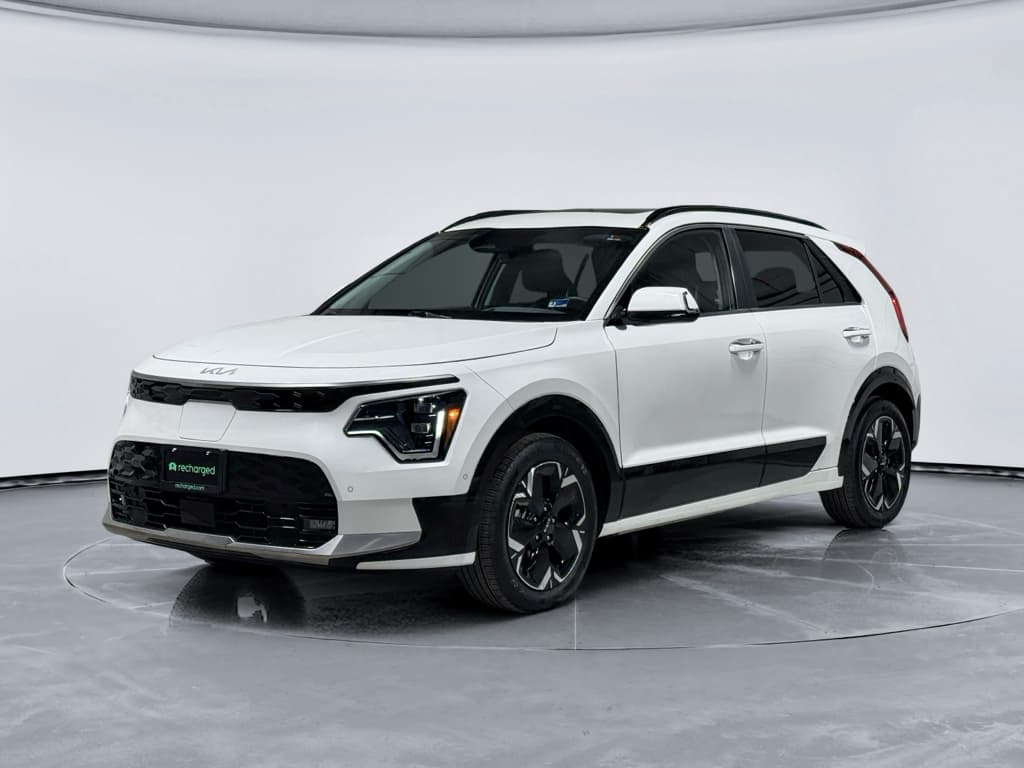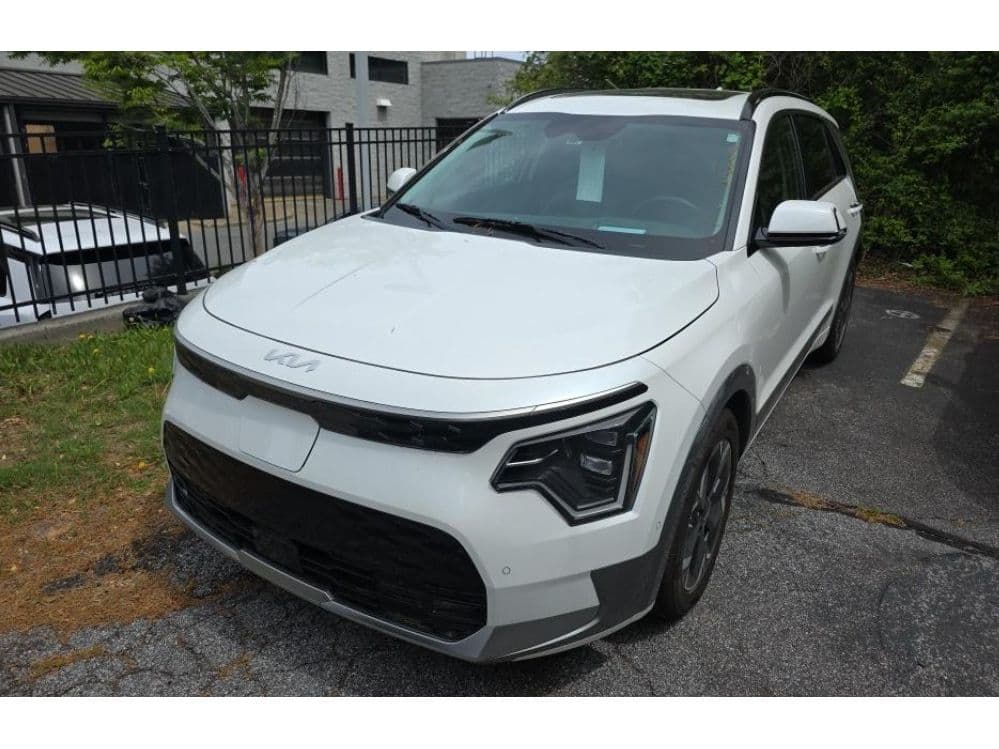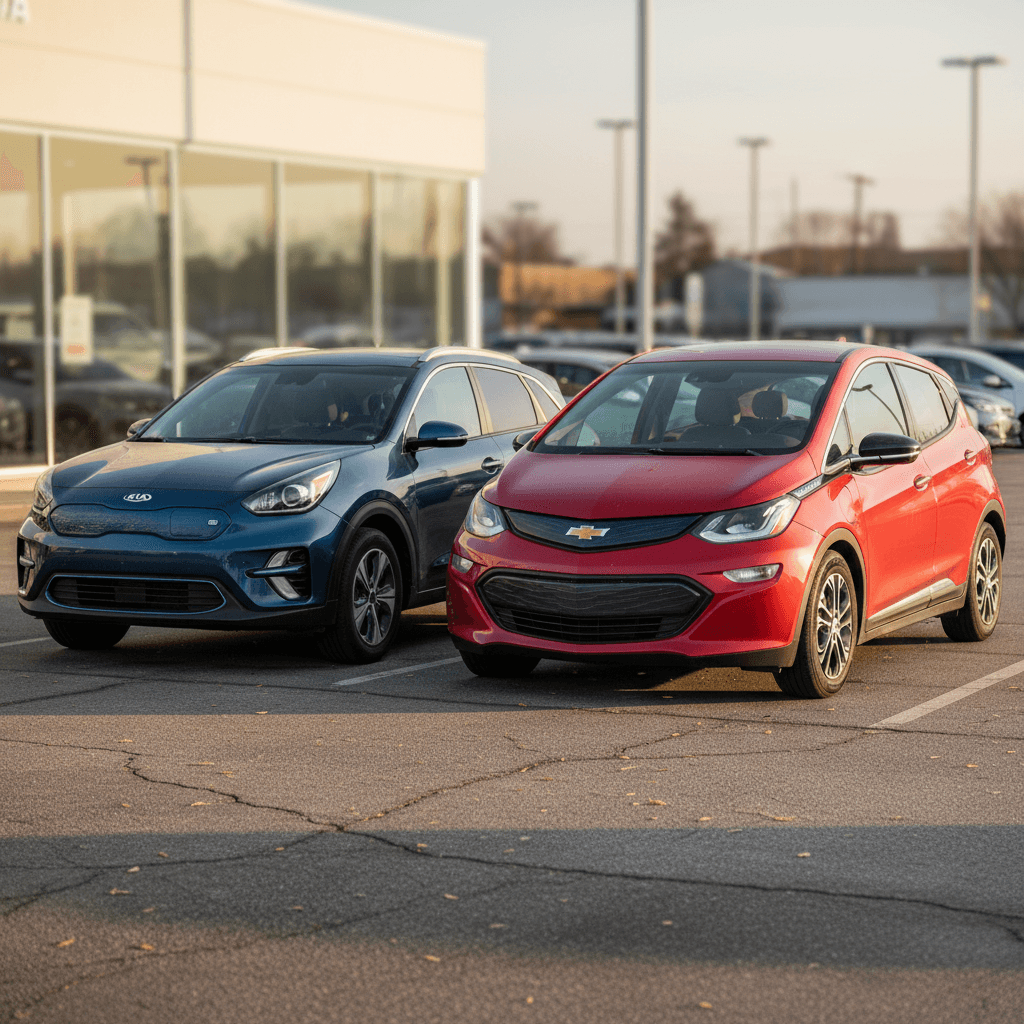
If you’re shopping for an affordable used EV, you will almost inevitably end up comparing the Kia Niro EV vs Chevy Bolt EV. They’re two of the most budget‑friendly electric cars on the U.S. used market, with enough range for real‑world commuting and even the occasional road trip. But they do it with very different tradeoffs in space, charging speed, reliability history, and long‑term support.
Why this matchup matters
Overview: Kia Niro EV vs Chevy Bolt EV
When people say "Kia Niro EV" they usually mean the first generation sold in the U.S. from the 2019–2022 model years, with a 64 kWh battery, around 239 miles of EPA range and a compact crossover body. The Chevy Bolt EV in this comparison is the 2017–2023 five‑door hatchback with a roughly 66 kWh battery and 238–259 miles of range depending on model year.
Both are front‑wheel‑drive, compact and relatively efficient. The Niro EV leans toward being a quiet, practical crossover with a more traditional interior. The Bolt is smaller outside but very space‑efficient and feels more like an upright hatchback, a little more playful but also more basic in materials and sound insulation.
Headline specs at a glance
Quick specs and key differences
Kia Niro EV vs Chevy Bolt EV: core specs
These numbers represent typical U.S.-market configurations you’ll see most often on the used market.
| Spec | Kia Niro EV (2019–2022) | Chevy Bolt EV (2017–2023) |
|---|---|---|
| Battery size (usable) | ~64 kWh | ~66 kWh |
| EPA range (when new) | 239 mi | 238 mi (2017–2019), 259 mi (2020–2023) |
| DC fast‑charge peak | ~72–80 kW (CCS) | ~55 kW (CCS, option or standard depending on year) |
| AC onboard charger | 7.2–11 kW (varies by market; ~7.2 kW U.S.) | 7.2 kW (2017–2021), 11.5 kW (2022–2023) |
| 0–60 mph | ~6.2–7.8 s (varies by source) | ~6.5–6.9 s |
| Body style | Subcompact crossover | Subcompact hatchback |
| Cargo (behind rear seats) | ~18–19 ft³ | ~16.6 ft³ |
| DC fast connector | CCS1 | CCS1 |
| Notable features | More refined, quieter ride, crossover seating height, long Kia warranty | Smaller footprint, great efficiency, later models got nicer interior & 11.5 kW AC |
| Headline drawback | Slower DC charging than newer EVs, not as common as Bolt | Battery‑fire recalls on many model years, thin sound insulation, narrow seats |
Always confirm exact specs (battery size, DC fast‑charge option) on the specific VIN you’re considering.
Model years that matter
Range and battery health
On paper, the two cars are very closely matched for range. Most Niro EVs in the U.S. are rated at 239 miles EPA. The Bolt EV launched at 238 miles and later crept up to 259 miles with efficiency improvements, so later Bolts technically win the spec‑sheet range battle by about 20 miles. In real use, both deliver roughly 200–240 miles between charges for most drivers depending on climate and speed.
Kia Niro EV range profile
- EPA rating around 239 miles when new.
- European WLTP numbers are higher (~285 miles) but not directly comparable.
- Owners typically see 3.3–3.8 mi/kWh in mixed driving, which lines up with low‑200s real‑world range.
- Kia’s thermal management helps keep performance relatively consistent across temperatures compared with older EVs.
Chevy Bolt EV range profile
- Early cars rated at 238 miles, refreshed ones at 259 miles.
- Very efficient drivetrain: highway energy use can rival newer, more expensive EVs.
- In cold climates, the Bolt can lose a bit more range than the Niro EV due to its smaller physical footprint and less aggressive heat‑pump availability.
- Post‑recall packs on many Bolts are effectively "new" batteries, which can be a hidden advantage if you verify the replacement date.
Battery recall vs. battery warranty
Charging speeds and road-trip viability
Day to day, both the Niro EV and Bolt EV are easiest to live with if you can charge at home on Level 2. The real difference shows up on road trips where DC fast‑charging speed, charging curve and network access determine how long you’re stuck at a station.
Home and fast charging: Niro EV vs Bolt EV
They share the same CCS1 plug, but behave differently at fast chargers.
Home Level 2 charging
Niro EV: Roughly 7.2 kW onboard charger in U.S. trim, taking about 9–10 hours for a full charge on a 40‑amp Level 2.
Bolt EV: 7.2 kW on 2017–2021 cars, upgraded to 11.5 kW on 2022–2023 models, cutting full‑charge times to around 7 hours on a strong circuit.
DC fast charging peak
Niro EV: Typically peaks around 70–80 kW, doing a 10–80% session in about 40–45 minutes when conditions are ideal.
Bolt EV: Limited to ~55 kW peak even on 2022–2023 cars. A similar 10–80% session usually takes closer to 45–60 minutes.
Road‑trip practicality
Neither car is a road‑trip monster like newer 800‑V EVs, but:
- Niro EV generally spends less time per fast‑charge stop thanks to higher peak power.
- Bolt EV’s extra rated range (on later years) can stretch legs a bit further between stops.
- Both use CCS1, so they tap the same non‑Tesla networks. NACS adapters and future charge‑port changes will matter over the next few years.
Charging strategy for either car
Space, comfort, and everyday usability
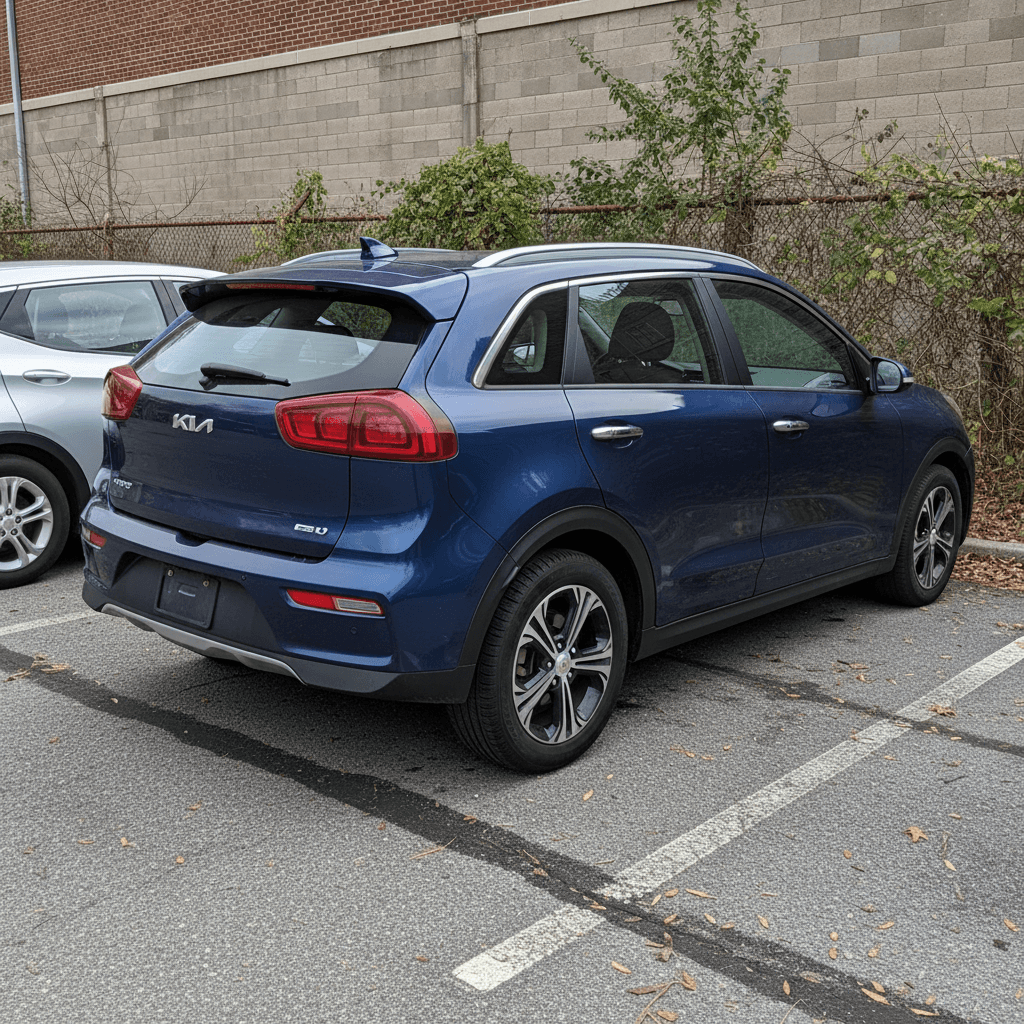
This is where the personalities really diverge. The Kia Niro EV feels like a small crossover that happens to be electric. The Chevy Bolt EV feels like a cleverly packaged subcompact hatch that happens to have excellent range. Both seat five on paper, but if you regularly carry adults in the back, they won’t feel the same.
Interior and cargo space comparison
Approximate factory and real‑world figures for interior practicality.
| Area | Kia Niro EV | Chevy Bolt EV |
|---|---|---|
| Seating position | Higher, small‑SUV like; easier ingress/egress | Lower, more car‑like; tall drivers may feel perched |
| Rear legroom | More generous for adults | Adequate but tight for tall passengers on long trips |
| Cargo behind rear seats | ~18–19 ft³; squarer opening and more vertical space | ~16.6 ft³, but deep floor makes it surprisingly usable |
| Cargo seats folded | ~53–54 ft³ (depending on spec) | ~56.6 ft³; long items fit well |
| Cabin noise | Noticeably quieter than Bolt at highway speeds | More wind and road noise, especially on early model years |
| Ride quality | More refined and composed, better isolation | Can feel busy on broken pavement, narrow tires |
Dimensions vary slightly by model year and trim; always test‑sit if you’re tall or need to fit child seats.
Family‑friendly edge: Niro EV
Driving experience and performance
Neither of these cars is a rocket ship by modern EV standards, but both are much quicker than the average compact gas crossover. Instant torque makes city driving effortless, merging easy, and one‑pedal driving surprisingly addictive.
How they feel from behind the wheel
Subtle differences that matter if you care about refinement vs. agility.
Kia Niro EV
- Character: Calm, composed, more mature.
- Acceleration: 0–60 mph quoted between ~6.2 and 7.8 seconds depending on source; it feels brisk rather than thrilling.
- Ride & noise: Better damping and noticeably lower wind/road noise than the Bolt EV, especially on the highway.
- Regen: Multiple adjustable levels with steering‑wheel paddles, plus strong one‑pedal mode when you want it.
Chevy Bolt EV
- Character: Nimble, a bit "go‑kart"‑like around town.
- Acceleration: Low‑7‑second 0–60 mph range, plenty for highway on‑ramps.
- Ride & noise: Tauter ride and more cabin noise; tires and wind are more noticeable, which can get tiring on rough highways.
- Regen: Strong one‑pedal mode with a dedicated paddle on the steering wheel for extra braking on demand.
"If you’re coming from an economy car, the Bolt EV feels like a revelation. If you’re coming from a modern compact SUV, the Niro EV will feel more familiar and less fatiguing over long distances."
Reliability, recalls, and warranty coverage
Reliability and long‑term support are where used EVs can get complicated, and where the Kia Niro EV and Chevy Bolt EV have very different stories.
Key reliability considerations
1. Chevy Bolt EV battery fires & recalls
Multiple Bolt EV model years were recalled for battery fire risk. Most affected cars had battery modules, or entire packs, replaced and received updated diagnostic software. A correctly remedied car can be a solid buy, but a car that slipped through the cracks is a risk you don’t want to own.
2. Niro EV’s quieter recall history
The Niro EV hasn’t faced the same high‑profile pack‑level recall in the U.S. There have been routine software and component campaigns, but nothing as defining as the Bolt’s fire issue, which gives many buyers more peace of mind by default.
3. Warranty coverage timelines
Many Niro EVs on the used market still have portions of Kia’s <strong>10‑year/100,000‑mile</strong> battery and powertrain warranty left, depending on in‑service date and mileage. Bolt EV battery and powertrain warranty coverage will vary by year and original sale date; some replaced Bolt packs carry their own warranty terms.
4. Service network and parts
Both Kia and Chevrolet have broad dealer networks, but day‑to‑day EV expertise can vary store by store. Bolts are more common in many regions, which can help with parts availability but doesn’t guarantee better EV‑specific service.
5. Software support and updates
Over‑the‑air software updates aren’t as central on these older EVs as they are on Teslas, but both have had important firmware updates applied through dealers. Confirm that campaign work and recalls are completed before you buy.
Don’t skip a battery‑health check
Ownership costs and used-market pricing
On the road, energy costs for the Niro EV and Bolt EV are nearly identical: both are efficient enough that electricity is usually a fraction of the cost of gasoline for an equivalent compact crossover. The bigger differences in ownership costs come from purchase price, depreciation, and potential long‑term risk.
What typically drives cost differences
Chevy Bolts were generally cheaper than Niro EVs when new and often still undercut them on the used market. However, a post‑recall Bolt with a freshly replaced pack and good documentation can punch above its price, while a Niro EV with many years of battery warranty remaining can justify a higher sticker with lower long‑term anxiety.
Think in total cost of ownership, not just price
Which used EV is right for you?
You can’t really go wrong with either the Kia Niro EV or the Chevy Bolt EV if you understand their tradeoffs and buy an individual car with a clean battery and recall story. But depending on how, and where, you drive, one is likely a better fit.
Buyer profiles: Niro EV vs Bolt EV
Match your real‑world use case to the car’s strengths, not just the spec sheet.
Choose the Kia Niro EV if…
- You want a small SUV feel with easier entry, a higher seating position, and more cargo flexibility.
- You prioritize a quieter, more refined ride, especially for longer highway drives.
- You value Kia’s long battery and powertrain warranty, and can find a car with significant coverage left.
- You’ll take occasional road trips and appreciate faster DC fast‑charging vs. the Bolt.
- You’re okay paying a bit more up front for lower long‑term anxiety.
Choose the Chevy Bolt EV if…
- You live in a city or dense suburb where a small footprint and easy parking matter more than crossover styling.
- You want the maximum range per dollar, especially on later 259‑mile models.
- You can verify that battery recall work has been properly done and ideally that the pack is relatively new.
- You’re mainly doing commuting and shorter trips, with only occasional DC fast‑charging.
- You’re shopping on a strict budget and want one of the most affordable long‑range EVs on the market.
A simple roadmap to making your choice
If you prioritize peace of mind
Start with Niro EV listings that still have several years of Kia battery warranty left based on the in‑service date.
Ask for a battery‑health report (or use a platform like Recharged that includes one by default).
Test‑drive at highway speeds to feel the difference in noise and ride vs. a Bolt.
If you don’t see a dramatic price penalty versus comparable Bolts, lean Niro EV.
If you prioritize lowest possible cost
Look at high‑mile Bolts with documented <strong>new or replaced batteries</strong> post‑recall.
Factor in insurance, taxes, and any local rebates for used EVs, Bolts often qualify given their pricing.
Confirm DC fast‑charge hardware is installed (it was optional on some earlier years).
Budget a bit extra for new tires and potentially upgraded seats or seat pads if you’re sensitive to comfort.
If you prioritize road trips
Filter to Niro EVs and later 259‑mile Bolts with DC fast‑charge capability.
Plan a sample 400‑mile route using CCS networks you expect to use; estimate stop frequency and duration for each car.
If fast‑charging infrastructure is sparse, the Bolt’s extra range can help; where chargers are abundant, the Niro’s quicker sessions become more important.
If you feel constrained by either car on paper, it may be worth stepping up to a newer EV platform entirely.
How Recharged helps you shop used Niro EVs and Bolts with confidence
The biggest risk with a used EV isn’t whether it was fun to drive when new, it’s whether the specific car you’re looking at still has a healthy pack, clean recall history, and fair pricing for its actual condition. That’s why Recharged was built as an EV‑first marketplace rather than just another generic used‑car site.
- Every vehicle on Recharged comes with a Recharged Score Report that includes verified battery‑health diagnostics, charge behavior, and real‑world range estimates, far beyond the basic dashboard guess.
- You see transparent, fair‑market pricing that accounts for battery condition, mileage, trim, options, and local demand for models like the Kia Niro EV and Chevy Bolt EV.
- If you’re replacing a gas car, you can get an instant offer or trade‑in and roll that value directly into your used EV purchase.
- Need help deciding between two specific cars? Our EV specialists can walk through use‑case fit, charging options at your home, and how each vehicle’s battery report lines up with your needs.
- Once you’re ready, you can finance, sign, and arrange nationwide delivery completely online, or visit our Experience Center in Richmond, VA if you prefer to see vehicles in person.
Whether you end up in a Kia Niro EV, a Chevy Bolt EV, or a different electric altogether, the key is aligning a specific used car’s battery health, warranty status, and charging profile with the way you actually drive. With transparent data and EV‑specific guidance, that decision stops being a gamble and starts looking like a straightforward upgrade from gas to electric.