On paper, the Kia Niro EV looks like a range overachiever: an EPA estimate of about 253 miles from a 64.8 kWh battery. But you don’t drive in a lab. You drive at 70–75 mph, in winter, with kids in the back, heat on, Spotify blaring. So what is the Kia Niro EV real-world range on the highway when you actually use it like a car, not a science project?
Quick takeaway
Why real-world Kia Niro EV highway range matters
The Niro EV occupies that deeply sensible middle lane of the EV world: compact, efficient, front-wheel drive, not a drag-strip monster, not a rolling battery bank. For commuters and first‑time EV buyers, it’s a sweet spot, until you start asking, “Can I actually do my 200‑mile highway trip without staring at the range meter like it’s a horror movie?” Real‑world highway range is where expectations and physics collide.
Understanding the gap between the EPA rating and 70‑mph freeway reality helps you decide whether a Niro EV fits your life, especially if you’re shopping the used market and wondering how battery health and weather will change the picture. That’s exactly where a verified battery report, like the Recharged Score that comes with every car sold on Recharged, becomes more than just paperwork; it tells you how much of that original range is still in play.
EPA range vs reality on the highway
Kia Niro EV range by the numbers
Recent U.S.‑spec Niro EVs (2023–2025) share essentially the same 64.8 kWh battery and front‑motor powertrain. The EPA stamps them at about 253 miles of combined range. That’s a mix of city and highway driving at moderate speeds, in ideal temperatures. Your actual highway range will almost always be lower, sometimes much lower in winter.
Think of the EPA number as “what’s theoretically possible if you drive like a saint in California springtime.” Once you cruise at a steady 70–75 mph, aerodynamic drag rises sharply and the Niro’s tidy consumption edge erodes. The question is: by how much?
70 mph highway tests: what the Niro EV really does
In an independent 75‑mph highway range test, a 2023–2024 Kia Niro EV delivered about 210 miles before needing a charge, roughly 17% below its 253‑mile EPA rating in calm, mild conditions. That’s actually a strong showing; plenty of EVs miss their EPA number by a wider margin at sustained freeway speeds.
Kia Niro EV highway range: lab vs. lane
Approximate real-world figures for a healthy‑battery Niro EV at U.S. highway speeds.
| Scenario | Speed | Weather | Estimated Consumption | Usable Battery | Estimated Highway Range |
|---|---|---|---|---|---|
| EPA combined rating (for reference) | Mixed | ~75°F (24°C) | 29 kWh/100 mi (3.4 mi/kWh) | ~62 kWh | ~253 mi |
| Independent 75‑mph test | 75 mph | ~70°F (21°C) | ~30.8 kWh/100 mi (3.25 mi/kWh) | ~62 kWh | ~210 mi |
| Typical owner, 70 mph, mild | 70 mph | 50–70°F (10–21°C) | 30–32 kWh/100 mi (3.1–3.3 mi/kWh) | ~62 kWh | ~190–210 mi |
| Typical owner, 75 mph, mild | 75 mph | 50–70°F (10–21°C) | 32–34 kWh/100 mi (2.9–3.1 mi/kWh) | ~62 kWh | ~180–195 mi |
Assumes 64.8 kWh pack, recent‑gen Niro EV, flat terrain, and typical loads.
Rule of thumb at 70 mph
Winter highway range: how much do you lose?
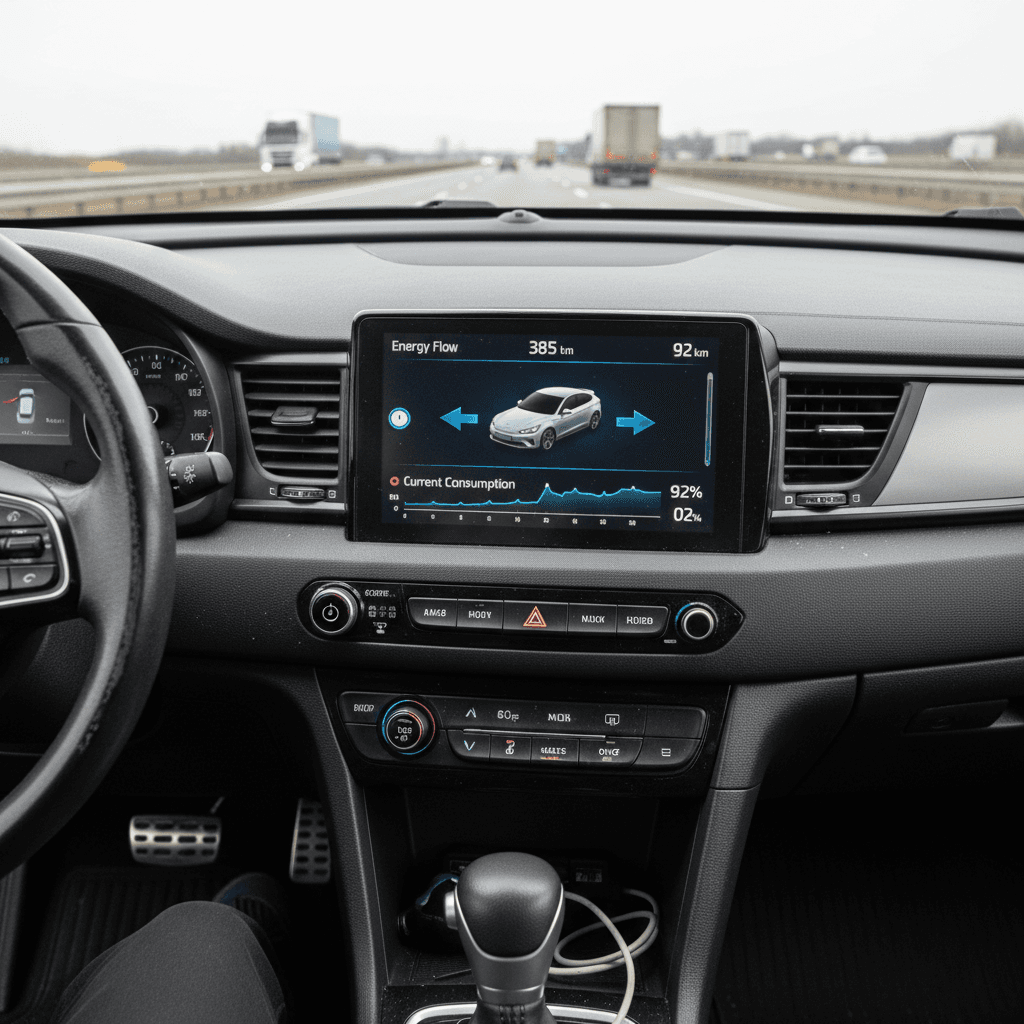
Cold weather is where the Niro EV, like every EV, quietly tears up the brochure. Owners in Canada, the northern U.S., and Scandinavia routinely report 25–35% winter range loss at highway speeds once temperatures drop near or below freezing, especially when you use cabin heat generously.
Real-world winter experiences from Niro EV owners
These are directional examples, not hard promises, your conditions will vary.
Freezing highway commute
Temps: around 32°F (0°C)
Speed: 70–75 mph, mostly highway
Reported range: roughly 190–200 miles from 100% with heat cycling on.
Deep cold, snow tires
Temps: 0–10°F (−18 to −12°C)
Speed: 70–75 mph, heavy winter tires
Reported range: as low as 150–170 miles per full charge for long highway stretches.
Daily winter commuting
Usage: 60–70 mile round‑trip, mix of highway/city
Driver reports: Still finishing the day with 30–40% battery thanks to overnight Level 2 charging, even in very cold regions.
Why winter hurts more on the highway
Practically speaking, if you’re planning a winter road trip in a Niro EV, it’s wise to base your planning on 150–180 miles between fast charges, unless you’re willing to slow down or precondition aggressively while plugged in.
Highway vs city driving in the Niro EV
City & suburban driving
- More slowing and stopping means more regenerative braking.
- Average speeds are lower, so less aerodynamic drag.
- The Niro’s efficiency can creep up to 4.0–4.5 mi/kWh in temperate weather.
- In practice, some owners see EPA‑beating range in gentle mixed driving.
Highway driving
- Steady 70–75 mph turns air into an invisible wall; drag rises with the square of speed.
- Regen opportunities are rare, so you don’t get energy back from slowing.
- Expect more like 3.0–3.3 mi/kWh in good conditions, and less in winter.
- Result: shorter legs between charges, even though the car feels relaxed.
Why EPA range feels optimistic
What actually affects your Niro EV’s highway range
- Speed: the single biggest lever. 65 mph vs 75 mph can easily be the difference between 210 miles and 180 miles of range.
- Temperature: batteries are most efficient in the 60–80°F (15–27°C) window; cold thickens the electrolyte and air, and often forces the battery heater to work.
- HVAC use: the resistance heater can draw several kilowatts at full blast, a constant tax at highway speeds.
- Tires and wheels: wider tires or aggressive winter rubber increase rolling resistance; heavy 18‑inch wheels don’t help either.
- Elevation & wind: long climbs, headwinds, or rough pavement quietly eat into your range margin.
- Battery health: an older pack with some degradation simply has less usable kWh, reducing your maximum practical highway distance.
Don’t trust the guess‑o‑meter blindly
How far can a Kia Niro EV go on a road trip?
Let’s turn the theory into something that looks like your life: a highway trip with normal speeds and realistic stops. Assume a recent‑gen Niro EV with a healthy battery, driven in the U.S. at typical speeds.
Sample Niro EV highway trip scenarios
Approximate ranges and stop spacing for common trip patterns.
| Scenario | Conditions | Planning Assumption | Recommended Max Leg | Notes |
|---|---|---|---|---|
| Summer interstate cruising | 70–75 mph, ~75°F, light load | ~190–210 mi/charge | 150–170 mi | Arrive with 15–25% buffer for charger or traffic surprises. |
| Shoulder season weekend trip | 65–70 mph, 45–60°F, mixed wind | ~180–200 mi/charge | 140–160 mi | Cooler air + occasional heat use. Slightly shorter legs recommended. |
| Winter holiday run | 70 mph, 10–32°F, cabin heat on | ~150–180 mi/charge | 120–140 mi | Build in extra margin; precondition and don’t skip that earlier fast charger. |
| Eco‑paced touring | 60–65 mph, 60–70°F, light HVAC | ~210–230 mi/charge | 170–190 mi | If you’re willing to slow down, you can stretch range noticeably. |
Real‑world trip planning should always build in safety margin and weather adjustments.
Charging network reality check
Maximizing Niro EV highway range: practical tips
Highway range playbook for Kia Niro EV drivers
1. Cruise at 65–70 mph, not 75–80
Every 5 mph above 65 takes a noticeable bite out of range. On long stretches, dropping from 75 to 68 mph can recover <strong>20–30 miles</strong> of usable distance without adding much driving time.
2. Use Eco & Eco+ strategically
Eco mode softens throttle and reduces HVAC draw. Eco+ can limit top speed and climate even more. On long, flat segments in mild weather, they’re cheap range insurance; just avoid Eco+ if you need full heat for comfort.
3. Precondition while plugged in
In cold weather, warm the cabin and battery while you’re still on Level 2 at home or at a hotel. That way, you’re not spending the first 20–30 minutes of highway driving burning range to heat things up.
4. Favor seat and wheel heaters
The Niro EV’s heated seats and steering wheel use far less energy than blasting cabin air heat. In winter, set a modest cabin temperature and lean on the seat heaters for comfort.
5. Pack smart: tires & roof racks
Low‑rolling‑resistance all‑season tires and an empty roof are your friends. Snow tires and cargo boxes are sometimes necessary, but understand you’re trading away highway range when you use them.
6. Plan chargers with a buffer
On road trips, aim to arrive at fast chargers with <strong>15–25% battery</strong>, not 3%. That margin protects you from detours, full stations, or unexpectedly strong headwinds.
Used Kia Niro EV range: what to watch for
The Niro EV is already a darling of the used‑EV market thanks to aggressive depreciation and strong efficiency. That makes it tempting, and smart, to buy used. But highway range in a 3‑ or 5‑year‑old Niro depends on how much usable battery capacity is left and how the car was treated.
Key range questions for a used Niro EV
You’re not just buying a car; you’re buying a battery.
How healthy is the pack?
Ask for a battery health report with measured usable kWh, not just a dash estimate. A pack that’s lost 8–10% of capacity will trim highway range by a similar margin.
Fast-charging history
Frequent DC fast charging isn’t automatically bad, but aggressive, repeated 100% fast charges in hot climates can accelerate degradation over time.
Get data, not vibes
When you buy through Recharged, every vehicle includes a Recharged Score Report with verified battery health and fair market pricing, so you know what range you’re realistically getting on day one.
Highway test before you buy
FAQ: Kia Niro EV real-world highway range
Frequently asked questions about Niro EV highway range
Bottom line: is the Niro EV good for highway driving?
The Kia Niro EV is not a grand‑touring missile with a 300‑plus‑mile battery and 250 kW charging. It’s a pragmatic, ruthlessly efficient compact crossover that happens to do honest work on the interstate. In the real world, you’re looking at roughly 190–210 miles of highway range in good weather and 150–180 miles in winter, with DC charging that’s decent rather than dazzling.
If that profile fits your life, a daily commute, weekend trips within a couple hundred miles, occasional longer journeys on well‑served corridors, the Niro EV is a very competent highway partner. And if you’re shopping used, pairing that inherent efficiency with a verified battery health report and expert support, like you get when you buy through Recharged, lets you know exactly how much real‑world range you’re signing up for before you ever merge onto the freeway.