If you search for a Kia Niro EV owner review, you’ll see a strange split: some drivers quietly love this car, others complain about slow fast‑charging and big value drops. This piece cuts through the noise with an honest, owner-style look at living with a Niro EV day in and day out, especially if you’re eyeing a used one.
What this review is (and isn’t)
Who the Kia Niro EV Really Suits (and Who It Doesn’t)
Kia Niro EV: Best For vs Not Ideal For
Match the car to your actual daily life, not just the spec sheet.
Best for
- Commuters driving 20–80 miles a day who can charge at home or work.
- Suburban families who want a compact crossover footprint but decent cargo room.
- Drivers who value efficiency and comfort over raw acceleration.
- Shoppers looking for a bargain used EV with plenty of life left in the pack.
Not ideal for
- People who rely heavily on DC fast charging for road‑trip travel.
- Drivers who expect Tesla‑like 0–60 performance or charging speeds.
- Households that routinely tow or haul very bulky cargo.
- Shoppers who are allergic to depreciation and plan to sell again quickly.
If that sounds like your life, short‑to‑medium daily drives, a driveway or garage, and occasional road trips, the Niro EV can be a quietly excellent tool. If you live on public chargers or do frequent 500‑mile days, its limits will show up fast.
Real-World Kia Niro EV Range: What Owners Actually See
Typical Real-World Niro EV Range
On paper, recent Kia Niro EVs advertise roughly 239–253 miles of EPA range, depending on model year and wheel size. In practice, most owners land a bit below that on the highway and a bit above it in slower city driving.
- On a warm day at 65–70 mph, assume roughly 210–230 miles from 100% to near empty.
- In mixed suburban driving with lighter speeds, it’s realistic to see 230–260 miles.
- Short, stop‑and‑go city trips can push the guess‑o‑meter higher, but that doesn’t necessarily translate to long‑trip range.
Owner-style tip on range planning
Winter Driving in a Kia Niro EV: An Honest Report
Cold‑weather performance is where many EVs, including the Niro, get their reality check. Owners in northern states and Canada report 20–30% range loss in typical winter, and even more during short, heater‑heavy trips.
What owners commonly see
- At freeway speeds with the cabin set to comfortable, winter efficiency often drops to around 2.7–3.2 mi/kWh.
- That translates into roughly 160–200 miles of usable range on a full pack in genuine cold.
- Short 10–15 minute drives are worst‑case: the cabin and battery are cold, so the heater is working hardest for the least distance.
Factors that hurt winter range
- Cabin heat is a big power draw, especially in cars without a heat pump or at very low temps.
- Higher speeds in dense cold air make the car work harder aerodynamically.
- Winter tires and slush add rolling resistance.
Be realistic in cold climates
Charging the Kia Niro EV: Home, DC Fast, and Frustrations
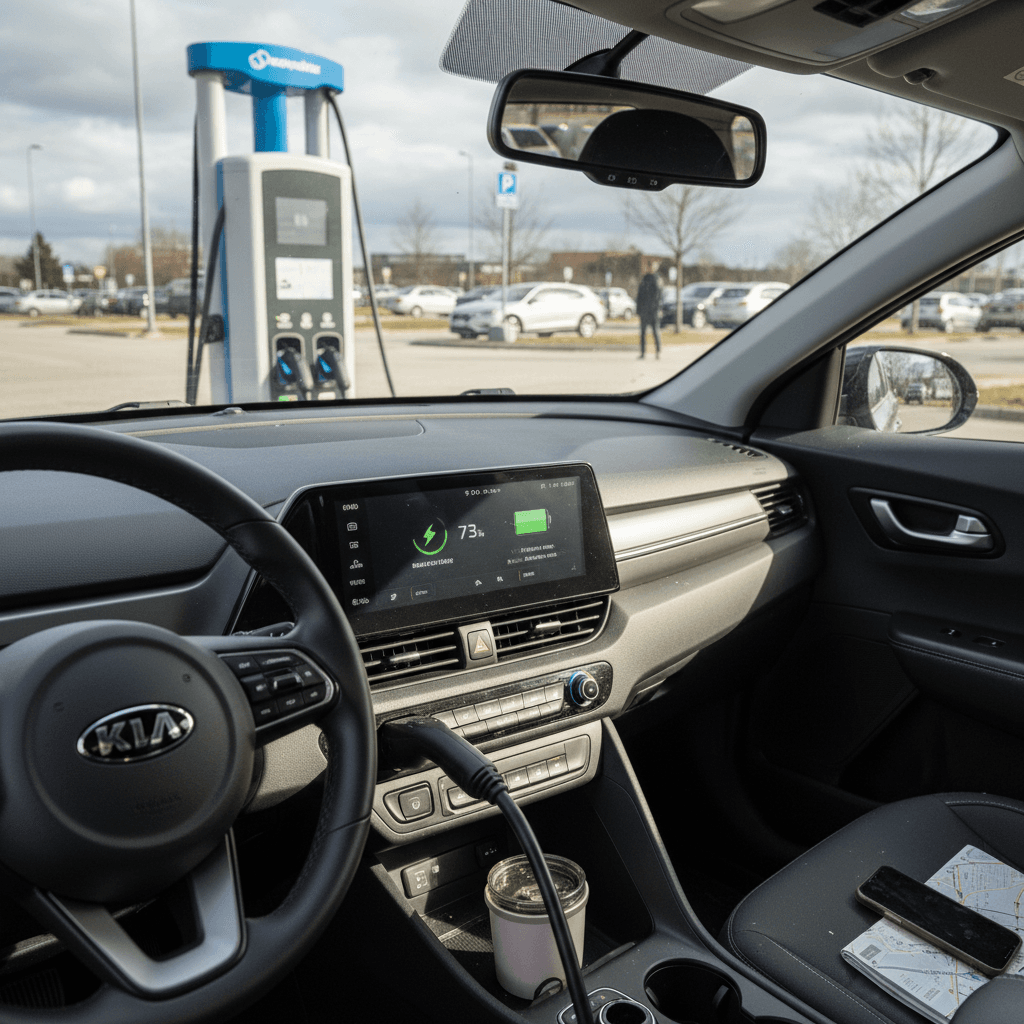
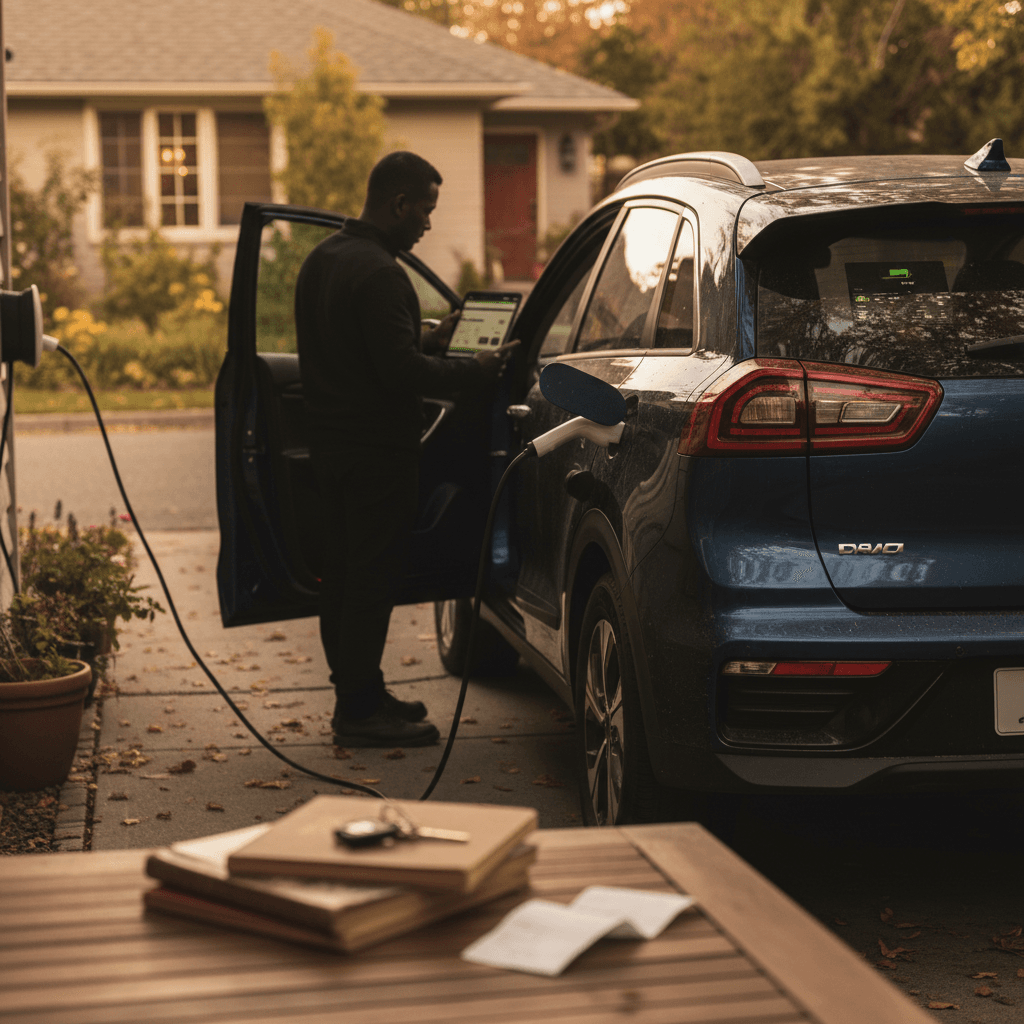
At home, the Niro EV is drama‑free. On a Level 2 (240‑volt) charger, most owners simply plug in overnight and wake up with a full or scheduled charge. The car’s onboard AC charger makes keeping the battery between about 20% and 80% straightforward if you’re mindful of long‑term health.
What Charging a Niro EV Feels Like Day to Day
Home is painless, public fast charging is where complaints start.
Home Level 2
- Full charge from low typically overnight.
- Realistically adds 25–30 miles of range per hour on many setups.
- Ideal if you own a home or have a dedicated spot at work.
Public Level 2
- Great for topping up while shopping or at work.
- Speeds similar to home charging if the station can deliver it.
- Best used opportunistically, not as your only source.
DC Fast Charging
- Peak power is modest versus newer EVs.
- Owners frequently report 30–70 kW depending on charger and conditions.
- Fine for occasional trips, frustrating if you expect 150–250 kW speeds.
Honest truth about Niro EV fast charging
Owners also report scattered issues with public chargers and charging errors, some related to the car, some to aging infrastructure. Kia has issued guidance reminding Niro EV owners to visually inspect connectors and avoid obviously damaged plugs; that’s good advice for any EV, but it underscores that the Niro’s charging hardware is sensitive to poor‑quality equipment.
Comfort, Space, and Daily Usability
On the road, the Niro EV behaves like a well‑sorted compact crossover. Most owners highlight comfort and practicality as major strengths, especially in the newer‑generation cabin with its cleaner layout and larger infotainment screen.
Living With a Niro EV Every Day
Where it quietly shines for a lot of owners.
Ride & seating
- Comfortable seats for most body types, especially in mid‑ and upper‑trim cars.
- Quiet cabin at city speeds; some wind noise shows up on the highway but it’s not out of class.
Cargo & space
- Practical hatchback opening and fold‑flat rear seats.
- Enough room for groceries, strollers, or luggage for a long weekend.
Driving feel
- Not a performance EV, but responsive off the line.
- Multiple regen levels with paddle control let you choose between coasting and near one‑pedal driving.
Infotainment and driver‑assist tech skew more mainstream than futuristic, but that’s not necessarily a bad thing. Lane‑keeping and adaptive cruise do their jobs on long drives, and the learning curve is short if you’re coming out of a traditional compact crossover.
Reliability and Common Issues Owners Talk About
The honest summary: most Niro EVs just quietly do their thing, but there are a few recurring themes in owner forums and complaint data you should know about, especially if you’re buying used.
- 12‑volt battery quirks (earlier years): Some 2019–2020 owners reported weak 12‑volt batteries that could lead to odd warning lights or a no‑start situation. Many cars have already had these batteries replaced.
- Charging behavior and error messages: A minority of owners report inconsistent DC fast‑charging speeds or sessions that cut off early. Sometimes it’s the station; sometimes a software update or dealer visit is needed.
- Thermal management under heavy use: On long, hot road trips with multiple DC fast‑charge stops in a day, a few drivers have seen battery temperature warnings or reduced charge speeds as the car protects itself.
- General durability: Outside of those edge cases, the Niro EV hasn’t developed a widespread reputation for massive battery degradation or chronic drivetrain failures. Routine maintenance needs are low versus a gas crossover.
Warranty gives meaningful peace of mind
Depreciation: The Bad News That Becomes Good News Used
Here’s where an honest Kia Niro EV owner review has to talk about money. As a new purchase, the Niro EV has been one of the faster‑depreciating electric crossovers on the U.S. market. Five‑year drops around 56–60% of original value are common, putting it on lists of EVs that lose more than half their price in that window.
What Niro EV Depreciation Looks Like in Plain English
Why this can actually be good news
If you’re shopping used, focus less on what the car cost new and more on what you’re getting today: a comfortable, practical EV with plenty of remaining battery warranty, often priced far below a comparable‑age Tesla or Hyundai.
Honest Pros and Cons of the Kia Niro EV
What owners tend to love
- Efficiency and ease of use: Great around‑town economy, simple controls, and a painless daily routine if you can charge at home.
- Comfortable, familiar feel: Feels like a normal compact crossover, not a science experiment.
- Practical size: Easy to park, still plenty of cargo space and rear‑seat room.
- Used pricing: Depreciation turns the Niro EV into a relative bargain on the pre‑owned market.
What frustrates some owners
- Slow DC fast charging: Acceptable for occasional trips, but uncompetitive next to newer 800‑volt rivals.
- Winter range hit: Like most EVs, range drops more than many first‑time owners expect.
- Not a performance EV: Fine for daily use, but won’t satisfy speed‑hungry drivers.
- Resale for first owners: Big early value loss if you buy new and sell after just a few years.
Buying a Used Kia Niro EV: Practical Checklist
If you’re considering a used Niro EV, you’re exactly the kind of shopper who can benefit from all that front‑loaded depreciation, as long as you buy with your eyes open. Here’s a concise checklist to work through before you sign.
Used Kia Niro EV Buyer’s Checklist
1. Verify battery health, not just range display
A healthy high‑voltage pack is the heart of any used EV. Don’t rely solely on the dashboard guess‑o‑meter. Look for evidence of capacity tests, software updates, and how the previous owner charged the car. A third‑party battery health report, like the Recharged Score used on every vehicle on our marketplace, gives you a data‑driven view instead of guesswork.
2. Ask about DC fast‑charging history
Occasional fast charging is normal; living on 150 kW stations every day isn’t. Ask the owner how they mostly charged (home Level 2 is ideal) and whether they’ve ever seen error messages or big slowdowns when DC fast‑charging.
3. Inspect the 12‑volt battery and service history
On older Niro EVs, a weak 12‑volt battery can trigger odd behavior. Check whether it’s been replaced and skim service records for software updates or charging‑system work.
4. Test both Level 2 and DC fast charging
On a proper test drive, plug into a public Level 2 charger and, if possible, a DC fast charger. Make sure the car handshakes correctly, starts charging promptly, and maintains reasonable power without unexplained drop‑offs.
5. Evaluate range against your real use
Don’t buy on the EPA number or the sales pitch. Take a long test drive on your actual commute route, note the energy use, and estimate your real‑world range in your climate and driving style.
6. Consider financing, trade‑in and long‑term plans
Because Niro EVs depreciate quickly up front, many used buyers are better off buying at today’s market‑correct price and keeping the car for several years. If you’re trading out of another EV or want to roll everything into simple monthly payments, a platform like Recharged can bundle trade‑in, financing, and nationwide delivery into a single, digital process.
Kia Niro EV Honest Owner Review: FAQ
Frequently Asked Questions About Living With a Kia Niro EV
Bottom Line: Is the Kia Niro EV Right for You?
An honest Kia Niro EV owner review has to say two things at once. No, this isn’t the flashiest or fastest‑charging EV you can buy in 2025. But as a real‑world tool for commuting, errands, and family life, especially bought used at today’s prices, it’s quietly compelling. If your life fits its strengths and you go in with realistic expectations about range, winter behavior, and charging speeds, the Niro EV can deliver years of low‑drama electric driving.
If you’re ready to explore used examples, platforms like Recharged are built specifically for this kind of decision. Every vehicle comes with a Recharged Score battery‑health report, transparent pricing, EV‑savvy support, and options for financing, trade‑ins, and nationwide delivery. That way, whether you end up in a Kia Niro EV or a different used EV that fits you better, you’re making the move with real data, not just a hunch.