If you’re considering a Kia Niro EV, you’re probably trying to nail down the total monthly out‑of‑pocket cost, payment, charging, maintenance, and especially insurance cost per month. The good news: among electric vehicles, the Niro EV is on the affordable end to insure, but your actual premium can still swing widely depending on how, where, and what year you drive.
Quick answer
What does Kia Niro EV insurance cost per month?
No single number fits every driver, but several recent data points give us a realistic range for Kia Niro EV insurance cost per month in the U.S.:
Kia Niro EV insurance by the numbers
Put simply, if you’re a middle‑of‑the‑road driver with good credit and a clean record, insuring a Niro EV is likely to land slightly below or around the U.S. average for full‑coverage car insurance. But a young driver in a dense city or a household with prior claims could easily see premiums well beyond the averages.
Beware overly generic averages
How Kia Niro EV insurance compares to other EVs and gas cars
Kia Niro EV vs other EVs
- The Niro EV consistently shows up near the least expensive EVs to insure, often cheaper than many Teslas or performance‑oriented models.
- Moderate power, compact‑SUV size, and good safety ratings all help insurers view it as a relatively low‑risk electric vehicle.
- Battery and repair costs are still higher than many equivalent gas crossovers, but not at the top of the EV spectrum.
Kia Niro EV vs similar gas crossovers
- Compared with a gas Kia Niro or similar compact crossovers (CR‑V, RAV4, etc.), the EV’s premium might be slightly higher because of specialized repair and battery replacement costs.
- On the other hand, strong crash‑test performance and advanced driver‑assistance tech can offset some of that in the insurer’s models.
- In many states, a safe driver in a Niro EV will fall in the same general neighborhood as mainstream gas crossovers, not the luxury EV tier.
Good news for long‑term ownership
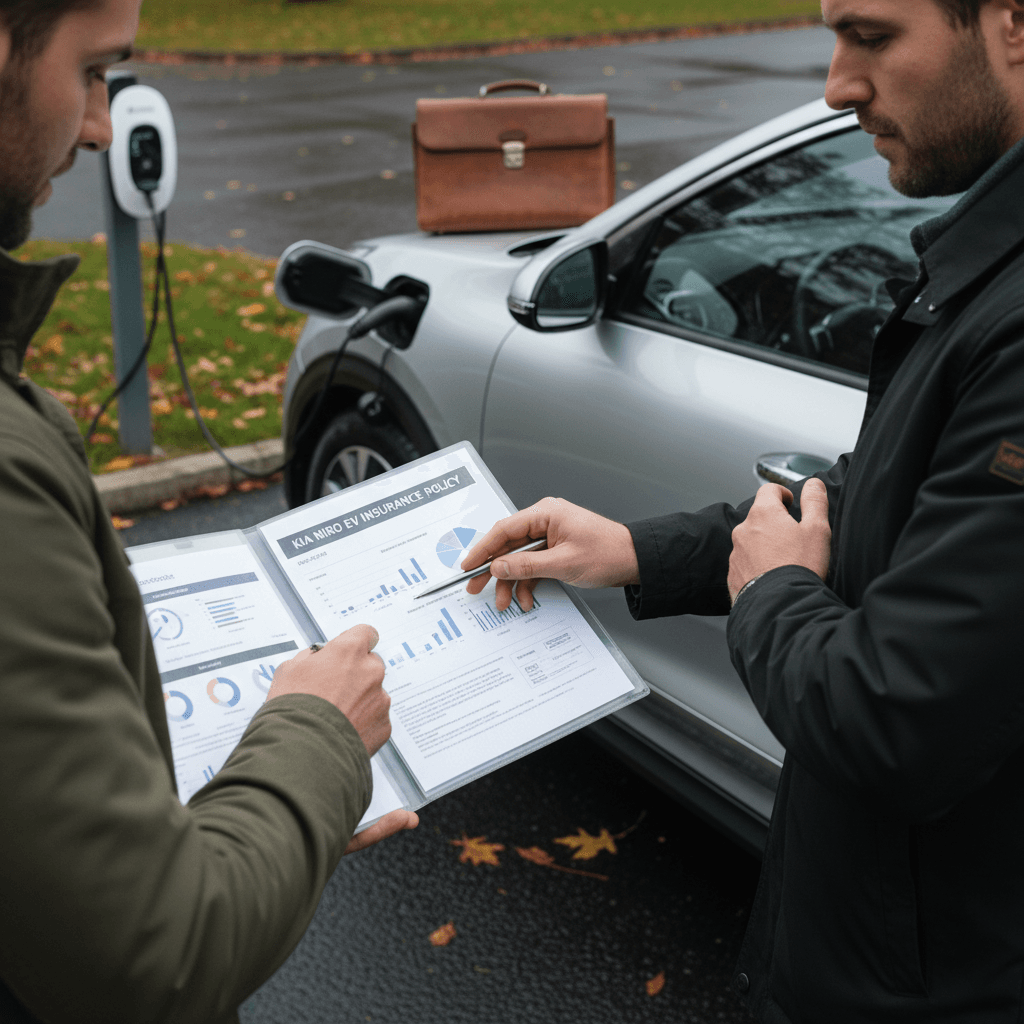
8 key factors that affect your Kia Niro EV insurance cost
Two Niro EV owners can pay very different amounts for insurance. Here are the main variables carriers use when they build a premium for your specific car and situation.
What shapes your Niro EV insurance rate?
Most of these apply to any car, but a few are especially important for EVs.
1. Where you live
2. Driver profile
3. Annual mileage & use
4. Coverage limits & deductibles
5. Repair & parts costs
6. Safety & loss history
7. Multi‑car & household profile
8. Individual insurer pricing
Pro move: get model‑specific quotes
9 ways to lower your Kia Niro EV insurance premiums
You can’t change your age or overnight traffic in your ZIP code, but you do have more control over your Kia Niro EV insurance cost than many drivers realize. Think of these as levers you can pull before you sign on the dotted line, or any time at renewal.
Kia Niro EV insurance savings checklist
1. Shop more than one insurer
Different insurers view EVs differently. Always compare at least <strong>3–5 quotes</strong> using the same coverage limits and deductibles before deciding. Some carriers are especially EV‑friendly; others still price conservatively.
2. Adjust deductibles thoughtfully
If you can comfortably handle a <strong>$500–$1,000 deductible</strong> on comprehensive and collision, you may be able to trim $20–$50 per month versus a very low deductible policy. Just make sure you have an emergency fund to back it up.
3. Consider telematics or usage‑based programs
Many insurers now offer discounts if you enroll in an app that monitors driving behavior and mileage. Smooth, low‑mileage drivers in Niro EVs often qualify for meaningful savings over time.
4. Bundle home or renters with auto
If you own a home, or even have a renters policy, quoting them together with your Niro EV insurance can unlock <strong>bundle discounts</strong> that are hard to match with standalone policies.
5. Capture all the discounts you qualify for
Ask explicitly about good‑driver, good‑student, multi‑car, EV/green vehicle, autopay, and paperless discounts. Discounts stack, and insurers don’t always surface every option unless you ask.
6. Right‑size your coverage on older vehicles
As your Niro EV ages, revisit whether full coverage makes sense. On a high‑mileage 2019 Niro EV worth only a few thousand dollars, dropping collision might be reasonable, while keeping strong liability limits in place.
7. Keep your driving record clean
It sounds basic, but avoiding speeding tickets, distracted‑driving violations, and at‑fault accidents is one of the most powerful ways to protect your premium, especially for younger Niro EV drivers.
8. Improve your credit profile over time
In most states, credit‑based insurance scores have a strong impact on rates. Paying bills on time, lowering credit utilization, and limiting new accounts can gradually reduce your insurance cost per month.
9. Re‑shop at renewal, not just at purchase
The market has been volatile, insurers have raised and then cut rates in many states. Make a habit of <strong>re‑quoting every 12 months</strong> so you don’t miss savings as the landscape shifts.
When NOT to cut corners
Insuring a used Kia Niro EV: what changes?
Many shoppers find their way to the Kia Niro EV on the used market, where prices can be especially attractive compared with new EVs. Insurance behaves a little differently as the vehicle ages:
- Lower vehicle value can help. As your Niro EV depreciates, comprehensive and collision portions of the premium often trend downward, because the insurer’s maximum payout is lower.
- Battery health matters indirectly. Carriers don’t currently rate your policy on battery state‑of‑health, but a Niro EV with documented battery stability and no major repair history is less likely to be totaled from underlying issues after a claim.
- Older tech can change repair decisions. On early‑generation Niro EVs, the cost to replace certain components can approach the vehicle’s value, nudging insurers to total the car more readily. That can impact how they price risk for older models.
- Usage patterns shift. Many used‑EV buyers drive fewer miles annually. If that’s you, make sure your insurer knows, low‑mileage ratings can reduce premiums.
How Recharged helps used‑EV buyers
Choosing the right coverage levels for a Niro EV
Picking coverage is where most drivers either overpay or leave themselves too exposed. Here’s a practical way to think about protection for a Kia Niro EV.
Common coverage choices for Kia Niro EV owners
These aren’t recommendations, but they reflect patterns we often see among EV drivers thinking about risk vs. cost.
| Coverage area | Typical approach for financed/new Niro EV | Typical approach for paid‑off/older Niro EV |
|---|---|---|
| Liability (bodily injury & property damage) | Higher limits (e.g., $100k/$300k/$100k or more) to protect assets and future income | Often still higher limits, liability is where you don’t want to skimp |
| Collision | Required by lenders; low or mid deductibles ($500–$1,000) depending on savings cushion | Optional: many owners keep it for several years, then drop once vehicle value falls and premium savings justify it |
| Comprehensive | Usually kept with similar deductible to collision to protect against theft, weather, animals, glass, etc. | Often kept even when collision is dropped, because it’s relatively inexpensive vs. the risks covered |
| Uninsured/Underinsured motorist | Strong limits, especially in states with lots of underinsured drivers | Often mirrored to liability limits for consistent protection |
| Extras (rental, roadside, gap) | Gap coverage commonly used on new or heavily financed Niro EVs; rental is helpful if the car is a daily driver | Gap usually unnecessary on older, paid‑off cars; rental coverage depends on whether you have backup transportation |
Talk to a licensed insurance agent before making coverage decisions. Use this table as a conversation starting point, not a final answer.
Mind the lender’s requirements
Putting insurance into your total cost of ownership
Insuring a Kia Niro EV isn’t just a line item; it’s part of the entire ownership equation alongside payment, electricity, maintenance, and taxes. Thinking holistically will keep you from falling in love with a monthly payment that only works on paper.
1. Build a realistic monthly budget
- Start with your expected car payment or cash outlay.
- Add a realistic insurance quote for the exact Niro EV you’re considering.
- Estimate charging costs using your commute and local electricity rates (many owners land between $40–$80 a month for home charging).
- Include maintenance, tires, parking, and tolls, EVs save you oil changes, but tires and brakes still wear.
2. Use insurance differences as a tiebreaker
- If you’re cross‑shopping a Niro EV against other EVs or gas crossovers, compare total monthly cost, not just MSRP and range.
- A vehicle that’s $30 cheaper to insure each month can offset a slightly higher payment, especially over a 5‑ or 6‑year loan.
- When you shop used Niro EVs on Recharged, you can see battery health, pricing, and ownership costs side by side to understand the full picture.
FAQ: Kia Niro EV insurance cost per month
Frequently asked questions about Kia Niro EV insurance
Bottom line: Is Kia Niro EV insurance expensive?
For most drivers, the Kia Niro EV lands in a sweet spot: one of the more affordable EVs to insure while still delivering the low running costs and smooth drive you expect from an electric car. A typical full‑coverage policy for a Niro EV often sits near or below the national average monthly premium, especially for experienced drivers in moderate‑cost states.
Your own Kia Niro EV insurance cost per month will depend on your ZIP code, driving history, coverage choices, and whether you choose a new or used model. But if you shop quotes smartly, adjust deductibles with care, and take advantage of discounts, the Niro EV’s insurance bill doesn’t have to be the line item that breaks your budget.
If you’re ready to put real numbers to the rest of the equation, explore used Kia Niro EV listings on Recharged. Every vehicle comes with a Recharged Score Report so you can understand battery health, pricing, and ownership costs up front, making it much easier to pair the right car with the right insurance and monthly budget.