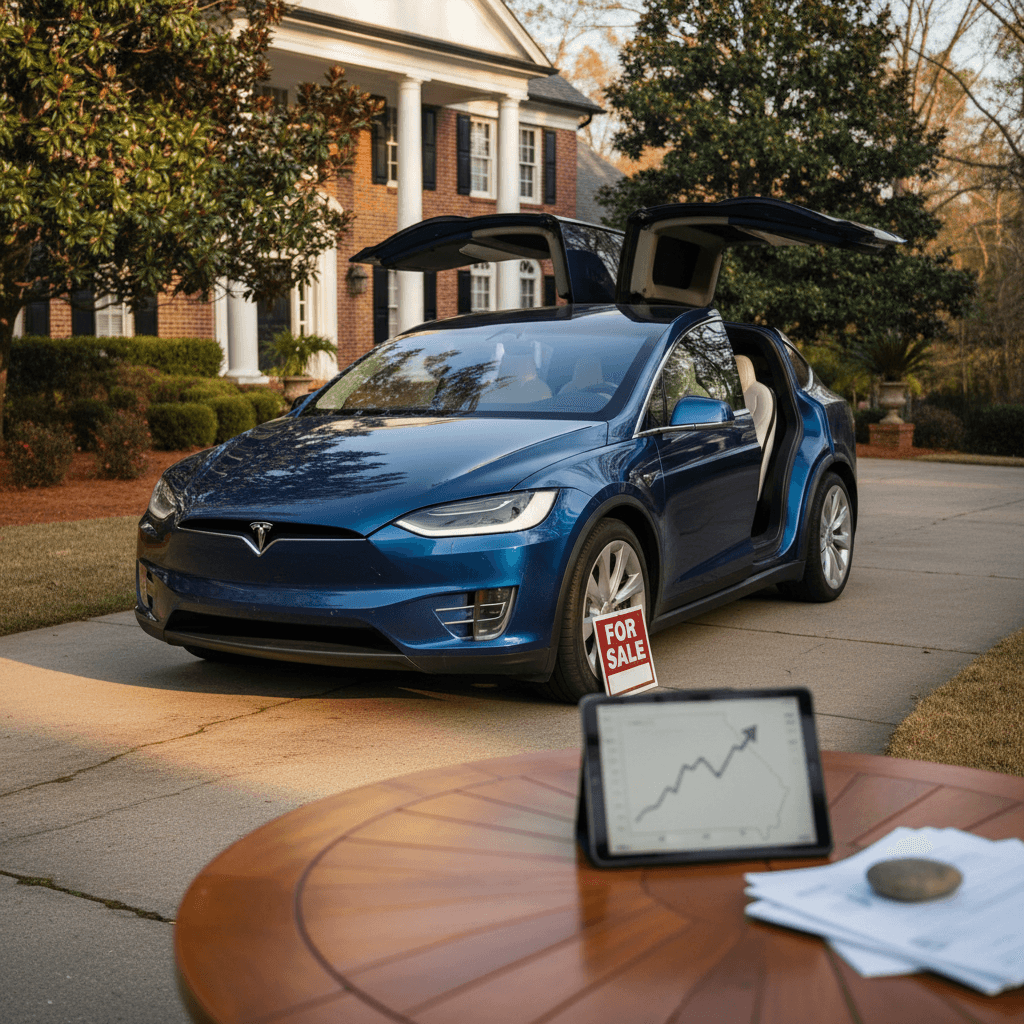
If you’re ready to sell a Tesla Model X in Georgia, whether you’re in Atlanta, Savannah, Augusta or anywhere in between, you’re timing it during a strange but potentially favorable moment for used Teslas. Prices dipped hard in 2024, then bounced back after Tesla discontinued the Model X and federal used‑EV credits changed, so what you do next can easily mean a difference of several thousand dollars either way.
Quick snapshot for Georgia sellers
Why selling a Tesla Model X in Georgia is different
Three factors that shape your Model X sale in Georgia
Market swings, state tax rules, and EV‑specific concerns all play a role.
EV‑heavy Atlanta metro
Title Ad Valorem Tax (TAVT)
High‑tech used SUV
On top of that, Tesla ended new Model X production in early 2026, which has nudged resale prices higher after a rough couple of years. For Georgia sellers, that means two things: demand is still there for clean, well‑optioned examples, and buyers will be picky about the details. The better you prepare, the faster you’ll sell and the closer you’ll land to your asking price.
What is my Tesla Model X worth in Georgia today?
Recent used Tesla Model X price trends
Online valuation tools from sites like Edmunds and auction data show 2022–2024 Model X Long Range examples in strong condition trading well above $50,000, while older, higher‑mileage or accident‑history vehicles can fall into the $30,000s. Local Georgia demand can push you toward the higher end if you’re in the Atlanta area with easy access to charging and service, or toward the middle if you’re in a rural county where EV buyers are thinner on the ground.
Use multiple value benchmarks
Georgia taxes and fees when you sell a Model X
How Georgia taxes vehicle sales
Georgia uses a one‑time Title Ad Valorem Tax (TAVT) instead of a sales tax on vehicles. Every time a vehicle’s ownership changes and it’s titled in Georgia, the buyer pays TAVT based on the state’s idea of “fair market value,” not just the price you write on the bill of sale.
As the seller, you don’t pay this tax, but your buyer does, so expect Georgia shoppers to factor it into what they can afford out‑the‑door.
What this means for you as a seller
- Dealer vs private party: Buyers pay TAVT either way. There’s no built‑in tax advantage to buying from you privately.
- Trade‑in scenarios: If you trade your Model X into a dealer and buy another vehicle, the trade value can reduce the taxable amount on the new car. That can justify taking a slightly lower number if convenience matters.
- Emissions: EVs are exempt from Georgia emissions testing, which removes one common headache when you sell.
Don’t misrepresent the sale price
Option 1: Trade in your Tesla Model X in Georgia
Trading your Model X to Tesla or a local dealer in Georgia is the fastest, lowest‑friction play. You get one number, sign some forms, and you’re done. But you’re almost always leaving money on the table compared with a private sale or a specialist EV marketplace.
Pros and cons of trading in your Model X
Good for convenience, not for squeezing every last dollar out.
Pros of trading in
- Fast and simple: One visit, one transaction. You avoid showings, test drives, and no‑shows.
- Tax benefit on new car: If you’re buying another vehicle, your trade value can reduce the taxable amount of the replacement in many states; dealers in Georgia may still highlight this as part of the math.
- No direct buyer risk: The dealer, not you, owns any reconditioning and title issues after the deal.
Cons of trading in
- Lower offer: Many Tesla owners report dealer trade‑ins coming in $5,000–$10,000 below realistic private‑sale values for late‑model luxury EVs.
- No control over pricing: You can reject the offer, but you can’t negotiate much. For most stores it’s “take it or leave it.”
- Limited EV expertise: Non‑EV specialty dealers may undervalue healthy batteries or paid software like FSD.
When a trade‑in makes sense
Option 2: Sell your Tesla Model X privately in Georgia
A well‑executed private sale is still the best way to unlock top‑of‑market money for a clean Model X, especially in and around Atlanta, where EV‑savvy buyers understand things like battery state of health and Autopilot hardware versions. But it will demand time, patience, and a little risk tolerance.
- Create a detailed, honest listing with clear photos in daylight, including close‑ups of the interior, wheels, and any wear.
- Highlight EV‑specific strengths: battery health, charging habits (mostly home vs DC fast), software version, and paid upgrades.
- Be prepared to explain how home charging works and which adapters or cables are included.
- Screen buyers before you share your address or let anyone test‑drive the car, ask for a photo of their license and basic proof of funds.
- Use a safe, public location for test drives, and ride along so you keep control of the key card or key fob.
- Close the deal at your buyer’s bank or a tag office when possible so funds and paperwork change hands together.
Safety first with private buyers
Option 3: Sell your Tesla Model X through a marketplace like Recharged
If you don’t love the idea of parking‑lot meetups but also don’t want to give up thousands of dollars to a quick trade‑in, a specialist used‑EV marketplace can be a middle path. That’s where Recharged focuses its entire business.
How Recharged helps you sell a Tesla Model X
Designed around used EVs, not gas cars.
Recharged Score battery report
Fair market pricing support
Digital sale & nationwide delivery
Ready to find your next EV?
Browse VehiclesYou can work with Recharged to get an instant offer, choose a consignment‑style listing, or use an EV‑savvy team as a sounding board while you decide whether to hold, trade or sell. For some Georgia sellers, that expert guidance alone is worth more than the difference between a quick dealer number and a well‑marketed EV listing.

How battery health impacts what you’ll get for your Model X
Battery health is the single biggest variable that separates a “great deal” Model X from one that sits on the market. Most buyers will look for a rough sense of real‑world range at 100% charge, but serious shoppers will ask for more detail, and you should be ready.
How battery health affects Model X resale value
Illustrative examples assuming two similar‑year Model X Long Range vehicles in similar cosmetic condition.
| Battery condition | Typical buyer reaction | Likely pricing impact |
|---|---|---|
| 80–90% of original range, clean history | Seen as normal for a used Tesla; still plenty of range for daily Georgia commuting and road trips. | Baseline market pricing if the rest of the car checks out. |
| 70–80% of original range, heavy fast‑charging use | Savvier buyers may worry about long‑term degradation and road‑trip flexibility. | Discount expected vs similar mileage cars with healthier packs. |
| Below 70% or warning messages present | Buyers anticipate near‑term repair or pack replacement costs. | Deep discount or very long time to sell; many buyers simply walk away. |
| Documented, healthy pack with third‑party or Recharged Score report | High confidence and fewer questions during negotiations. | Easier to defend a strong asking price and close quickly. |
These are directional examples, not formal appraisals. Actual values depend on options, mileage, history, and local demand.
Why the Recharged Score matters
Step‑by‑step checklist to sell a Tesla Model X in Georgia
Your Georgia Model X selling playbook
1. Pull your data and value estimates
Gather your VIN, mileage, option list, and current software status. Run value estimates with Tesla, a few instant‑offer sites, and, ideally, an EV‑focused platform like Recharged to understand your realistic price range.
2. Get a battery and service health check
If you’re not selling through a platform that includes diagnostics, consider having a trusted EV shop or service center pull battery health data and check for open recalls or service campaigns.
3. Decide how you want to sell
Compare a Tesla or dealer trade‑in, private sale, and a marketplace like Recharged. Weigh <strong>time, risk, and net dollars</strong>, not just the sticker number.
4. Prep and photograph the car
Detail the interior, wash and clay‑bar the paint if needed, fix inexpensive cosmetic issues, and photograph the Model X in good light from all angles, including the frunk, trunk, and charging port.
5. Create a Georgia‑ready listing
Call out that the vehicle is titled and registered in Georgia, mention that it’s EV‑only (no emissions testing required), and be transparent about any prior damage, curb rash, or panel alignment issues.
6. Handle test drives and negotiation safely
Meet in safe, public spots; ride along; and have a clear price floor in mind. Don’t be afraid to walk away from low‑ball offers or buyers who seem unsure about EV ownership basics.
7. Close the deal and update ownership
Once funds are secured, sign the Georgia title correctly, complete a bill of sale, remove the vehicle from your Tesla account and insurance, and remind the buyer about their TAVT and registration steps at their county tag office.
Documents you need to sell a Model X in Georgia
- Current Georgia title in your name (or lienholder payoff letter if you still owe money).
- Valid government‑issued photo ID that matches the name on the title.
- Recent registration card and proof that property taxes/fees are current (for reassurance).
- A simple bill of sale showing buyer and seller info, VIN, odometer, and agreed price.
- Maintenance and repair records, especially for tires, brakes, and any HV‑system work.
- If applicable, documentation for upgrades such as new wheels, wraps, or professionally installed charging accessories.
Double‑check the title before you list
Common mistakes sellers make in Georgia (and how to avoid them)
Avoid these Model X selling missteps
Most of them are easy to fix, if you know to look for them.
Overpricing off the bat
Vague on battery and software
Not transferring digital access correctly
Don’t forget Georgia’s EV registration fee
FAQ: Selling a Tesla Model X in Georgia
Frequently asked questions for Georgia Model X sellers
Key takeaways if you want to sell a Tesla Model X in Georgia
Selling a Tesla Model X in Georgia in 2026 isn’t like selling a typical gas SUV. You’re dealing with an all‑electric luxury vehicle whose value hinges on battery health, software configuration, and local demand, plus a state tax system that hits buyers with a one‑time TAVT instead of standard sales tax. If you price realistically, document the car’s condition, and choose the right channel, trade‑in, private sale, or an EV specialist like Recharged, you can turn a complex process into a clean, profitable exit.
If you want expert help benchmarking value, understanding what your Model X battery looks like to buyers, or simply avoiding the back‑and‑forth of private listings, consider starting with a Recharged Score Report and exploring consignment or instant‑offer options. That way, when you do sell your Tesla Model X in Georgia, you’ll know you did it with clear data, realistic expectations, and a buyer who understands exactly what they’re getting.