If you’re shopping for a Kia Niro EV or already own one, cargo room with the rear seats folded down is probably high on your checklist. Between Costco runs, road trips, and the occasional IKEA flat-pack, that “seats down” volume is what turns this compact electric crossover into a real workhorse.
Quick answer
Overview: How much cargo space does the Niro EV have with the seats down?
Kia publishes different cargo numbers depending on region and measurement standard (liters vs. cubic feet, to the window vs. the ceiling). To keep things simple, here’s what most U.S. shoppers should know about Kia Niro EV cargo space with the seats down:
- 2023–2025 Kia Niro EV (2nd generation, U.S.): about 63.7 cu ft of max cargo space with the rear seats folded, 22.8 cu ft with seats up.
- 2019–2022 Kia Niro EV (1st generation, U.S.): roughly 53 cu ft with seats folded, upper‑40s cu ft in some spec sheets depending on how it’s measured.
- All Niro EVs use a 60/40 split‑folding rear bench, so you can fold one side for long items and keep a rear passenger onboard.
How to think about the numbers
Kia Niro EV cargo specs by generation
Because the Kia Niro family has been around since 2017 and the EV version spans two generations, it’s worth separating first‑gen from second‑gen when you’re comparing cargo.
Kia Niro EV cargo space at a glance
Seats folded, by generation (U.S.‑focused figures)
1st‑gen Niro EV (2019–2022)
- Max cargo (seats down): ~53 cu ft (varies slightly by source)
- Cargo behind rear seats: ~18.5–19.4 cu ft
- Seat fold: 60/40 split, not completely flat in all trims
- Feel: More like a tall wagon than a small SUV
2nd‑gen Niro EV (2023–2025)
- Max cargo (seats down): ~63.7 cu ft
- Cargo behind rear seats: 22.8 cu ft (same figure used across Niro variants)
- Seat fold: 60/40 split, flatter load floor esp. with raised cargo board
- Extras: small front trunk (frunk) and more under‑floor storage
Spec sheet confusion warning
Real‑world dimensions: How long, how wide, and what actually fits
Cargo‑space math gets easier when you translate cubic feet into everyday objects. While Kia doesn’t publish full length‑and‑width diagrams for the Niro EV cargo bay, owner measurements and road‑test impressions give us a clear picture of what fits with the rear seats down.
Approximate interior dimensions
Exact measurements vary a bit between generations and trims, but most Niro EVs will give you roughly:
- Load floor length (seats down): about 65–70 inches from hatch to front seat backs when fronts are in a normal position.
- Max width: ~54–55 inches at the widest point near the hatch opening.
- Between wheel wells: about 40–41 inches.
- Usable height: about 30 inches to the window line; more if you pack up to the roof and use a cargo net.
These are ballpark, real‑world measurements based on owner reports and comparable factory data, not Kia’s official dimensional drawings.
Typical items that fit with seats folded
- Flat‑pack furniture: Most IKEA bed frames, desks, and bookcases up to ~6 feet long when angled.
- Bikes: One or two adult bikes with front wheels removed, laid flat or stood diagonally.
- Home‑improvement runs: 8‑foot trim pieces can run diagonally to the dash; 10‑foot sections usually require angling between the front seats and dash and may still be tight.
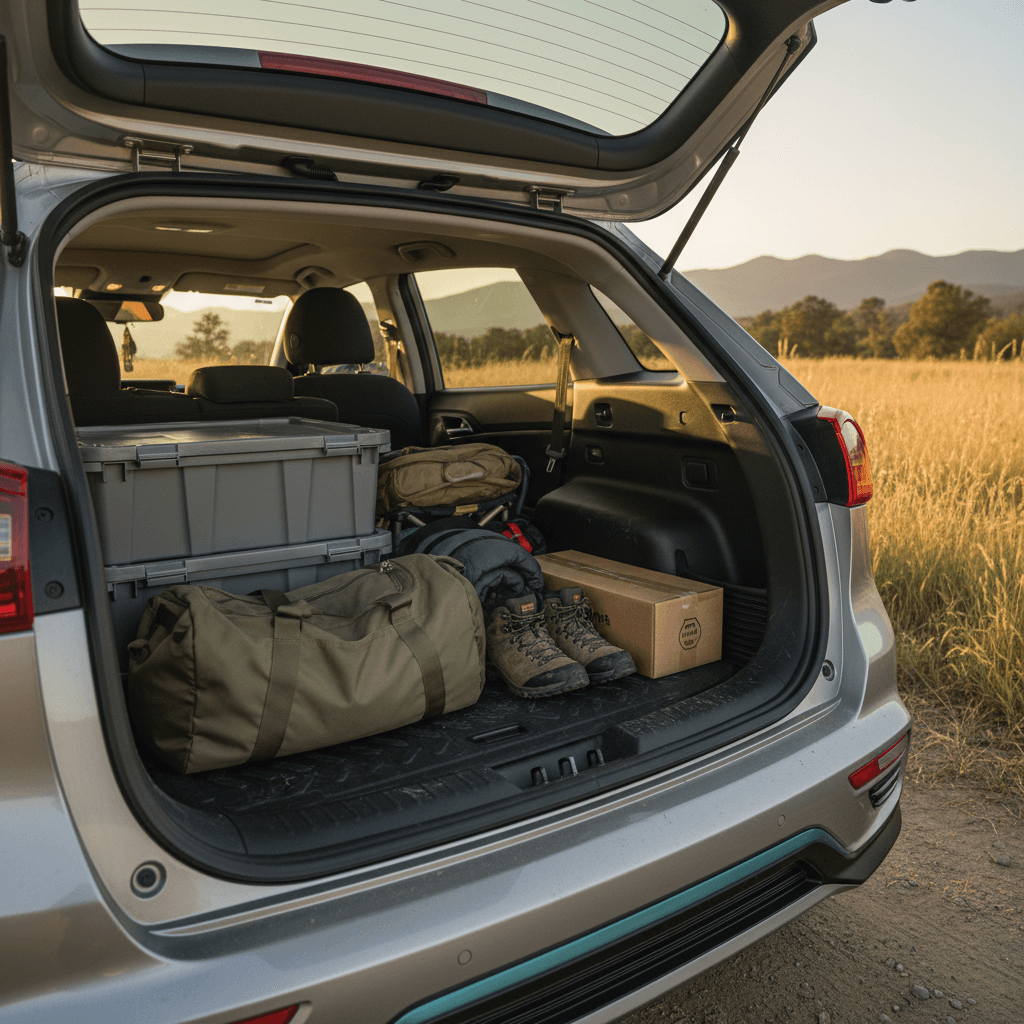
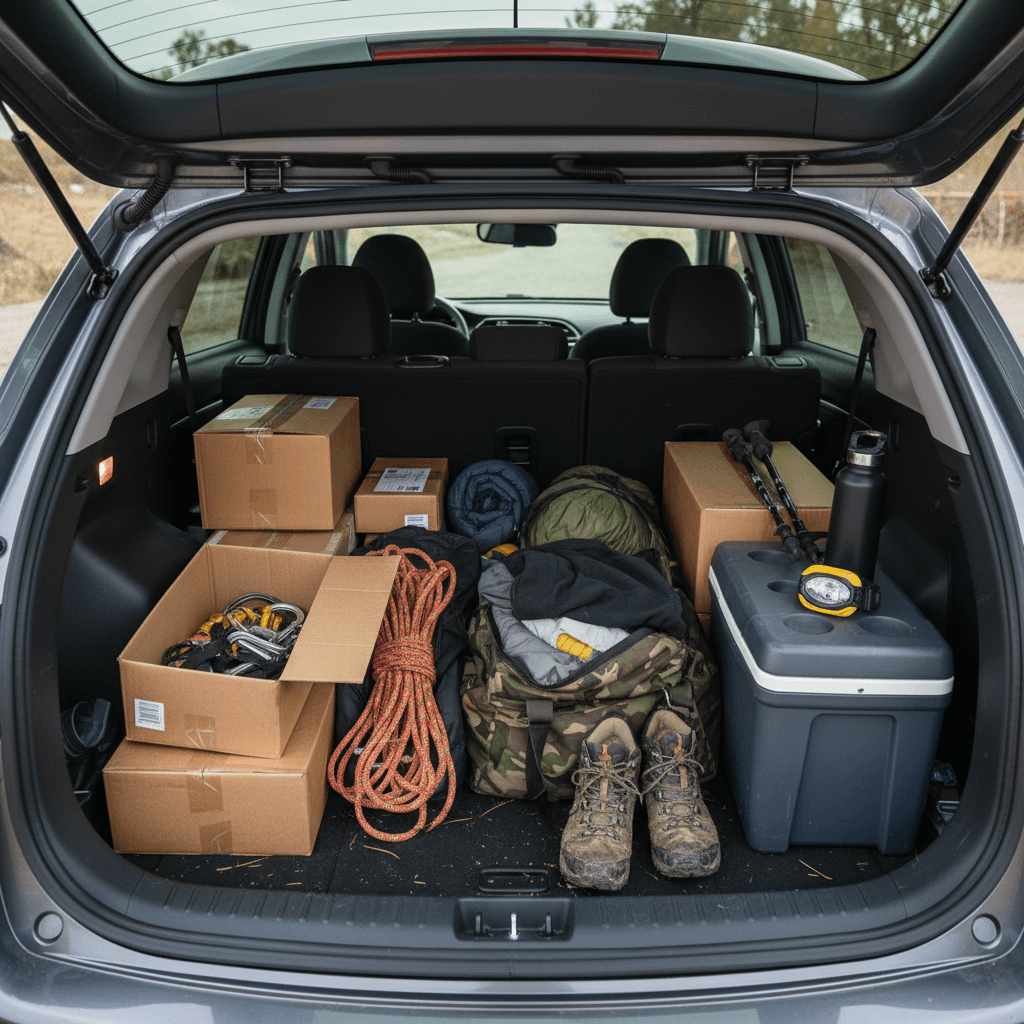
- Camping gear: Tents, coolers, and storage bins for a family of four plus soft bags.
- Pets: Large dog crate or two medium crates with room for luggage around them.
Bring a tape measure
Two‑level cargo floor, frunk, and hidden storage
A big part of making the most of your Kia Niro EV cargo space with the seats down is learning how to use the two‑level cargo floor and hidden storage areas, especially on second‑generation models.
Where your extra cubic feet are hiding
Small touches that make the Niro EV more practical than the spec sheet suggests
Two‑level cargo floor
Many 2023–2025 Niro EVs have a removable panel that can sit flush with the hatch opening or in a lower position:
- Upper position: Creates a nearly flat load floor when seats are folded, easier for sliding heavy items.
- Lower position: Adds a few extra inches of vertical space when you need maximum volume.
Under‑floor storage
Beneath that panel you’ll usually find divided bins sized for:
- Charge cable and adapters
- Emergency kit and tools
- Small items you don’t want rolling around
Stashing small gear below the floor frees up the main area for larger cargo when the rear seats are down.
Small front trunk (frunk)
Second‑gen Niro EVs add a compact frunk, around 0.7 cu ft (~20 L). It’s not huge, but it’s perfect for:
- Charge cable and gloves
- Washer fluid, small tools
- Items you want separated from the cabin
Every cubic foot counts
Kia Niro EV vs other EVs for cargo with seats down
If you’re cross‑shopping, it helps to see where the Niro EV lands among other compact electric crossovers when all seats are folded.
Cargo space with seats down: Niro EV vs similar EVs
Approximate max cargo volume with rear seats folded, U.S.‑market figures.
| Model | Type | Max cargo (seats down) | Behind rear seats | Notes |
|---|---|---|---|---|
| Kia Niro EV (2023–2025) | Compact crossover | ~63.7 cu ft | 22.8 cu ft | Long, wagon‑like load floor; small frunk on EV. |
| Kia Niro EV (2019–2022) | Compact crossover | ~53 cu ft | ~18.5–19.4 cu ft | Slightly less total volume, still highly usable. |
| Hyundai Kona Electric (2nd gen) | Subcompact crossover | High‑40s to low‑50s cu ft | ~19 cu ft | Similar footprint; Niro has flatter, longer floor. |
| VW ID.4 | Compact crossover | ~64 cu ft | 30.3 cu ft | More space behind rear seats, footprint is larger. |
| Hyundai Ioniq 5 | Compact crossover | ~59–60 cu ft | 27.2 cu ft | Bigger outside, more rear legroom than Niro. |
The Kia Niro EV doesn’t have the biggest numbers on paper, but its long, low cargo floor makes the space feel larger than some taller rivals.
Where the Niro EV shines
Practical packing tips for Niro EV owners
Once you lay those rear seats flat, the Niro EV becomes an impressively capable hauler. A few strategies can help you squeeze every last cubic foot out of the space, and keep your cargo and battery pack safe.
Maximizing Kia Niro EV cargo space with seats down
1. Decide whether you need a flat or deep floor
For heavy items like furniture or boxes you’ll slide in and out, use the <strong>upper cargo‑floor position</strong> for a smoother, nearly flat surface when the seats are down. For tall loads, drop the floor to its <strong>lower position</strong> to gain vertical space.
2. Use bins to build a level surface
If the seatbacks sit slightly higher than the cargo floor, use <strong>storage bins or duffels</strong> in the main area and lighter items on top to create a level surface. This keeps things from shifting while you drive.
3. Load heavy items forward and low
Place the heaviest items <strong>as close to the rear seatbacks as possible</strong>, not all the way at the hatch. This keeps weight centered between the axles and reduces the chance of cargo sliding into the liftgate in a hard stop.
4. Protect the interior plastics and seatbacks
Use a <strong>rubber mat, moving blanket, or cargo liner</strong> to protect the seatbacks and side plastics from scratches, especially with bikes, tools, and furniture. This is doubly important if you’re planning to resell later.
5. Don’t block rear visibility more than needed
It’s tempting to stack to the roof, but try to keep hard items <strong>below the top of the rear seats</strong> and use soft bags on top. A simple cargo net or strap can prevent items from flying forward in sudden stops.
6. Remember charging gear and emergency kit
Reserve a bit of space, either under the cargo floor or in the frunk, for your <strong>mobile charge cable, tire inflator, and roadside kit</strong>. You don’t want to unload the entire car on the shoulder just to reach a tow hook.
Safety reminder
Buying a used Kia Niro EV with cargo in mind
If you’re considering a used Kia Niro EV, you’re probably balancing budget, range, and practicality. Cargo capacity with the seats down is one of the places where a clean, well‑kept Niro EV can feel nearly as useful as many new crossovers.
What to check in person
- Seat‑fold action: Fold both sides of the 60/40 bench. Seats should drop and lock without excessive force or strange noises.
- Floor panels and hinges: Lift the cargo board, check hinges and tabs for cracks, and confirm the panel sits securely in both high and low positions.
- Under‑floor area: Look for water stains, rust, or damage that could indicate leaks.
- Interior wear: Scratches, torn seatbacks, or cracked plastics in the cargo area can indicate heavy use from previous owners.
How Recharged can help
Every Niro EV sold through Recharged comes with a Recharged Score Report that goes beyond basic specs:
- Battery health diagnostics so you’re not trading cargo room for a tired pack.
- High‑resolution photos of the cargo area, seatbacks, and under‑floor storage so you can spot wear before you buy.
- Fair‑market pricing that reflects condition, mileage, and options like cargo covers or organizers.
If cargo flexibility is a top priority, our EV specialists can also compare Niro EV listings to alternatives like the Kona Electric, ID.4, or Ioniq 5 and help you decide what fits your life best.
FAQ: Kia Niro EV cargo space with seats down
Frequently asked questions
The bottom line: if you want an efficient EV that can still play small SUV when duty calls, the Kia Niro EV’s cargo space with the seats down is one of its biggest strengths. First‑generation models already offered wagon‑like practicality, and second‑generation Niro EVs add more volume, a flatter floor, and extra hidden storage. If you’re comparing used EVs and cargo flexibility is high on your list, a well‑kept Niro EV, especially one with a verified battery and clean interior from a seller like Recharged, deserves a serious look.